








Popular
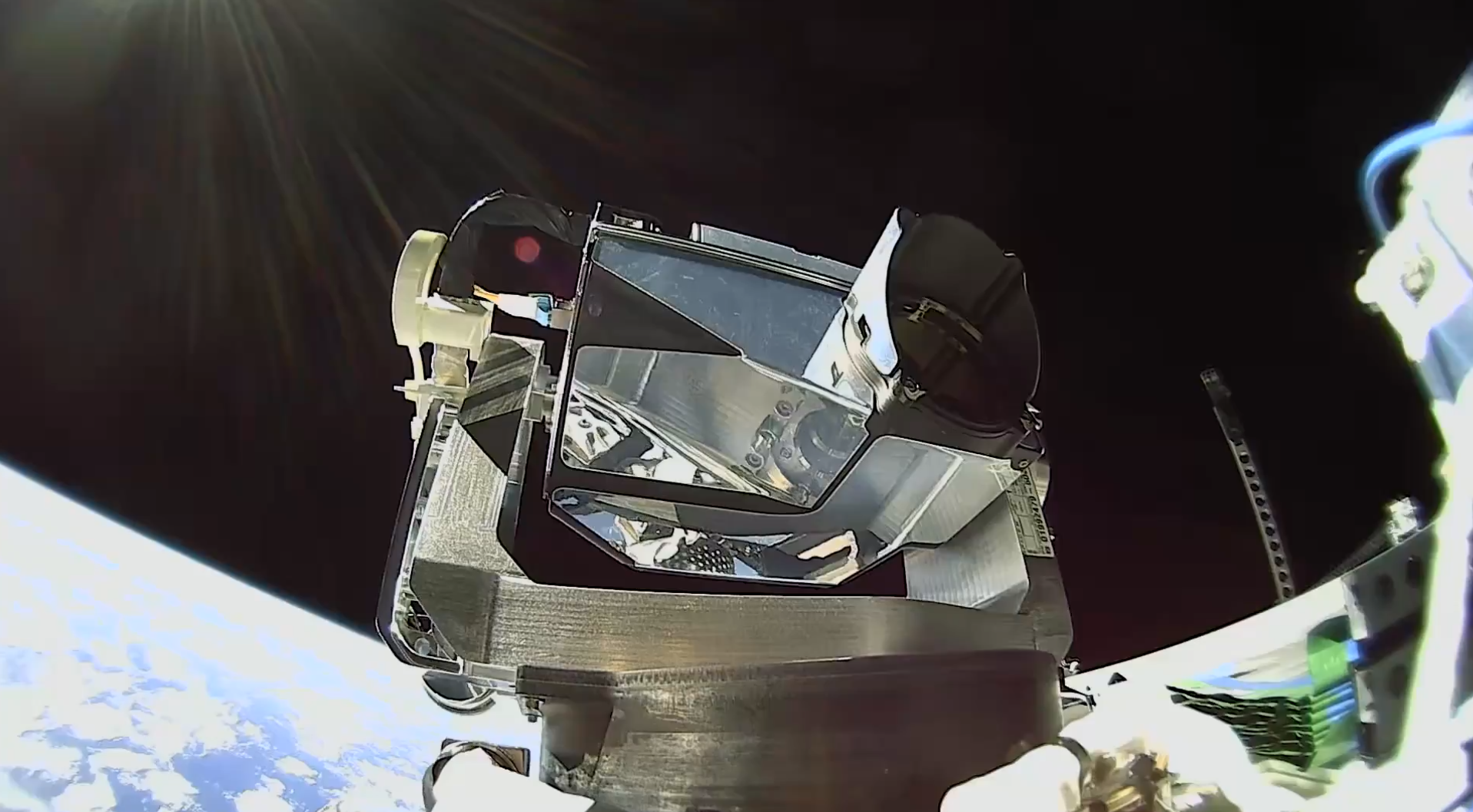
SpaceX has launched into orbit the first satellite equipped with a new laser communication system that will allow third-party satellites and space stations to connect to the Starlink network.
Michael Nicolls, the Vice President for Starlink Engineering at SpaceX, announced this.
Two weeks after the successful completion of the Starlink G10-20 mission, which deployed a new batch of satellites, the company tested a prototype featuring the new space communication system, which the Vice President referred to as a “mini laser.”
The key feature of the new module is expected to be the ability to communicate with third-party satellites and space stations. While the basic principle of data transmission using lasers is not new, the innovation of this technology lies in its capability to connect devices from other companies to the high-speed Starlink network.
Until now, Starlink has used the laser communication system exclusively within its own network, implementing the technology in 2023 on the V2 mini satellites. This allowed direct communication between satellites and the formation of a dynamic mesh-like network, reducing reliance on ground stations and providing global coverage even over oceans and polar regions.
By opening this network to third-party satellites, SpaceX will effectively be able to offer “space internet” services without building separate infrastructure for other orbital system operators, such as NASA. Additionally, this opens up broad opportunities for communication with spacecraft in deep space.
According to the developers, the presented system is capable of providing data transmission speeds of up to 25 Gbps over distances of up to 4,000 kilometers. The deployment and testing of the system shown in the video confirmed its capabilities.
It is likely that SpaceX will soon start launching new satellites equipped with the latest laser communication system, which will act as terminals for third-party spacecraft to “connect” to the network that already includes over 8,000 satellites.
Militarnyi previously reported that the U.S. military command signed a contract with SpaceX to develop a new MILNET government satellite communications system, a network of over 480 satellites in low Earth orbit that will provide communications for the U.S. Armed Forces.
The architecture of the new system assumes the creation of a decentralized grouping that will not have communication nodes and will interact directly with each other. In the future, these satellites will become part of a “hybrid mesh network” – a global association of commercial and Department of Defense satellites.
In addition, SpaceX is one of the leading contenders for creating the space component of the Golden Dome missile defense shield, which is intended to provide early detection and interception of intercontinental missiles.

Thus, when developing multiple satellite networks for different purposes, the technology for communication with third-party devices could play an important role in the future.
Підтримати нас можна через:
Приват: 5169 3351 0164 7408 PayPal - [email protected] Стати нашим патроном за лінком ⬇
Subscribe to our newsletter
or on ours Telegram
Thank you!!
You are subscribed to our newsletter