

Popular

Internal documents of the Russian Rostec Corporation reveal the real cost of weapons and the pricing scheme of Russian export contracts.
The archive of seized correspondence of the corporation was published by the Black Mirror hacker team.
A letter from the Russian holding company Concern Radio-Electronic Technologies (CRET) to the management of the special exporter of aviation systems, NACC, dated December 2022, describes an updated scheme for setting the minimum bid price for foreign contracts.
The formula is based on the cost of the product formed for the state defense order, to which is added another 20% export surcharge, as well as the manufacturer’s profit margin. This amount also includes the costs of logistics, transaction administration, compensation for currency risks, and servicing of loans taken out to fulfill the contract.
Most parameters, except for the 20% export markup, remain unknown. However, the results of pricing are well covered in CRET’s internal report, which shows the cost of products for domestic customers and foreign partners.
For example, the L-256M10-02 Khibiny-M electronic warfare system worth 2.7 million euros becomes twice as expensive as part of an export contract for Iranian Su-35s, costing 5.4 million euros.

The same situation is true for the Algerian contract for L-256VE electronic warfare systems, where a product worth $3 million will cost the foreign customer all of $6 million.
Export price conversion factors vary depending on the product model and can be lower or even higher. For example, the smallest charge of 20% was for the command and control indicators of Algerian Su-57s. Instead, the Iranians had to pay 2.5 times more for the L-277M air defense system.
Algeria is one of the key foreign customers of Russian weapons, in particular in the field of aviation. In recent years the country has purchased a squadron of Su-35 fighters, a squadron of Su-34 bombers and became the first customer of the latest Su-57. However, this did not affect the Russians’ pricing policy.
The aforementioned systems belong to the Khibiny-M product line, an electronic countermeasures system that protects combat aircraft from enemy anti-aircraft systems. Their main task is to create interference for enemy radars and targeting systems.
Technically, the system can operate in several modes. It analyzes the signal emitted by the enemy radar and creates interference, both jamming and simulation, when the aircraft “draws” false targets on the radar or shifts its real mark.
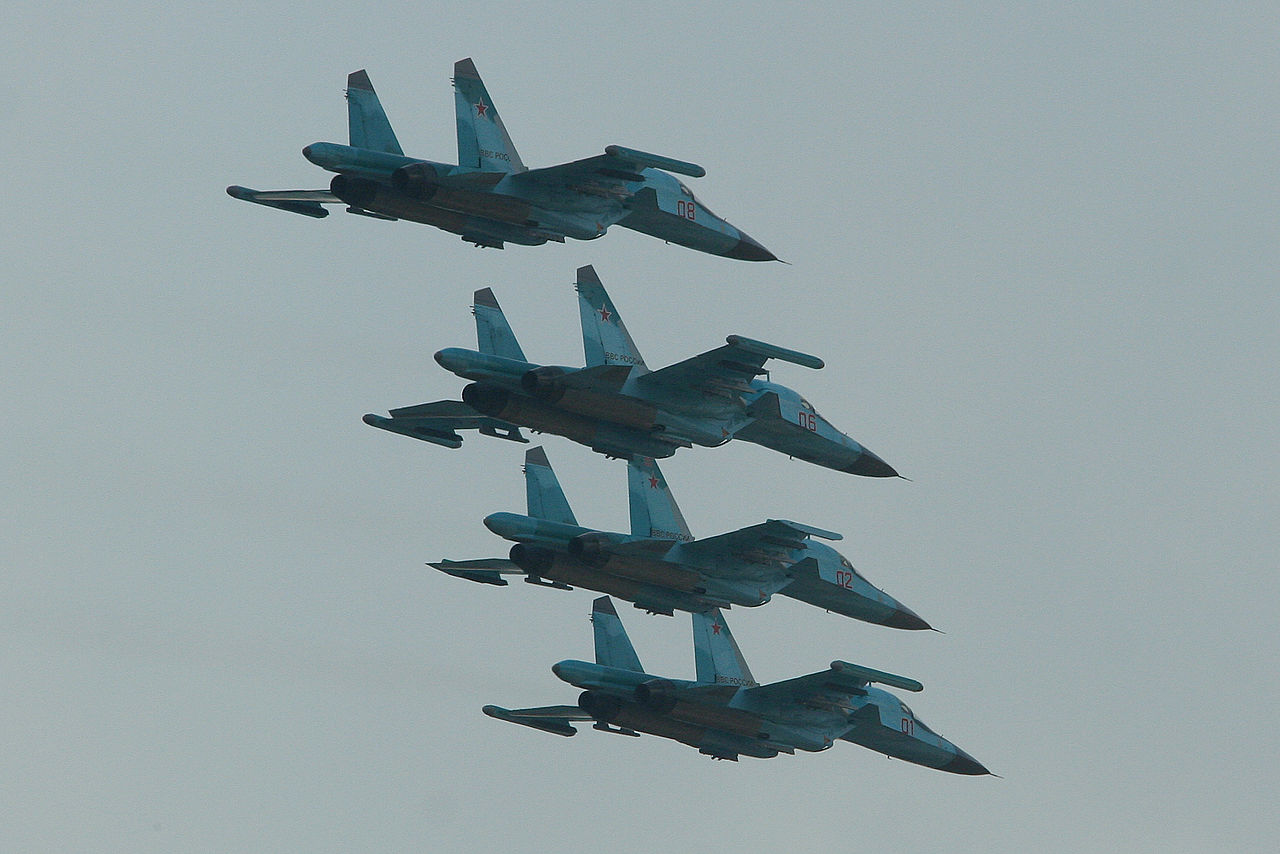
Khibiny can also operate in group mode, when one aircraft covers several neighboring ones, forming a kind of umbrella protection for the entire formation.
The Khibiny-M version is one of the newest modifications that takes into account the experience of use in wars of the last decades. They are primarily fitted to modern Russian fighters and multi-role aircraft such as the Su-35S, Su-34M, and Su-30SM. They are also mentioned as part of the onboard equipment of the promising Su-57. The system is mounted in special suspended containers at the ends of the wings or integrated into the aircraft structure, depending on the model.
Підтримати нас можна через:
Приват: 5169 3351 0164 7408 PayPal - [email protected] Стати нашим патроном за лінком ⬇
Subscribe to our newsletter
or on ours Telegram
Thank you!!
You are subscribed to our newsletter