




Popular

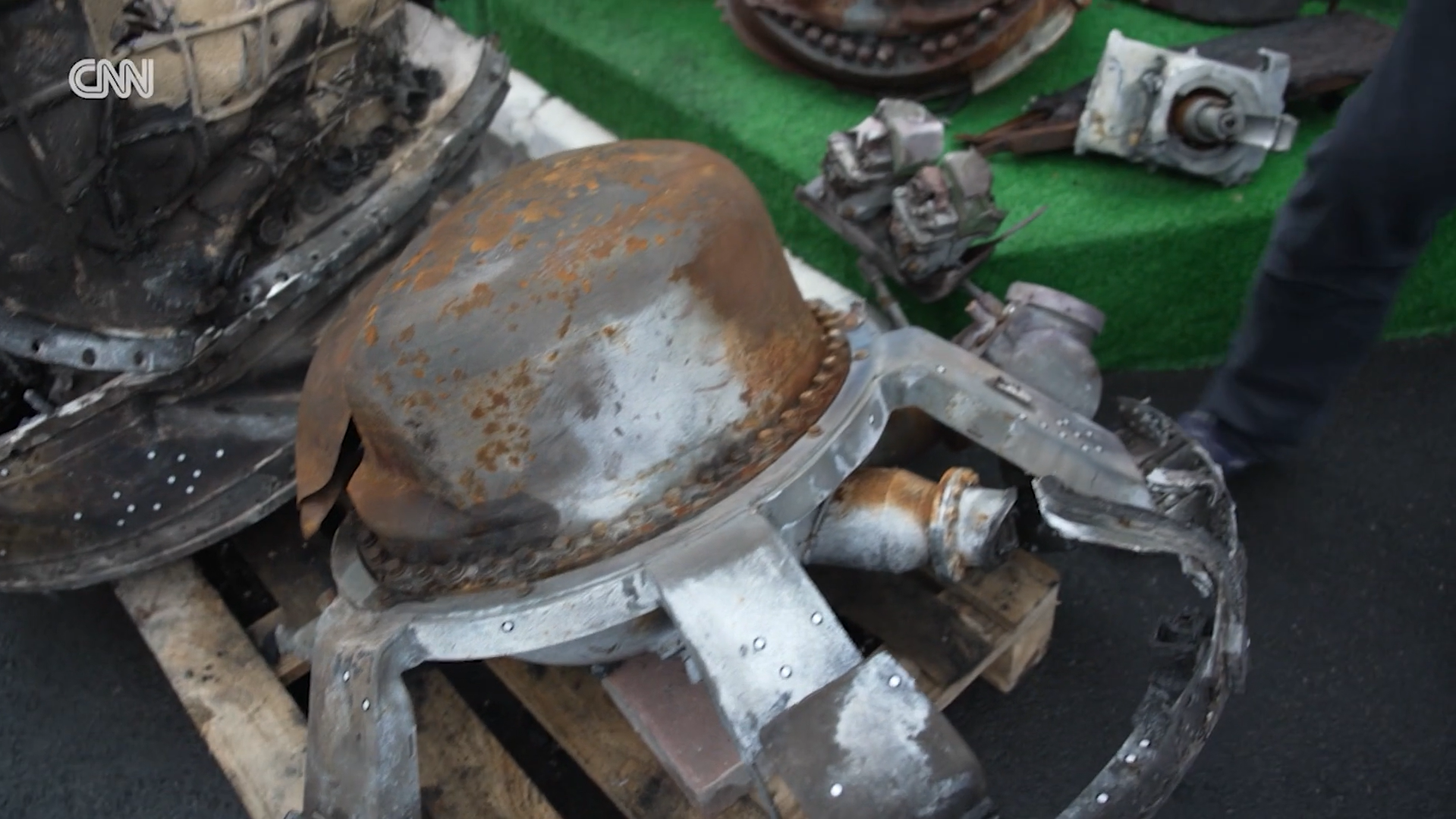
Journalists have for the first time shown detailed components of the Oreshnik (Kedr) missile, which experts at the Kyiv Scientific Research Institute of Forensic Expertise are examining.
CNN published the footage.
The journalists were shown debris of the missile that struck the city of Dnipro in November 2024 without causing casualties. According to the report, despite Russian claims that the missile represents a major technological breakthrough, Ukrainian experts who analyzed the wreckage found nothing fundamentally new.
Among the components shown was part of a gyroscope used in Oreshnik’s inertial guidance system, which Ukrainian specialists described as “the kind Yuri Gagarin flew with.”

In addition, Soviet-era vacuum tubes were identified on the control boards. Based on their appearance, they are likely krytrons, typically used as high-speed electronic switches. Another possibility is that the component is a high-frequency resonator.
Markings on some parts indicate they were manufactured in early 2018 and were likely originally intended for other projects.

Journalists also showed a wiring block for the warhead elements, confirming earlier information that the Oreshnik missile’s warhead consists of six submunitions, each believed to further fragment into six smaller elements.
However, analysis of video footage from a strike on the outskirts of Lviv on the night of January 9, 2026, suggests that only four groups of striking elements reached the ground, followed by two individual elements. There was a significant distance between the impact points.
This indicates that the missile’s extremely high speed creates not only accuracy issues for the conventional kinetic version, whose warheads contain no explosives and rely solely on mass and velocity, but also structural problems, with some warheads apparently failing to survive atmospheric re-entry. The terminal velocity is believed to exceed Mach 11, or about 3,740 meters per second.
In June 2025, armored vehicle researcher Andriy Tarasenko published a Chinese study on the effects of high-velocity kinetic munitions similar to the Oreshnik warhead on his Telegram channel. The study suggested that Russian claims about the destructive power of such warheads are significantly overstated.
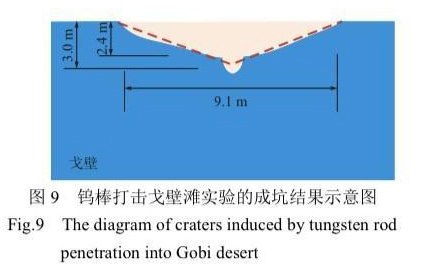
“Based on an experiment with a prototype ultra-high-velocity kinetic projectile at a test site in the Gobi Desert, a tungsten rod weighing 140 kg and traveling at 4,650 m/s struck the surface, forming a parabolic crater 3.0 meters deep and 4 meters in diameter,” the researchers reported.
It is reported that the Russian medium-range ballistic missile is based on the RS-26 Rubezh platform. The Defense Intelligence of Ukraine has stated that the system’s actual name is Kedr, not Oreshnik.
Підтримати нас можна через:
Приват: 5169 3351 0164 7408 PayPal - [email protected] Стати нашим патроном за лінком ⬇
Subscribe to our newsletter
or on ours Telegram
Thank you!!
You are subscribed to our newsletter