


Popular
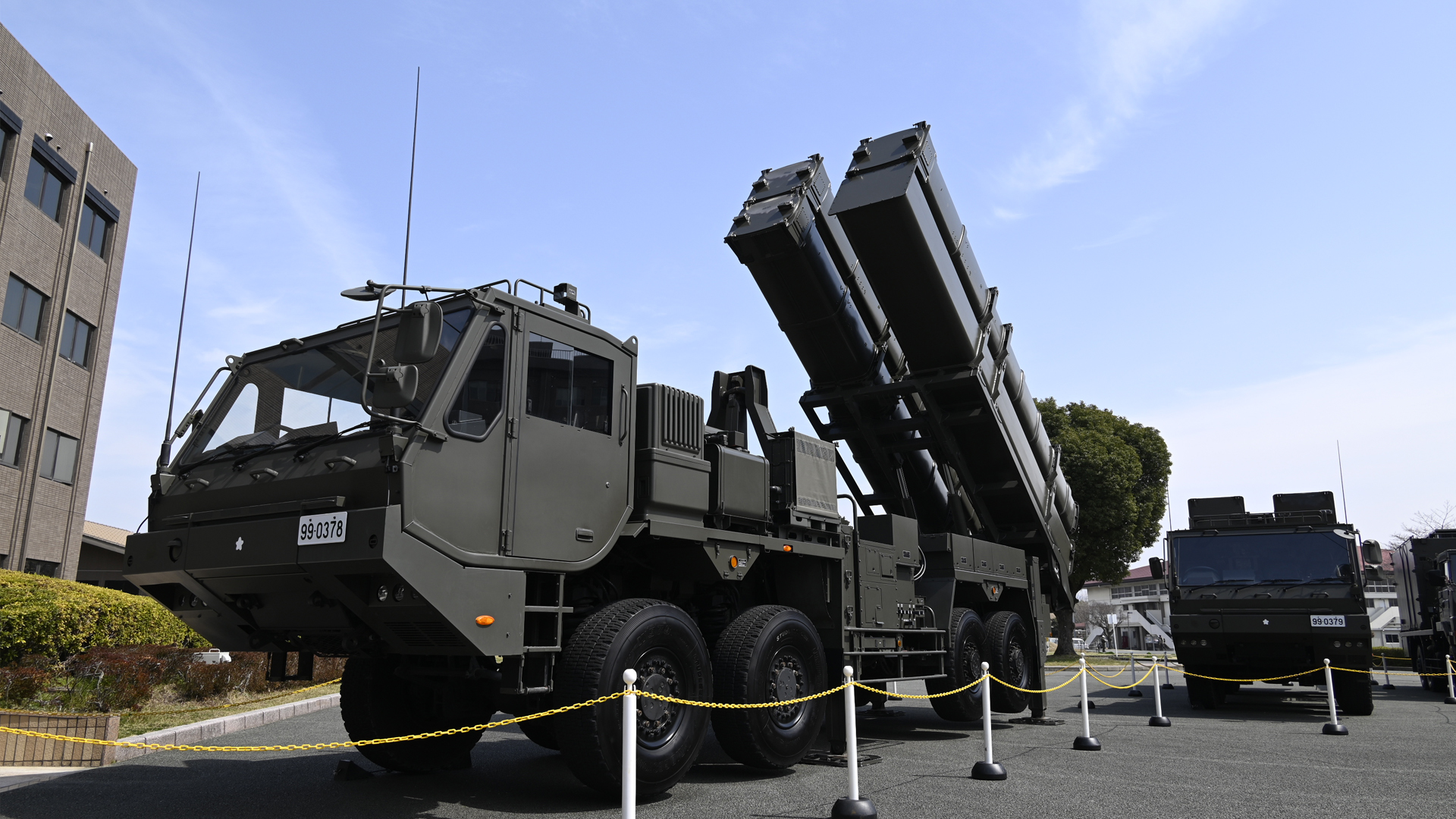
The Japan Ministry of Defense announced the deployment of Type 25 ground-based launchers for cruise and ballistic missiles.
This was reported on the ministry’s official X page.
The deployment is part of efforts to enhance the Japan Self-Defense Forces’ capabilities for retaliatory strikes, as well as to expand anti-ship capabilities through the use of long-range weapons.
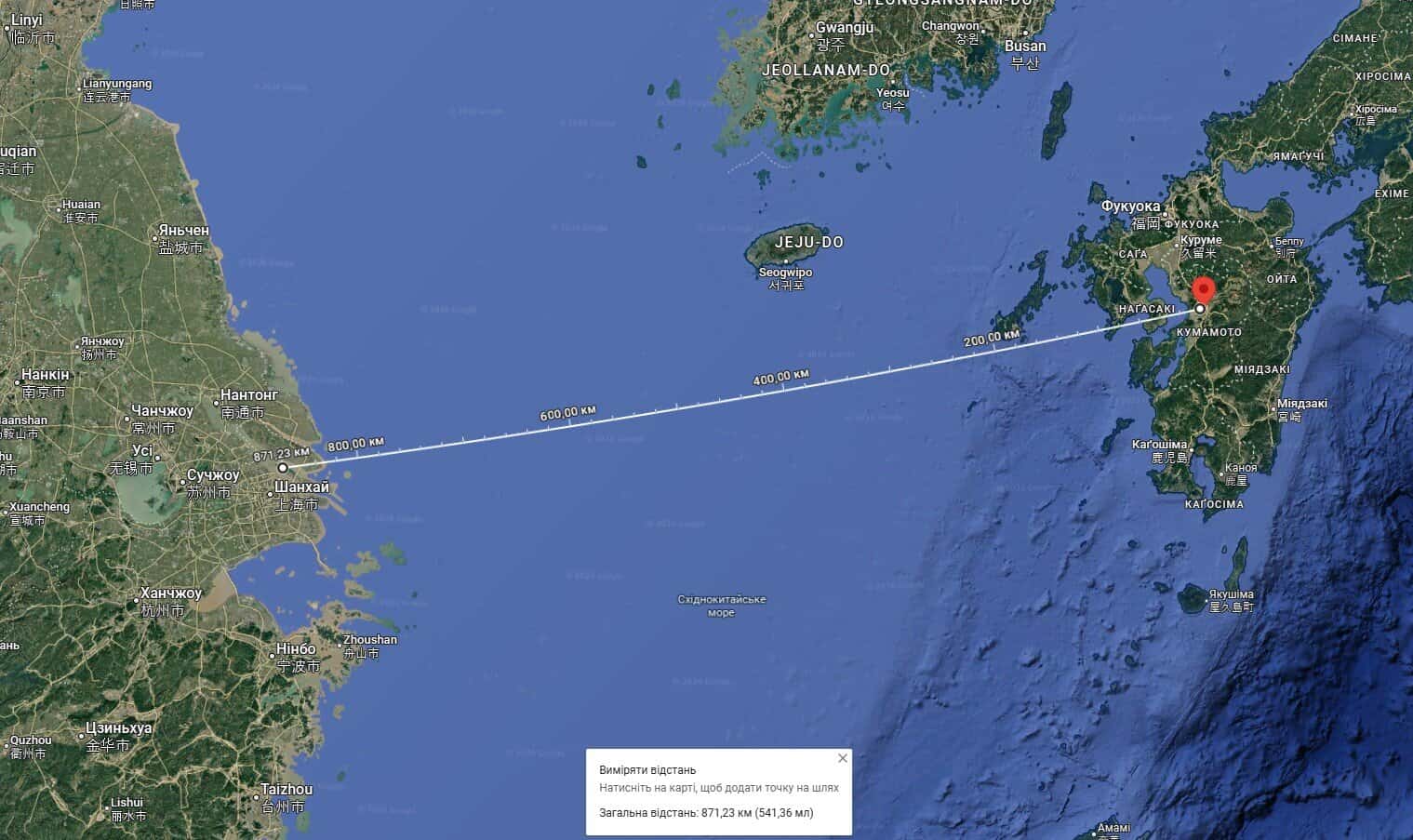
The systems are being deployed at two locations: cruise missiles at the Kengun Camp (5th Anti-Ship Regiment) in Kumamoto Prefecture, which is located approximately 800–900 km from China and falls within the range of Japanese cruise missiles.
But the key factor is the complete coverage of the East China Sea by Japanese missiles, which allows Japan to organize an effective defense to prevent Chinese ships from entering.
Ballistic missiles are currently being deployed at Camp Fuji in Shizuoka Prefecture, where the equipment is primarily used for training and drills, with plans for additional deployment to the 1st Artillery Brigade (Kamifurano Garrison) and the 2nd Artillery Brigade (Ebino Garrison).
The new missile systems have officially been designated Type 25, corresponding to the year their serial production began.
These systems are expected to supplement the Type 12 systems currently in service with the Army’s anti-ship defense units, as well as gradually replace the obsolete Type 88 systems, which have been in service since 1988.
Earlier, Militarnyi reported that the Japan Ministry of Defense, as part of the approved military budget for 2026, allocated funds to begin mass production of the new HVGP Block 1 hypersonic missiles.
The Type 25 cruise missile systems, formerly known as the 12SSM-ER, are a modern long-range strike capability designed to engage both land-based and surface targets.
The 12SSM-ER is capable of striking surface targets with a displacement of up to 15,000 tons at a range of up to 1,500 km. For the Ground Self-Defense Force, it is mounted in a transport-launch container on a Mitsubishi truck chassis with an 8×8 wheel configuration—a standard platform for the Japan Self-Defense Forces’ heavy missile systems.
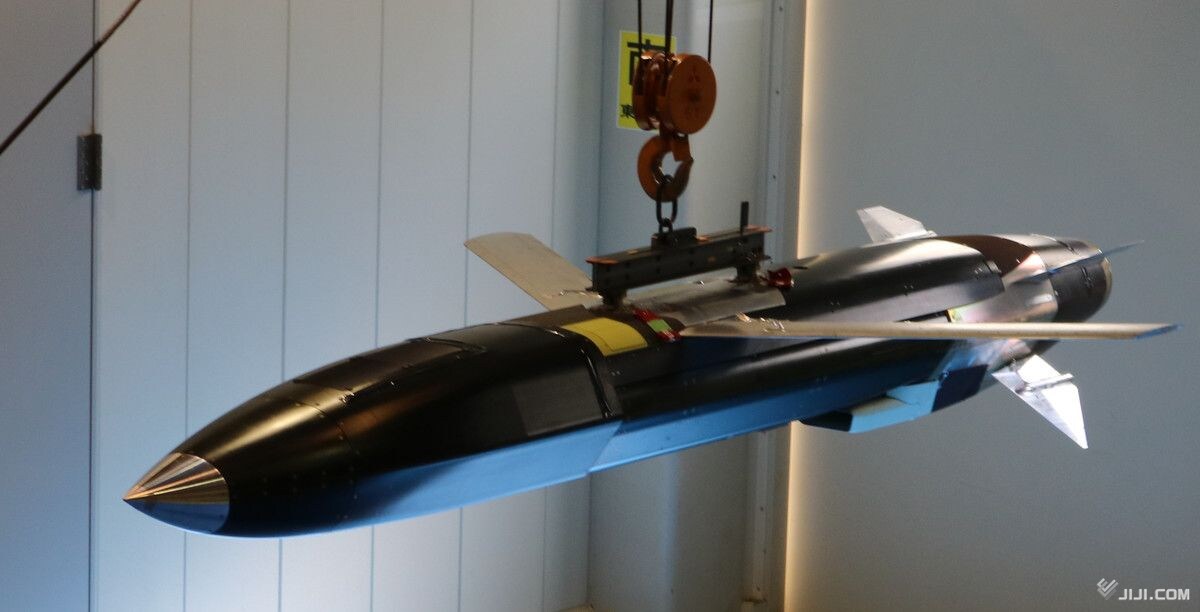
With a length of approximately 9 meters, the missile’s warhead weighs about 300 kg, providing a powerful strike against large surface targets and coastal facilities. The guidance system combines inertial navigation with GPS correction, as well as an active radar homing head during the terminal phase of flight.
We also recommend reading the author’s article on the Militarnyi website: “Development of Cruise Missiles in Japan: Current Projects and Strategic Prospects.”
The radar seeker is based on an active phased array (APAR), which allows scanning the area, detecting targets against complex terrain (on land and over water), and provides enhanced resistance to electronic countermeasures (ECM) thanks to multi-frequency operation and the ability to dynamically switch bands.
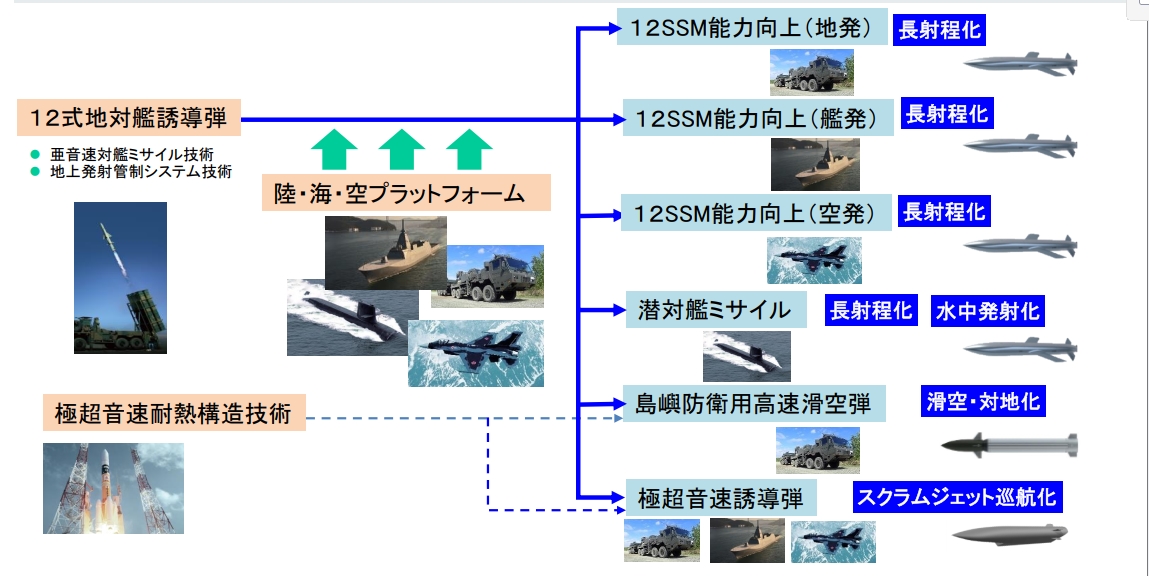
This approach makes the 12SSM-ER a powerful tool not only for deterring enemy fleets but also for striking their infrastructure at long range.
In addition, the new missile will be adapted for carriage and use by F-2 fighters, which are one of the Japan Air Self-Defense Force’s primary strike platforms for engaging maritime targets, as well as for combat surface ships and submarines.
The Type 25 ballistic missiles (formerly known as HVGP Block 1) are ballistic missiles developed based on the expertise of two leading Japanese aerospace companies—IHI and Mitsubishi Heavy Industries. To engage targets, they use a glider located in the nose of the missile, which separates after reaching the required altitude and speed. Development of Block 1 progressed rapidly: announced in fiscal year 2018, the missile underwent testing in 2024 and 2025 in the United States and Japan, confirming its stated performance characteristics.

In eight years, Japan has managed to develop a short-range ballistic missile that provides a significant advantage on the battlefield, given the country’s lack of weapons with a range exceeding 300–500 km.
Mitsubishi Heavy Industries will be the primary manufacturer of the Block 1, with whom a production contract was signed in April 2023.
We also recommend reading the author’s article on the Militarnyi website — “Japan’s Missile Era: Short- and Medium-Range Ballistic Missiles”
The new HVGP missiles will replace the US M270 MLRS rocket systems within the Ground Self-Defense Force. The launchers will be organized into two hypersonic missile battalions, which will be deployed on the islands of Kyushu and Hokkaido.
The missile is planned to be mounted on a self-propelled launcher based on a Mitsubishi truck with an 8×8 wheel configuration. The total weight of the launcher will be approximately 36 tons, of which 4 tons is accounted for by the missile itself. Its dimensions are 7 meters in length and 530 mm in diameter.

In the transport and launch container, the missile will be 7.5 m long, and the container will be approximately 1,250 mm wide.
Of the missile’s total mass of approximately 2 tons, about 2 tons is accounted for by the rocket engine, which is 4.5 m long and 530 mm in diameter. The engine itself is 4 m long, with an additional 50 cm occupied by the solid-fuel booster necessary for the missile to exit the container.
Підтримати нас можна через:
Приват: 5169 3351 0164 7408 PayPal - [email protected] Стати нашим патроном за лінком ⬇
Subscribe to our newsletter
or on ours Telegram
Thank you!!
You are subscribed to our newsletter