


Popular
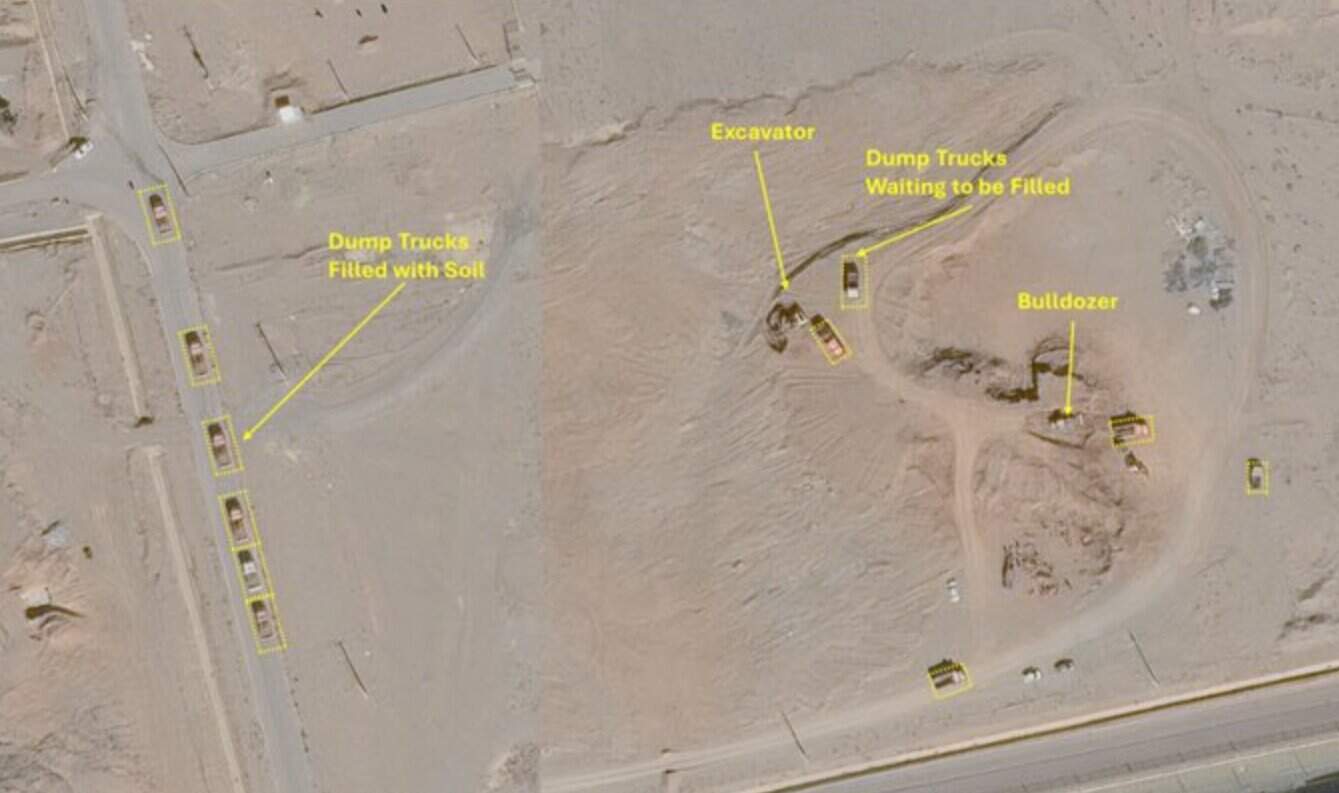
Iran is strengthening security near the entrances to the tunnels of the nuclear complex in Isfahan and has renovated some buildings.
This is according to an analysis by the Institute for Science and International Security.
The northern entrance, which has been fortified in recent months, remains open as of the end of January. Construction workers are working nearby.
The scope of work inside the tunnels remains unknown at this time. At the same time, analysts do not rule out that Iran may be moving equipment into the tunnels rather than removing it.
In addition, attention is drawn to activity near the destroyed above-ground building of the Isfahan nuclear complex.
Until recently, work on this site was limited mainly to sorting and removing debris. However, Iran has recently built a new roof over the surviving steel frame of the destroyed building.
This may indicate that the Iranian side considers the structure worth preserving. The purpose of the building has not been officially confirmed, but there are signs that it is linked to the production of centrifuges.
“Such activity inevitably raises concerns about Iran’s possible resumption of its gas centrifuge program,” analysts say.
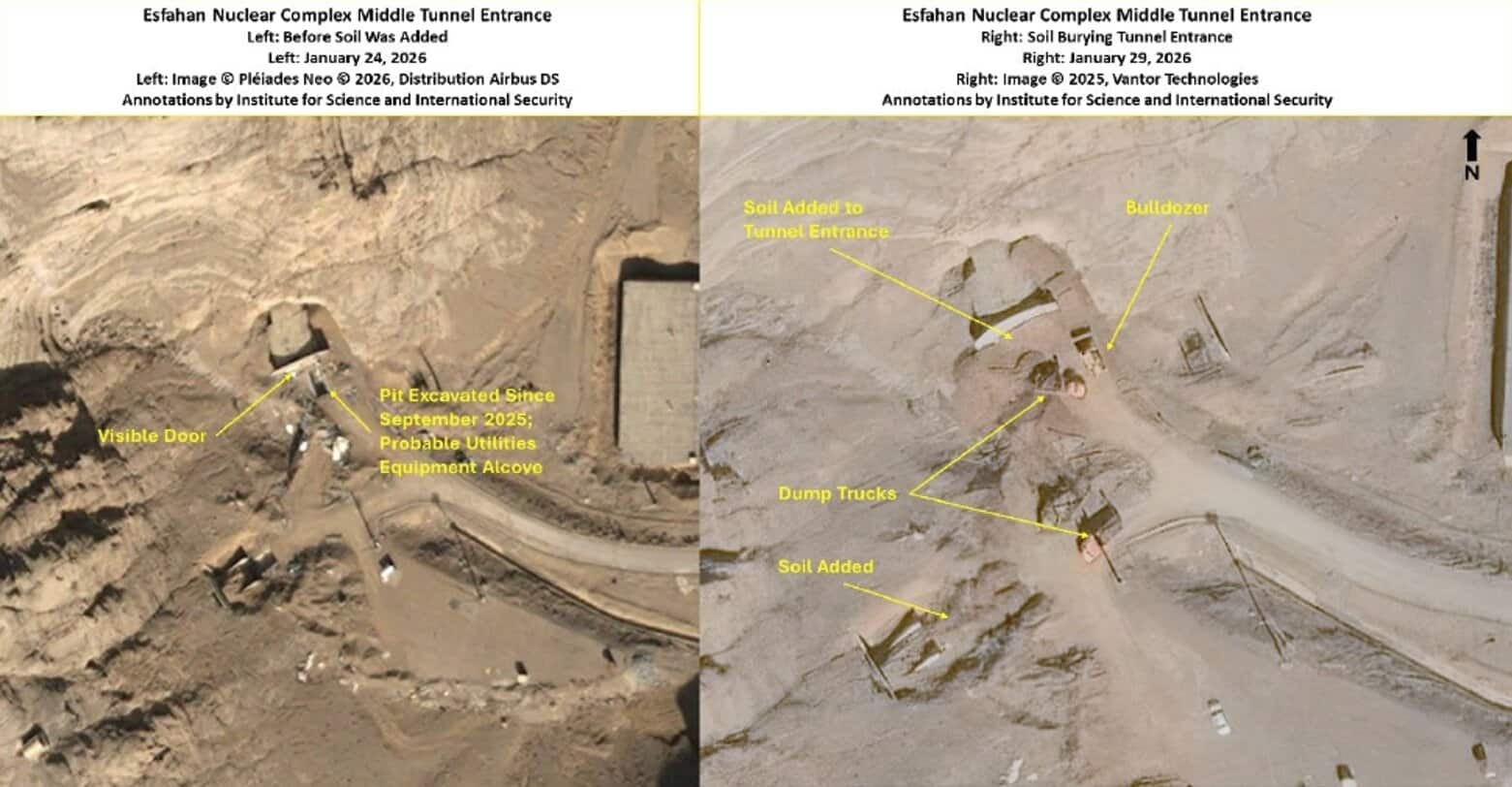
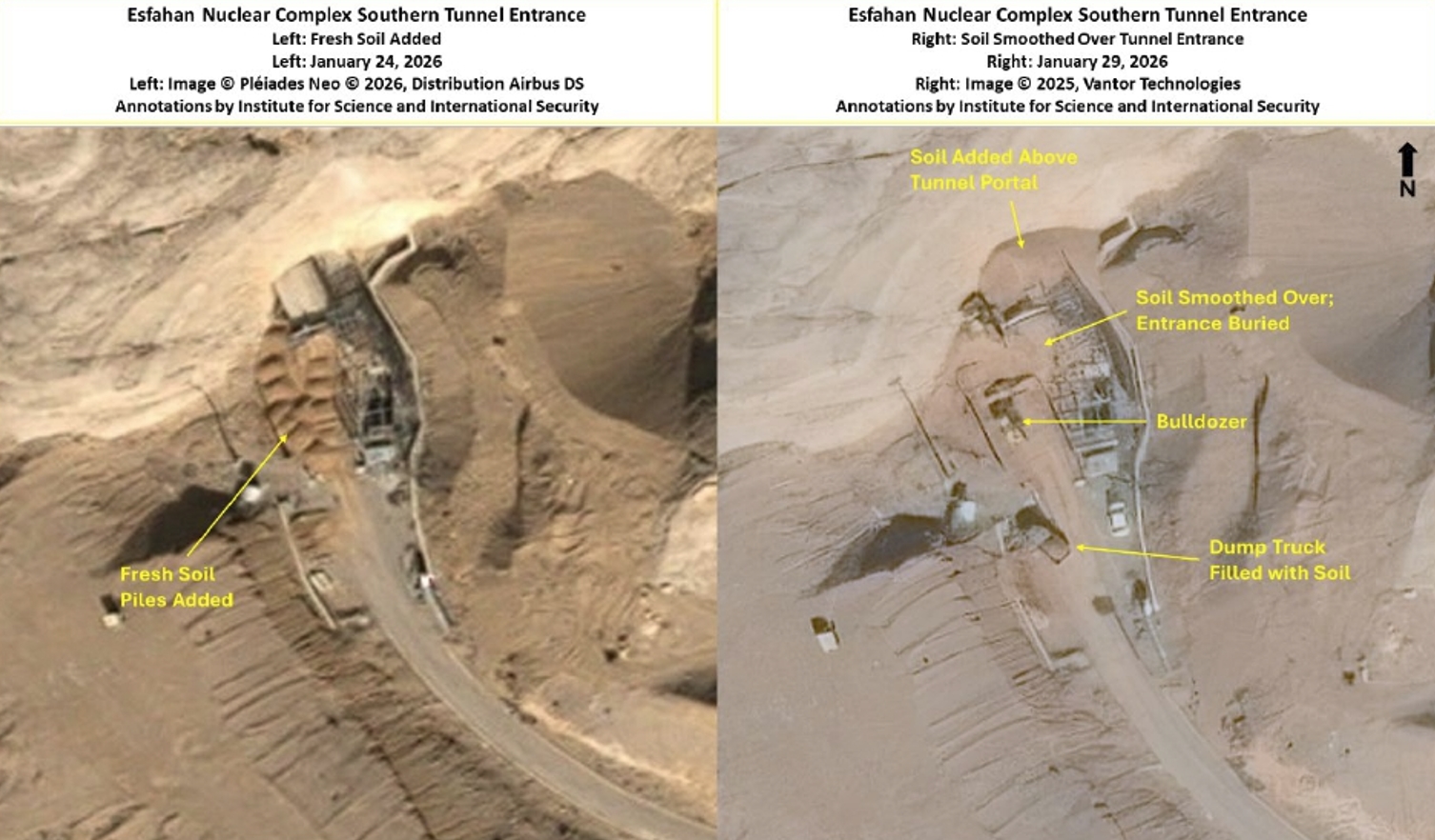
Satellite images from January 24 and 29, 2026, show Iran’s efforts to fill the middle and southern tunnel entrances with soil.
As of January 29, the door of the middle tunnel, as well as the entrance to the adjacent niche, are completely blocked by earth, as can be seen in the first satellite image.
The second image, taken on January 24, shows piles of fresh soil near the southern entrance.
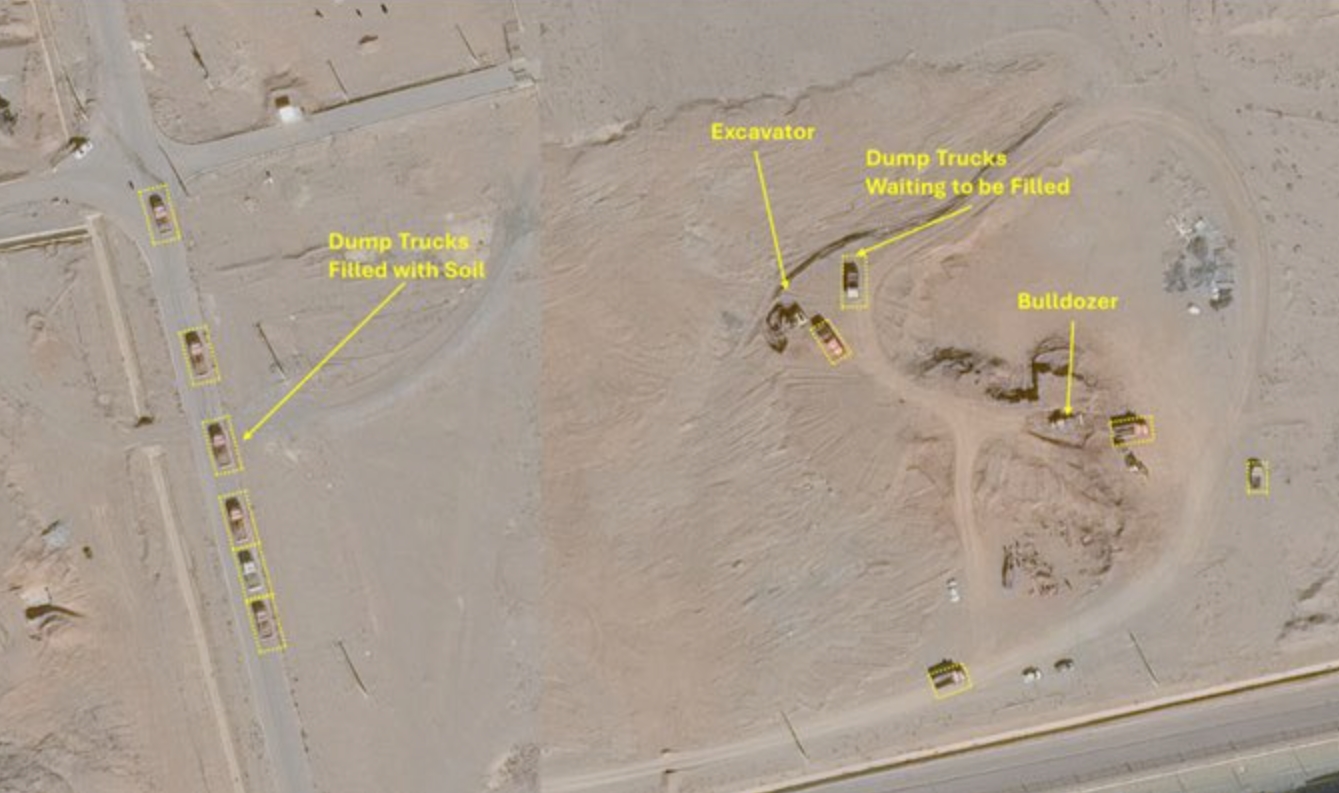
A few days later, construction equipment was already working near it. Additional dump trucks were spotted at the adjacent site, either being loaded with soil or waiting to be loaded.
A convoy of dump trucks carrying soil was spotted on the road leading to the tunnels. They were probably used to further fill in the middle entrance. Activity in this area was also recorded on January 24, as confirmed by a third satellite image.
Such actions may indicate preparation for possible future US strikes. Iran has already used similar tactics on the eve of previous US attacks.
At the same time, activity near the northern entrance, which has been further fortified in recent months, in particular by creating zigzag anti-missile passages, is less noticeable. As of January 29, the entrance remains open, and the presence of equipment nearby indicates the possible transfer of equipment from other facilities into the tunnel.
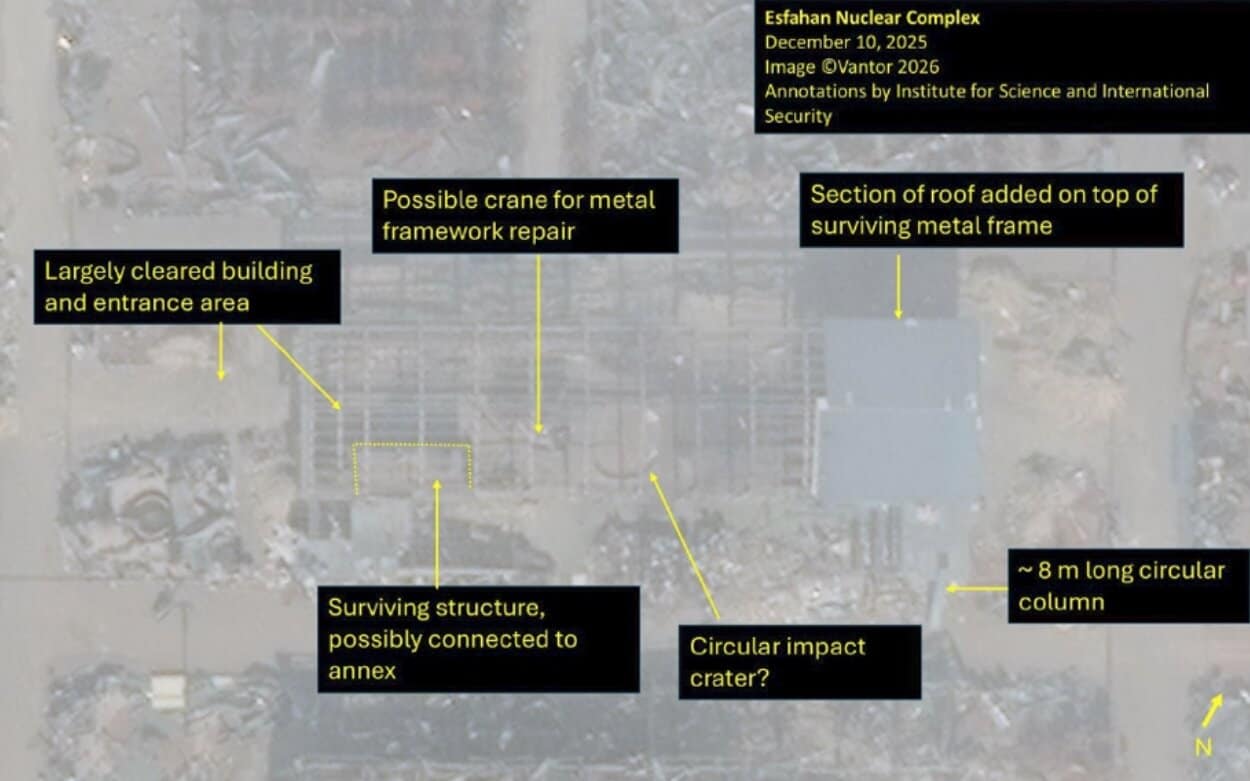
Satellite images from December 2025 and January 2026 show that over the past two months, Iran has repaired the metal frame and installed a new roof on one of the buildings destroyed by an Israeli airstrike on June 20, 2025.
As of January 17, the updated frame and roof have been recorded, while as of January 22, the wall panels, at least on the south side of the building, have not yet been installed. Analysis of the images shows that the roof has been installed in stages since early December. Although most of the debris was cleared before installation began, individual fragments of the structure remain on both sides of the annex and inside the building.
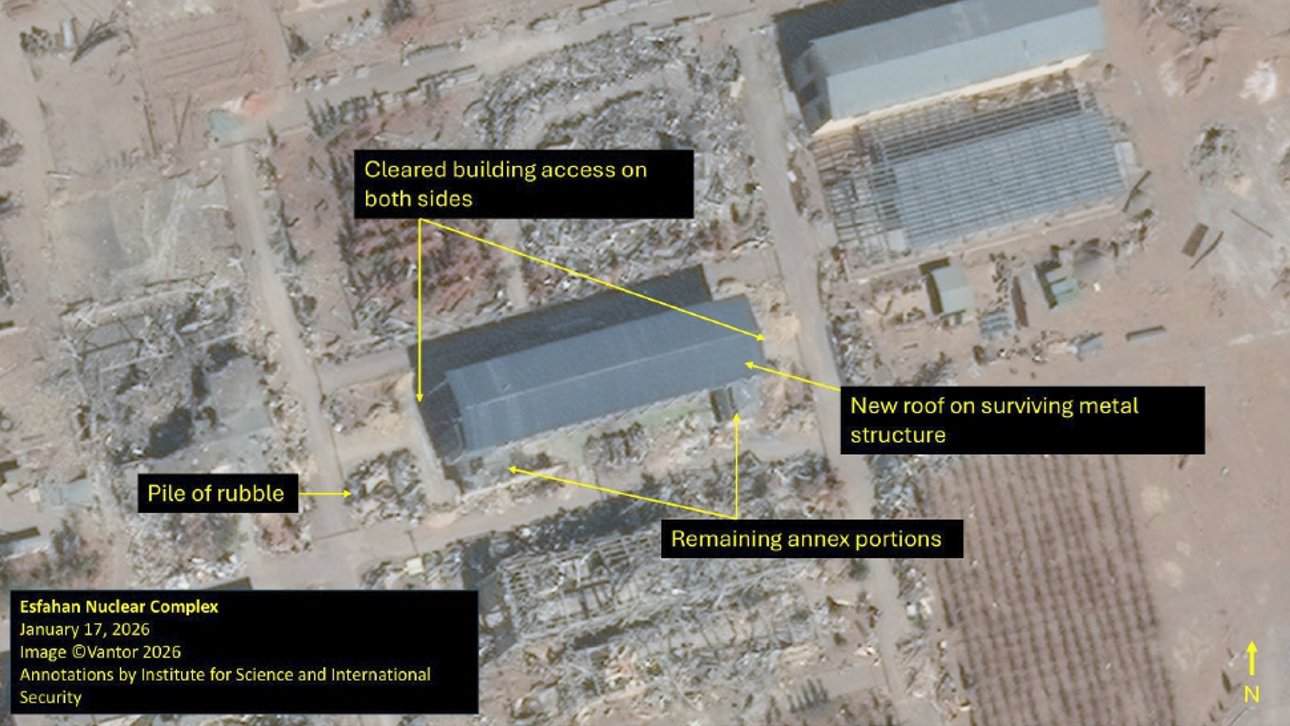
Cleanup work began in early July 2025 with the clearing of adjacent streets to ensure transport access. By mid-October, most of the debris inside the building and on the metal frame had been cleared. In early November, work intensified significantly, creating conditions for restoration measures.
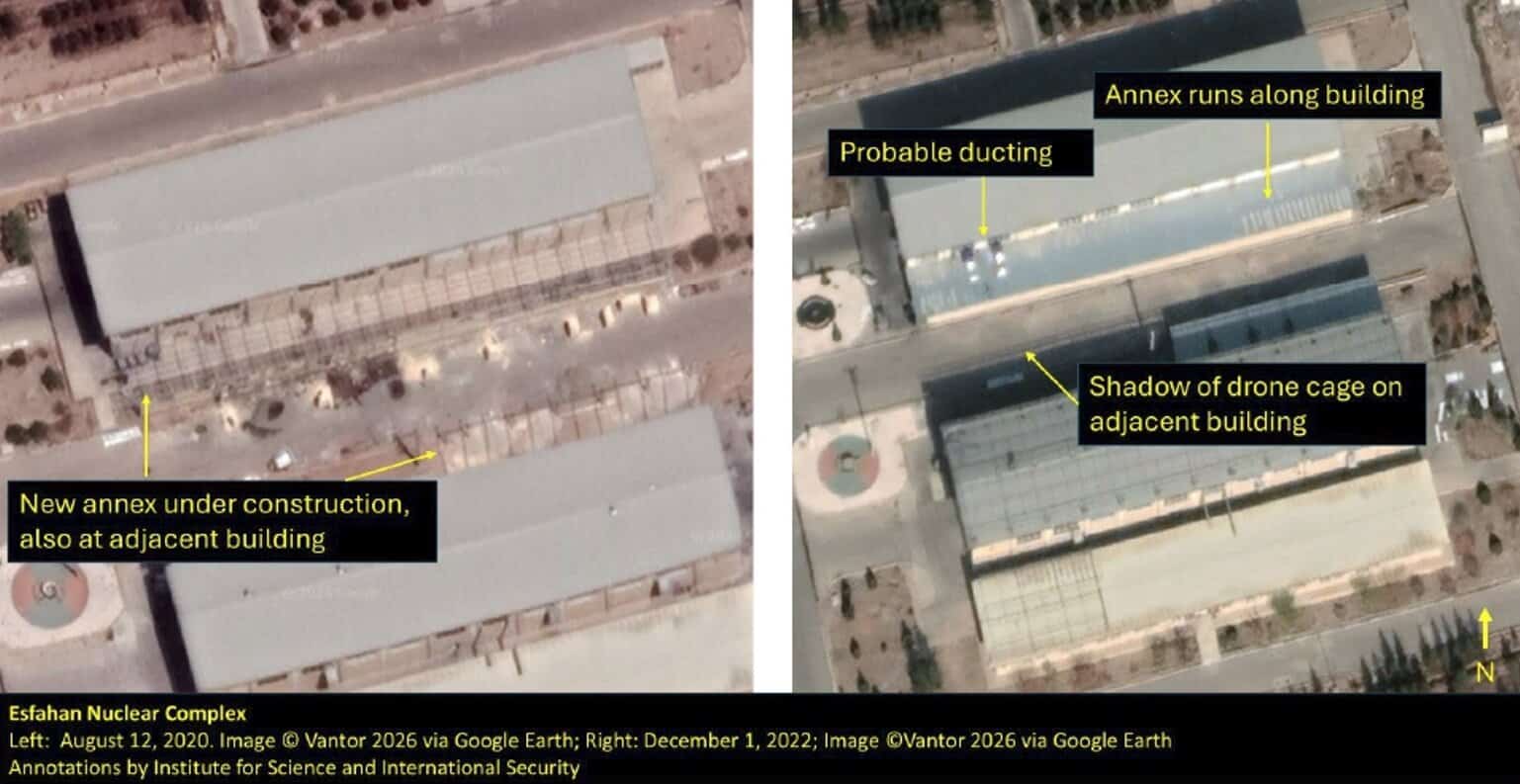
Although the Israel Defense Forces has not officially identified the purpose of the destroyed building, a number of clues point to its possible connection with the production of centrifuges. The main structure was built in the early 2000s, and the extension was built in late 2020, as recorded in satellite images.
This is somewhat ahead of the IAEA’s official announcement of the transfer of centrifuge production to Isfahan in early 2022, but is generally consistent with existing estimates.
Previously, experts had assumed that one of the existing buildings could be used for this purpose.
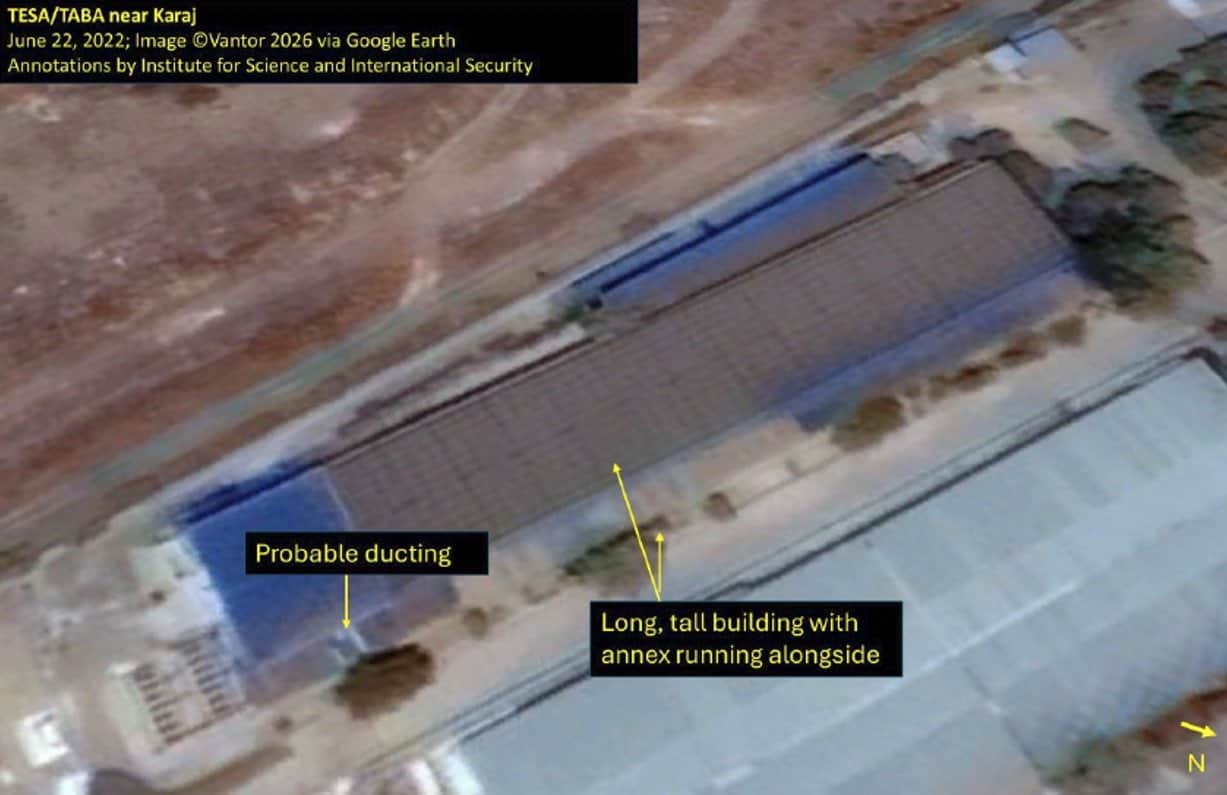
The architectural features of the building, in particular the extension along its entire length, resemble the building at the TESA/TABA facility near Karaj, where centrifuge components were estimated to have been manufactured.
That building was hit by a drone attack in June 2021. Similarities can also be seen in the structures on the roof, which are likely related to ventilation, although the facility in Isfahan is lower but wider.
The IDF linked the area where this building is located to the production of centrifuges and noted that two separate structures were involved in this process. Presumably, the second was the neighboring building, which was also damaged and, after the 2021 attack, was additionally protected by an anti-drone net.
Analysts suggest that the installation of the roof may indicate Iran’s desire to restore the surviving equipment without satellite surveillance or its intention to preserve the structure itself for future use.
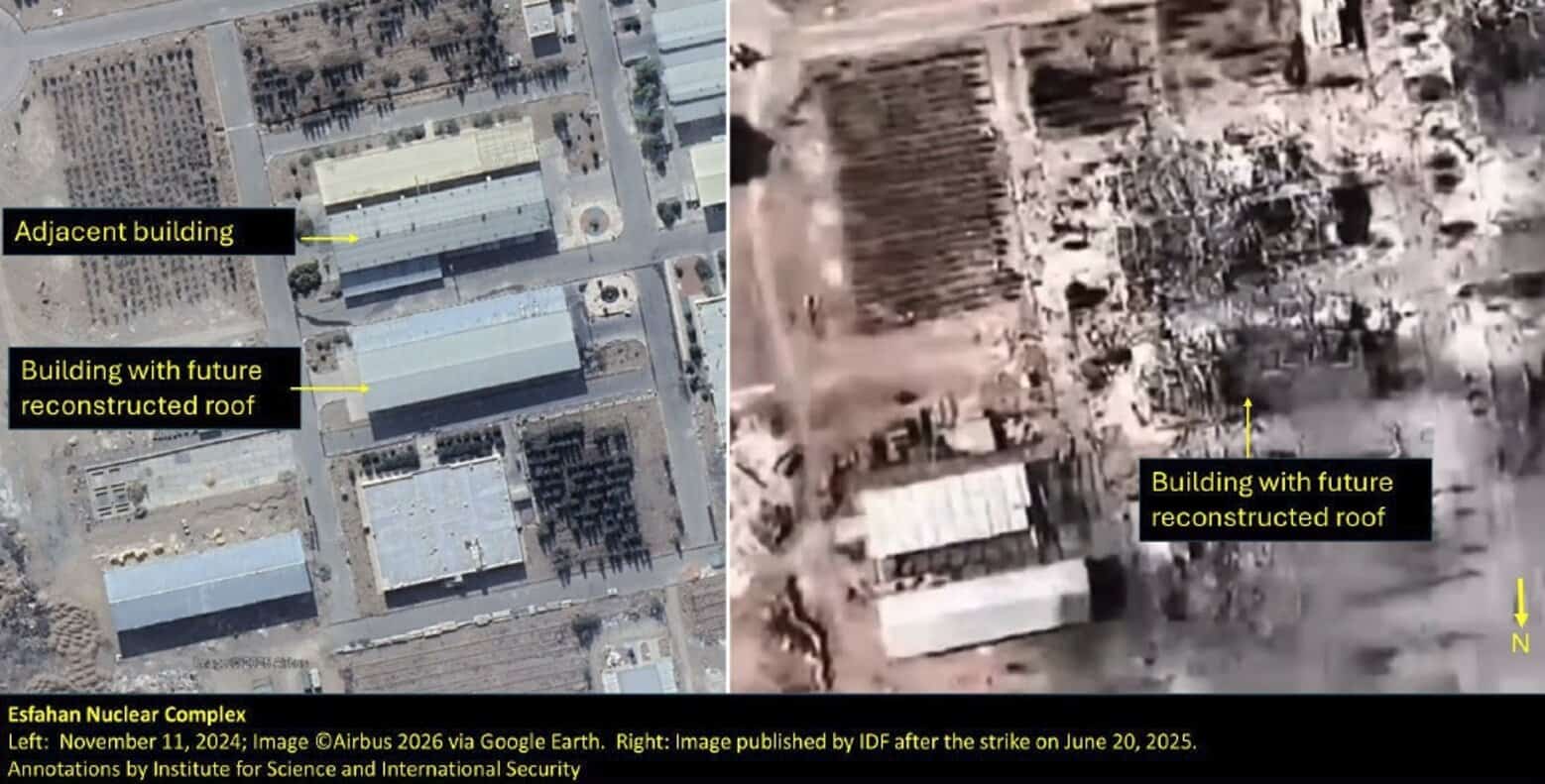
If work continues inside the building, the roof serves a dual purpose: protection from the weather and concealment of activities.
If the site is indeed primarily associated with centrifuge production, the current activity — combined with work at the mountain complex in Isfahan and the uranium enrichment complex in Natanz — may indicate that Iran is prioritizing the restoration and preservation of facilities related to uranium enrichment.
Підтримати нас можна через:
Приват: 5169 3351 0164 7408 PayPal - [email protected] Стати нашим патроном за лінком ⬇
Subscribe to our newsletter
or on ours Telegram
Thank you!!
You are subscribed to our newsletter