




Popular
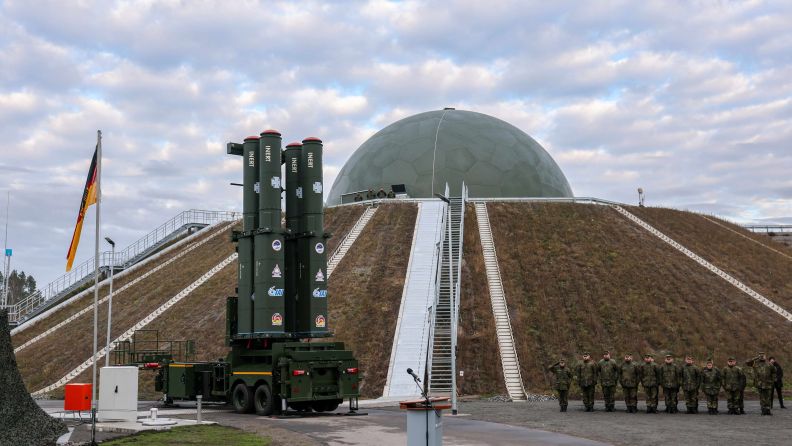
Germany’s Arrow-3 missile defense system is currently unable to intercept ballistic missiles such as the Russian Oreshnik.
This was reported by the German newspaper Die Welt.
According to the newspaper, Russia’s recent strike on the Lviv region, which directly borders NATO countries, marked the “first indirect confrontation” involving the Israeli-made Arrow-3 missile defense system, which was recently placed on combat duty in Germany.
The system’s description on the Bundeswehr’s official website states that Arrow-3 is designed to neutralize ballistic missiles such as Oreshnik before they enter Earth’s atmosphere.
With a declared range of up to 5,500 km, the Oreshnik missile is theoretically capable of reaching almost any point in Europe from Russian territory.

However, at this stage the Arrow-3 system in Germany is only at an initial phase of operational capability. The first battery has been deployed at an air base in the eastern federal state of Saxony-Anhalt.
From this location, the system can track ballistic missiles at very early stages of flight, well before they enter NATO airspace.
This capability is supported by integration with early-warning satellites and NATO’s Aegis missile defense system, whose data are shared among Alliance members.
In addition, Russia typically notifies NATO countries of ballistic missile launches through diplomatic channels to avoid misinterpretation as a nuclear strike. As a result, German operators could have been aware of the launch in advance.

The United States regularly shares early-warning data with its allies, making it likely that Germany was informed ahead of time and was able to track the missile’s flight.
However, when asked whether the German Arrow-3 in its current configuration could intercept an Oreshnik-type missile, Die Welt’s NATO sources responded negatively, noting that the system has not yet reached full operational readiness.
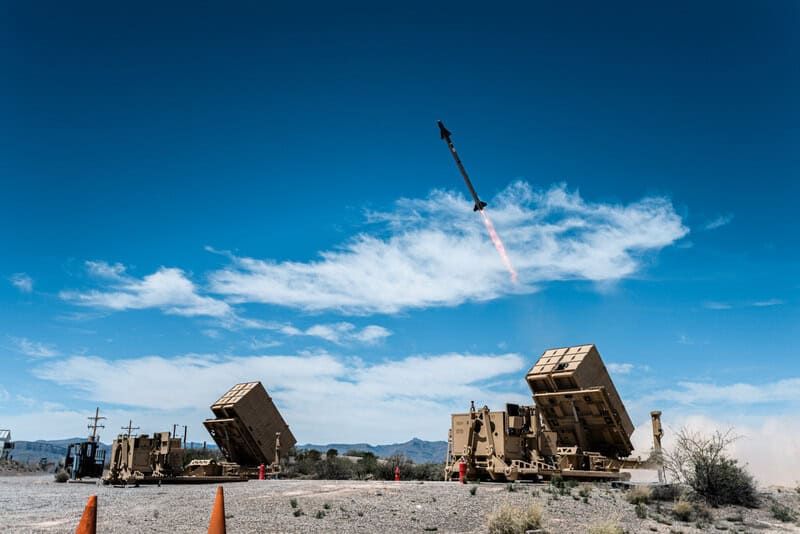
According to Alliance interlocutors, the Patriot system could theoretically be used in such a scenario.
At the same time, despite successful interceptions of Russian Kinzhal missiles using PAC-3 interceptors, Patriot systems are not considered capable of reliably intercepting individual Oreshnik warheads, which travel at the upper limits of hypersonic speed, around Mach 10.
In early December 2025, the Israeli Arrow-3 missile defense system officially entered combat duty in Germany.
In late November, German authorities announced the completion of training for Bundeswehr personnel conducted by Israeli specialists.
The system was purchased in 2023 under an intergovernmental agreement between Germany and Israel valued at around €3 billion.
The missile defense complex is being integrated into Germany’s national air defense architecture as well as the European Sky Shield Initiative (ESSI).
The deployment of Arrow-3 is intended as a response to the threat posed by Russia.
The rollout of the system has already faced challenges, including attempts by unidentified drones to locate its positions.
Arrow-3 is Israel’s third-generation long-range missile defense system, designed to counter medium- and long-range ballistic missiles, including those carrying nuclear warheads.
The Arrow program began in the 1980s as a joint Israeli-U.S. effort to counter Scud-type missiles and other ballistic threats in the Middle East.
Arrow-1 and Arrow-2 were the first two generations of the system, focused on medium-range, atmospheric interception. They were successfully tested and entered service in the 1990s and 2000s.

Arrow-3 represents a major redesign intended to intercept missiles during the exo-atmospheric phase of flight, outside Earth’s atmosphere.
Development took place in the 2000s and early 2010s, making it a core element of Israel’s missile defense architecture.
The main developers are Israel Aerospace Industries (IAI) and the U.S. company Boeing, working in close cooperation with the governments of Israel and the United States.
Characteristics:
System components:
Підтримати нас можна через:
Приват: 5169 3351 0164 7408 PayPal - [email protected] Стати нашим патроном за лінком ⬇
Subscribe to our newsletter
or on ours Telegram
Thank you!!
You are subscribed to our newsletter