
Popular

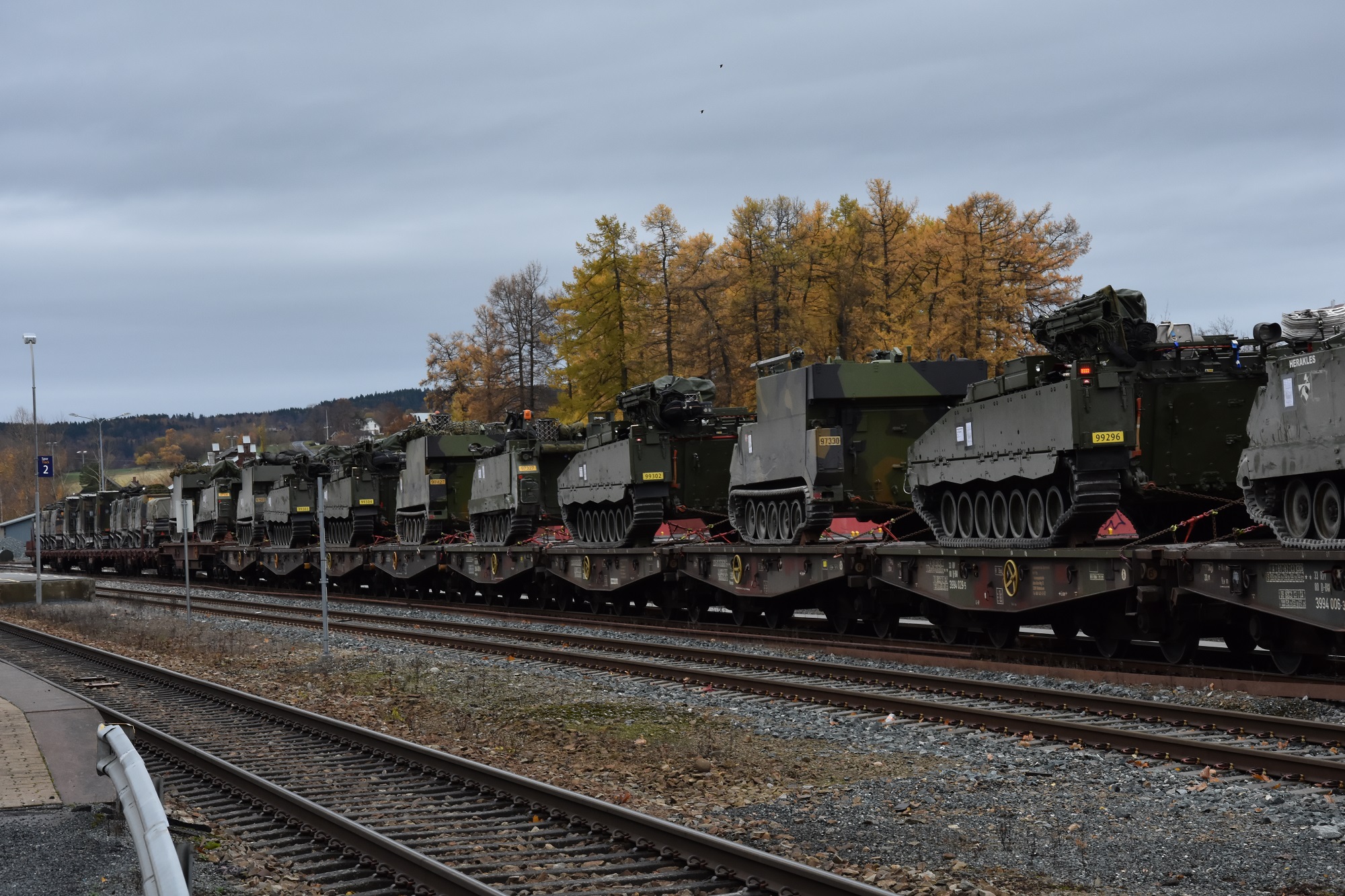
European infrastructure – roads, bridges, and railways – has proven to be unsuitable for the rapid movement of tanks, troops, and equipment in the event of a full-scale war with Russia.
This was reported by the Financial Times with reference to the head of the EU’s transport agency, Apostolos Tzitzikostas.
According to him, if NATO tanks are deployed to the frontline, they may get stuck in tunnels, cause bridges to collapse, or be delayed at the borders due to excessive bureaucratic procedures.
In this regard, the European Union plans to invest 17 billion euros in upgrading transport infrastructure to increase military mobility.
In particular, it is planned to modernize 500 facilities along four strategic military corridors across Europe.
Most of the existing roads are designed for trucks, but cannot withstand the load of heavy equipment such as 70-ton tanks. Much of the infrastructure does not take into account the needs of rapid troop transportation.
The EU is developing a new strategy that will allow troops to be moved “in a matter of hours, at most a few days” in response to potential aggression.
All the details of the identified projects are classified for security reasons and agreed upon in cooperation with NATO.
In addition to technical modernization, Brussels also plans to simplify border formalities so that equipment does not “get stuck in paperwork” when crossing borders.
Previously, the European Commission has developed a new strategy aimed at strengthening the EU’s resilience to future conflicts and climate threats. Its key element is the creation of strategic stockpiles of critical minerals and materials.
Member states should coordinate the accumulation of food, medicine, and nuclear fuel.
In addition, the Commission will accelerate work on the formation of common reserves at the EU level for the repair of electrical and optical cables, as well as for the accumulation of rare earth metals and permanent magnets, which are crucial for energy and defense infrastructure.
At the end of May, it became known that the European Union had presented a large-scale security strategy for the Black Sea aimed at countering Russian threats in the region.
Підтримати нас можна через:
Приват: 5169 3351 0164 7408 PayPal - [email protected] Стати нашим патроном за лінком ⬇
Subscribe to our newsletter
or on ours Telegram
Thank you!!
You are subscribed to our newsletter