




Popular
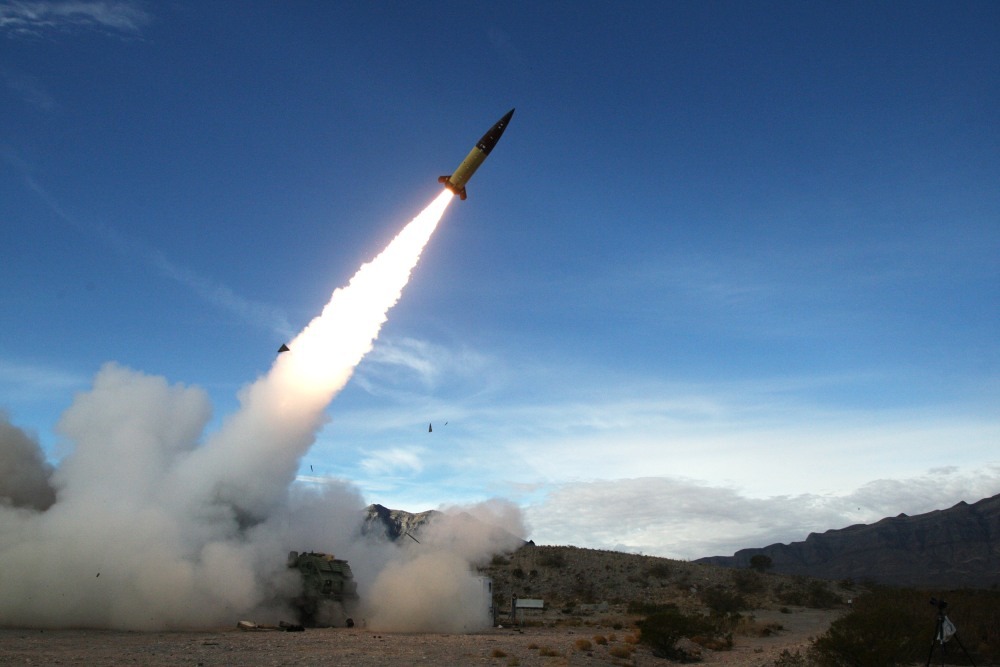
The British Ministry of Defense has announced the NIGHTFALL project to develop a new tactical ballistic missile with a range of over 600 kilometers in record time.
The announcement was published in the Contracts Finder section of the gov.uk official government website.
The Ministry of Defense has announced the opening of the “early engagement” stage for proposals on the development of a cost-effective land-based ballistic missile that will be launched from a mobile platform and capable of hitting targets at programmed coordinates.
A missile with a range of over 600 kilometers would have to carry about 300 kilograms of explosives alone, meaning that the weight of a full warhead would likely reach at least 400-500 kilograms.
It will have a quasi-ballistic trajectory, meaning that it will maneuver at the terminal stage of flight, ensuring an accurate hit on the target with a circular deviation of no more than 5 meters.
The navigation system is required to operate steadily in a “complex electromagnetic environment,” even in the absence of satellite navigation or signal jamming by electronic warfare systems.
The developers also specified the requirement for a low multispectral signature of the product, which may mean the need to use stealth technologies.
The launcher of the missile system must carry at least two ballistic missiles and have the capability to “safely launch the entire warhead in conditions of high tactical threat” within 15 minutes after stopping at the firing line. After launch, the launcher and crew must be able to quickly leave the area within 5 minutes.

The Ministry of Defense also stated that “the project will prioritize scalability over perfect solutions,” making it clear that mass production and speed of delivery will be valued more than highly complex or expensive products.
The expected cost per missile should not exceed £500,000 per unit ($675,000), excluding the warhead, launcher, and any development costs.
Considering a potential future contract, production should be capable of producing at least 10 units per month, with the possibility of further scaling.
The defense ministry intends to find potential solutions within 9-12 months and provide at least five fully operational prototypes for testing. Ideally, these solutions should utilize technologies that are free from trade restrictions imposed by foreign governments.
That is, if industry feedback is positive, the competition will be announced in late 2025, leading to demonstration firing in 2026.
Підтримати нас можна через:
Приват: 5169 3351 0164 7408 PayPal - [email protected] Стати нашим патроном за лінком ⬇
Subscribe to our newsletter
or on ours Telegram
Thank you!!
You are subscribed to our newsletter