



Popular

The Ukrainian-Russian war has convincingly demonstrated that the classic tank paradigm, which has dominated military thinking since World War II, is coming to an end. We are currently witnessing attempts by many countries to develop a new concept for the tank of the future. German projects EMBT (Enhanced Main Battle Tank), KF51U Panther Evo Upgrade, Leopard-2 A-RC 3.0, British Challenger 3 (CR3) and MODIFIER (Mobile Direct Fire Equipment Requirement), and the American M10 Booker and Abrams M1A3 — all of them, with varying degrees of innovation, are attempts to break out of the rigid framework of the classic tank paradigm.
China is not standing aside either – a tank called Type 100 (ZTZ-100) was demonstrated at a pompous parade in Beijing. It should be noted that in terms of innovation, the Chinese model is significantly ahead of its Western “colleagues.”
The Type 100 is radically different from its predecessors, which evolved iteratively from the Type 59 medium tank (a replica of the Soviet T-55) to the Type 99 main battle tank (MBT).
The first thing that catches the eye is its size and weight. One of the latest models of Chinese MBTs, the Type 99A2, has a combat weight of 54-58 tons, depending on the configuration. The Type 100 weighs between 35 and 40 tons, depending on the level of modular protection, which means it returns to the weight category of medium tanks. The most likely reason for this transformation is a change in the vision of a probable enemy and, therefore, the possible theater of war in which the new combat vehicle is planned to be used. All previous tank models were created to counter the USSR, i.e., for use in the steppes of Mongolia and Transbaikal. The successor to the USSR, Russia, is not only rapidly losing its potential for military confrontation with China, but is also becoming increasingly dependent on it every year. Chinese policy is characterized primarily by a very long planning horizon in comparison with European standards, so it is possible for it to regain the territories seized by Russia under the Aigun and Beijing treaties in the long term without the use of military force (and tanks in particular). All that is needed is to wait patiently for the final decline of Russia.

Instead, India is becoming China’s main strategic adversary. The only land border between China and India is located in the highlands, in the Ladakh Pass area. Therefore, the tank equipment that was planned for large-scale use on the plains is not particularly suitable for mountainous terrain.
The Chinese carefully studied the experience of using tanks in combat during the Afghan war. The T-62 tank could not be used effectively in the mountains, as bridges and narrow mountain roads often collapsed under its weight, and when it was disabled, it usually completely blocked the road. In contrast, the lighter T-55 and the completely antiquated T-34 felt much more at home in the mountains, while the T-62 was used mainly in the desert areas of the east and south of the country.

Let’s take a closer look at the Chinese concept. It is striking that the Type 100 tank is considered part of a system that also includes the ZBD-100 fire support vehicle. The rationale behind this symbiosis is the belief that the situational awareness and firepower provided by a single vehicle are no longer sufficient on the modern battlefield. Therefore, the combination of two combat vehicles into a single system provides not only a constant exchange of information, but also mutual fire cover. Both vehicles are built on a single chassis, which reduces their cost and facilitates personnel training, repair, and logistical support.
Compared to previous generations of tanks, the Type-100 has a radically changed overall architecture, primarily characterized by the use of an unmanned turret. Russian media were quick to label this design solution the “Armata syndrome,” strangely forgetting (or perhaps simply not knowing) that the creators of the Armata borrowed this solution from the Kharkiv tank Object 477, which was developed in the mid-1980s.
A big step forward in the Chinese solution is the reduction of the crew to two people. The hatches for them are located in the front of the tank hull. Instead, technological hatches are located exclusively on the roof of the turret. In other words, the crew consists of the driver and the commander, with the gunner’s functions almost entirely delegated to artificial intelligence. The tank’s artificial intelligence, through the combat information and control system, uses a higher-level AI that performs certain functions of the headquarters of the unit to which the specific tank belongs. The crew uses AR goggles that employ the principle of “transparent armor,” i.e., thanks to a composite image “stitched” from images received from different external cameras, it is possible to conduct surveillance as if the armor did not exist. Due to the network-centric design of the surveillance system, the goggles can display not only images from the sights of this vehicle, but also receive images from other vehicles in their unit, from reconnaissance drones, and, if necessary, any graphic information from headquarters, including satellite images.
These solutions may hopefully have a positive impact on the speed of combat operations: taking up certain positions, searching for targets, determining the priority of their destruction, selecting weapons, and solving ballistic problems. However, this only works if the rather complex system, both its hardware and software components, is functioning correctly.

In turn, the unmanned turret shields the crew’s workstations in a certain way, i.e., it reduces the likelihood of casualties in the event of an attack from above. The crew’s survivability could be significantly increased by isolating the command post from the control compartment, but it is currently unknown whether this solution has been implemented in the new Chinese vehicle.
The tank’s chassis is made using components from the Type 15 (ZTQ-15) serial tank.
There are two levels of main armament for the tank: heavy, using 125 or 105 mm caliber guns, and light, using 90 or 76 mm caliber guns with a corresponding automatic loading system for each. Using the above-mentioned modular principle (like in Lego), it is possible to select the necessary armament for the tank based on the specifics of a particular operation. It can be assumed that the modular principle will determine the use of design solutions that facilitate the process of replacing guns, which in turn has a positive effect on the ability to repair and replace damaged weapons. Additional armament is represented by a remotely controlled combat module with a 12.7 mm caliber machine gun.
The significantly lower combat weight compared to its predecessors results in a lower level of protection provided by the main armor. However, the use of several levels of additional modular armor allows for the necessary balance between the weight of the tank and its level of protection, depending on the specifics of a particular operation. Passive armor is supplemented by dynamic protection system (DPS) modules at the front of the vehicle and lattice screens at the rear — the explosive activation of DPS blocks located in the engine and transmission compartment could damage the engine systems, primarily the air filtration system.
The Type 100 is the first user of the latest GL-6 active protection system. It differs from its predecessor, the GL-5 Raptor, by number of antennas. In addition to four millimeter-wave radar antennas that provide circular surveillance of the environment, there is also a fifth antenna directed upward. Its task is to detect UAVs and ammunition attacking from the upper hemisphere. In addition to radar antennas, an optoelectronic station for detecting IR signatures of attacking ammunition is also designed to detect threats. Rotary launchers are designed to destroy threats – two mortar units located at the rear of the turret.
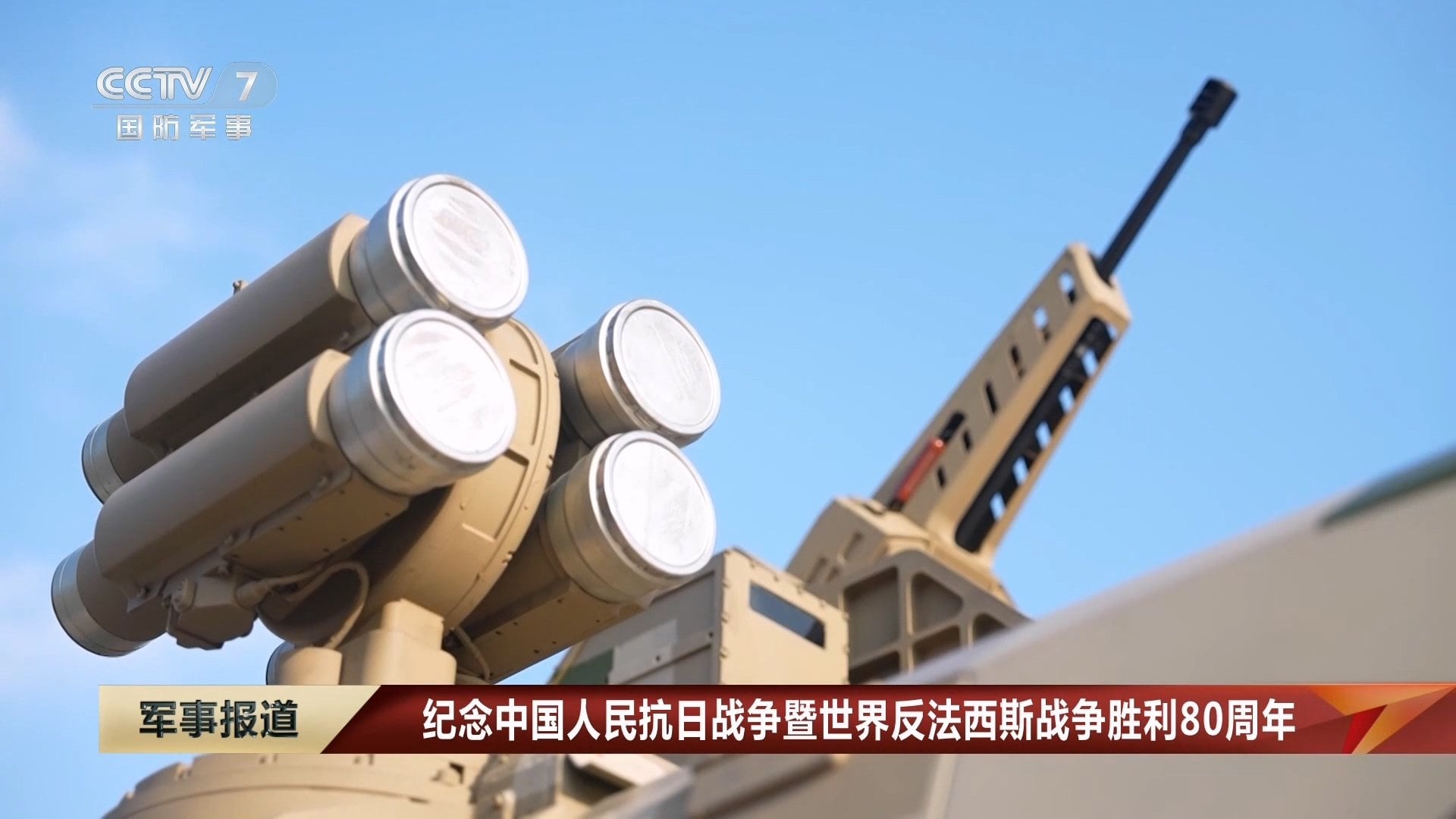
Another level of protection is the JD-4 electro-optical countermeasure system (EOCM), which is designed to disrupt the guidance of UAVs and ATGMs by using an LSDW combat quantum generator, i.e., when a missile or drone is detected, a powerful laser pulse blinds the ATGM’s homing head or the UAV’s video camera. EOCM can also issue a command to deploy a smoke screen, which is carried out by a specific group of smoke grenade launchers, 12 mortars of which are located on the turret. The smoke screen is multispectral, i.e., opaque not only in the visible but also in the IR ranges.
Laser irradiation indicators and detectors for detecting enemy radar irradiation also serve as threat detection sensors.
The power plant is a hybrid power unit with a battery-electric drive, consisting of a 1,500 hp diesel engine, a generator set, a battery pack, and electric motors. The complexity of the design is compensated by increased survivability: in the event of a malfunction or combat damage to the diesel engine, the tank will be able to either continue performing its combat mission or leave the battlefield by running on batteries. Another reason for switching to an electromechanical transmission is the sharply increased level of electricity consumption by the tank’s onboard systems: the above-mentioned KAZ, KOEP, combat module, weapon stabilizer, and communication systems together consume such a significant amount of electricity that the presence of an auxiliary power unit to power them becomes simply impractical, and it is much easier and cheaper to power them from the transmission’s electrical branch.
Now let’s take a look at the second component of the system. The ZBD-100 fire support vehicle (FSV) performs the functions of detecting and destroying tank-threatening targets (including drones) and expanding situational awareness through constant communication with the main vehicle of the system, including two-way target designation, when detected targets are prioritized and the striking characteristics of their own weapons are distributed among the vehicles of the system.
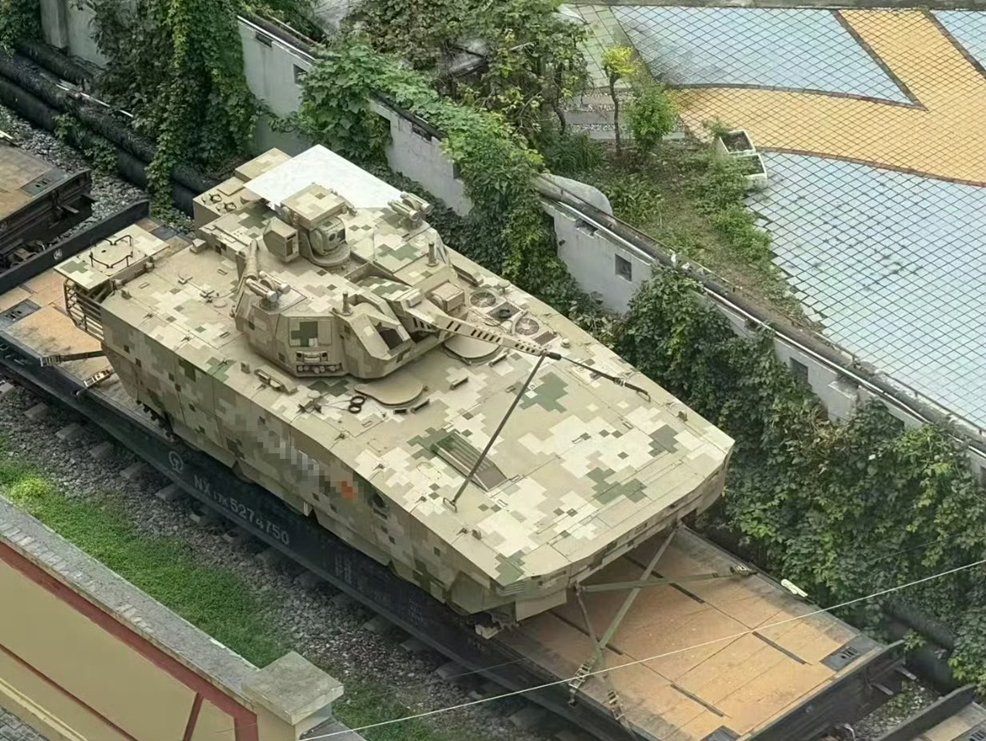
Some Western sources consider the ZBD-100 to be a somewhat flawed concept of a “castrated IFV,” since the vehicle’s troop capacity is only three soldiers. However, if we focus on the main purpose of this vehicle, it becomes clear that its troop function is not at all the same as that of a line infantry platoon. The main task of the troop is to provide fire cover for both combat vehicles, and the advantage of infantry support becomes particularly relevant in areas with a short firing range: in urban areas, in the mountains (again, Ladakh!), jungles, etc. As an illustration, based on combat experience in the jungles of Vietnam, the firing range is only 10-30 m.
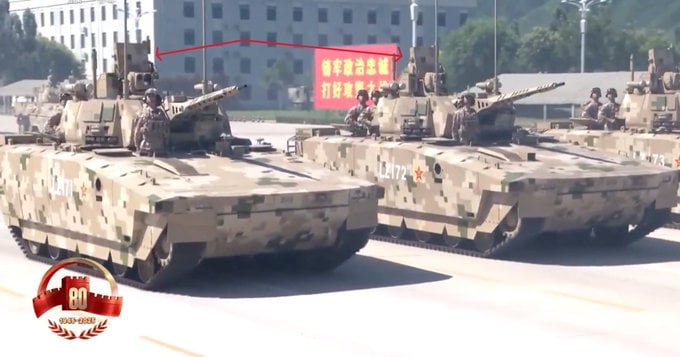
The combat weight of the vehicle is 40 tons. The chassis of the Type 100 tank is converted to a front-engine layout, the turret is unmanned, with a 30 mm automatic cannon and a combat module unified with the tank’s combat module. A launcher for vertical launch of loitering munitions can be assumed as a likely weapon. The fire control system includes a panoramic sight, an optoelectronic station, a radar, a reconnaissance quadcopter, and augmented reality helmets. Fire control is carried out from a helmet-mounted targeting system using the aforementioned “transparent armor” system.

Let’s wrap it up: the Chinese have moved from the concept of a tank as a combat unit to the concept of a tank as a component of a combat system. This evolution seems quite reasonable, since the range of threats that a tank must counter no longer allows all effective countermeasures to be located on a single chassis.
The downside of this solution is its considerable complexity, which, when multiplied by Chinese quality, can lead to a cascade of equipment failures. Some users of modern Chinese combat equipment have compared it to Chinese plastic toys: it looks very attractive, has a large number of different functions, but is fragile and cannot be repaired. The Chinese mostly rely on mass production of weapons, which involves the rapid replacement of faulty equipment with spare parts. From an economic point of view, this solution is not acceptable for countries with economies smaller than China’s, but it should be noted that this flaw relates more to implementation than to the concept as a whole.
So, only time will tell how viable the new tank concept will prove to be.
Підтримати нас можна через:
Приват: 5169 3351 0164 7408 PayPal - [email protected] Стати нашим патроном за лінком ⬇
Subscribe to our newsletter
or on ours Telegram
Thank you!!
You are subscribed to our newsletter