

Popular
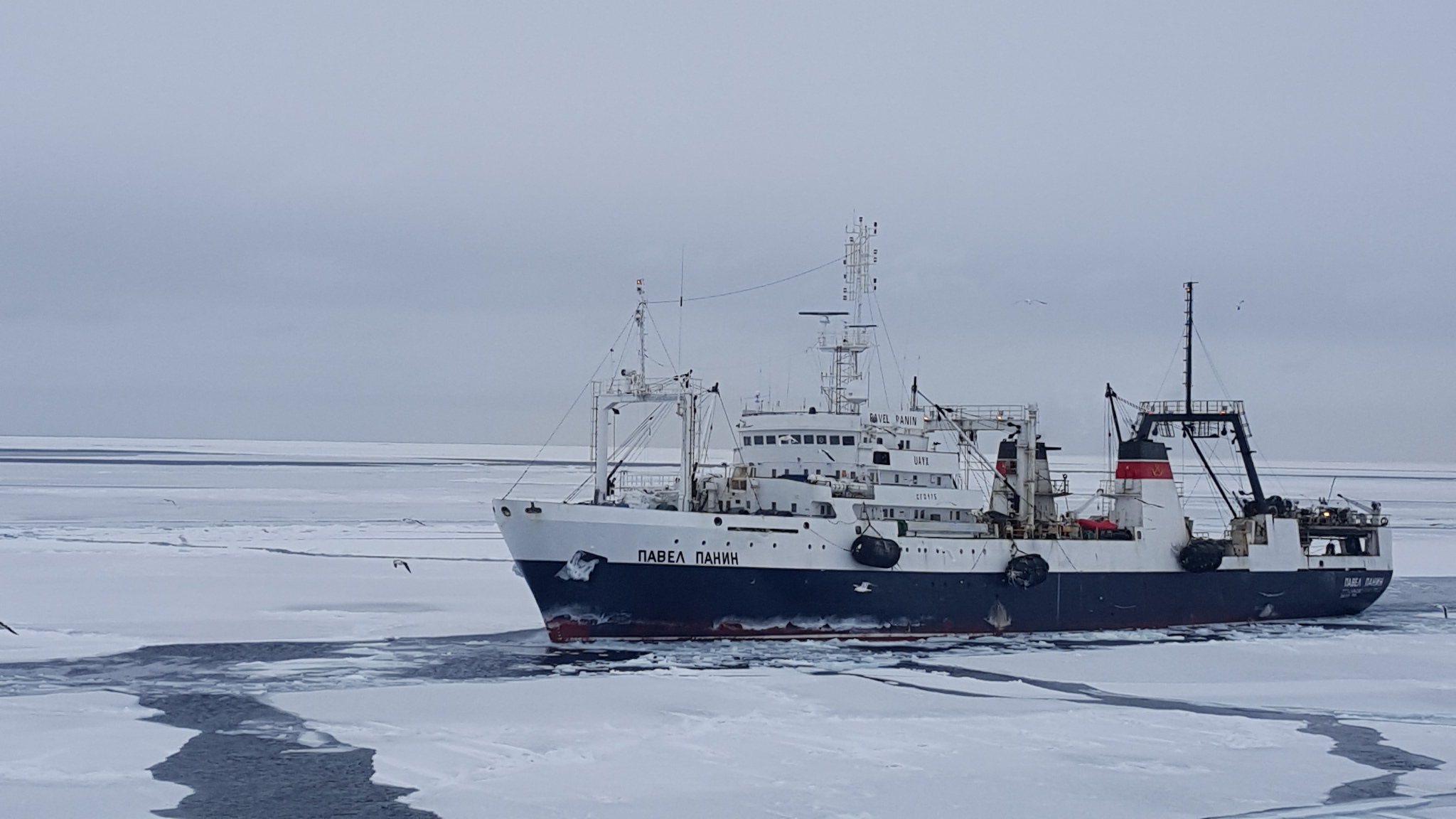
Fishing is one of the biggest economic sectors in the Arctic (Dodds, 2021). Providing jobs, income, and a valuable resource in areas that otherwise wouldn’t face the same financial opportunities. Russian criminal organizations similarly see the profit that can be exploited in this field, as well as the political leverage they can gain as a result of spying on other Arctic states, resulting in the development of illegal Russian fishing networks.
These groups operate illegally in various ways in this sector, with the most common offences including exceeding fishing quotas, fishing without a license, fishing in illegal waters, and bribery of officials. As demonstrated in 2005, Russian fishing companies are estimated to be overfishing their quota by 20,000-26,000 tonnes per year, which has a monetary value exceeding $350 million. Another instance of this is with a shipment from the Bering Strait region being delivered to South Korea. Russian logs stated the combined fleet had 5,446 tonnes of Alaskan Pollock Roe; however, South Korean import figures showed a combined catch of 7,865 tonnes (WWF, 2008).
This significant gap between the reported and actual number of fish obtained goes unreported. As a result, this leads to these goods being declared as Illegal, Unreported, and Unregulated (IUU) fishing (FAO, n.d.). This creates an illegal trade network. Typically, these fish are caught on Russian fishing boats and sold to ports, often unsuspectingly believing they are a legally caught product, creating a trade network where most of the actors involved, from the port to the consumer, are unaware that they are financially fueling a Russian IUU (Hønneland, 2014). This demonstrates a blatant violation of international fishing agreements (Directorate‑General for Maritime Affairs and Fisheries, 2021).
A key component of how Russian companies are able to carry out these operations is through the use of fraudulent documentation. An example of how this is specifically done can be seen in the 2006 inspection of the port of Eemshaven in the Netherlands. Inspectors “found out how Russian fishing vessels used duplicate sets of documents. This way they could launder illegal fish for which they had no fishing rights.”(Glistrup, 2028). It was also discovered that these companies would mislabel their cargo with the goods being marked as cheaper fish, such as haddock; however, inside would be found a more expensive fish, such as cod (Den Boer, 2024).
There has been progress made to discourage these operations. In May 2025, the European Union (EU) included in its 17th package of sanctions two of Russia’s large fishing companies, Norebo JSC and Murman Seafood, which are also speculated to be involved in these illicit fish smuggling operations as well (European Commission, 2025; Leigh & Evans, 2006). Norway in July 2025 followed the EU and sanctioned both of these companies. Norway’s Foreign Minister Espen Barth Eide stated, “’The EU points to the fact that the two fishing companies Norebo JSC and Murman Seafood are part of a Russian state-sponsored surveillance campaign and intelligence activity targeting critical underwater infrastructure in Norwegian and allied maritime areas.” (Regjeringen, 2025)
Minister Barth Eides’ mention of the “state-sponsored surveillance campaign” introduces the second problem with Russian fishing companies. While some are smuggling goods and overfishing, other fishing boats also serve as a way to gain intelligence on allies. With some even speculated to be doing both (European Commission, 2025; Leigh & Evans, 2006). Especially since the Ukraine Russia war, Norway has noticed an increase in these fishing vessels conducting monitoring and military intelligence gathering since the start of the war (RUSI, 2025), the reason Norway has claimed these boats are gathering intelligence is because “Their tracks run over oil and gas fields, close to military exercises, and when American nuclear submarines appear.” (NRK, 2023). All sites that would provide Russia with beneficial information on not just Norway’s military exercises, but also neighboring Arctic states, and from NATO simulations. Additionally, there have been concerns as well from the Norwegian Naval Academy, which may be identifying infrastructure to sabotage (NRK, 2023).
This duality of fish smuggling and intelligence gathering creates grey zones between whether these companies are involved in organized crime or state-sponsored activity. Revealing how layered Russian international crime is and how, in this case, it’s so much more than just a fishing network to increase profits and exploit the system, but a potential extension of the Kremlin to keep tabs on adversaries. It also emphasizes the risk that unsanctioned Russian fishing companies and their shadow fleet pose to Arctic states and the importance of sanctioning and barring these companies from entering these states’ waters, as their intentions, as demonstrated through this article, may be more complex than they appear.
Підтримати нас можна через:
Приват: 5169 3351 0164 7408 PayPal - [email protected] Стати нашим патроном за лінком ⬇
Subscribe to our newsletter
or on ours Telegram
Thank you!!
You are subscribed to our newsletter