


Popular
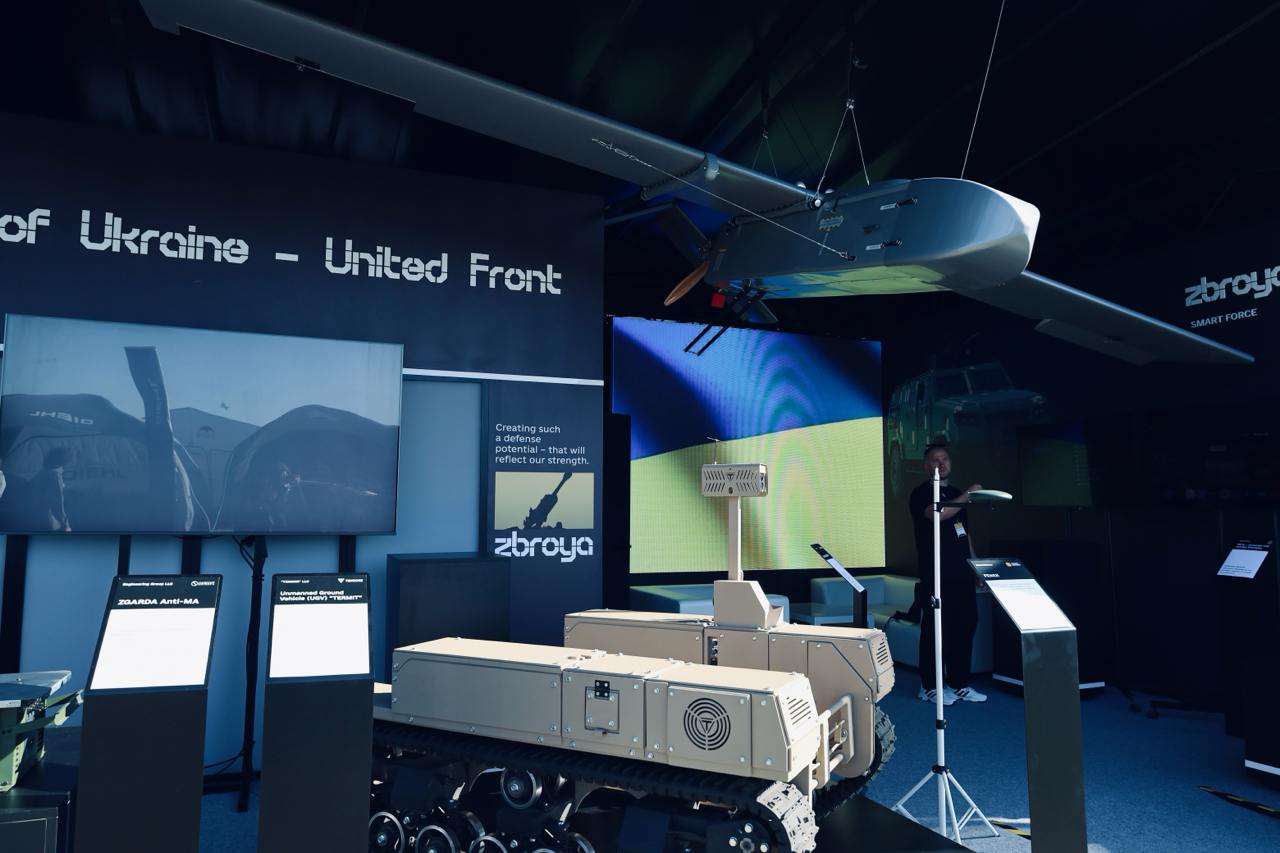
Today, the final episode of Season One of Situational Awareness is out. It closes the first season of the first English-language podcast in Ukraine dedicated entirely to defence technologies.
When I first conceived this podcast in spring 2025, it was a direct response to a gap I saw too clearly to ignore: the lack of honest, first-hand communication from Ukraine’s defence ecosystem — in a language understood by our key international partners.
By then, J.D. Vance had already spoken at the Munich Security Conference. Europe had already announced rearmament on a scale not seen in decades. Decisions were being made fast — but often without a clear understanding of what Ukraine actually is, what it produces, and how its defence innovation really works.
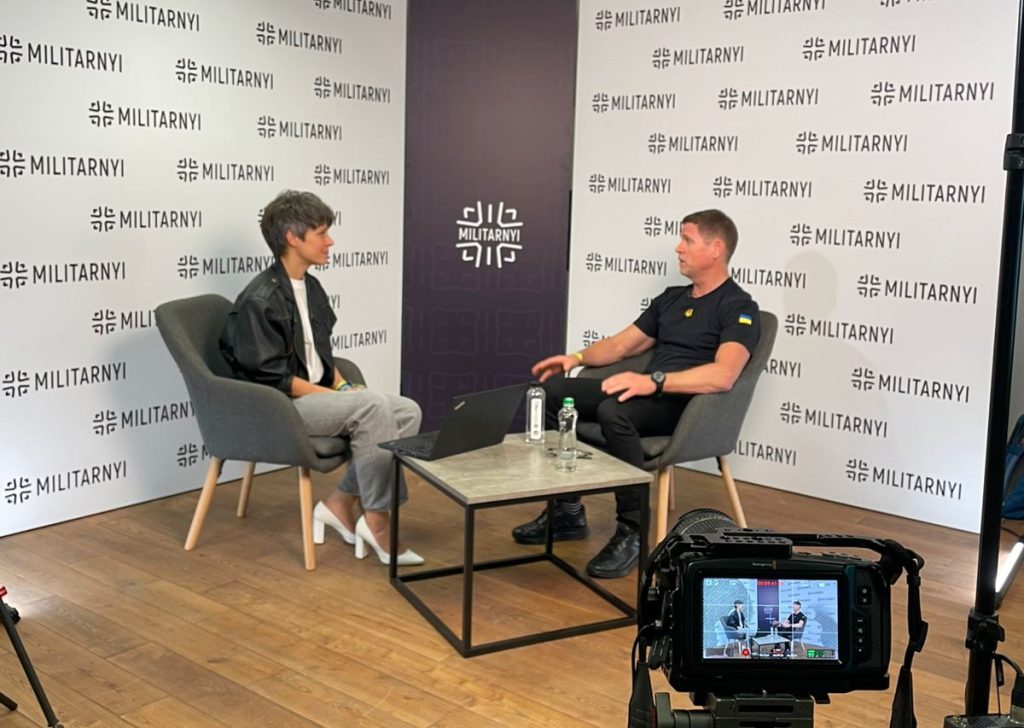
So I bought my first camera, a tripod, and a cheap Chinese light on Amazon — almost the same way Ukrainian drone engineers assemble their first UAVs. ?I got the number of amazing Kateryna Suprun and suggested we build this project together with Militarnyi. My thanks go to Militarnyi for the courage and leadership to do this with me. They were the only ones with enough backbone to say yes.
Over the past months, we recorded nearly 30 episodes. We spoke with Ukrainians, Lithuanians, Swedes, and Americans. With first-year students taking their first steps in defence tech — and with investment funds working exclusively with defence startups. With founders just starting out — and with companies already supplying NATO countries.
This was the first and perhaps most important realization. Ukraine’s defence infrastructure is not a single “wartime improvisation” — it is a layered ecosystem. It spans universities, startup clusters, manufacturers, funds, accelerators, associations, and state-linked platforms. The idea that Ukraine is “just catching up” is simply false.
Across nearly every conversation, one pattern repeated itself: success depends on being embedded in a full cycle — R&D, testing, codification, production, logistics, feedback, iteration, scaling. The strongest players are not lone inventors, but those integrated into networks that shorten this entire loop.
Ukraine’s innovation cycles are brutally fast: software updates in minutes, hardware iterations in months, codification in weeks rather than years. But speed alone is not the lesson. The real insight is discipline: knowing where full autonomy is dangerous, where human control matters, and how to deploy systems that are fast and safe.
Motors, magnets, stators, thermal cameras, localization levels — these topics came up repeatedly. Control over components shapes sovereignty. The war has made painfully clear that supply chains decide outcomes just as much as platforms do.
Battlefield experience is Ukraine’s unmatched advantage. Yet many partnerships now expect joint ventures, production, or certification within their own jurisdictions. The emerging model is clear: R&D and testing in Ukraine, scaling through Europe and allied markets.
Export frameworks determine standards, investment readiness, and the structure of cooperation. Opening controlled exports is not merely a commercial footnote; it is the moment when Ukrainian defence tech integrates structurally into global defence architectures.
Investors repeatedly spoke about myths: corruption stereotypes, doubts about standards, uncertainty about scale. These are not technical barriers. They are narrative failures.
From student-led defence startups to engineers testing systems at the frontline themselves, the message was consistent: talent does not emerge automatically. It is cultivated through education, exposure, responsibility, and direct contact with reality.
This brings me to the final lesson. Ukraine does not suffer from a lack of achievements. It suffers from a lack of translation. Between Ukraine and its partners still stand myths, fear, and outdated mental models. The gap is not technical — it is informational and psychological. And that gap has a cost: delayed decisions, missed investments, slower integration, and smaller capital flows.
Situational Awareness was built as a translation layer — between Ukraine’s battlefield-driven innovation and the partners who can help scale it. Here, I return to a lesson from On Tyranny by Timothy Snyder. He reminds us that democracies do not sustain themselves. Institutions do — but only if people consciously choose to support them. Independent defence journalism is an institution.
Support Militarnyi — Ukraine’s leading defence media, and a core part of the ecosystem it has been helping to build since 2008.
Підтримати нас можна через:
Приват: 5169 3351 0164 7408 PayPal - [email protected] Стати нашим патроном за лінком ⬇
Subscribe to our newsletter
or on ours Telegram
Thank you!!
You are subscribed to our newsletter