

The Battle for the “Small Sky” — Ukrainian Drones with Anti-Aircraft Drone Protection Make Their Frontline Debut

The Battle for the “Small Sky” — Ukrainian Drones with Anti-Aircraft Drone Protection Make Their Frontline Debut

Oleksandr Yan

Oleksandr Yan

January 20, 2026
22:05
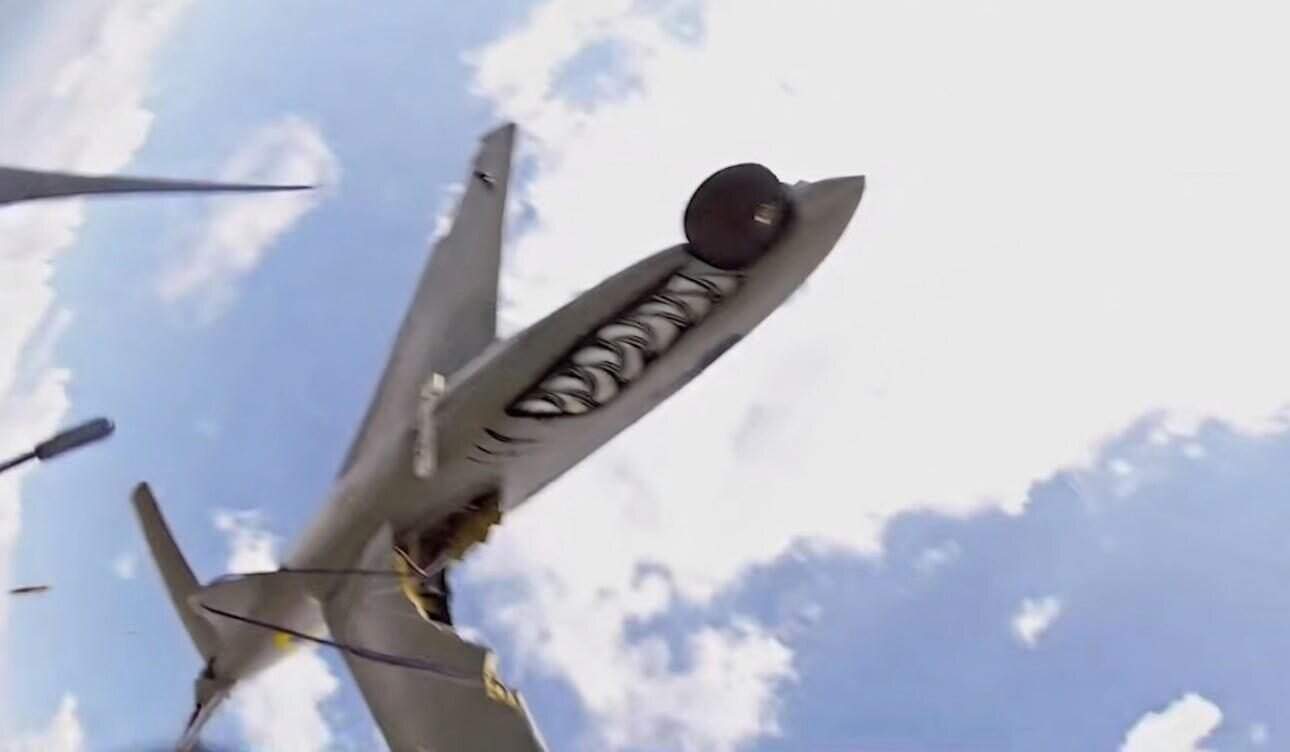
A downed Ukrainian Shark drone captured in the sights of a Russian interceptor drone

The Battle for the “Small Sky” — Ukrainian Drones with Anti-Aircraft Drone Protection Make Their Frontline Debut

Oleksandr Yan

Oleksandr Yan

January 20, 2026
22:05
A downed Ukrainian Shark drone captured in the sights of a Russian interceptor drone

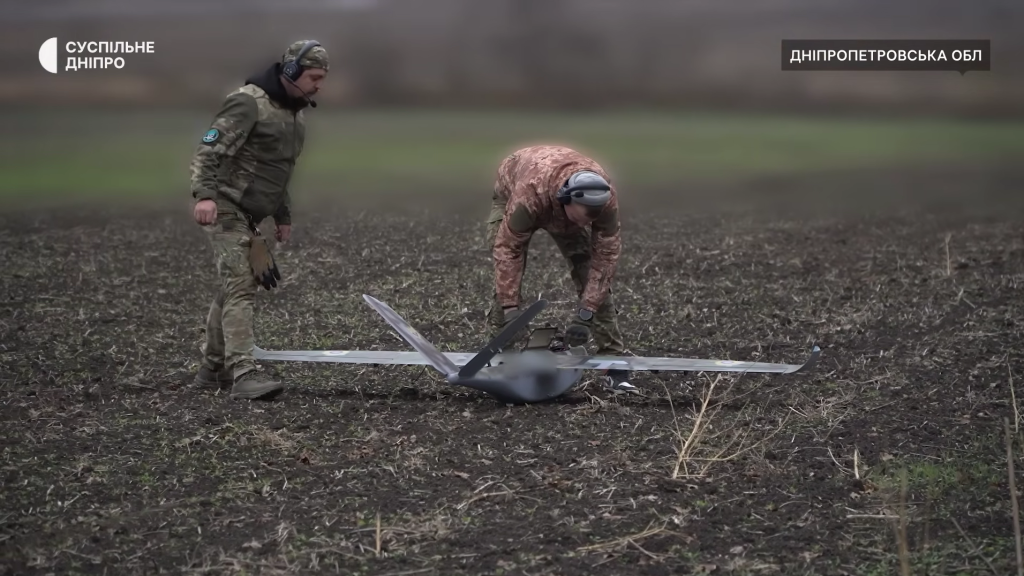
Locate the target and adjust fire — this is the task assigned to the Ukrainian crew of the Gor drone, which is defending the Dnipropetrovsk region as part of the 37th Marine Brigade. On command, the scout takes off and heads for the target area, but the task will not be completed — an order comes to return the aircraft “home.” The command urgently curtails aerial reconnaissance due to the downing of another drone nearby by a Russian interceptor drone.

This is one of many similar situations that made it into a report by Suspilne. The pilots say that an enemy unit of anti-aircraft drone operators, which targets aerial reconnaissance drones, has recently been deployed to their area.

The crew raises their Gor into the clouds, where enemy drones cannot find it, and returns the aircraft to its takeoff point. Flights in this area will be suspended for some time due to the risk of losing the scarce aircraft.

“The situation is difficult right now, we don’t have enough aircraft. You saw it yourself, two drones down in half an hour. They see us immediately. I haven’t even reached the front line yet, and they’re already sending me intercepted video from an enemy interceptor — they’re already tracking us. I fly to the front line, and their drone is already waiting for me there. They shot down our last aircraft three or four days ago,” says the pilot of the Gor drone.

Ukraine has pioneered drone interception tactics, revolutionizing the concept of aerial reconnaissance and ending the invulnerability of drones in the “small sky” — a new plane dominated by unmanned aerial vehicles. Numerous shootdowns in the summer of 2024 crippled the effectiveness of enemy artillery and aviation, and also allowed Ukraine to quietly build up its forces ahead of the Ukrainian army’s breakthrough into Kursk.

Within a year, the Russian army also mastered drone interception, announcing this with footage of Ukrainian drones being shot down in April 2025. By winter, the scale of such units had reached a critical point — the Ukrainian front began to go blind. At the end of the year, the leading enemy drone unit, Rubicon, reported shooting down more than 1,300 reconnaissance drones since its inception.

The commander of an aerial reconnaissance unit of one of the brigades says that along the entire front line — from Kherson to the border with Belarus — the enemy has deployed anti-aircraft drone crews. Their highest concentration is observed in areas of active advancement, where a multi-level anti-drone defense has been built. As a result, real no-fly zones have formed there, through which reconnaissance UAVs are almost unable to break through.

“In such areas, it is enough to fly two kilometers deep and circle for 20 minutes in one square to be guaranteed to be shot down,” says the reconnaissance UAV operator.

As an example, he cites the village of Velyka Novosilka, located 20 kilometers from the front line. The enemy uses it as a key logistics hub through which reinforcements and equipment for the entire direction are delivered. There are so many anti-aircraft drone crews concentrated there that any UAV near the settlement is shot down almost immediately.

The consequences of losing aerial reconnaissance are extremely serious not only does it affect the coordination of strikes, but also the overall organization of defense across entire sectors.

“Constant reconnaissance is critically important. We track changes in the enemy’s actions, look for signs of future attacks — and it really works. In May, thanks to reconnaissance, we repelled an attack in Hlyboky and Lyptsi so effectively that the enemy column did not even reach our forward positions. My Shark detected the advance of the armored group in advance, which significantly reduced the response time,” says a drone operator from the 92nd Separate Assault Brigade.

Early detection and destruction of enemy armored groups still on the approaches was the key to the success of the Ukrainian defense, which is holding back the superior forces of the enemy with small forces.

In a conversation with Militarnyi, the military notes that if drones are lost faster than new ones arrive, their tasks will have to be narrowed down exclusively to observing the line of combat. This will significantly complicate the lives of other units and infantry on the front lines.

After all, the tactics of using UAVs have already changed — reconnaissance drones can no longer fly anywhere and anytime.

“The reality is that we will never be able to fly as we did in 2022-2024. We need to realize this and either look for new solutions or accept this fact,” concludes the operator of reconnaissance drones of the 92nd Brigade.

Dogfights in the small sky

Every day, air battles unfold in the “small sky” above the front line between hundreds of drones: guided by software algorithms, the reconnaissance drones maneuver and squeeze maximum speed out of their engines to escape their interceptors as they try to lock onto their targets and destroy them.

Russian Zala Z-16 reconnaissance drones were among the first to receive side-view cameras and software that allowed them to automatically detect threats and maneuver away from interceptors. In contrast, Ukrainian interception tactics began to become more complicated, and drones faster.

Over the course of a year, the aerial drone war has evolved, repeating the path of manned aviation from the canons of World War II to the elements of modern warfare with high-tech fighter jets.

“There are several ways to detect enemy interception systems when they are trying to shoot you down. The simplest, most obvious, and one that everyone has already seen is visual detection. We have seen a lot of this on Russian drones. A small camera looks, sees something, and, according to an algorithm, transmits a signal to the autopilot for a series of programmed maneuvers,” says the technical director of the Ukrainian company Deviro.

The main goal of such systems is not to escape from fast and maneuverable interceptors, but to play on endurance: anti-aircraft drones are equipped with small batteries and have only a few minutes to reach their target, while reconnaissance drones are designed for many hours of flight.

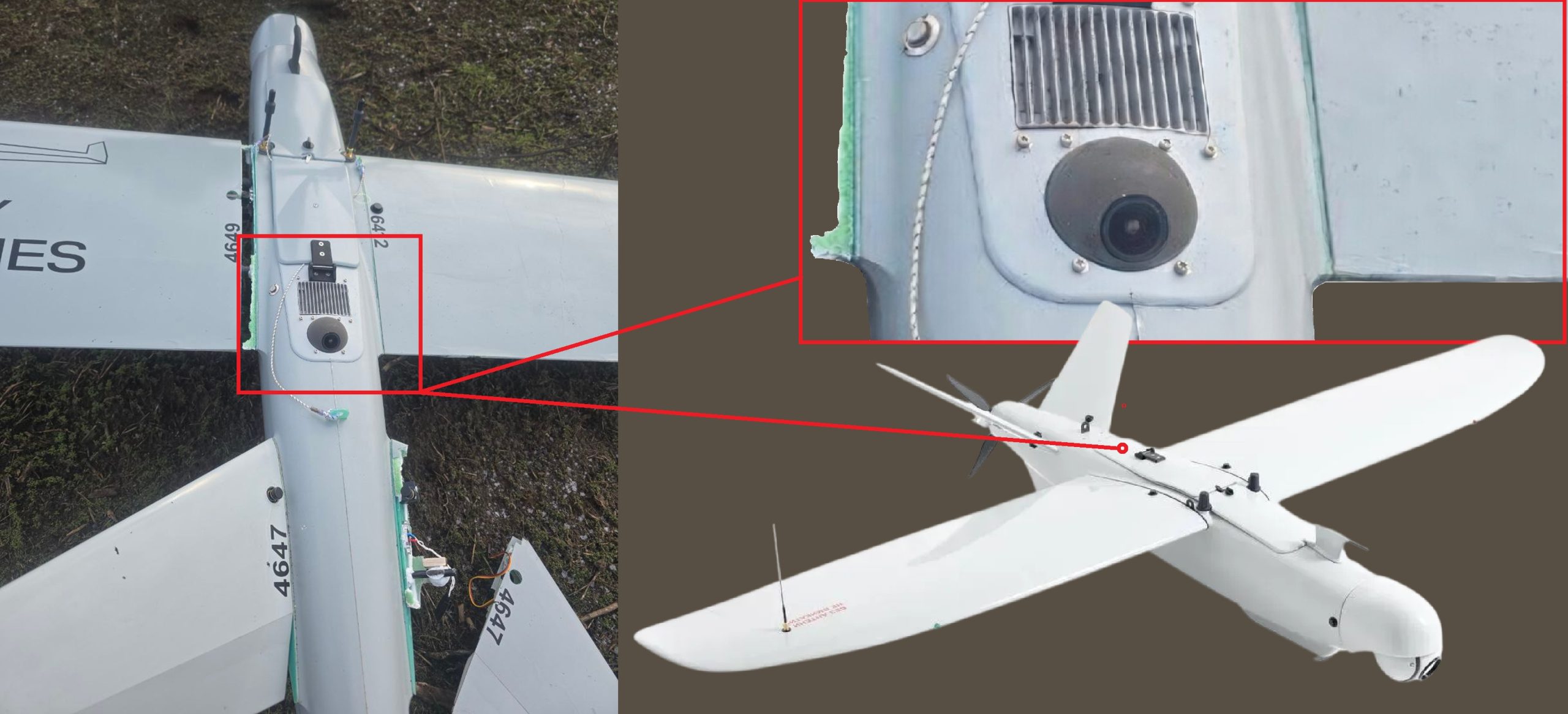
Among Ukrainian drones, one of the first to receive the “evasion” system was the Leleka-100, nicknamed “Snitch.” It was integrated into a hundred experimental aircraft and has proven itself well in combat conditions.

“Now the enemy covers its attack aircraft with groups of anti-aircraft drones, each flight ended with the loss of an aircraft, and the only way out was simply not to fly. But with the ‘snitch’, not a single aircraft has been shot down, even though there can be up to three activations per flight,“ says the commander of the aerial reconnaissance groups of the ”Hizhak” brigade of the patrol police from the Dobropillya direction.

Deviro expects that in the coming months, the system will be installed as standard on all serial Leleka-100 reconnaissance drones. Its cost is low, so the price of the drone will not change significantly.

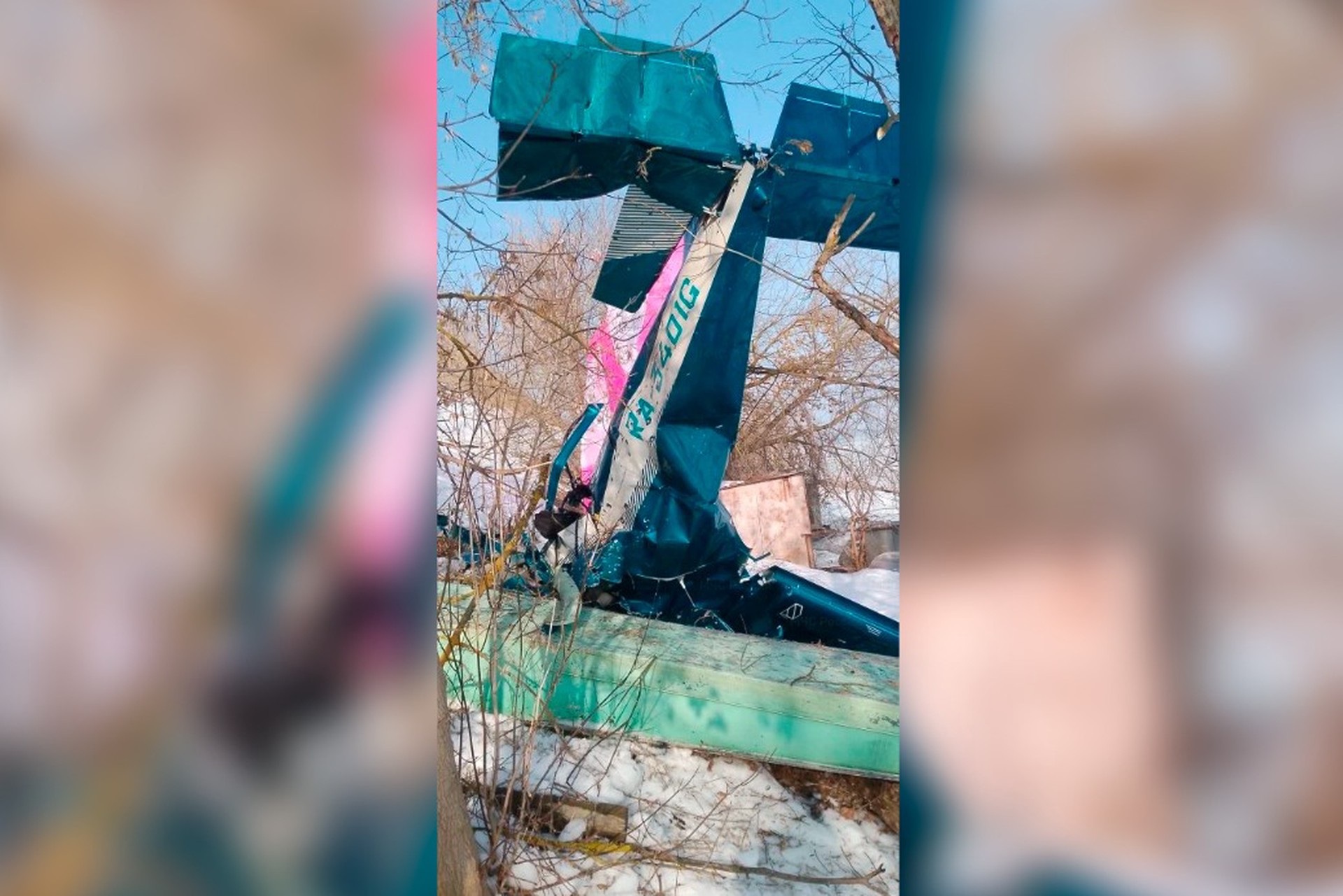
Debris from a Ukrainian Leleka-100 reconnaissance drone with a Snitch rear-view camera, January 2026.

Airborne defense systems at various stages of development are also being implemented by a number of other Ukrainian companies, including Airlogix, the developer of the aforementioned Gor drones. One of the foreign companies whose products are used by the Ukrainian military is also working on its own solution. However, for various reasons, manufacturers are refraining from publicizing their projects.

The manufacturers and military personnel interviewed by Militarnyi agree that the high effectiveness of Ukrainian defense systems based on optical detection is due to the element of surprise and will decline as the enemy adapts, as has already happened with Russian optical systems. Therefore, countermeasures must be made more sophisticated.

The next stage in the “arms race” will be the emergence of a new generation of sensors that scan the radio frequency spectrum in search of anti-aircraft drones — a reliable indicator, since they continuously transmit video signals to the ground. Such systems already exist on some Russian and Ukrainian drones and complement optical sensors.

Sound detection could become a promising and, at the same time, quite exotic technology. The relevant developments for searching for enemy artillery are already being installed on German Vector drones and can be refined to detect the characteristic noise of UAV engines.

Is this just the beginning?

Along with technical developments, tactics are also improving. At the heart of each drone interception unit is a small tactical radar that can be carried by soldiers and installed in camouflaged positions near the front line. It detects drones in the sky and provides targeting information for interceptors. Therefore, it is essential to eliminate these radars for effective operation.

To detect the radars, the Ukrainian military uses electronic intelligence units to determine their location, after which artillery, high-tech loitering munitions such as Bulava or RAM-2X, and fiber-optic FPV drones are deployed. On the Russian side, the use of specialized anti-radar missiles launched by fighter jets has been repeatedly recorded.

At the end of the year, Russian media published an interview with the operator of the Merlin-VR unmanned system, who announced the emergence of a new drone defense system that allows detecting enemy radar exposure and leaving the interceptor’s area of operation in advance. Even more interesting was the mention of an active defense mode that allows the creation of interference for radars.

These developments lead to the conclusion that the development of unmanned systems will steadily follow in the footsteps of large-scale aviation with operations to suppress and break through not anti-aircraft, but anti-drone defenses. Will we see further differentiation between unmanned fighters and specialized radar hunters? We will probably have the answer in the coming years.

SUPPORT MILITARNYI

PrivatBank ( Bank card )
5169 3351 0164 7408
Bank Account in UAH (IBAN)
UA043052990000026007015028783
ETH
0x6db6D0E7acCa3a5b5b09c461Ae480DF9A928d0a2
BTC
bc1qv58uev602j2twgxdtyv4z0mvly44ezq788kwsd
USDT
TMKUjnNbCN4Bv6Vvtyh7e3mnyz5QB9nu6V
Popular
Button Text