
Su-30: Why This Russian Fighter Jet Become Commercially Successful

Su-30: Why This Russian Fighter Jet Become Commercially Successful

Roman Pryhodko

Roman Pryhodko

January 19, 2026
13:20
Su-30SM fighters. Photo: Sergey Tchaikovsky
News

Su-30: Why This Russian Fighter Jet Become Commercially Successful

Roman Pryhodko

Roman Pryhodko

January 19, 2026
13:20
Su-30SM fighters. Photo: Sergey Tchaikovsky

The Su-30 is currently the only truly commercially successful fighter jet in Russia. It is no less effective in the Russian Aerospace Forces, where it serves as a multifunctional and multipurpose aircraft compared to the existing fleet.

Technically, the Su-30 remains a formidable weapon even compared with Western fourth-generation fighters. However, during Russia’s full-scale invasion of Ukraine, its use remained rather limited, and losses of this type of aircraft were among the highest among aircraft during the war.

History of creation

The history of the creation of the Su-27UB and the further development of the Su-30 line began in the late 1970s, when the designers of the Sukhoi Design Bureau were tasked with creating a trainer version of a fourth-generation fighter that would match the combat aircraft in terms of capabilities.

In Soviet aircraft construction at that time, the two-seat version was usually a simplified version of the aircraft with less fuel capacity, but an exception was made for the Su-27. Chief designer Mikhail Simonov insisted on creating a full-fledged combat aircraft in which the second crew member could perform the functions of a weapons operator.

The preliminary design of the aircraft, which received the factory code T-10U, was completed in 1980. Due to the priority given to single-seat fighter jets, work was delayed, and the first flight prototype, the T-10U-1, was not assembled until early 1984. On March 7, 1985, test pilot Nikolai Sadovnikov took it into the air for the first time. The aircraft’s design was unique: the second cockpit was installed well above the first, which made it possible to maintain the volume of the fuel tanks without lengthening the fuselage, although the area of the keels had to be increased to ensure stability.

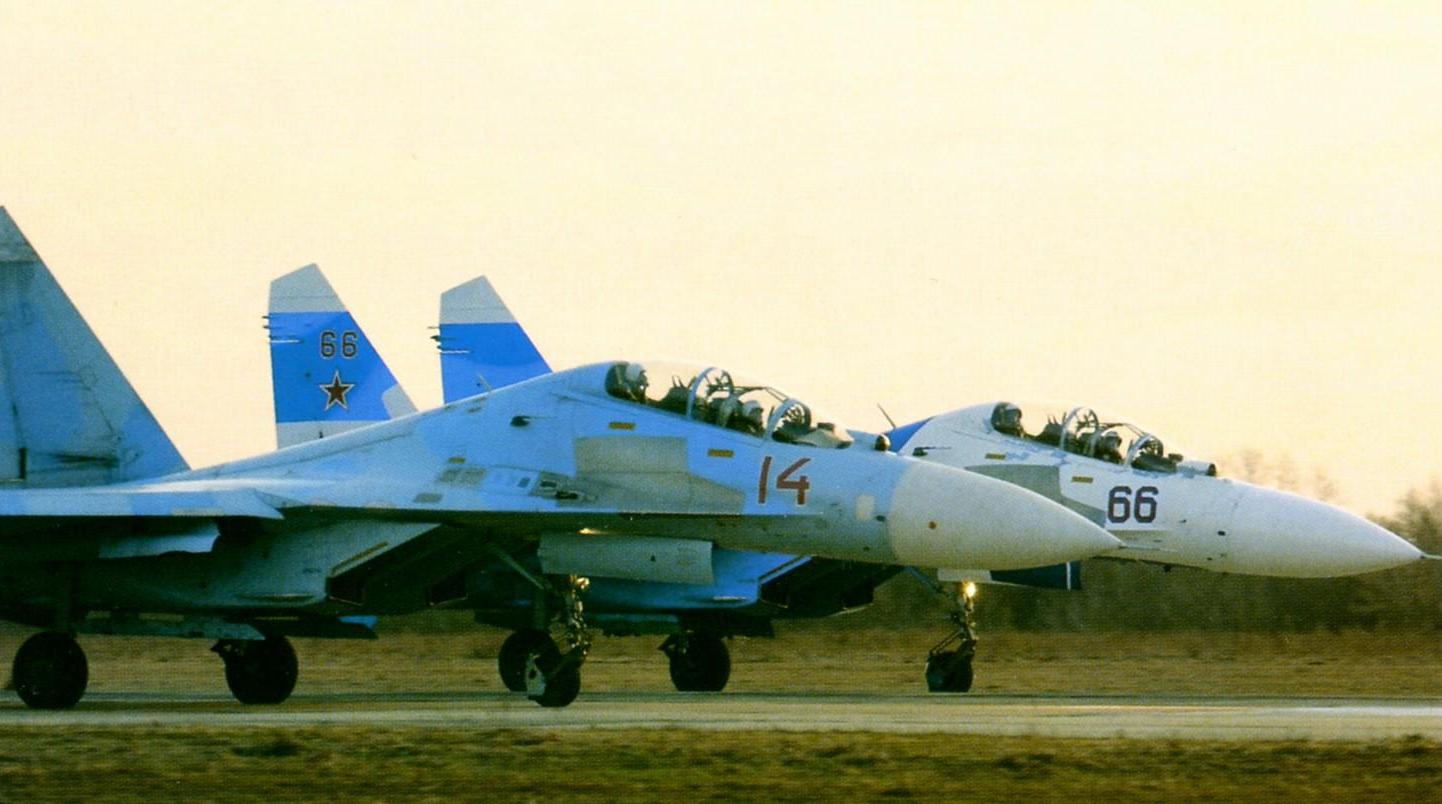
Су-27УБ (б/н 14) та Су-30 (б/н 66) Липецького авіаційного центру. Фото: legendary-aircraft

In the mid-1980s, the success of the Su-27UB attracted the attention of the USSR Air Defense Command, which needed an interceptor to protect the Arctic with a flight duration of about 10 hours. This gave impetus to the development of the Su-27PU (later Su-30). To test the refueling system, a second prototype, the T-10U-2, was completed in 1987, on which the crew of Nikolai Sadovnikov and Igor Votintsev made a record non-stop flight from Moscow to Komsomolsk-on-Amur and back to Moscow, lasting 15 hours and 42 minutes.

In 1988, the refueling system was installed on the serial T-10U-5, which became the first prototype of the T-10PU-5 interceptor. In addition to the fuel receiver rod, the Su-27PU differed in the OEPS-27 optical-electric sight fairing shifted to the right side and the presence of a tactical situation television indicator in the rear cabin.

Serial production of the Su-30 began in Irkutsk, and the first serial aircraft took to the skies on April 14, 1992. These aircraft had a reinforced center wing and landing gear, but due to the economic crisis, the series was limited to only ten units. Two of them were later used by the Gromov Flight Research Institute’s “Test Pilots” aerobatic team. The further development of the project was determined by the free market conditions of the 1990s.

Although the Soviet doctrine since 1985 had focused primarily on air-to-air defense weapons, foreign customers were looking for multi-purpose aviation systems. In 1993, a prototype of the Su-30MK, capable of engaging ground targets, was presented at the Paris Air Show in Le Bourget.

It was export contracts with India and China that allowed the aircraft to transform from a highly specialized interceptor into one of Russia’s most advanced strike fighter jets, dividing the line into the maneuverable Su-30MKI with thrust vector control and the strike Su-30MKK.

Avionics

The Su-30SM is equipped with modern avionics with digital flight control and navigation systems. The basic radar station is the passive phased array radar “BARS” N011M, which provides circular scanning of the space.

The BARS radar detects and tracks air targets in various modes: it is capable of automatically finding and tracking up to ten targets simultaneously, transmitting their coordinates for missile guidance (in particular, R-77, R-73, R-27), and performing radar mapping of the Earth’s surface.

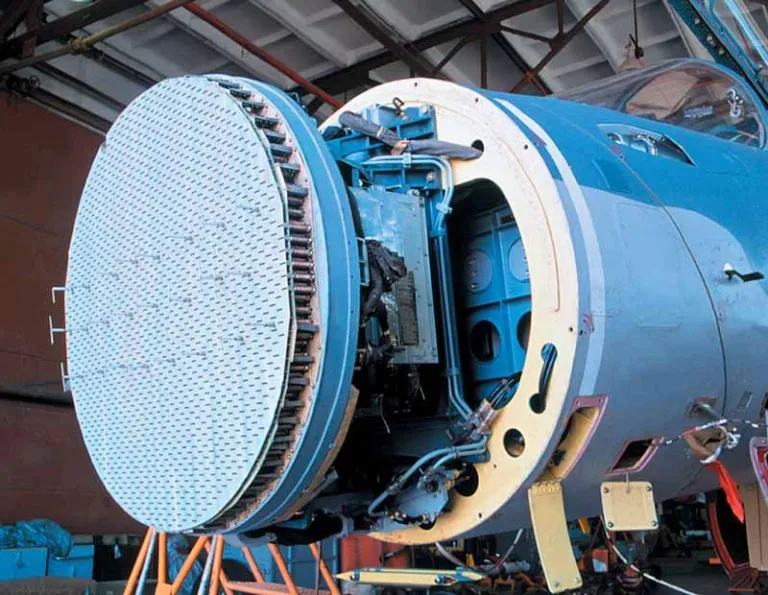
The radar is equipped with an antenna with a diameter of about 0.9-0.96 m. The combination of electronic beam scanning with a mechanical antenna drive provides a wide viewing angle — from ±70° to ±90° in azimuth. The peak transmitter power is 4-8 kW (in average — 1-2 kW), which allows it to operate effectively in conditions of radio-electronic interference.

РЛС Н011М на Су-30МКІ. Фото: Повітряні сили Індії

According to available data, the station is highly efficient at long ranges. A typical MiG-29 fighter jet can be detected at a distance of up to 140 km on a head-on course and up to 60 km in pursuit mode. Large air targets can be detected at distances of up to several hundred kilometers. The radar is also capable of detecting ground targets: a group of armored vehicles at a distance of 40-50 km, and large surface ships at up to 120 km.

The system supports air-to-air and air-to-surface modes. In tracking while scanning (TWS) mode, the radar tracks up to 15 targets simultaneously, providing missile guidance to the four highest priority objects.

Functional capabilities also include:

  • mapping of the Earth’s surface using Doppler beam sharpening (DBS) and synthetic aperture (SAR) modes to obtain a clear image of the terrain;
  • GMTI — selection of moving ground targets.

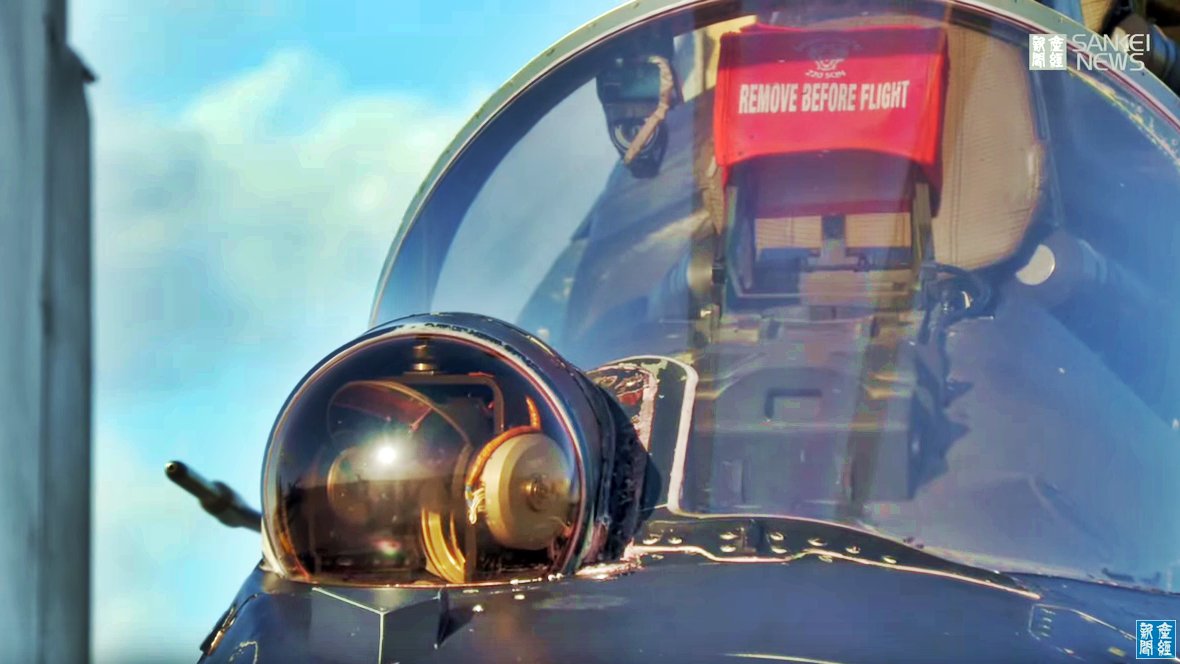
In addition to the onboard radar, the Su-30SM is equipped with optoelectronic systems designed for passive detection, tracking, and target designation. They include an optoelectronic targeting station (OET) that combines an OLS-30 infrared search and track station with a laser rangefinder and tracking channels, as well as a low-level television system (OTB-100 type), which provides observation and recognition of objects in the visible range during the day and in low-light conditions.

ОЛС-30 на винищувачі Су-30МКІ. Фото: Sankei News

The use of an optoelectronic targeting station allows the Su-30SM crew to search for and track air targets in passive mode — without emitting a radar signal. This improves the aircraft’s stealth mode and makes it more difficult to be detected by enemy electronic intelligence. The infrared channel is effective for detecting aircraft and helicopters by the thermal radiation of their engines, particularly at short and medium ranges, as well as in difficult meteorological conditions.

The Su-30SM’s navigation is based on a high-precision inertial system (LYNS-1000RS) with laser gyroscopes and a satellite navigation system receiver (GLONASS/GPS). This configuration ensures high accuracy in following the route and reaching the target area. The mission automatic control system is integrated with the navigation unit, allowing the aircraft to fly autonomously along the route, perform a landing approach, or exit the mission area in automatic mode.

All information from these systems is displayed on the color multifunctional displays in the cockpit and on the integrated instrument panel, providing the crew with full situational awareness. Overall, the Su-30SM’s avionics are designed according to an “open architecture” principle for onboard electronic equipment, allowing the aircraft to be upgraded by installing new sensors and systems.

It is also claimed, although there is no confirmation of this, that the Irbis active phased array radar, which is also installed on the Su-57, can be used to launch missiles. Similar claims appeared as early as 2018-2020, but as of today, there is no confirmation of this information in open sources.

It should be noted that some Su-30SMs use French-made modules and units, mainly components from Thales and the former Sagem (now Safran), including indicators, HUD, navigation and transceiver units SMD-55S and SMD-66S (multifunctional LCD indicators), HUD 3022 (windshield indicator), TLS 2020 (multimode receiver), TACAN NC-12 (tactical navigation system), and SIGMA 95NAA (high-precision inertial navigation system).

After 2022, due to French sanctions, Russia tried to organize the repair and maintenance of these systems through Kazakhstan. InformNapalm’s investigation claims that intermediaries in third countries (in particular, the Kazakh ARC Group) were used to avoid the sanctions. They received training and diagnostic equipment and carried out repair work under contracts that were formally registered in favor of Kazakhstan.

Electronic warfare equipment

Despite the fact that the Russian company positions the Su-30 as a 4++ generation aircraft, it does not have a radio-absorbing coating or structural elements made of radio-absorbing materials. Therefore, this aircraft cannot be classified as a stealth platform. Because of this, the fighter jet was equipped with a powerful L-175V Khibiny-U electronic warfare system, developed specifically for the Su-30SM. The system has been in service since 2013.

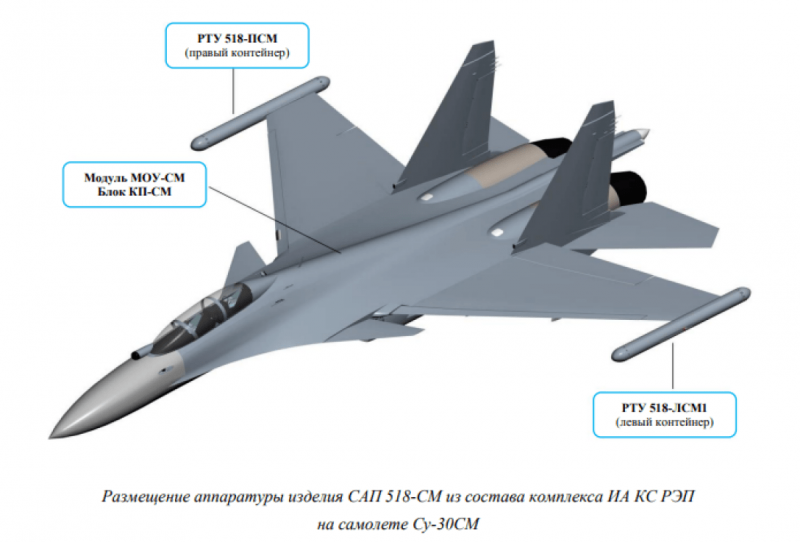
The Khibiny-U includes an integrated radio-electronic reconnaissance system called Proran, designed to detect enemy radar equipment, as well as two SAP-518 active jamming stations located in containers at the wing tips. The SAP-518 stations generate emissions that mimic and reflect enemy radar signals, creating false targets and complicating the operation of enemy missile guidance systems.

Thus, the Khibiny-U is designed to reduce the effectiveness of enemy radar equipment and increase the survivability of the aircraft. Similar systems are also used on Su-34 bombers and Su-35S fighters.

Розміщення апаратури виробу САП-518СМ зі складу комплексу індивідуального захисту РЕП на літаку Су-30СМ. Фото: ОАК

In addition to the Khibiny, other radio-electronic suppression systems, such as the Sorbtsiya-S, can also be used on the Su-30SM (as well as on the Su-34). The Su-30SM’s onboard reconnaissance and reception equipment detects emissions and then automatically selects interference parameters.

As a result, the Su-30 family of aircraft is used not only as multi-role fighters, but also as electronic warfare platforms capable of performing some air reconnaissance tasks.

Engine

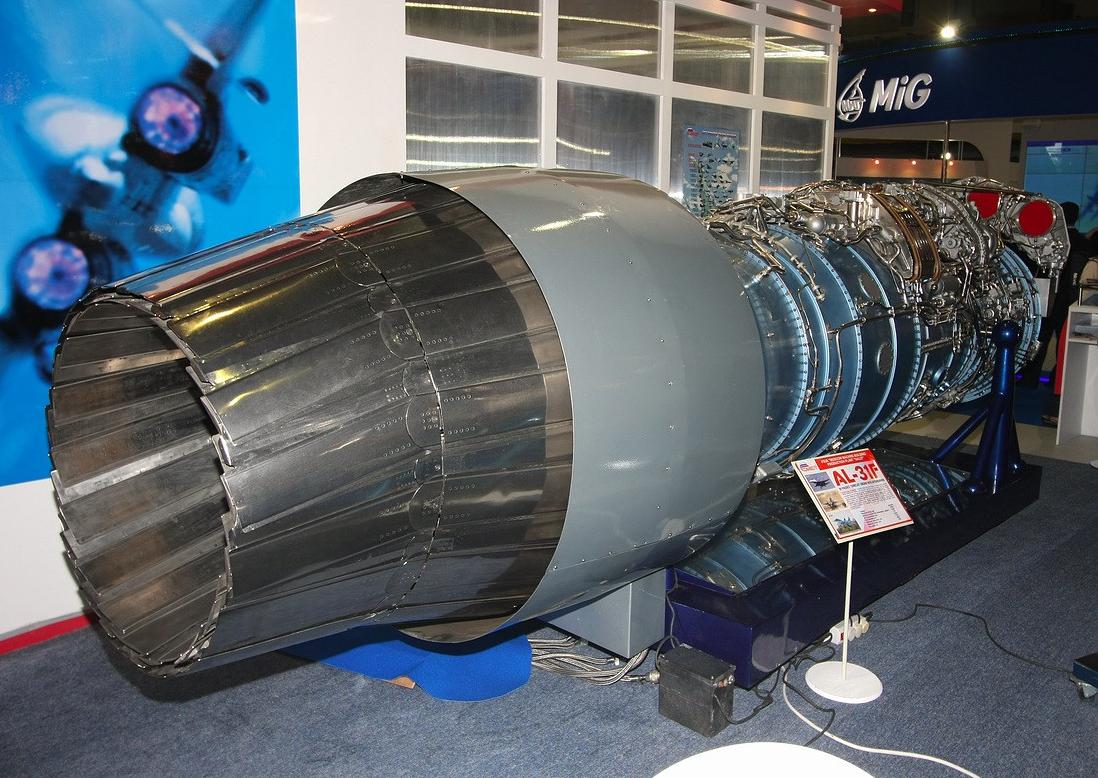
The Su-30SM is equipped with two AL-31FP twin-circuit turbojet engines with controlled thrust vectoring. Each engine develops a maximum non-afterburner thrust of about 7,700 kgf and an afterburner thrust of up to 12,500 kgf.

The presence of swivel nozzles provides the Su-30SM with extremely high maneuverability: the aircraft is capable of performing sharp turns and reaching high angles of attack during advanced aerobatics. The engine air intake unit has flow control panels and a foreign object damage protection system, which increases reliability in various flight modes.

Двигун АЛ-31Ф. Фото: Aviaphoto

The fuel capacity of the Su-30SM is approximately 12,000 liters (three tanks in the fuselage and one in each wing). This provides the aircraft with a significant range. At the same time, a removable refueling pylon and a refueling boom are used — the Su-30SM can receive fuel from an aerial refueling tanker, which significantly extends the time of patrolling or performing long-range strike missions.

A program is underway to upgrade the Su-30SM to the Su-30SM2 level. This version involves replacing the AL-31FP engines with new AL-41F1-S engines (similar to those used on the Su-35S and Su-57).

Weapons

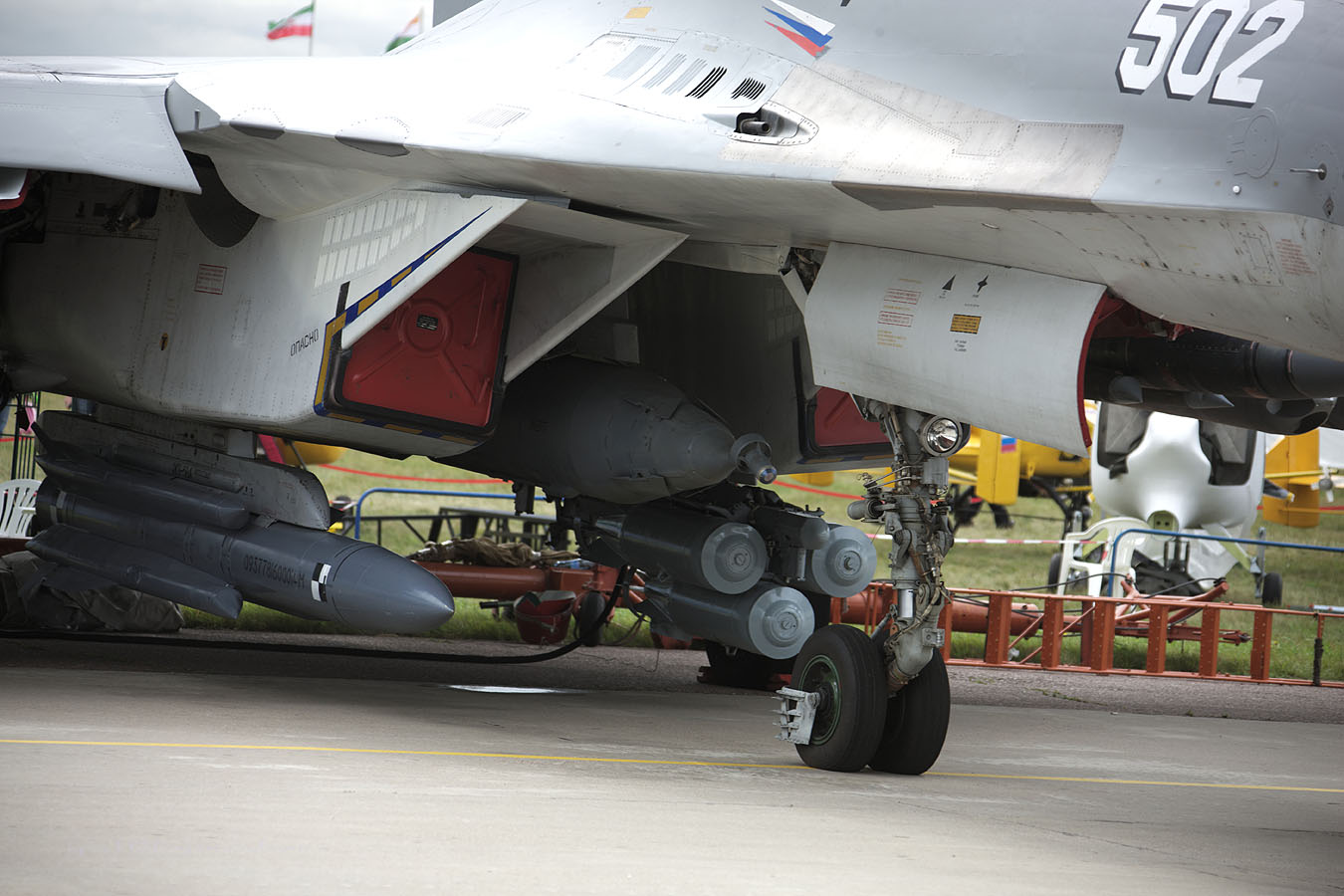
The Su-30SM can carry a wide range of weapons. The aircraft’s fuselage is equipped with a 30 mm GSh-30-1 automatic cannon with an ammunition capacity of 150 rounds, which is distinguished by its high rate of fire. There are 12 suspension points for external weapons: eight under the wings (including at the tips), two under the engine nacelles, and two under the center wing. The maximum combat load is about 8,000 kg, and in overload mode it can reach up to 10,500 kg. To engage air targets, the aircraft uses air-to-air missiles of various ranges. Its armament includes short-range R-73 missiles, as well as medium-range R-27 and R-77 (RVV-AE) missiles. As part of the upgrade to the Su-30SM2 level, long-range R-37M missiles have been integrated.

Керована авіаційна ракета Р-73

The R-73 is designed to engage aircraft and helicopters in close-range maneuvering combat at declared ranges of up to 20-30 km and at g-loads of up to 12G. This is achieved through the use of a passive infrared homing head with wide capture angles, which, in combination with a helmet-mounted targeting system, allows targets to be attacked outside the aircraft’s flight axis. The R-27 family of medium-range missiles is designed to engage air targets at ranges of 50 to 120 km and includes modifications with infrared or semi-active radar homing heads. At the same time, these missiles are gradually being replaced by more modern models, in particular the R-77. The R-77 (RVV-AE) is equipped with an active radar homing head and distinctive lattice fins that provide increased maneuverability. The declared launch range is about 110 km, although actual performance is usually lower.

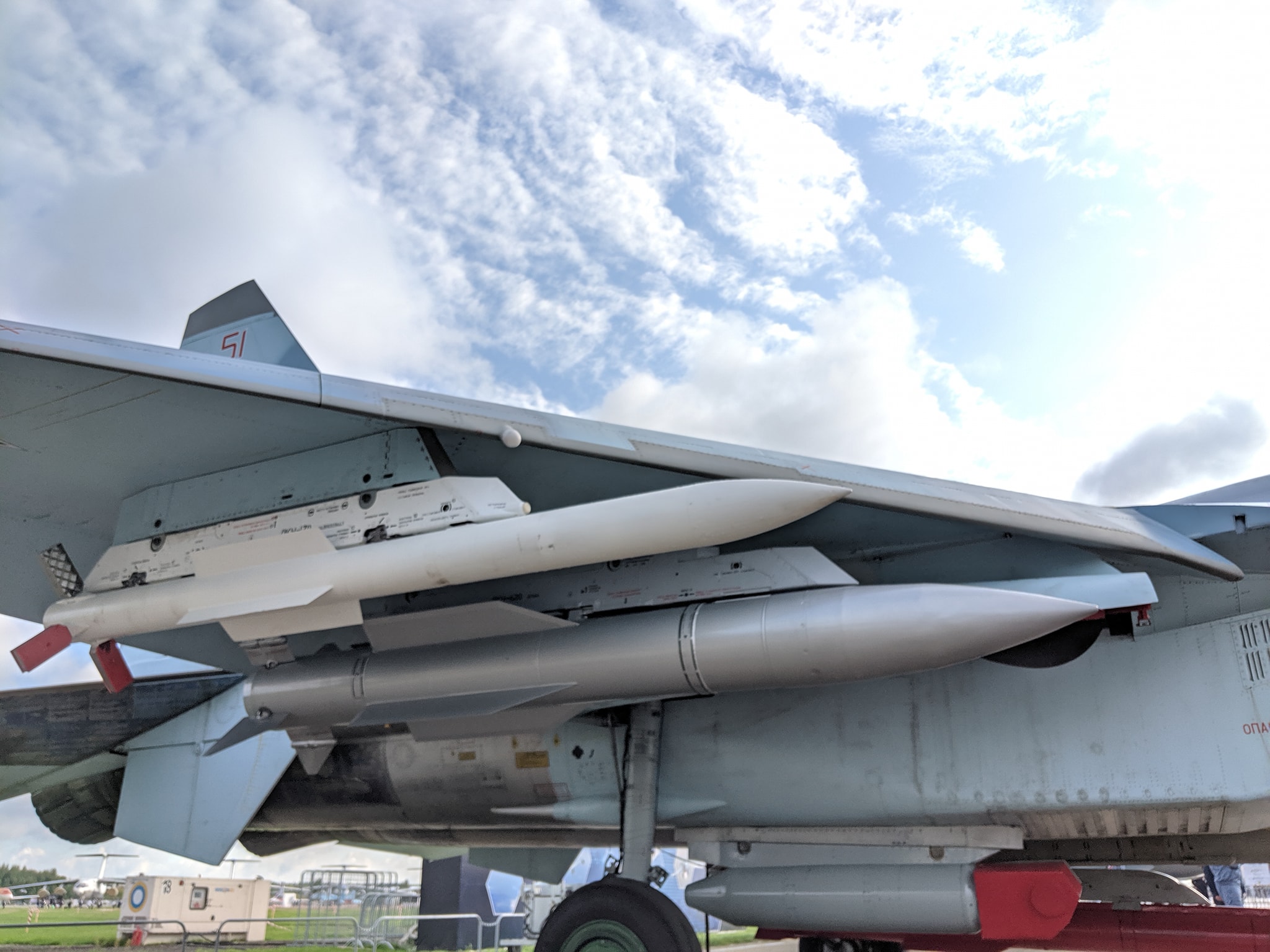
Р-37М поряд з меншою ракетою Р-77 під крилом винищувача Су-35С (б/н «51 красный»), 2019 рік. Фото: Михаил Жердев

A notable element of the modernization was the integration of the R-37M missile, which is positioned as a long-range guided missile. It is adapted for use with Su-30 fighters in the Su-30SM2 version and, according to published photos and videos, is already being used by Russian forces.

The declared flight range of the R-37M, depending on the trajectory profile and launch conditions, varies between 200 and 300 km. However, achieving such performance in practice seems unlikely, as the missile requires constant radio correction from the carrier or external means to update target position data. Without such correction, the effectiveness of striking airborne targets is significantly reduced.

Taking into account the capabilities of the onboard radar station and the real conditions of air combat, the practical range of the R-37M is probably limited to 50–100 km. The missile guidance system includes inertial navigation with radio correction during the cruise phase of flight, and in the final phase, an active radar homing head is activated for independent target acquisition. According to Russian sources, the integration of the R-37M required changes to the aircraft’s onboard radar station and weapon control systems. It is also claimed, although without official confirmation, that the Irbis active phased array radar, known as part of the Su-57 fighter’s onboard equipment, can be used. In addition, Russian observers claim that the aircraft has been given the capability to use this long-range missile in combat.

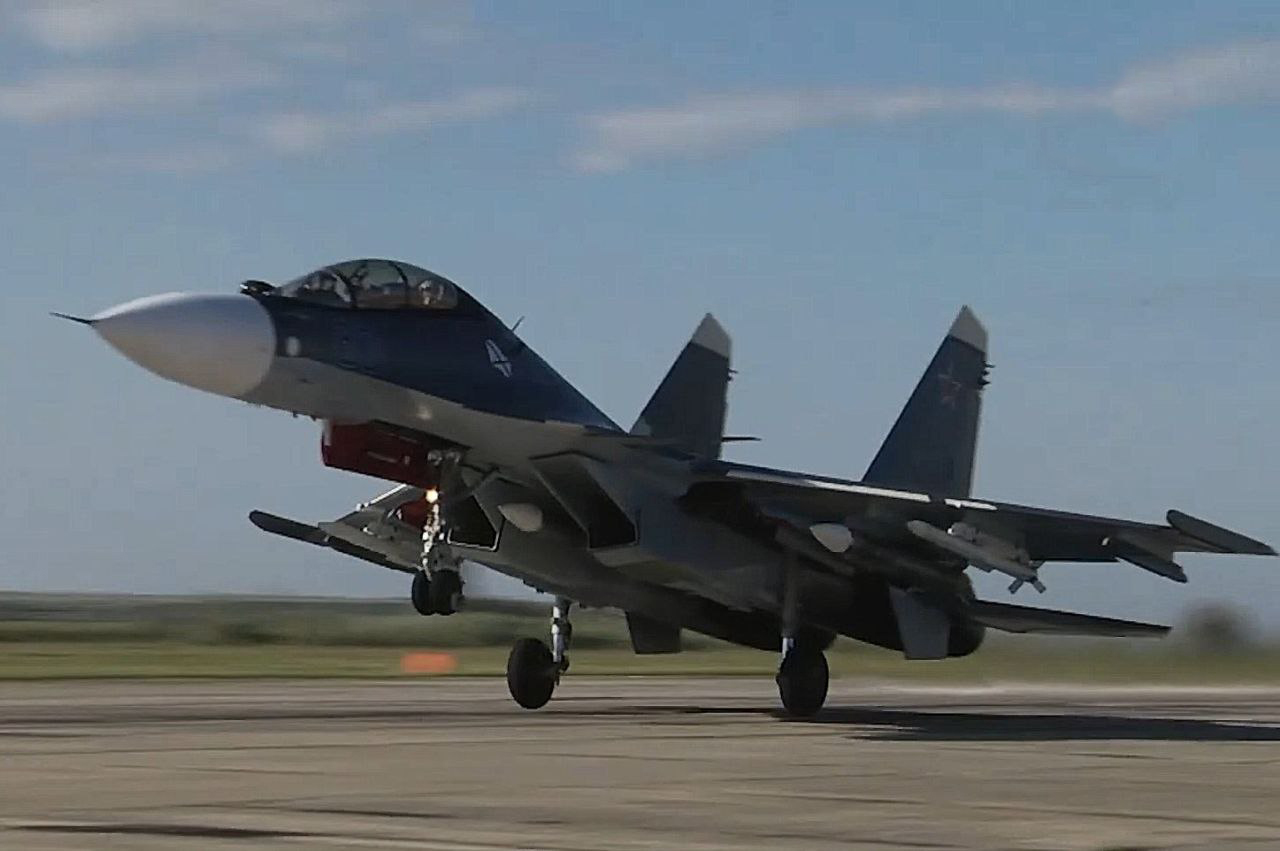
Винищувач Су-30МКК2. Фото: igor113

The Su-30SM’s strike capabilities are provided by air-to-surface guided missiles. To suppress air defense systems and radar stations, Kh-31P/PD and Kh-58 anti-radar missiles are used. Naval targets are engaged with Kh-31A/AD or Kh-59M anti-ship missiles. The aircraft is also capable of using high-precision guided bombs KAB-500 and KAB-1500, as well as a wide range of unguided bombs and rockets.

The Su-30SM can be equipped with suspended electronic warfare pods to reduce the effectiveness of enemy detection systems. An important role in the fire control system is played by the helmet-mounted targeting system, which allows the pilot to lock onto targets for short-range missiles by simply turning his head toward the object, greatly simplifying close-range maneuvering combat.

Use in the war against Ukraine

During the full-scale invasion of Ukraine, the Su-30SM was regularly used by the Russian command to deliver air strikes and suppress Ukrainian air defense systems. In particular, according to the British analytical center RUSI, already at the initial stage of the war, the Su-30SM, together with the Su-35S, actively used the Kh-31P and Kh-58 anti-radar missiles to destroy the radars of Ukraine’s anti-aircraft missile systems.

At the same time, Su-30SMs were involved in strikes against ground and sea targets. In the Black Sea, these aircraft were first spotted during the launch of Kh-31A/AD anti-ship missiles at unmanned boats and naval drones of the Ukrainian Navy.

In carrying out these tasks, Russian pilots mainly operated from long distances, avoiding entering the strike zones of Ukraine’s MANPADS and modern mobile anti-aircraft missile systems.

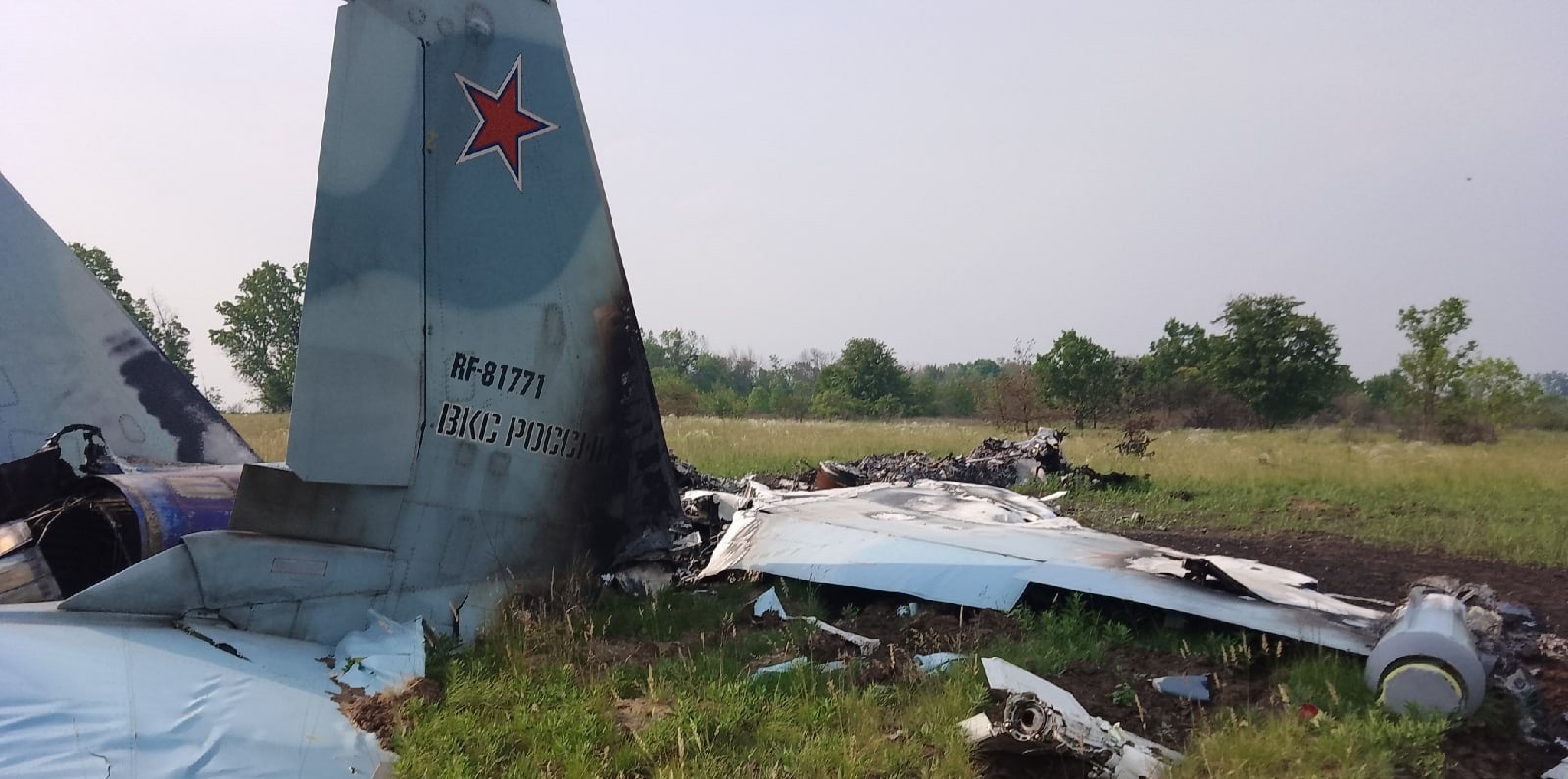
Збитий над Україною російський винищувач Су-30СМ з номером RF81771. Літо 2022. Україна. Фото: Андрій Цаплієнко

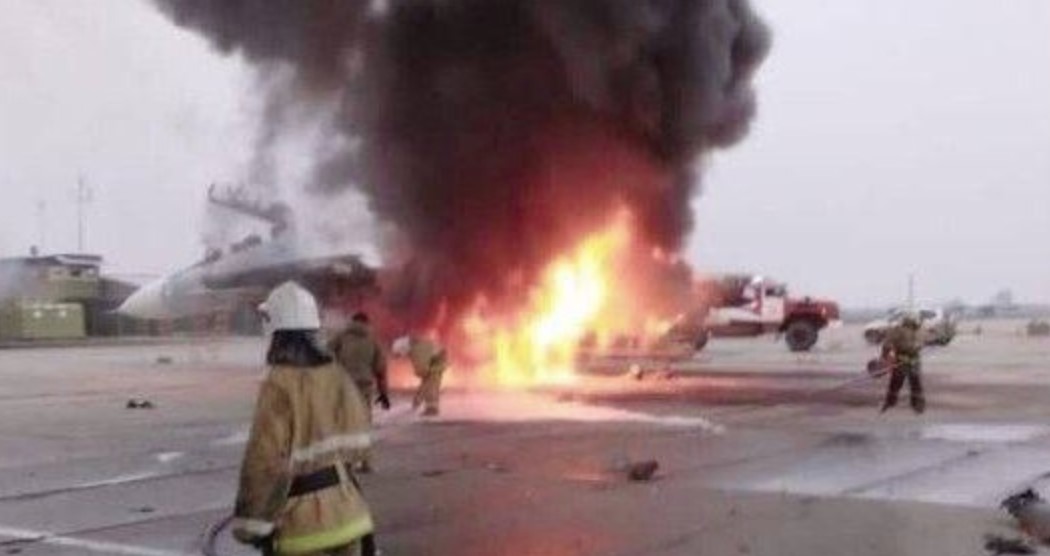
At the same time, the Su-30SM faced active opposition from Ukrainian air defenses. According to official and open estimates, the losses of the Su-30SM as part of the Russian Air Force in the war were significant. As of June 2022, according to various estimates, the number of aircraft of this type destroyed reached at least 11, including several aircraft lost as a result of explosions at the Saki airfield. In addition, in April–May 2025, Ukraine announced new confirmed cases of Su-30SM destruction, bringing the total losses to more than 15 aircraft.

On May 2, 2025, one aircraft of this type was hit by an AIM-9 air-to-air missile launched from a Magura V7 naval drone; the Russian crew ejected.

Despite the losses, the Su-30SM remains one of the key multi-role fighters of the Russian Air Force. The Russian side has announced further expansion of its fleet, and according to Russian sources, the upgraded version of the Su-30SM2 has demonstrated increased effectiveness in combat conditions.

Знищений Су-30СМ ПКС Росії на авіабазі біля міста Міллерово. 25.02.2022. Росія. Фото з соцмереж

The Su-30SM is used both to gain limited air superiority and to strike tactical targets from long range using guided missiles and aerial bombs under the cover of electronic warfare systems.

Modifications for foreign customers

Su-30MK and the Indian contract

Negotiations between Russia and India on the supply of two-seat fighters based on the Su-27 began in 1993. These negotiations later became the basis for the creation of a deeply modernized export modification — the Su-30MKI, adapted to the requirements of the Indian Air Force. The first experimental aircraft (tail number 56) made its maiden flight on July 1, 1997. The program subsequently included the refinement of several prototypes, and by 1999, 18 Su-30K fighters had been delivered to India, which were used as a transitional solution.

India signed an official contract for the purchase of 40 Su-30MKI fighters on November 30, 1996, and on December 18, 1998, an additional agreement was signed for 10 more aircraft. The Su-30MKI development program was a milestone for Russian aircraft manufacturing, as it was the first time in the history of the Russian Federation that Western-made avionics and weapon control systems were integrated into the design of a domestic combat aircraft on such a large scale.

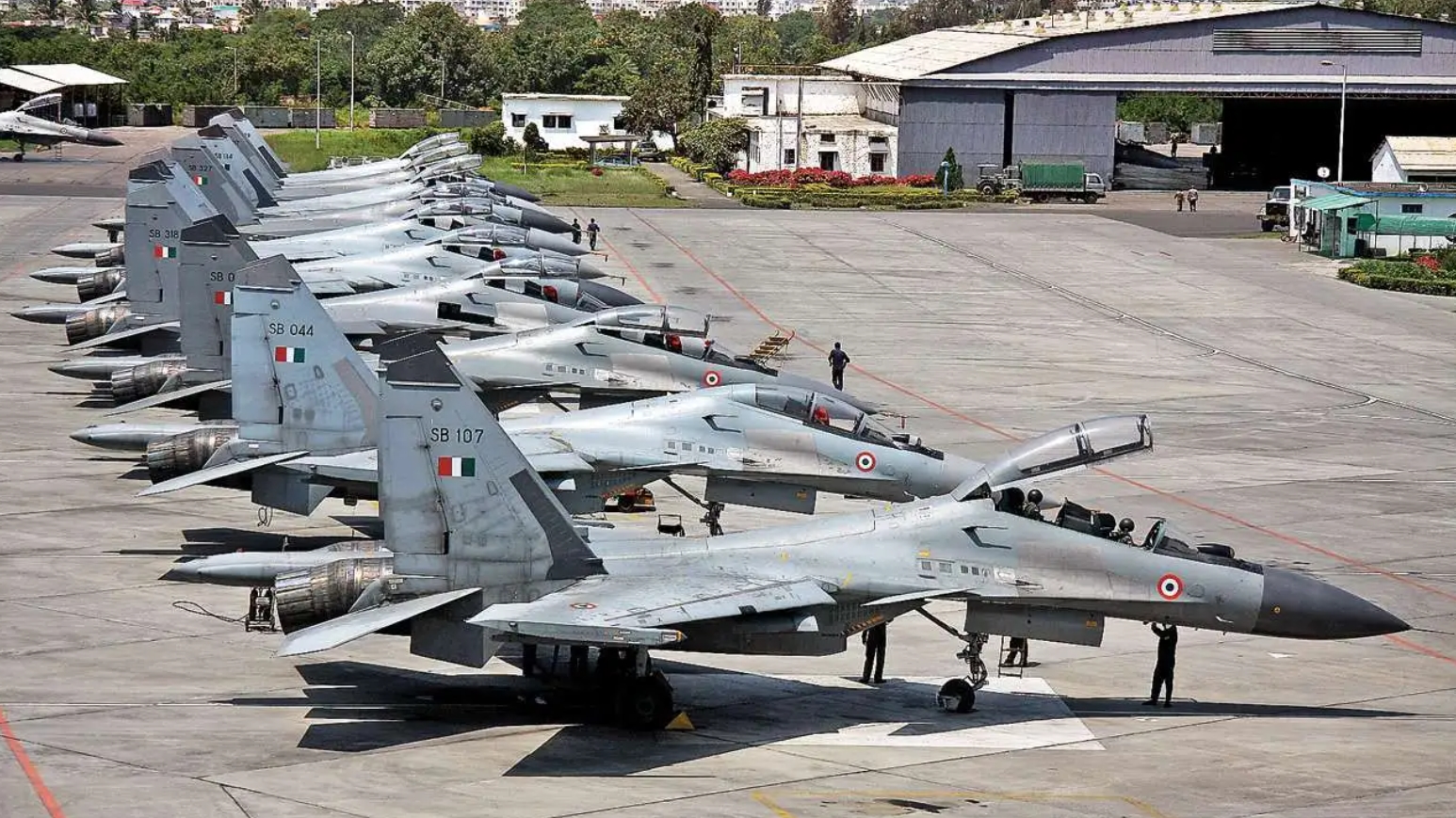
Subsequently, the Su-30MKI became the backbone of India’s fighter aviation. As of 2024, the country remains the world’s largest operator of this type, with 262 Su-30MKI aircraft in service. An additional order for 12 more fighters confirms India’s long-term commitment to this platform and its key role in the national air defense and strike capabilities.

Su-30MKI upgrades

  • Su-30MKI Mk 1 (2002): equipped with PGO, AL-31FP engines with controlled thrust vectoring, Bars Mk 2 radar, allowing the use of RVV-AE missiles and Kh-31A anti-ship missiles; up to 12 weapon suspension points, combat load — up to 8 tons, air refueling system.
  • Su-30MKI Mk 2 (2003): added use of Kh-59ME air-to-surface guided weapons, improved Bars Mk 3 radar with Indian processors and the ability to mount Israeli guidance systems.
  • Su-30MKI Mk 3 (2004): ten aircraft of the fourth batch; all were built in Irkutsk. Licensed assembly at the HAL plant in Nasik (India) began in 2004. The total requirement of the Indian Air Force is about 300 Su-30MKI.

Deliveries to other countries

Algeria remains the largest operator of Su-30s among African countries, with 59 Su-30MKA fighters. Deliveries were made in several batches: 28 aircraft in 2009, another 16 in 2012, and 14 in 2017. In addition, Algeria has ordered 10 more aircraft, which are expected to be delivered.

Angola operates 12 Su-30Ks, which were previously in service with the Indian Air Force and were transferred in full under the first contract.

Uganda has six Su-30MK2s, delivered in 2011, making it another African operator of this type.

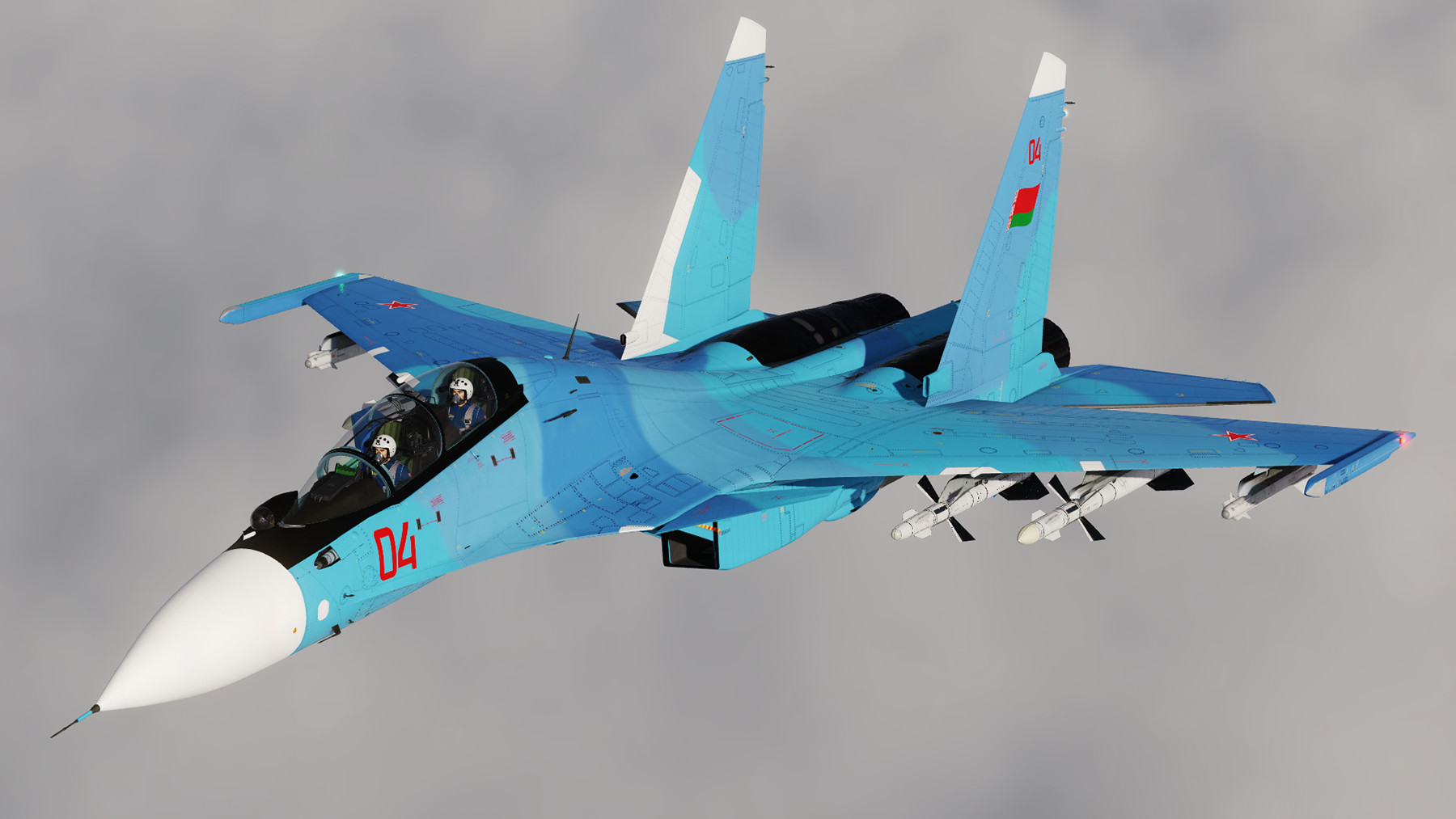
In the post-Soviet space, the Su-30 is used by a number of states. Armenia has four Su-30SM fighters, while Belarus operates four Su-30SMs and has ordered an additional eight SM2 aircraft.

As of 2024, Kazakhstan has 23 Su-30SMs, with a total of 36 aircraft ordered under four contracts.

The Su-30 also plays a prominent role in Southeast and East Asia. Vietnam operates 35 Su-30MK2s. Indonesia has a mixed fleet of two Su-30MKs and nine Su-30MK2s.

Malaysia uses 18 Su-30MKM, although the combat capability of some of these aircraft is questionable.

Myanmar has received at least two Su-30SM, while the total order is for six aircraft.

China deserves a special mention, as the Su-30 is operated by both the air force and the naval aviation. The PLA Air Force has 24 Su-30MK2s, while the PLA Navy operates 73 Su-30MKKs.

Conclusion

Today, the Su-30 fighter is one of the key combat aircraft of the Russian Aerospace Forces. This is due to its significant modernization potential, high commercial success of the platform, and the important role of the aircraft in the structure of the Russian Air Force.

The Su-30 is somewhat outperformed by the more powerful Su-35 in terms of flight characteristics, but it has no significant limitations in terms of its range of missile and bomb armament or the capabilities of its onboard radar station, especially in the upgraded Su-30SM2 version.

Thanks to its two-seater configuration, the Su-30’s strike capabilities exceed those of the Su-35 in many scenarios. The presence of a weapons operator reduces the pilot’s workload, simplifies the process of searching for, tracking, and using weapons, and facilitates the effective execution of long patrols.

A similar concept is used in the US Navy, particularly on the two-seater F/A-18D Hornet and F/A-18F Super Hornet, where the second seat is reserved for a weapons operator to reduce the pilot’s workload during combat missions.

Despite its advantages, the Su-30 is not a fifth-generation fighter and does not have low-observability characteristics, which limits its effectiveness against modern air defense systems and new-generation aircraft.

SUPPORT MILITARNYI

PrivatBank ( Bank card )
5169 3351 0164 7408
Bank Account in UAH (IBAN)
UA043052990000026007015028783
ETH
0x6db6D0E7acCa3a5b5b09c461Ae480DF9A928d0a2
BTC
bc1qv58uev602j2twgxdtyv4z0mvly44ezq788kwsd
USDT
TMKUjnNbCN4Bv6Vvtyh7e3mnyz5QB9nu6V
Articles
Popular
Button Text