


Despite the fact that as of the end of 2025, unlike in 2022, Belarus is not directly involved in hostilities, it serves as a powerful military-industrial base for the Russian Federation. The contribution of the Belarusian defense industry to the Russian aggression against Ukraine is significant and is likely to grow.
Within the framework of the “union state,” the Russian and Belarusian military industries are interdependent and deeply integrated. As the report of the Prism UA think tank states, according to the State Military Industrial Committee of the Republic of Belarus, 99 Belarusian enterprises supply 1880 types of components and weapons for 255 enterprises of the Russian defense industry.
In addition, the importance of the Russian market for the Belarusian defense industry has been growing since 2020. Thus, in 2019, the share of the Russian market was 26%, and in 2022, the share of the Russian market in Belarusian exports reached 60%.
The BelPol think tank has come to similar conclusions. According to their estimates, at least 287 Belarusian enterprises produce weapons for Russia, and there are probably many more such companies – about 500.
“This is what is now 100 percent known, in fact, there may be much more such enterprises. We are working on this, although we are not ready to submit a complete list yet,” the BelPol noted.
According to BelPol representatives, virtually all enterprises of the Ministry of Industry of Belarus and the State Military-Industrial Committee are involved in the fulfillment of the defense order, supply and circumvention of sanctions. About 200 other commercial enterprises in Belarus are also involved.
As in the Soviet era, the Belarusian military-industrial complex mainly specializes in the production of heavy military trucks; repair and modernization of equipment and aircraft; production of optical devices, sighting systems, fire control systems, electronic equipment, and software systems.
Although Belarus is capable of producing a wide range of lightly armored vehicles and modernized Soviet weapons, they have not yet been seen in the possession of the Russian military.
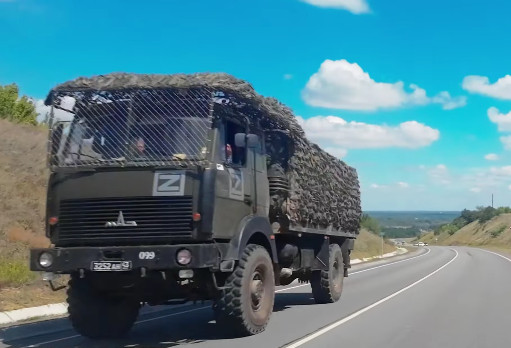
The country’s defense industry is not a direct supplier, except for the supply of MAZ trucks, but rather a subcontractor with its own share of specialization and responsibility.
According to analysts, the militarization of the Belarusian industry will reach an unprecedented level. According to the plan, by 2027-2028, Belarusian enterprises will be able to:
In addition, due to the absence of a unified Western sanctions policy towards Russia and Belarus, defense enterprises of the Republic of Belarus are able to receive Western equipment and components through imports provided by intermediary companies associated with Alexander Lukashenko. In particular, this makes it possible to import microcircuits and electronics of European and American origin, which are used in Su-34 and Su-30SM aircraft, as well as in Russian missiles R-37, Kh-59M2A, S-300, Kh-101, Iskander, and Kalibr.
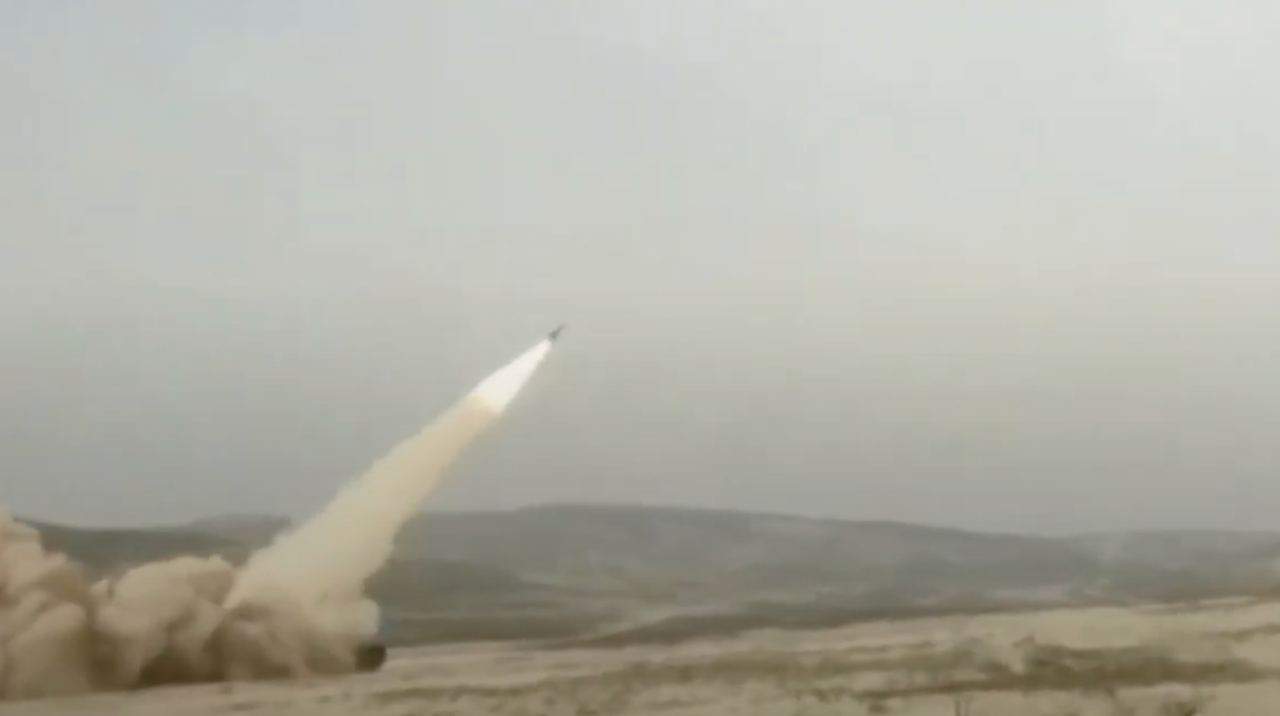
Belarusian MAZ trucks and MZKT chassis serve as the basis for numerous models of Russian weapons. In particular, the mobile launchers of the Russian Topol-M and Yars missile systems are mounted on wheeled chassis manufactured by MZKT. The chassis of the Belarusian manufacturer also includes the Iskander air defense system, the Uragan-1M multiple launch rocket system, self-propelled launchers and mobile radar systems of the S-400 air defense system.
It is known that in 2024, MZKT supplied a total of 306 railcars with its products to Russia, the vast majority of which were delivered to military plants.
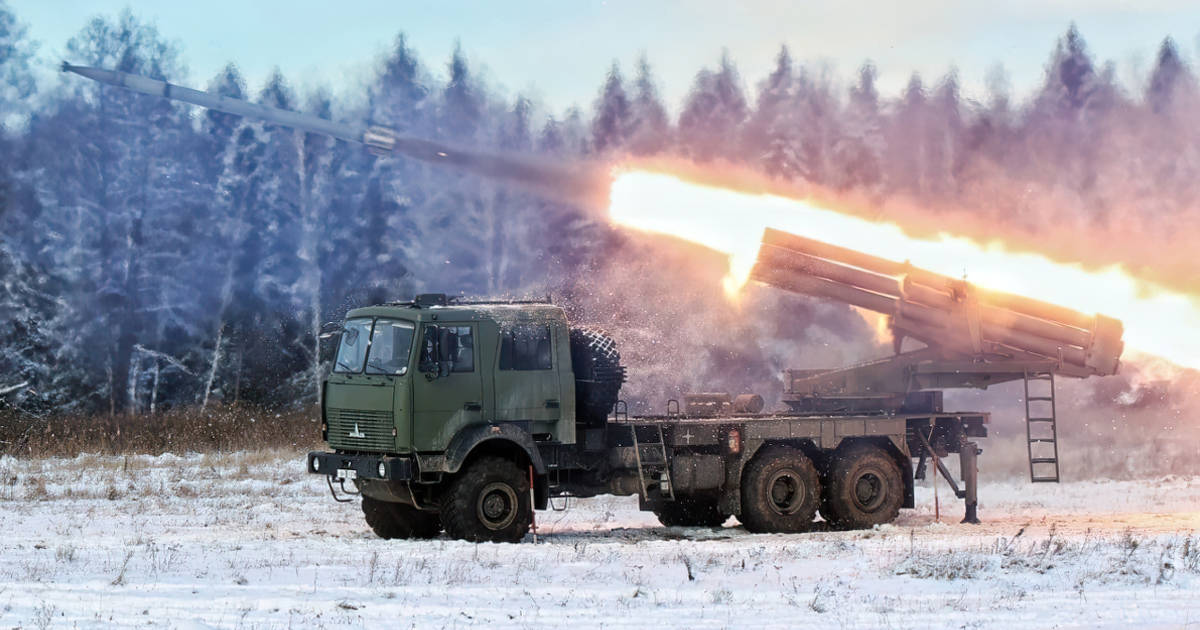
BelPol analysts have found that at least 40 Belarusian enterprises are involved to some extent in the production of shell parts for Russian BM-21 Grad multiple rocket launchers.
Among them are the Precision Electromechanics Plant, Zhlobin BMZ, Orsha Legmash, BAZtub, and others. It is known that Volatavto supplies Russian customers with frames, bases, guide pipes, cradles and other elements of BM-21 Grads.
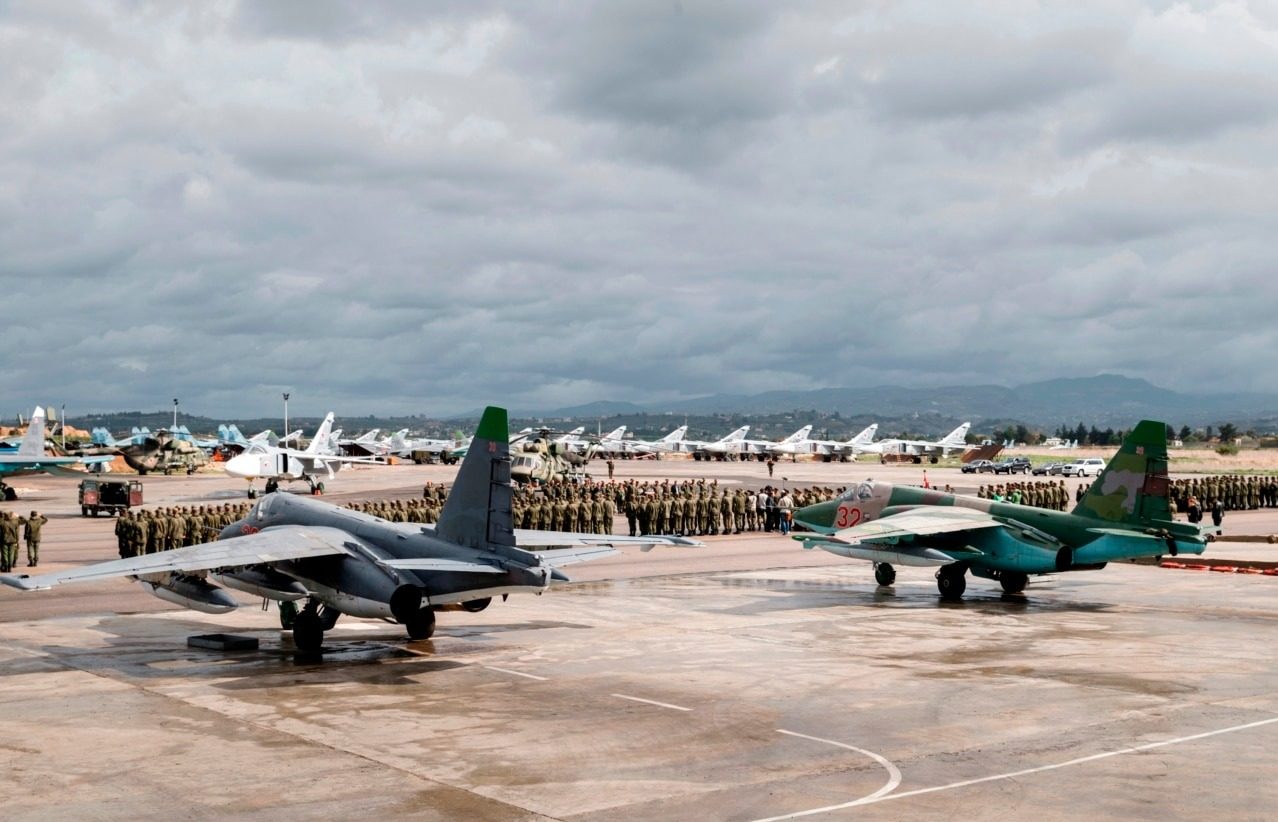
The 558th Aviation Repair Plant repairs and modernizes Russian aircraft such as Su-25, Su-27, Su-30 and MiG-29, as well as Mi-8 and Mi-24 helicopters. OJSC Ekran produces onboard equipment for Su-27, Su-30, and MiG-29 fighters.
Belarusian specialists from the Monitor Service plant are involved in the repair of Tunguska and Tor anti-aircraft systems. Damaged Russian equipment is also periodically repaired by Belarusian workers, both at Belarusian enterprises and at Russian ones, where Belarusian specialists are sent.
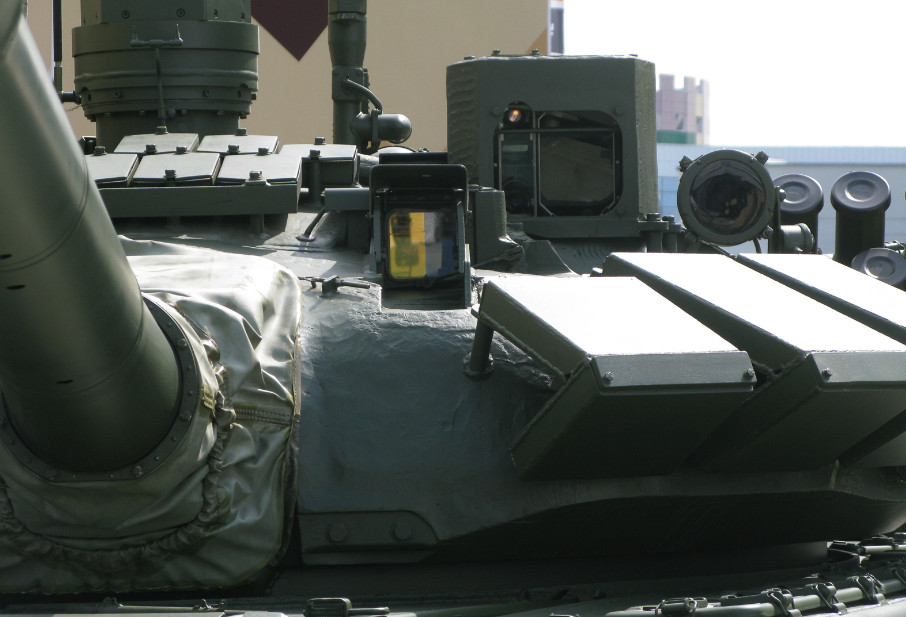
One of the most important for Russia is the Belarusian-made optical and optoelectronic sighting systems, which are installed on most new and modernized armored vehicles.
The most important company in this area is Peleng, which produces the Sosna-U multichannel gunner’s sight used on T-72B3 tanks, the Essa thermal imaging gunner’s sight for T-90 tanks, and the Plisa gunner’s sight installed on T-80 tanks.
In addition, Peleng supplies the Russian military with Vesna-K and Soyuz-TM multichannel gunner sights for BMP-3.
In May 2024, it was reported that the defense industry of Belarus was to produce 700 sights for T-72 and T-90 tanks, 500 sights for armored personnel carriers, 100 sights for Terminator tank support vehicles, and 70 sights for Chrysanthemum anti-tank systems under a Russian order.
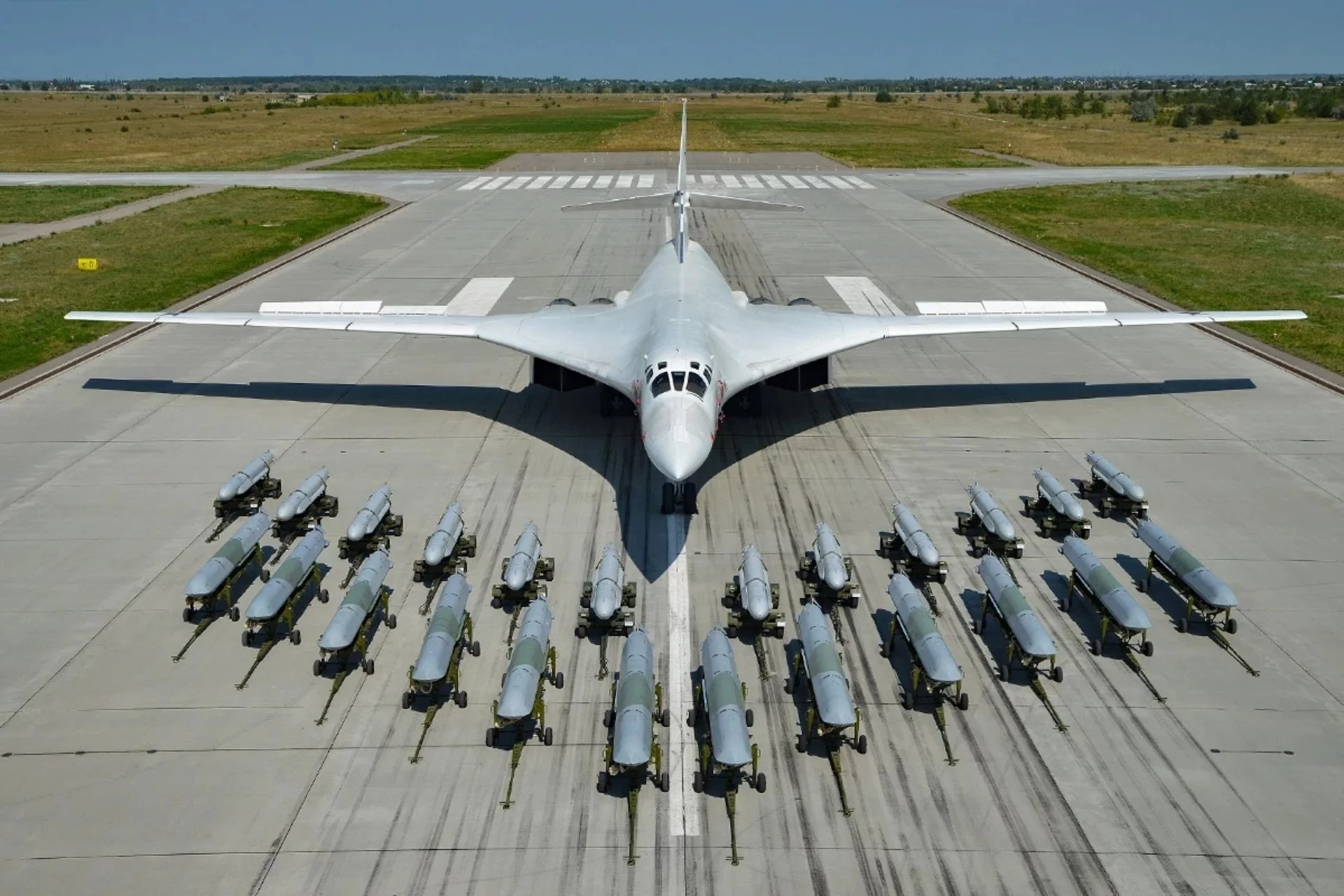
The Integral plant is one of the main Belarusian chip manufacturers for a wide range of missiles, including strategic cruise missiles.
As of mid-2024, the company had supplied more than six million chips worth $130 million to Russia, and the company’s profit in 2023 increased more than 40 times compared to 2021.
According to the Foreign Intelligence Service of Ukraine, Integral is expanding its production capacity for dual-use electronics. In particular, we are talking about chips that Russia can use for guidance systems in Kh-101 missiles. The new shop is to be commissioned in December, and is expected to reach nominal production levels in 2026.
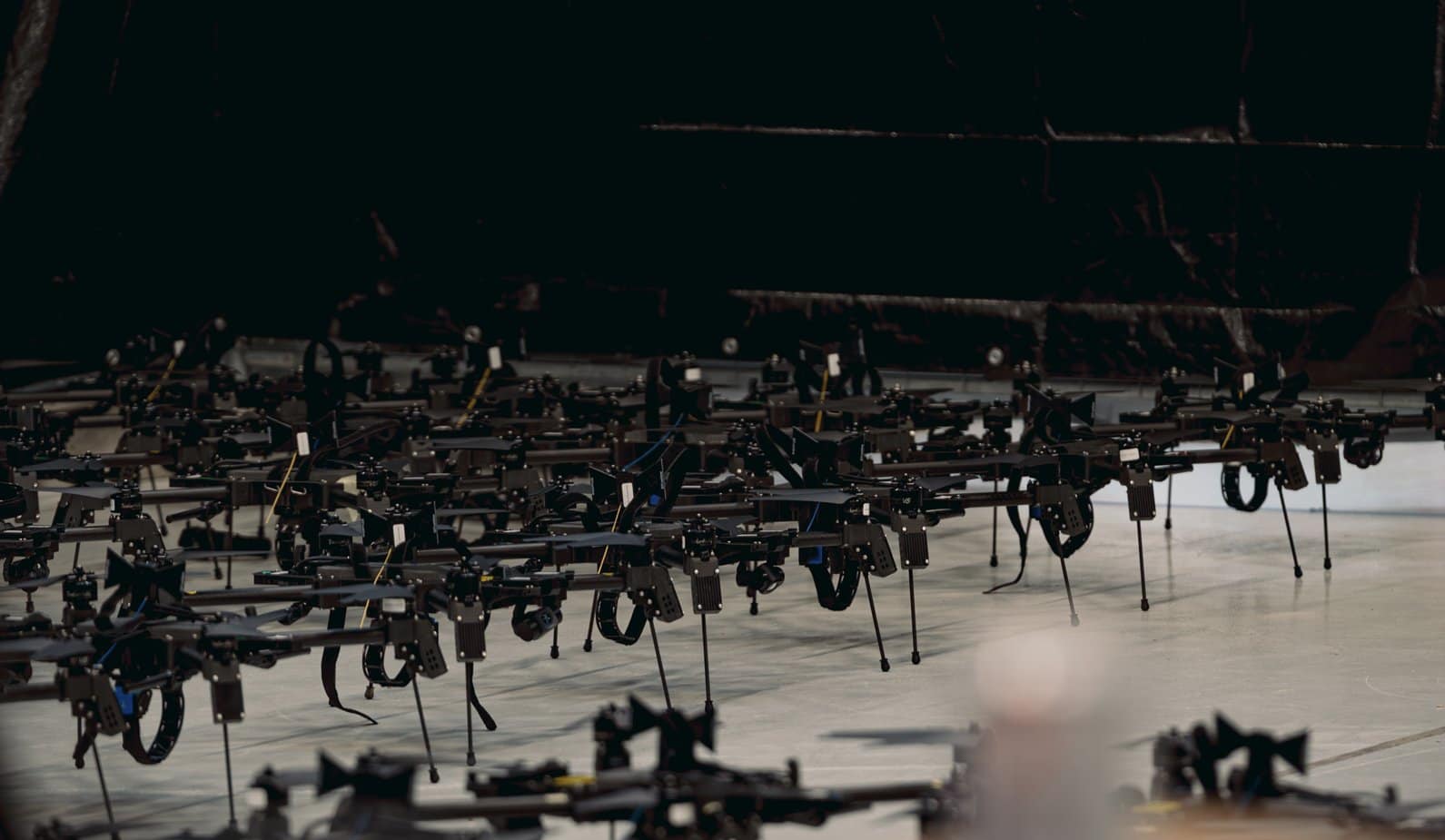
In addition, the intelligence revealed a newly established production of composite elements for UAVs at the Research and Production Center for Multipurpose Unmanned Systems. The project was frozen in 2020, but resumed after the start of the full-scale invasion. By the end of 2024, the facility was built and equipped, and in Liutyi 2025, it was launched. In March, it reached full capacity.
In addition, it is known that in early 2025, Russia offered Belarus to build a drone production plant. Russia’s basic proposal includes the construction of a plant with a capacity of up to 100,000 units annually.
This was stated by Deputy Chief of Staff of the Russian Presidential Administration Maxim Oreshkin during an exhibition of Russian drones visited by Alexander Lukashenko.
According to him, the plan is to set up production of all key components, as well as use Russian “technological developments and solutions.”
“It is very important for Belarus to have its own production facilities that would ensure not only the economy but also the country’s security sector are truly sovereign,” the Russian official added.
It is known that Belarus has developed its own missiles for the Buk system, the 9M318, which are similar in characteristics to the Russian 9M317M missiles used in the most recent Russian version of the Buk M3.
It is believed that the 9M318 was developed jointly with the People’s Republic of China (PRC). According to Russian sources, China produces the solid rocket engine and a number of other components for the 9M318, while Belarusian specialists are responsible for the missile body, guidance and control algorithms.
Although these missiles have not yet been seen in service with the Russian military, given the growing shortage of missiles for anti-aircraft missile systems amid intensified Ukrainian drone attacks, it is likely that in the future Russia will be forced to purchase them as well.
After Belarus transferred more than 130,000 tons of ammunition, including anti-aircraft missiles, from its own stockpiles to Russia in 2022-2023, the warehouses were largely depleted and supplies had to be reduced.
In total, in 2024, the supply of ammunition in volume terms amounted to 192 railcars, which corresponds to a level of approximately 4,500-5,000 tons.
It is known that the Belarusian Precision Electromechanics Plant and the Russian research and production association Splav signed a contract in March 2023 to supply more than 184,000 hull and mechanical parts of rocket shells as part of the Russian defense state order.
According to the document, starting in September 2023, the Belarusian side undertook to supply 13,000 sets of parts for 122 mm rockets to Russia every month. One thousand 122 mm caliber shells are to be returned to Belarus.
In addition, it is known that Belarus, with the help of equipment purchased in China, has launched the production of 152 mm artillery shells and 122 mm rockets for Russia.
This was stated by the public representative of the organization of former employees of the Belarusian security forces BelPol, Matvey Kupreichik, during the Ostroh Forum, which took place in Ukraine from November 11 to 15.
“China has helped the Belarusian regime to set up the production of 240,000 152-mm artillery shells and 240,000 122-mm missiles for the Grad system. This is the data for the year. Thus, one Belarusian enterprise produces at least half a million shells,” he said, specifying that these are shells without explosives inside.
According to Kupreichyk, Lukashenka’s regime is currently unable to manufacture explosives on its own, as it has no production facilities. Therefore, it only produces bodies that are equipped with explosives in Russia.
In addition to supplying ammunition and its parts, Belarus also supplies Russia with equipment for its production.
For example, in 2025, the Minsk branch of Center-5 manufactured and handed over to the Russian company equipment for an ammunition production line. The equipment is intended for a line for filling 152 mm artillery shells and 122 mm 9M22U rocket warheads with explosives.
The equipment is scheduled to be manufactured in March 2025, ready for shipment in August 2025, and handed over in early September 2025. The estimated annual capacity of the line is about 180,000 shells per year.
Підтримати нас можна через:
Приват: 5169 3351 0164 7408 PayPal - [email protected] Стати нашим патроном за лінком ⬇
Subscribe to our newsletter
or on ours Telegram
Thank you!!
You are subscribed to our newsletter