



Popular
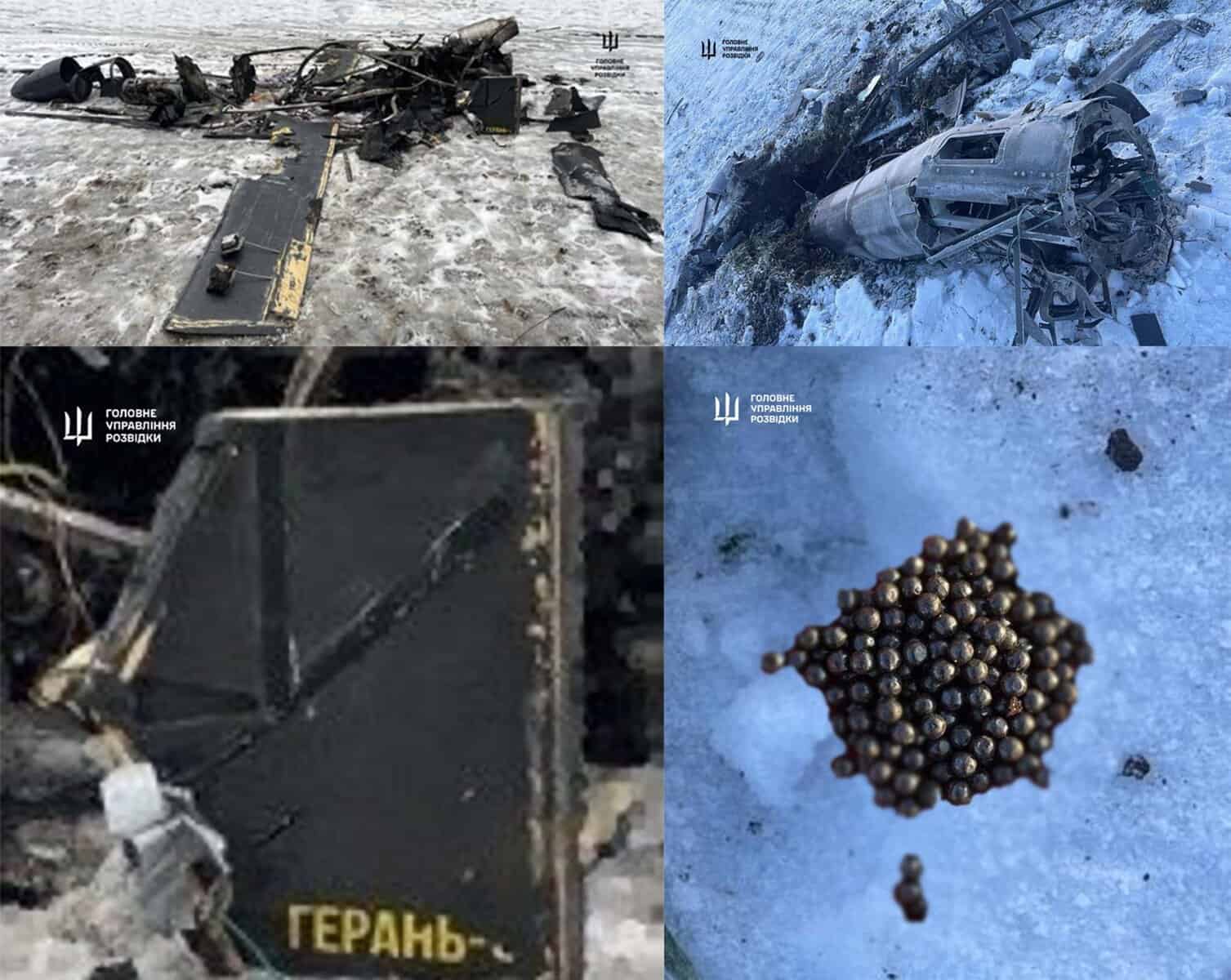
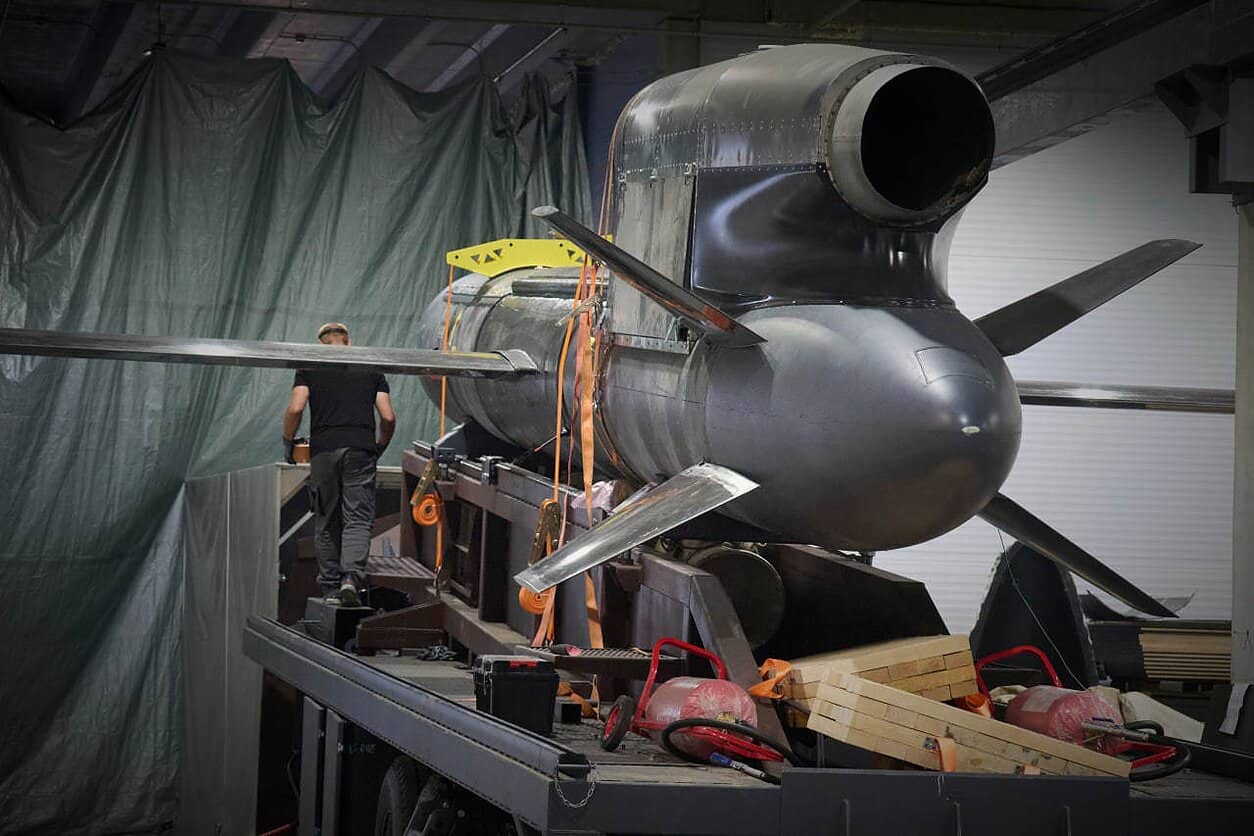
Russian Geran-5 missile-drones, used by Russia to attack Ukraine earlier this year, rely on Western microelectronics.
This conclusion is based on an analysis of components published on the War&Sanctions portal.
The microchips used in the Geran-5 originate from several countries, including Germany and the United States. Some components are manufactured in China, such as the XK-F358 MESH modem produced by Xingkai Tech.
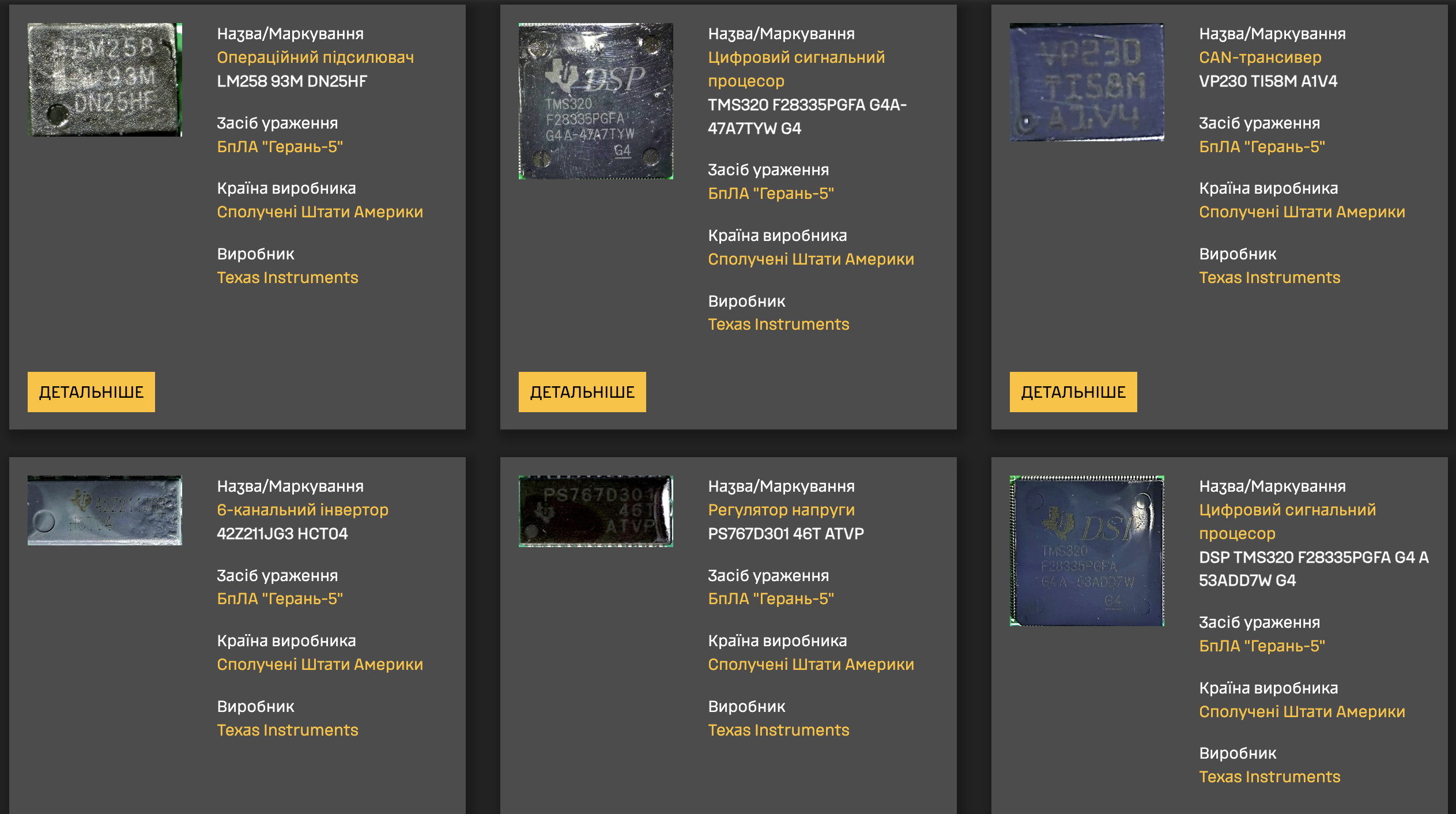
A study of the Geran-5’s component base identified electronics made by U.S. companies Texas Instruments, CTS Corporation, and Monolithic Power Systems.
In particular, the drone includes several Texas Instruments products, including the LM258 operational amplifier, the TMS320 digital signal processor, the VP230 CAN transceiver, the 42Z211JG3 six-channel inverter, and the PS767D301 voltage regulator.
The identified CTS Corporation components include CTS39CB3 clock oscillators. Products from Monolithic Power Systems include the MPST17 synchronous step-down converter.
Microchips produced by the German company Infineon Technologies were also identified, specifically the 014N06NS transistors.
The production dates of some components indicate that they were manufactured after the start of the full-scale war, once again confirming Russia’s ability to circumvent sanctions in order to produce new strike drones.
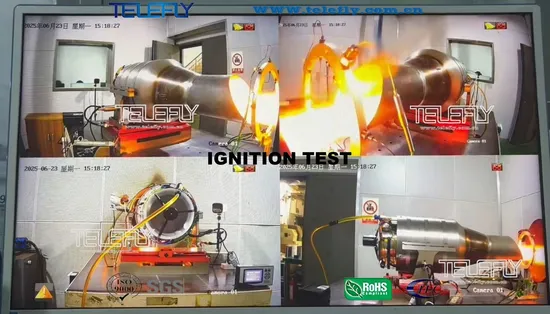
The Geran-5 is equipped with a TELEFLY TF-TJ2000A turbojet engine. According to publicly available information, the engine delivers 200 kgf of thrust while weighing 29 kg.
Despite sharing the same name series as earlier Russian copies of Iranian drones—Geran-1, Geran-2, Geran-3, and Geran-4—and being produced by the same manufacturer, the Geran-5 differs significantly from previous models in both its aerodynamic design and intended purpose.

In terms of its airframe shape, the new drone more closely resembles a cruise missile rather than Shahed-type UAVs with delta wings, and can be classified as a missile-drone—a term already widely used for Ukrainian systems.
The Defence Intelligence of Ukraine has previously reported that the Geran-5 is a Russian replica of the Iranian Karrar UAV.
The key distinguishing feature of the new platform is its flight speed, estimated at 500–600 km/h.
By comparison, Russia’s most widely used drone, the Geran-2, has a top speed of around 180 km/h, making the Geran-5 a significantly more difficult target to intercept.
Підтримати нас можна через:
Приват: 5169 3351 0164 7408 PayPal - [email protected] Стати нашим патроном за лінком ⬇
Subscribe to our newsletter
or on ours Telegram
Thank you!!
You are subscribed to our newsletter