





Popular

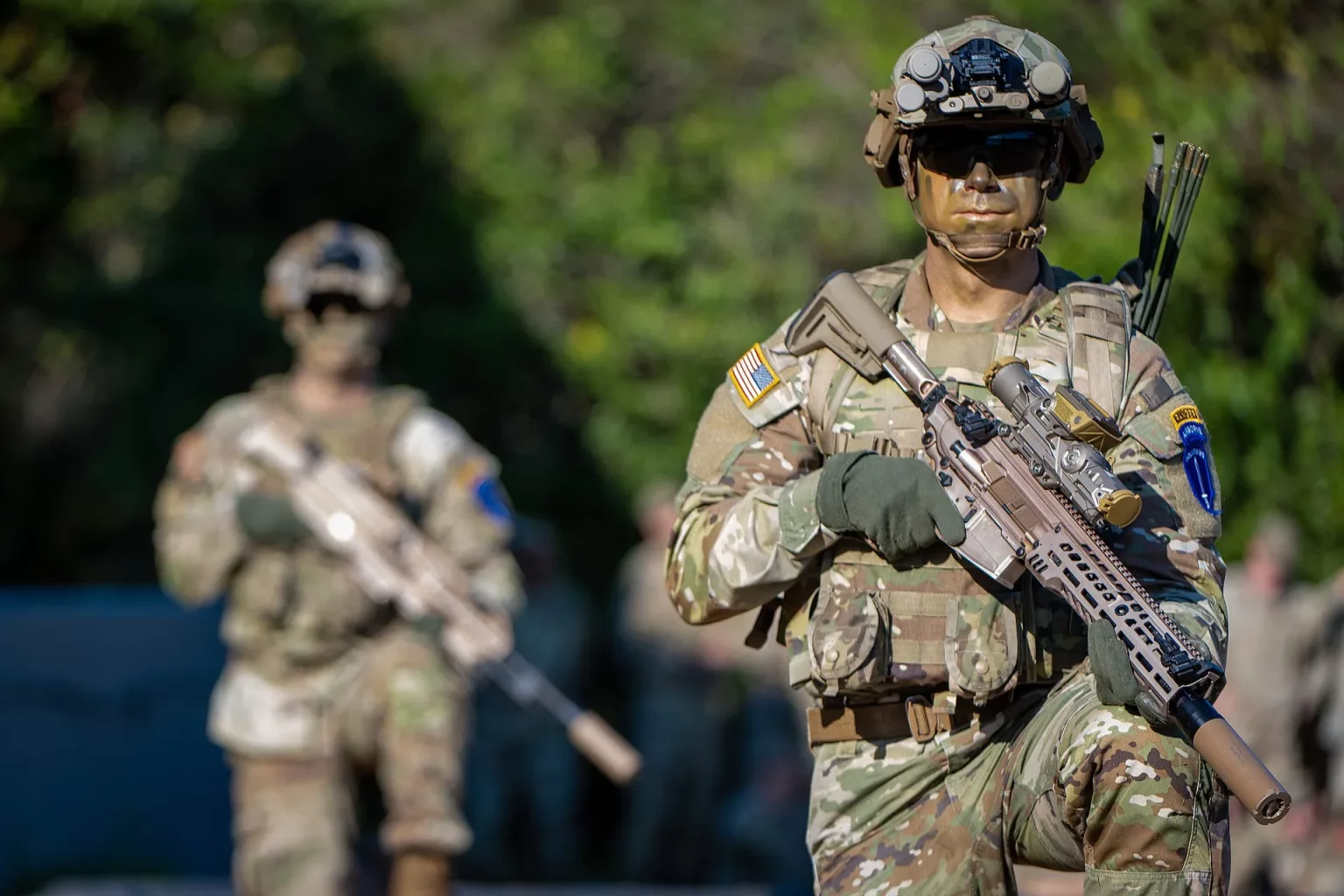
U.S. Army soldiers have voiced concerns over the new 6.8×51 mm XM7 rifle developed by Sig Sauer, citing issues with reliability, excessive wear, and design flaws.
The criticism, reported by The War Zone, is based on comments from Army Capt. Braden Trent and observations during live-fire exercises.
According to Trent, the rifle experiences premature barrel wear and repeated failures of key components, calling into question its suitability for combat deployment.
Based on feedback from soldiers who used the weapon during field exercises, he concluded that XM7 is currently “unfit” for operational use.

Trent compared XM7 to the Army’s standard-issue M4A1, focusing on combat weight, which includes the rifle, loaded magazine, and attached accessories.
He states that M4A1 weighs around 3.8 kg, while XM7 reaches up to 6.9 kg, nearly double. He also claimed that the XM7’s barrel was 13 inches long, compared to the 14.5-inch barrel of M4A1.
However, official Army specifications contradict this, listing the XM7 barrel at 15.3 inches, which is even longer than the 14.5-inch barrel of M4A1.
The source of the 6.9 kg figure remains unclear; Army data show XM7 weighs 3.8 kg unloaded and 4.4 kg with a suppressor, excluding the weight of optics and ammunition. A loaded 20-round magazine and XM157 optical sight add weight.
National Guard specialist Turner Horton, drawing on Trent’s research, noted that XM7 rifle was required to fire projectiles at speeds exceeding 900 meters per second.
Achieving this velocity with a shorter barrel requires more powerful ammunition, which increases chamber pressure.
This, in turn, contributes to accelerated component wear and can result in casing ruptures — a potential hazard for the operator.
Based on a survey of more than 150 service members, technical personnel, and commanders, as well as an inspection of 23 XM7 samples, Trent identified several additional issues.
The most common was the appearance of scratches in the barrels after approximately 2,000 rounds. These marks were found four inches from the muzzle or one inch behind the gas block — areas critical to both accuracy and firing safety.
Trent also flagged the rifle’s charging handle, which requires a full rearward pull to operate, as problematic under combat conditions. Additionally, there were three reported cases in which the suppressor locking ring failed, as the component could be broken by hand, rendering the suppressor unusable.

Another concern involved the ambidextrous magazine release system. During field use, it reportedly caught on other equipment, causing the magazine to drop unexpectedly.
Overall, XM7 is heavier, bulkier, produces greater recoil, and has a smaller magazine capacity — 20 rounds compared to 30 in M4A1. In most combat engagements, which typically occur within 300 meters, the XM7’s extended range and penetration capabilities offer limited tactical advantage, Trent said.
He cited a training scenario in which his platoon was tasked with providing suppressive fire. After just 10 minutes of engagement, his unit had nearly exhausted its ammunition supply.
Sig Sauer representatives Jason St. John and Joshua Shoemaker rejected Trent’s criticisms, stating that he had not consulted the company or the Army’s program office.
St. John said Trent had misunderstood the key aspects of the Next Generation Squad Weapon (NGSW) program and dismissed claims about excessive chamber pressure and casing ruptures.
He also assured that there had not been cases of cartridge case ruptures, and all potential risks were checked through rigorous testing, including tests for clogging the barrel bore.

Trent’s claims regarding the XM7’s magazine release issues were described as outdated. According to Sig Sauer, the relevant component has already been modified under the Army’s ongoing change process.
Allegations that the charging handle could break off were also dismissed. The company says such failures stem from improper training when transitioning from other weapons platforms.
Sig Sauer representative Jason St. John rejected criticisms of the rifle’s side-mounted charging handle, arguing that the dual-handle configuration offers added flexibility rather than posing a design flaw. He also says he was unaware of any verified issues related to the suppressor’s locking ring.
The company stated that the XM7’s barrel life exceeded 10,000 rounds — double the threshold set by the Army. Sig Sauer acknowledged that the system remained in development and would continue to be refined in response to operational feedback over the coming decades.
Підтримати нас можна через:
Приват: 5169 3351 0164 7408 PayPal - [email protected] Стати нашим патроном за лінком ⬇
Subscribe to our newsletter
or on ours Telegram
Thank you!!
You are subscribed to our newsletter