

Popular

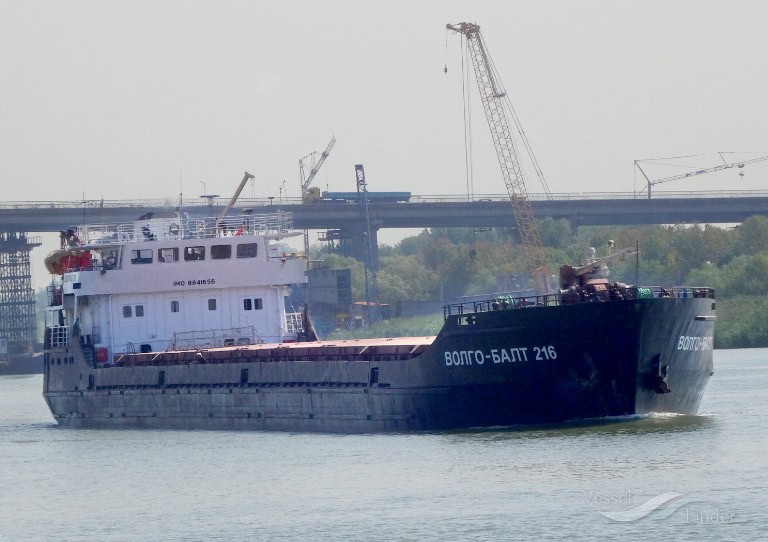
A Spanish investigation has concluded that the Russian cargo ship Ursa Major, which sank off the coast of Cartagena in December 2024, was transporting a secret strategic cargo.
Investigators found that the vessel was carrying two VM-4SG nuclear reactor hulls intended for North Korea, according to the Spanish newspaper La Verdad.
The ship was part of Russia’s so-called “ghost fleet” and was traveling on an unusual route from St. Petersburg to Vladivostok via the Mediterranean Sea.
Although the captain officially declared that the cargo consisted of empty containers, port cranes, and auxiliary equipment, aerial surveillance later identified undeclared heavy containers at the ship’s stern.
Spanish authorities recorded a sudden course change and loss of propulsion on December 22, followed by a distress signal on December 23, sent from 60 nautical miles off Cartagena.

An inspection of the damage revealed a hole in the hull with metal deformed inward, indicating an external impact rather than an internal explosion.
The size of the breach did not match that of a conventional torpedo, but was consistent with a strike by a supercavitating armor-piercing torpedo with a small or no warhead.
Spanish authorities do not rule out the possibility that the interference was intended to disrupt a covert delivery of nuclear technology to Kim’s regime.

The situation escalated after the appearance of the Russian landing ship Ivan Gren, which demanded that Spanish vessels withdraw from the accident area.
Following the use of signal flares and electronic warfare measures, Ursa Major disappeared from the surface and sank to a depth of approximately 2,500 meters.
Seismographs recorded vibrations consistent with a low-yield underwater explosive detonation at the moment the ship went down.
Subsequently, the Russian oceanographic vessel Yantar arrived at the site, which analysts believe may have conducted an operation to destroy or conceal the remnants of the secret cargo.
For reference, North Korea has completed the hull of its first domestically produced nuclear-powered submarine.
Підтримати нас можна через:
Приват: 5169 3351 0164 7408 PayPal - [email protected] Стати нашим патроном за лінком ⬇
Subscribe to our newsletter
or on ours Telegram
Thank you!!
You are subscribed to our newsletter