





Popular
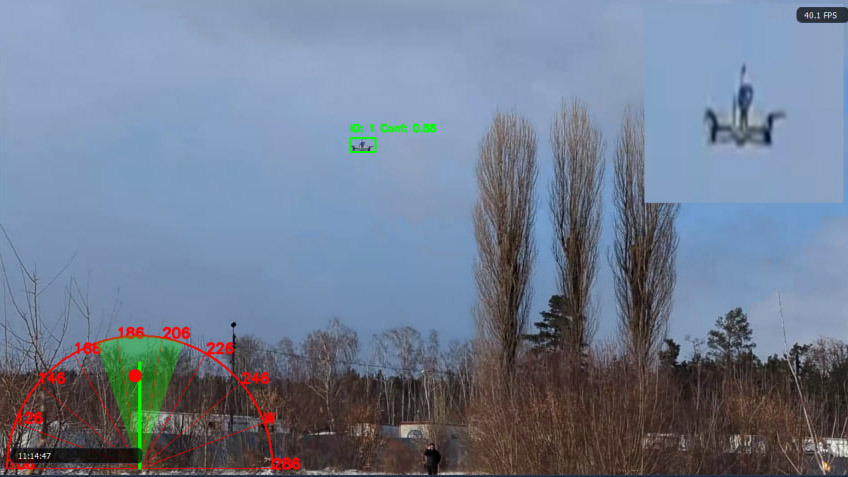
Ukrainian company I-SEE has developed an AI-based drone-detection system and is working on an autonomous anti-drone active-protection system built on the platform.
I-SEE announced the development in a press release.
The company said the solution combines computer vision with Edge AI. The system has evolved from what it described as an intelligent detector and tracker of enemy UAVs into a broader platform designed for kinetic interception systems.
I-SEE says a key advantage of the system is hardware independence. According to the company, the software can convert virtually any optical device into a smart sensor, processing video streams locally without latency or internet connectivity.
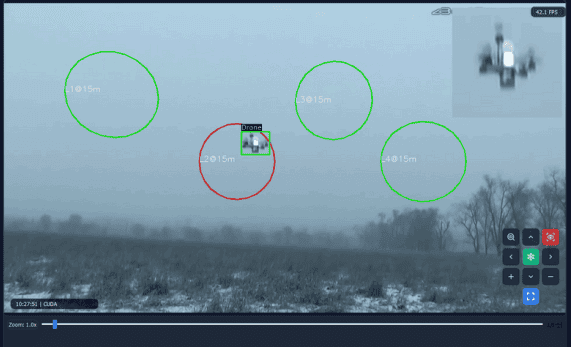
This allows deployment across a wide range of scenarios:
The company says its tracking algorithms calculate a target’s motion vector and speed with sufficient precision to enable automated use of net-launching systems. The system can estimate distance, calculate lead, and deploy a net to neutralize an FPV drone or a drone used for munition drops without operator input.
According to I-SEE, the next stage of development is a full-scale anti-drone active protection system. The company said its team is currently working on an automated turret.
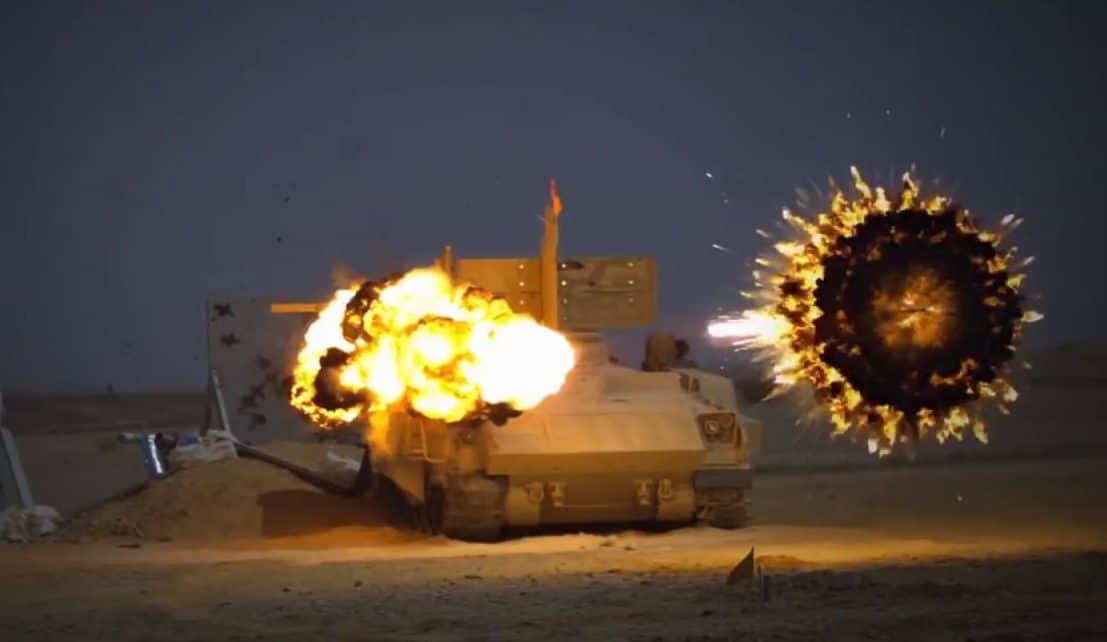
“Detection is only the first stage. When the enemy uses fiber-optic drones or systems with inertial guidance, electronic warfare becomes less effective. The response is kinetic interception,” the company reported.
The integration of the I-SEE AI tracker with a high-speed robotic turret is intended to create an autonomous protective system over vehicles or positions. According to the concept, the turret would automatically aim at detected targets and engage them using integrated small arms or net-launching systems, reducing reliance on operator response times.
The development of a reliable drone-focused active protection system could significantly affect battlefield dynamics, similar to the impact of FPV drones, and potentially improve the survivability of mechanized and armored units.
In November 2025, it was reported that Russia had been unable to adapt its Arena-M active protection system to intercept FPV drones due to radar limitations.
Russian designers have been working since at least 2019 to integrate the Arena-M system into T-72B3 and T-90M tanks. In 2024, individual T-72B3 and T-90M units were observed equipped with the system. Despite announcements that T-72 tanks fitted with KAZ would be deployed to the front, they were not fielded and were instead used in the filming of a promotional video.
Підтримати нас можна через:
Приват: 5169 3351 0164 7408 PayPal - [email protected] Стати нашим патроном за лінком ⬇
Subscribe to our newsletter
or on ours Telegram
Thank you!!
You are subscribed to our newsletter