




Popular
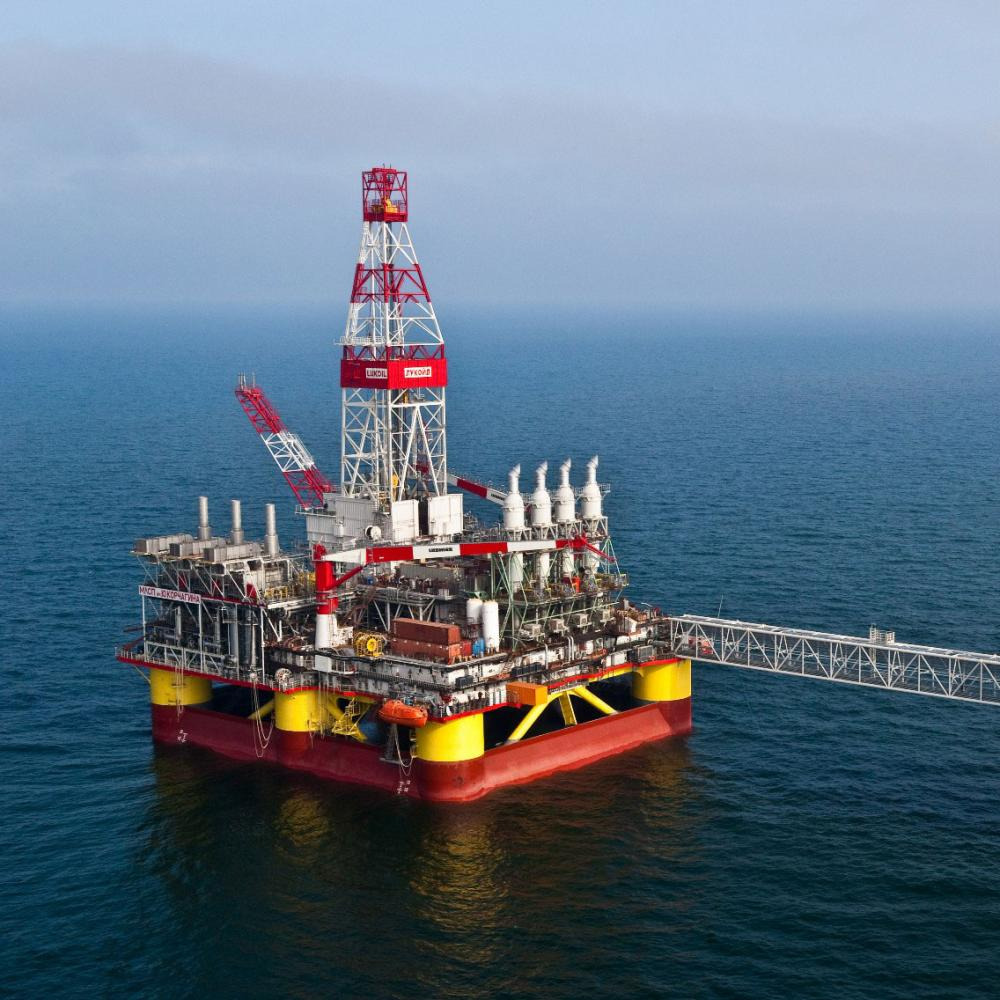
On the night of April 10, the Ukrainian Armed Forces used strike drones to hit two drilling platforms on the Caspian Sea shelf.
This was reported by the General Staff of the Armed Forces of Ukraine.
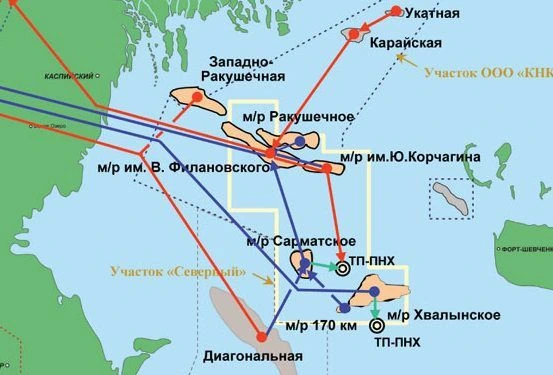
According to preliminary information from the agency, an ice-resistant stationary platform (LSP-2) on the drilling platform at the V. Graifer (“Rakushechne”) field and an ice-resistant stationary platform (LSP-1) on the drilling platform at the Yuri Korchagin field were struck.
“The drilling platforms are located in the northern Caspian Sea, nearly a thousand kilometers from the front line, and are a crucial link in supplying fuel and lubricants to the Russian occupation army. The Ukrainian Defense Forces will continue to strike key targets of the occupiers until the Russian Federation’s armed aggression against Ukraine is completely halted,” the General Staff stated.
Of particular note is that, judging by images released by the General Staff, the drones used to attack the oil platforms had a video transmission channel, even though they attacked targets located approximately 900 kilometers from the front line.

Previous attacks on Russian oil and gas infrastructure in the Caspian Sea took place between December 2025 and January 2026. The first strike was recorded on December 11 — an oil production platform at the V. Filanovsky field was attacked at that time.
Since then, at least four more attacks have been reported over the course of two months on the production infrastructure of the V. Filanovsky, Yuri Korchagin, and Valery Graifer fields, which belong to the Russian company Lukoil.
The V. Filanovsky field is the largest oil field in the Russian sector of the Caspian Sea. It was discovered in 2005. Initial recoverable reserves are estimated at 129 million tons of oil and 30 billion cubic meters of gas. Annual production volumes amount to about 6 million tons of oil.
The Yuri Korchagin Field is Lukoil’s first Caspian project, commissioned in 2010. Proven reserves amount to approximately 15 million tons of oil. Annual production is about 1.5 million tons of oil.
The Valery Graifer Field (“Rakushechnoe”) is estimated to contain 39 million tons of oil and approximately 33 billion cubic meters of gas. The projected production level is about 1.2 million tons of oil per year.
In late January in the Caspian Sea, the Iranian vessel Caspian Shiva, which was heading to the Russian port of Makhachkala, sustained a breach of “unknown origin,” ran aground, and began to sink.
Shortly before that, in the waters of the Caspian Sea, the Iranian-flagged dry cargo ship RONA, which regularly sailed between Iranian ports and Astrakhan, Makhachkala, and Azov, sank. This route coincides with the main route for maritime shipments of Iranian weapons to Russia.
Підтримати нас можна через:
Приват: 5169 3351 0164 7408 PayPal - [email protected] Стати нашим патроном за лінком ⬇
Subscribe to our newsletter
or on ours Telegram
Thank you!!
You are subscribed to our newsletter