






Popular

The Pentagon has officially confirmed a delay in the U.S. Navy’s F/A-XX carrier-based fighter development program.
Aviation Week reported this, citing sources within the U.S. Department of Defense.
According to the media, the Pentagon is currently assessing the capacity of the defense industrial base, as there are serious concerns about its ability to simultaneously support the competitions and serial production of two sixth-generation aircraft programs – the Navy’s F/A-XX and the Air Force’s F-47 (NGAD).
As a result, the competition announcement and the selection of a contractor for the F/A-XX have already been postponed to a later date.
Aviation Week notes that the delays are caused not only by financial constraints but also by staffing and production challenges within the industry.
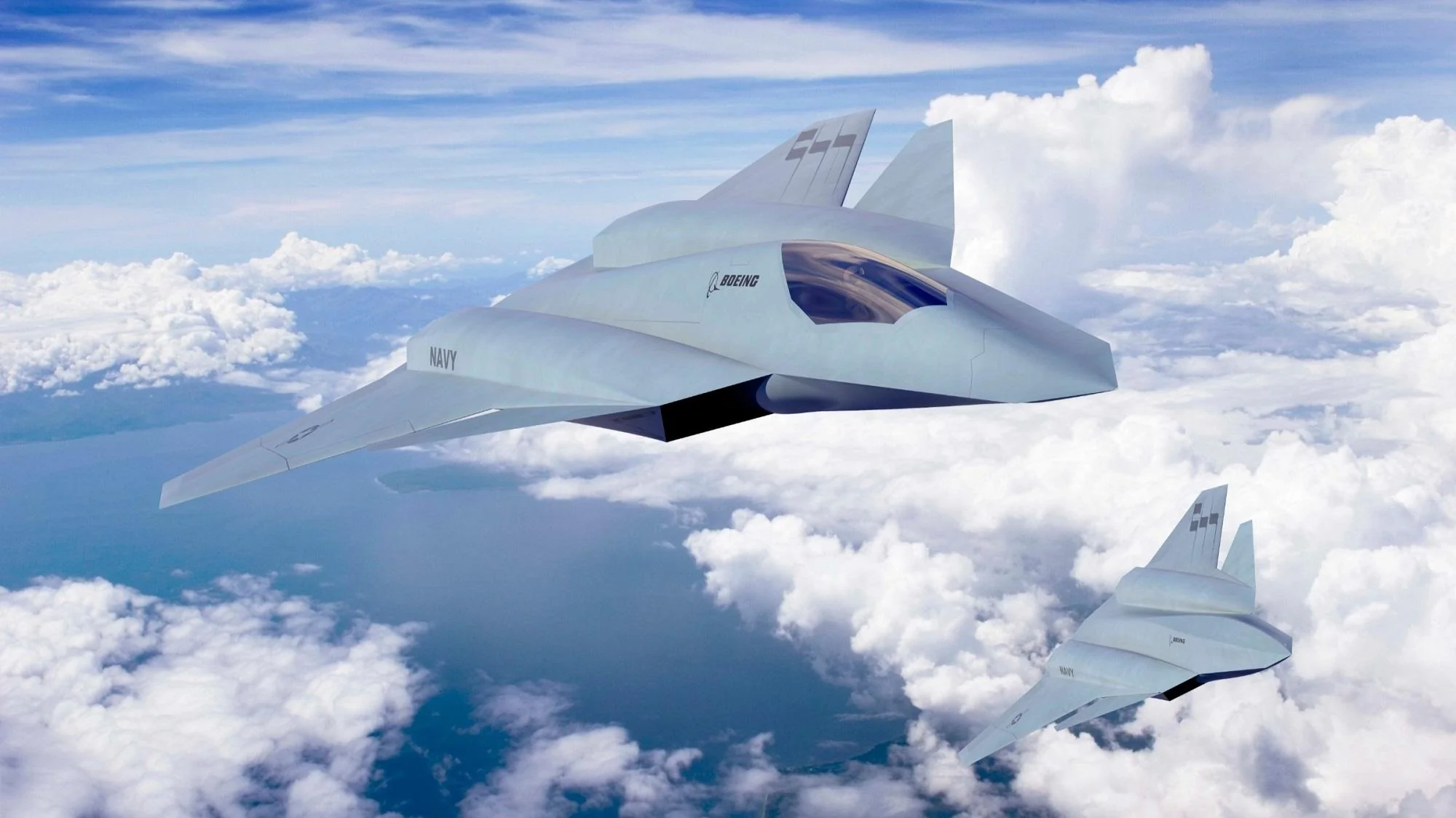
Despite this, the Pentagon emphasizes that it is not abandoning the F/A-XX program. The new aircraft is intended to replace the F/A-18E/F Super Hornet in the 2030s and ensure the U.S. Navy’s advantage in the Indo-Pacific region.
Defense officials stress that the delays are technical and procedural, and not related to political or financial decisions.
Militarnyi previously reported that the U.S. Navy has yet to announce a winner in the competition to develop the sixth-generation F/A-XX carrier-based fighter jet due to funding issues.
In addition, the Cost Assessment and Program Evaluation (CAPE) office of Defense Secretary Pete Hegseth plans to cut funding for the F/A-XX’s development, redirecting $454 million already allocated by Congress in the 2025 fiscal year budget to other projects.
The F/A-XX program is a U.S. Navy initiative to develop a sixth-generation fighter jet that will replace the F/A-18E/F Super Hornet and complement the F-35C in the 2030s.
Although the program has a similar name to the Air Force’s NGAD initiative, its goals, requirements, and technical characteristics differ significantly. The need for such an aircraft was first identified back in June 2008.
The future fighter is expected to operate effectively in dense enemy air defense environments and to perform a wide range of missions, including aerial refueling, reconnaissance, surveillance, target designation, and electronic warfare.
The Navy is considering several configuration options – manned, unmanned, or optionally manned – to ensure maximum adaptability to future combat conditions.

In March, it became known that Lockheed Martin had dropped out of the competition. As a result, only two participants remain in the program – Northrop Grumman and Boeing.
For Northrop Grumman, this is the company’s first carrier-based fighter project since the legendary F-14 Tomcat.
For Boeing, a victory could mark a significant step toward dominance in the U.S. armed forces’ development of sixth-generation fighter jets.
Підтримати нас можна через:
Приват: 5169 3351 0164 7408 PayPal - [email protected] Стати нашим патроном за лінком ⬇
Subscribe to our newsletter
or on ours Telegram
Thank you!!
You are subscribed to our newsletter