





Popular
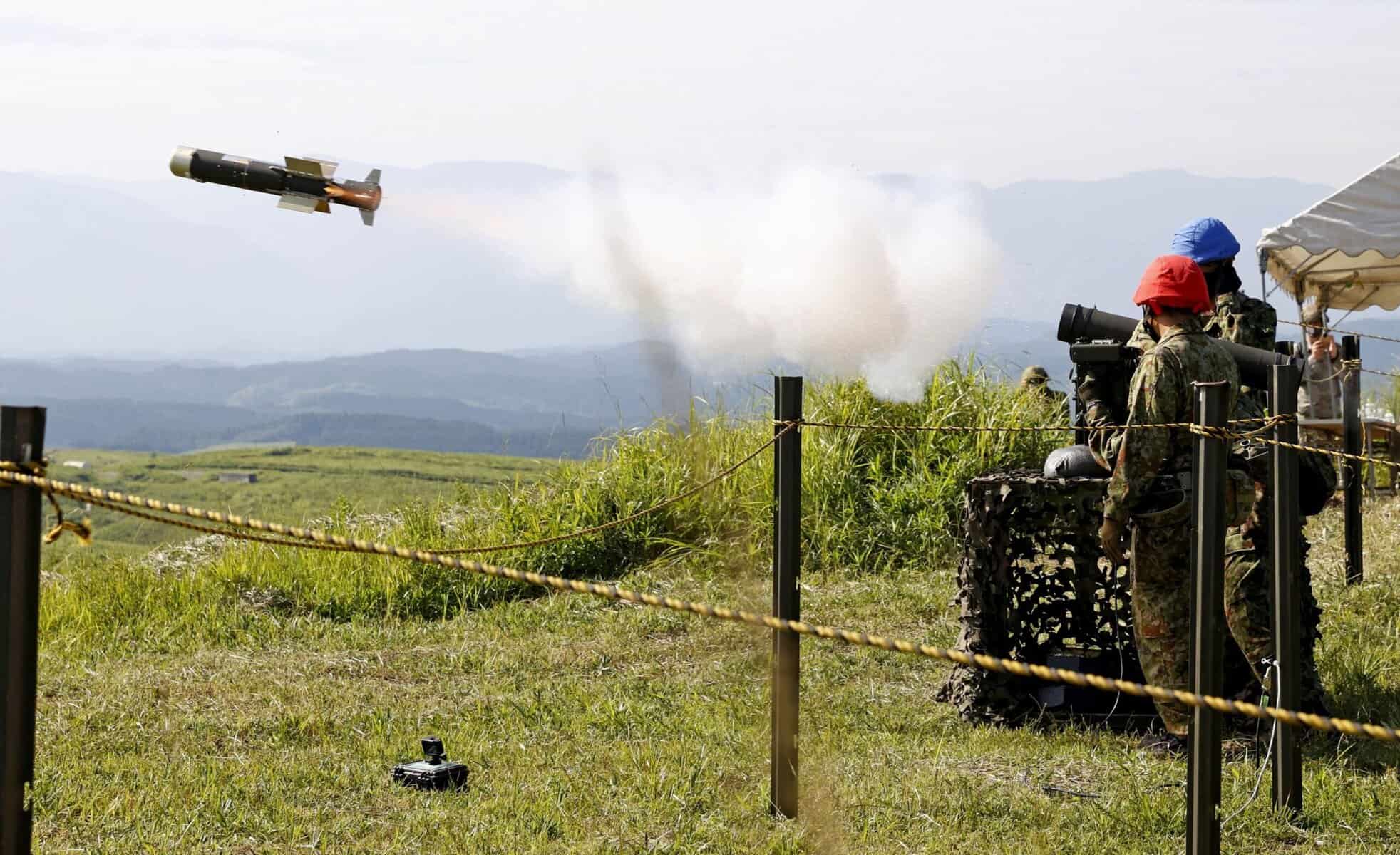
Japan’s Ministry of Defense has ordered additional missiles for the third-generation Type 01 LMAT anti-tank missile system.
This was reported on the official website of the Japanese Ministry of Defense.
The contract was signed on December 17, 2025, with Kawasaki Heavy Industries. The total value of the order is 2,008,567,000 yen (about $13 million).
The agreement provides for the production of new tandem anti-tank missiles equipped with an infrared homing seeker operating on a “fire-and-forget” principle.
The Type 01 systems are the primary anti-tank weapon for Japanese infantry units and are issued at a rate of one launcher per soldier in a detachment.

Militarnyi previously reported that the new MPMS Kai missile system was inadvertently shown during military exercises in Japan.
Development of the Type 01 LMAT system took place between 1993 and 1999 and included several stages during which Japanese engineers addressed several technical challenges.
The program launched in 1993 with prototype development, which continued until 1996.
Work on final prototypes and technical testing began in 1997. After approval of the basic design, engineers focused on ergonomics and interface improvements to ensure a single soldier could effectively operate the system.
In 1998-1999, the military conducted large-scale testing, including operator safety trials, environmental resistance testing, drop tests, and transport evaluations.
Particular attention was paid to live-fire testing against real targets. The results confirmed guidance accuracy and the effectiveness of the tandem warhead.
In November 1999, the system was officially certified as meeting all requirements, paving the way for mass production.
The Type 01 LMAT lightweight anti-tank missile system was developed to replace the 84 mm recoilless gun (Carl Gustaf) in infantry units, improving the capability to engage enemy tanks and armored vehicles in close combat.
The system consists of a missile, a launcher, and a night sight. Its total weight does not exceed 20 kilograms, making it lighter and more compact than its predecessors. This enables a single soldier to operate the weapon.
A key technical feature is its infrared homing seeker based on an uncooled sensor — the first implementation of such technology in this class of system at the time.
This enables a fire-and-forget capability, allowing the missile to track the target independently after lock-on while the operator relocates. The absence of a cooling requirement significantly reduces launch preparation time.
Another innovation was the use of a jet-based flight control system, which enables safe firing from enclosed spaces and shelters, increasing operator survivability.
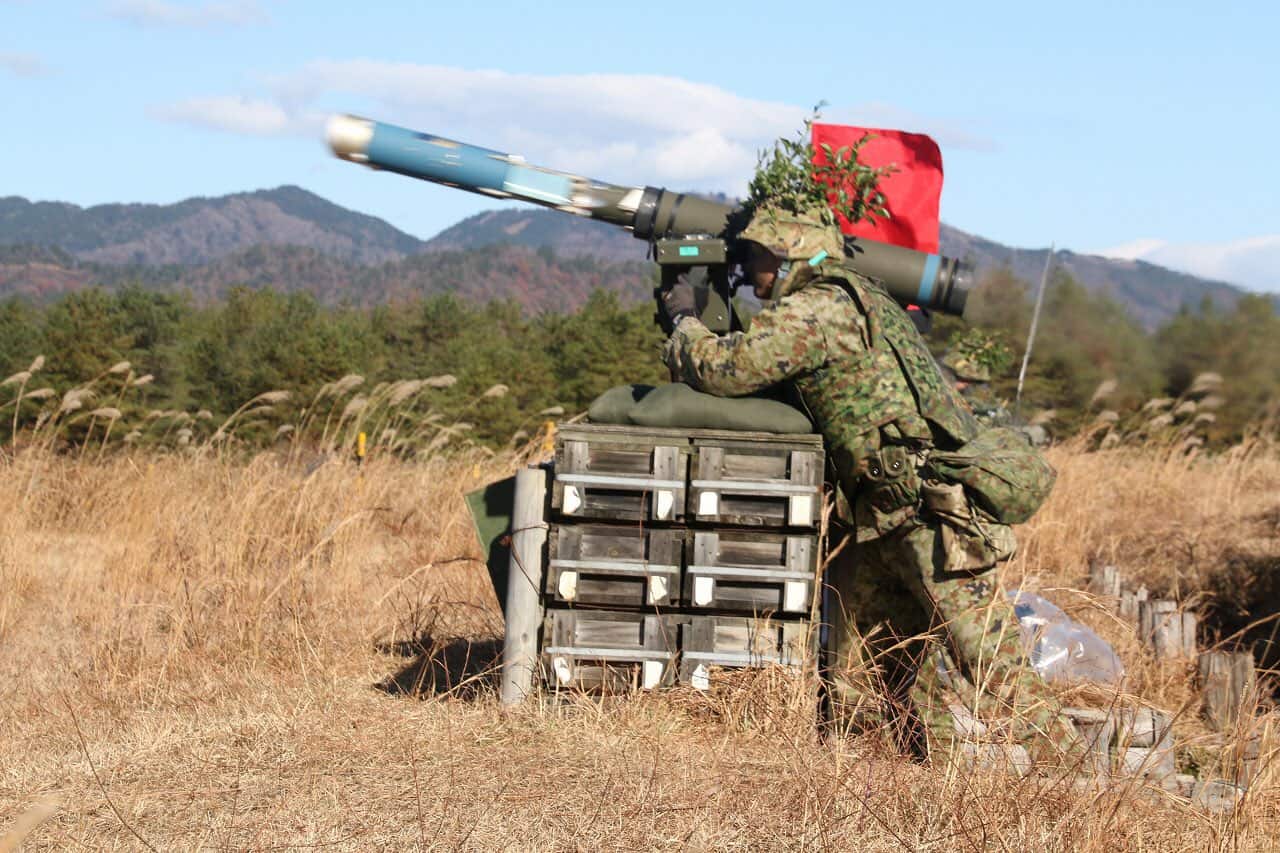
Despite its compact size, the missile is equipped with a tandem warhead, the first such development in Japan at the time, capable of defeating explosive reactive armor and penetrating the protection of main battle tanks.
Production costs were reduced by using commercial electronic components and large-scale serial procurement, a practice common in Japan’s defense industry.
Підтримати нас можна через:
Приват: 5169 3351 0164 7408 PayPal - [email protected] Стати нашим патроном за лінком ⬇
Subscribe to our newsletter
or on ours Telegram
Thank you!!
You are subscribed to our newsletter