

Popular

The Estonian government has passed a law to withdraw from the Ottawa Convention — an international agreement that prohibits the use, stockpiling, production, and transfer of anti-personnel mines and mandates their destruction.
The Estonian Ministry of Defence announced this.
Foreign Minister Margus Tsahkna, who submitted the bill to the Riigikogu (Estonian Parliament), explained that the decision demonstrates Estonia’s readiness to use all necessary means to defend its territory and freedom.
“I welcome the Riigikogu’s decision to pass the law on withdrawing from the convention. Leaving the convention gives the Estonian Defence Forces greater flexibility and freedom in choosing the weapons systems and solutions necessary to strengthen national defence. This significantly enhances Estonia’s ability to safeguard its security. I hope the President will soon promulgate the law,” Tsahkna said.
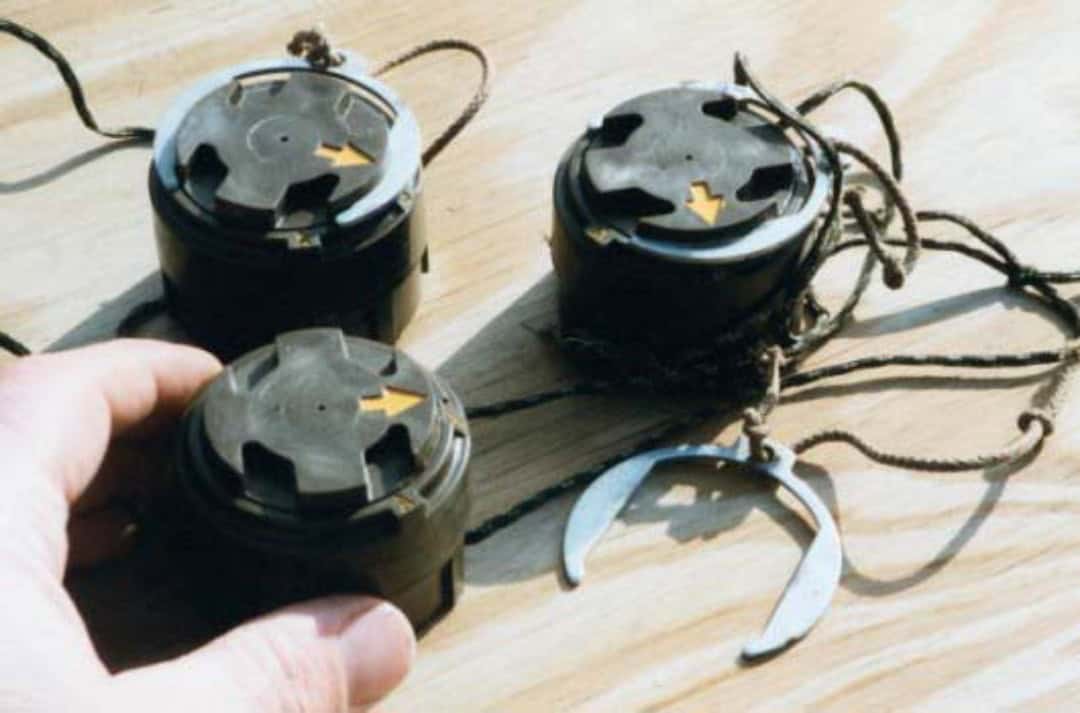
The Ottawa Convention entered into force in 1999, and Estonia joined it in 2004.
According to Tsahkna, the security situation has changed significantly since then, especially after Russia’s full-scale invasion of Ukraine. In this context, the withdrawal from the convention is seen as a justified step.
“Russia poses a serious and long-term threat not only to Ukraine but to all of Europe. During its aggression against Ukraine, Russia, which is not a party to the Ottawa Convention, has extensively used anti-personnel mines. Considering the lessons of Russian aggression, it is clear that Estonia should not unilaterally limit its armament capabilities, as that would put us at a disadvantage,” Tsahkna stated.

Meanwhile, Tsahkna emphasized that Estonia remains committed to the principles of international humanitarian law and aims to minimize the impact of military operations on the civilian population.
In particular, the country will continue supporting humanitarian demining efforts and protecting victims of armed conflicts.
In addition to Estonia, Latvia, Lithuania, Poland, and Finland have also initiated the process of withdrawing from the Ottawa Convention. The parliaments of Latvia and Lithuania have already passed the respective laws, while discussions are still ongoing in Poland and Finland.
According to Tsahkna, with this decision, the countries on NATO’s eastern flank are demonstrating their readiness, if necessary, to use all available means to deter aggression and defend their own territories.
He noted that these steps are not taken lightly, but in light of the deteriorating security situation, they should be seen as necessary to strengthen defense capabilities.
Estonia’s withdrawal from the convention will take effect six months after the official notification, provided that the country is not involved in an armed conflict at that time.
Підтримати нас можна через:
Приват: 5169 3351 0164 7408 PayPal - [email protected] Стати нашим патроном за лінком ⬇
Subscribe to our newsletter
or on ours Telegram
Thank you!!
You are subscribed to our newsletter