


Popular
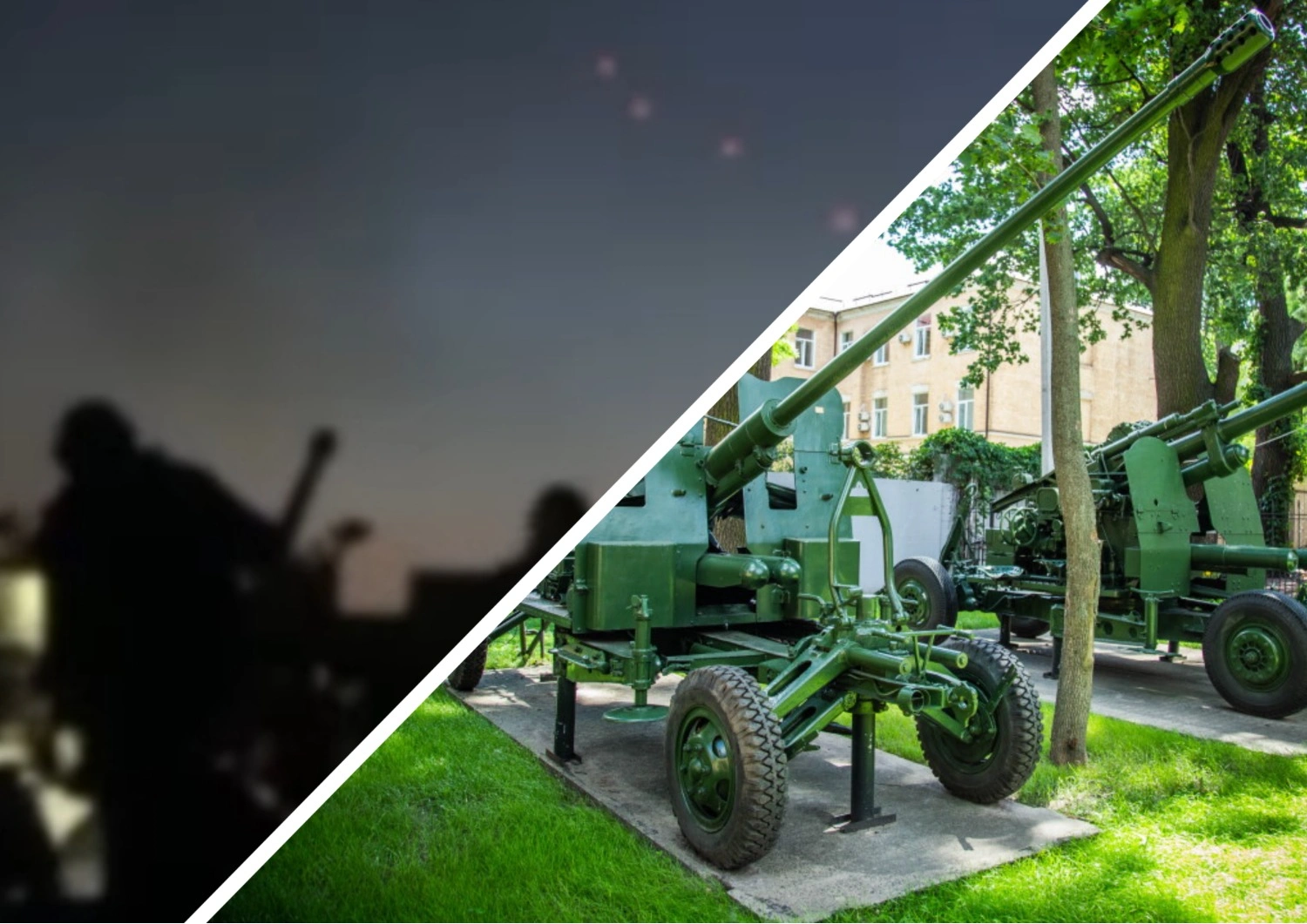
A mobile air defense unit of the 39th Tactical Aviation Brigade has destroyed an enemy Shahed kamikaze drone using the S-60 anti-aircraft artillery system.
The brigade shared a video of the operation on its official Facebook page, showing the crew firing at the aerial target, which ultimately exploded in the sky.
The 57-mm AZP-57 anti-aircraft gun, mounted on a truck chassis, was used for the strike.
Despite the strong recoil and oscillations, the crew managed to fire accurately at the target.
The S-60 anti-aircraft artillery system has been repurposed in the ongoing Russian-Ukrainian war for both air defense and ground target engagement.
Initially used for direct fire, since the beginning of the full-scale invasion, the system is now more often operated from closed positions, enhancing the safety of personnel and equipment.

The mobility of the S-60 system, mounted on a truck chassis, allows it to quickly advance to firing positions, engage targets, and retreat just as rapidly, which is crucial in modern warfare that involves frequent drone usage.
The S-60, a Soviet-era anti-aircraft artillery system developed in the mid-1940s, continues to see use in many countries around the world despite its age. The system is equipped with a 57-mm AZP-57 gun, designed to engage aerial targets up to 5,000 meters in altitude and ground targets, including armored vehicles, at distances of up to 6,000 meters.
The S-60 operates on an automated system that uses recoil energy during firing. Ammunition is loaded manually into clips, each holding four unitary shells of 57×348 mm SR. The system’s arsenal includes fragmentation-tracer and armor-piercing-incendiary shells. While the theoretical rate of fire is up to 120 rounds per minute, practical rates are typically limited to 70–75 due to cooling needs after 40–50 shots.
Originally a trailer-mounted unit used in anti-aircraft batteries, the S-60’s effectiveness declined with the advent of supersonic aircraft and more agile air targets in the 1960s. The cost of ammunition also rose sharply, making it less viable for modern combat.

By the late 1980s, the S-60 was mostly phased out from Soviet service, with the only remaining unit being the 990th Anti-Aircraft Artillery Regiment, which guarded the airport in Kunduz during the Afghan War. After the dissolution of the Soviet Union, many post-Soviet nations, including Russia and Ukraine, retired the S-60 due to its technical obsolescence. Some systems were scrapped, while others were placed in long-term storage.
Despite its outdated technology, the S-60 has found renewed use in the ongoing conflict in Ukraine, where its mobility and adaptability to modern warfare, especially in anti-drone operations, have extended its service life.
Підтримати нас можна через:
Приват: 5169 3351 0164 7408 PayPal - [email protected] Стати нашим патроном за лінком ⬇
Subscribe to our newsletter
or on ours Telegram
Thank you!!
You are subscribed to our newsletter