







Popular
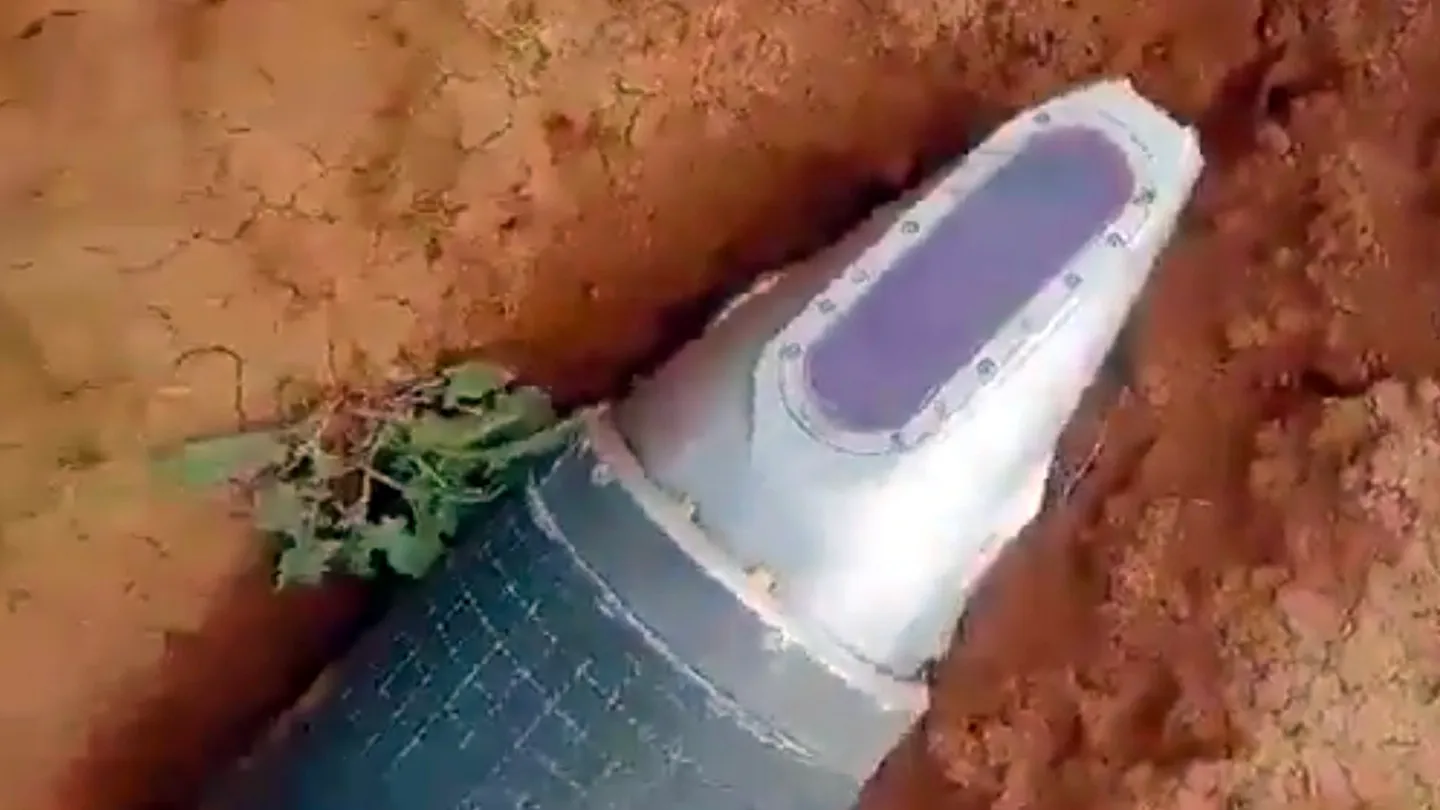
An intact warhead and kinetic block from a missile belonging to the US THAAD missile defense system have been discovered on Syrian territory.
This is reported by The War Zone.
It is reported that this critical component of the missile was found near the Syrian city of Suwayda in the southwestern part of the country, close to the border with Jordan, where one of the system’s batteries is deployed.
The published photos show the seeker head under a protective fairing and part of the kinetic block. The fairing itself is mounted on the kinetic warhead, which, in turn, is attached to the booster stage.
In the final phase of flight, the fairing is jettisoned, and upon approaching the target, the seeker head is destroyed along with the kinetic warhead.
#Syria: this unusual debris, reportedly an unexploded missile, fell today in the Southern #Suwayda countryside. pic.twitter.com/g4jVL355EV
— Qalaat Al Mudiq (@QalaatAlMudiq) April 6, 2026
The fact that the fairing, along with the seeker head and kinetic warhead, remained intact may indicate that the missile failed to function.
Gaining access to the THAAD seeker, as well as to the kinetic warhead, potentially opens up opportunities for a detailed analysis of their characteristics and limitations.
Such information can be used to develop countermeasures, as well as to improve tactics, techniques, and procedures aimed at reducing the interceptor’s effectiveness.
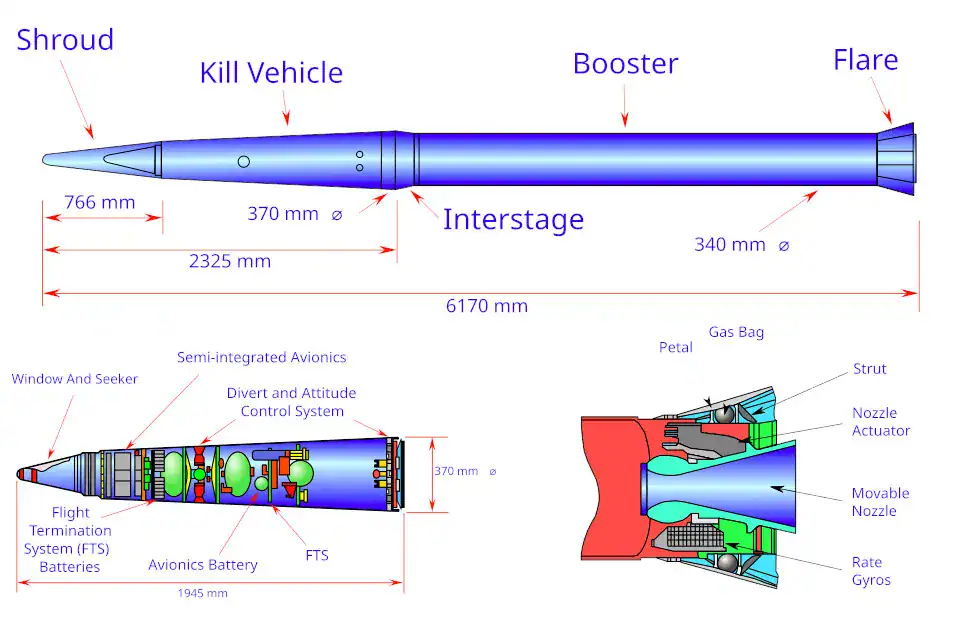
Furthermore, studying the design of the seeker, warhead, and materials used could be of significant interest for domestic technological development.
The fate of the recovered guidance seeker is currently unknown. It is possible that it was seized by US representatives, but there is also a possibility that the component fell into the hands of other interested parties.
THAAD (Terminal High Altitude Area Defense) is an American mobile missile defense system developed by Lockheed Martin to intercept short- and medium-range ballistic missiles in the terminal phase of their trajectory.
The system is designed to destroy targets both in the upper layers of the atmosphere and beyond it (exoatmospheric). Unlike traditional air defense systems, THAAD uses the hit-to-kill principle—that is, it destroys the target with a direct kinetic impact without using a warhead.

The system consists of launchers with interceptor missiles, a multifunctional AN/TPY-2 radar, a command post, and communication equipment. The radar provides detection, tracking, and guidance over long distances and is a key element of the system.
The intercept range is estimated at approximately 200 km, and the engagement altitude at up to 150 km, allowing for the effective interception of targets before they enter the dense layers of the atmosphere. This makes THAAD a vital component of the US layered missile defense system, alongside systems such as Patriot and Aegis.
Підтримати нас можна через:
Приват: 5169 3351 0164 7408 PayPal - [email protected] Стати нашим патроном за лінком ⬇
Subscribe to our newsletter
or on ours Telegram
Thank you!!
You are subscribed to our newsletter