
Popular

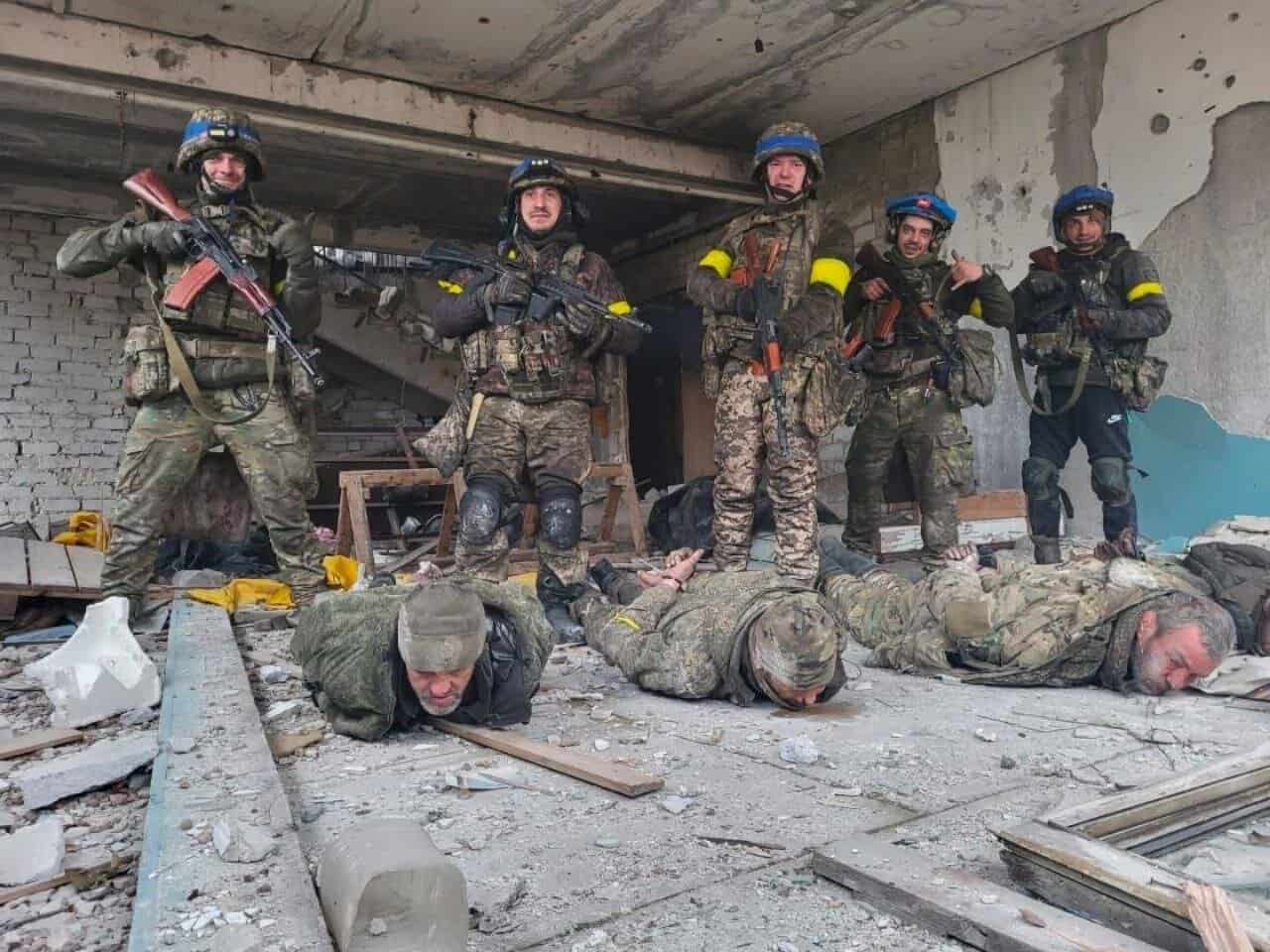
During interrogation, prisoners from among the Russian groups that infiltrated Pokrovsk said that it had taken them more than two weeks to cover the route from Selydove to Pokrovsk, having suffered heavy losses from drones along the way.
Yurii Butusov published the interrogation video.
Given the route the Russians took, they had to cover approximately 25 kilometers from the temporarily occupied Selydove to Pokrovsk.
The interrogation of the prisoners captured by the 425th Separate Assault Regiment ‘Skala’ confirms information from DeepState analysts. According to the analysts, sabotage groups set out from Selydove to Pokrovsk in early July, and the entire journey took them 14 days.

During this time, they spent 10 days covering the stretch from the village of Pishchane to the street of Zakhysnykiv Ukraiiny on the outskirts of Pokrovsk. Thus, each day, the enemy infantryman covered only 600 meters, hoping not to be detected. Communication, water, and food were supplied by drone drops.
According to DeepState, 120 out of 150 saboteurs were killed along the way. This is confirmed by the interrogation of prisoners:
“We had the ninth company, two platoons – about 50 people in total… Only about eight made it to Pokrovsk.”
On August 16th, it was reported that the 7th Rapid Response Corps and adjacent units had completely cleared Pokrovsk of Russian groups and individual saboteurs.
The slow pace of advancement and the high losses of Russian assault saboteurs were caused by the extensive ‘kill zone’ that formed on both sides of the front line due to the very high concentration of drones.
The ideology of the drone ‘kill zone’ is being implemented, in particular, through the development of the ‘Drone Line’ project. The main goal of the project is to develop the best unmanned systems units and scale their combat experience, so that they can become the backbone for weaker frontline units.
It’s important to understand that what is commonly referred to as a ‘kill zone’ is actually a zone of potential, not continuous destruction – it doesn’t mean that everything within it is annihilated. Nor does it imply that this is a gray zone. Both Russian and Ukrainian units are present in this area. However, due to the high saturation of strike capabilities, infantry can remain in position for months, showing minimal activity.
Ukraine is forced to rely on the drone-based ‘kill zone’ as its primary method of defense due to several critical issues the state is currently unable to solve directly. Chief among them is a severe shortage of infantry on the frontlines, which cannot be replenished at the current pace of mobilization.
As a result – and to some extent for humanitarian reasons – it was decided that “drones, not people, should fight.” However, a ‘drone-centric’ defense is extremely fragile. If the enemy manages to break through the strike zone or suppress drone operators with fire, resistance drops significantly. In the best-case scenario, the enemy captures empty fortifications; in the worst-case scenario, UAV operators themselves are forced to engage in rifle combat. Unfortunately, this has already happened more than once.
This was clearly demonstrated once again when Russian infantry, using tree lines and vegetation for cover, managed to infiltrate Pokrovsk, virtually encountering no resistance from Ukrainian infantry.
– How did you move through the residential sector?
– We went through gardens, sometimes along streets; wherever there was more greenery – we moved into it. And like that, slowly and covertly, we passed along the fences.
– And you didn’t encounter any enemy fire at all?
– Not at all. No resistance, nothing.
You can read more about the ‘kill zone’ in our special feature – “The Kill Zone of Modern Warfare: Dimensions and Structure, Control and Strike Capabilities, Survival and Shifting Frontlines.”
Підтримати нас можна через:
Приват: 5169 3351 0164 7408 PayPal - [email protected] Стати нашим патроном за лінком ⬇
Subscribe to our newsletter
or on ours Telegram
Thank you!!
You are subscribed to our newsletter