


Popular

After Operation Spider’s Web, conducted by the Security Service of Ukraine (SSU), Russian strategic aviation was forced to redeploy to the Far East, significantly complicating strikes on Ukrainian territory.
OSINT analysts, including the Telegram channel Tracking, reported on this.
Two Tu-160 strategic bombers, previously stationed at the Belaya air base, were reportedly relocated to the far eastern Anadyr airfield.
Another five aircraft of this type were relocated to the Elizovo air base. Both bases are located 6,770 and 7,250 kilometers from Ukraine, respectively.
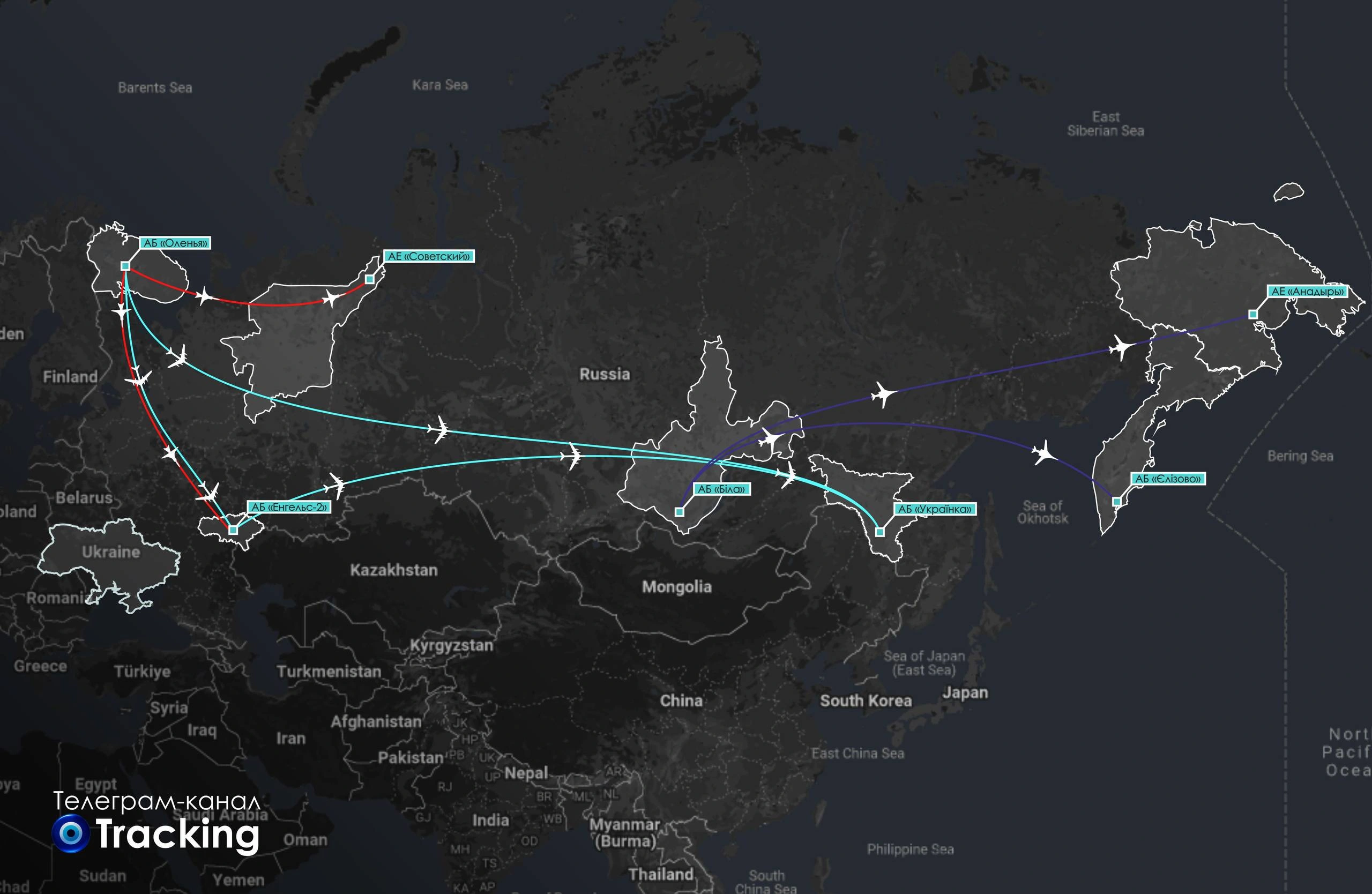
Additionally, Tu-22M3 bombers based at the Olenya air base are intermittently redeployed to the Sovetsky air base in Russia’s Komi Republic, located approximately 2,400 kilometers from Ukraine’s borders.
Meanwhile, Tu-95MS bombers now operate in rotation across three air bases — Olenya, Engels-2, and Ukrainka.
To launch Kh-101 cruise missile strikes, aircraft departing from Ukrainka air base must fly at least 7,000 kilometers to reach the launch zones near Russia’s Saratov region, followed by a return leg of roughly 5,400 kilometers.
Thus, the total distance of a Tu-95MS combat sortie can reach up to 12,400 kilometers, which amounts to approximately 23 hours in the air.
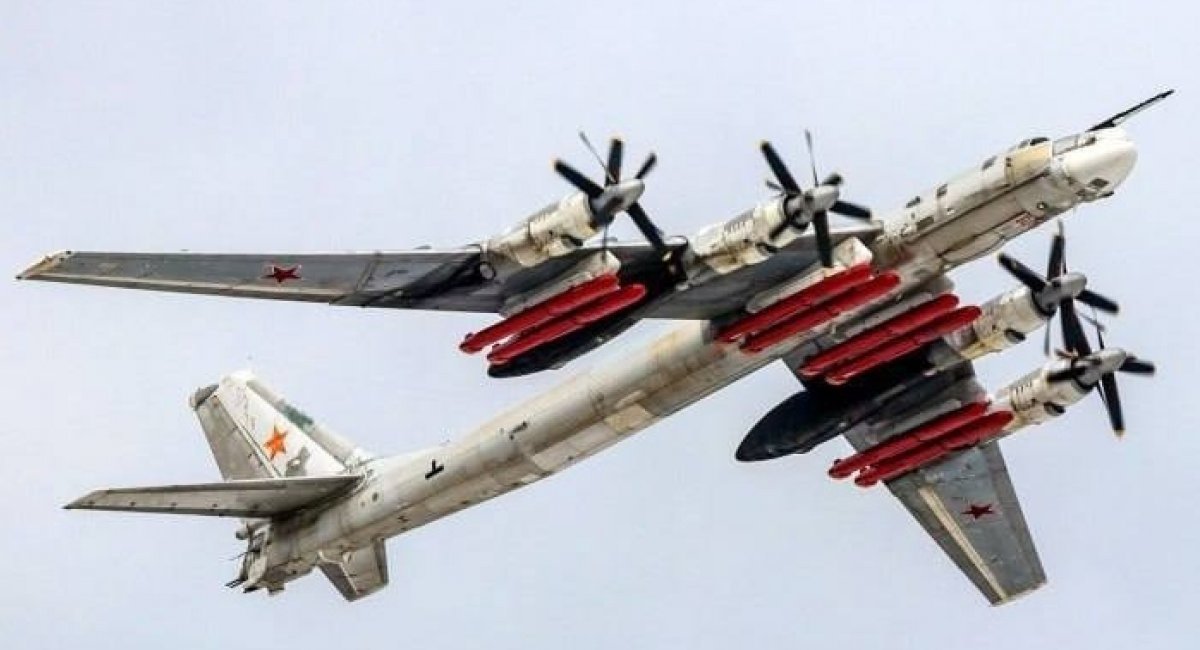
With these actions, Russia is attempting to reduce the vulnerability of its strategic aviation by dispersing it across multiple air bases.
Meanwhile, this creates new challenges: constant long-distance flights and extended time in the air accelerate the wear and tear of an already aging fleet, increase the burden on flight crews, and drive up maintenance costs.
As a result, the risk of accidents rises, both due to technical failures and human factors, particularly pilot fatigue.
Moreover, the extended flight times and increased operational strain may, over time, reduce the number of air-launched cruise missile strikes.
On June 1, 2025, the Security Service of Ukraine (SSU) executed a large-scale special operation named Spider’s Web to target Russia’s strategic aviation assets.
The operation focused on several airbases: Belaya, Ivanovo, Ukrainka, Olenya, and Dyagilevo.
Preliminary data indicates significant losses to Russia’s strategic aviation as a result of attacks by Ukrainian drones.
According to available information, at least 8 Tu-95MS (Tu-95MSM) strategic bombers, 12 Tu-22M3 bombers, 2 A-50 airborne early warning aircraft, 1 An-12 transport aircraft, and, reportedly, 1 Il-78M aerial refueling tanker were hit.

As of now, a complete set of satellite images from all the targeted airbases has not been released, nor has full video footage from the strike sites.
Additionally, the video materials released by the SSU are not comprehensive: they do not show the strike on one of the Tu-95MS bombers that is clearly visible in satellite imagery.
Without these visual confirmations, the assessments remain preliminary, although even the available data points to an unprecedentedly large-scale operation that has significantly impacted Russia’s strategic capabilities.
Підтримати нас можна через:
Приват: 5169 3351 0164 7408 PayPal - [email protected] Стати нашим патроном за лінком ⬇
Subscribe to our newsletter
or on ours Telegram
Thank you!!
You are subscribed to our newsletter