


Popular

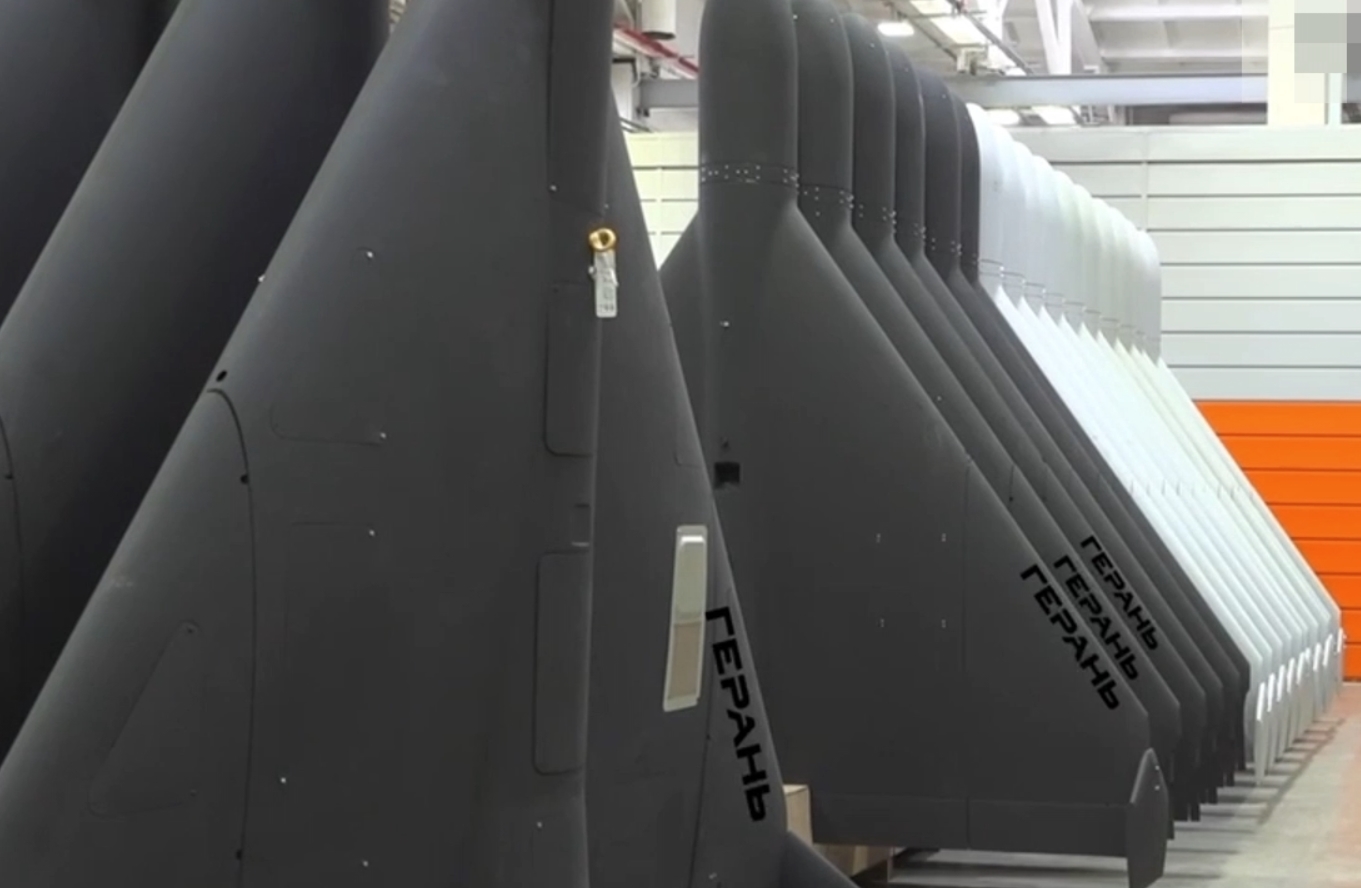
Russian Geran-2 (Shahed) kamikaze drones are almost entirely composed of foreign components manufactured in the West and East, despite tough international sanctions against Russia.
This is according to an OCCRP investigation.
Journalists have identified hundreds of components used in these drones. Only a few dozen of them are of Russian origin. Companies in the US, China, and Europe manufacture the majority of the parts.
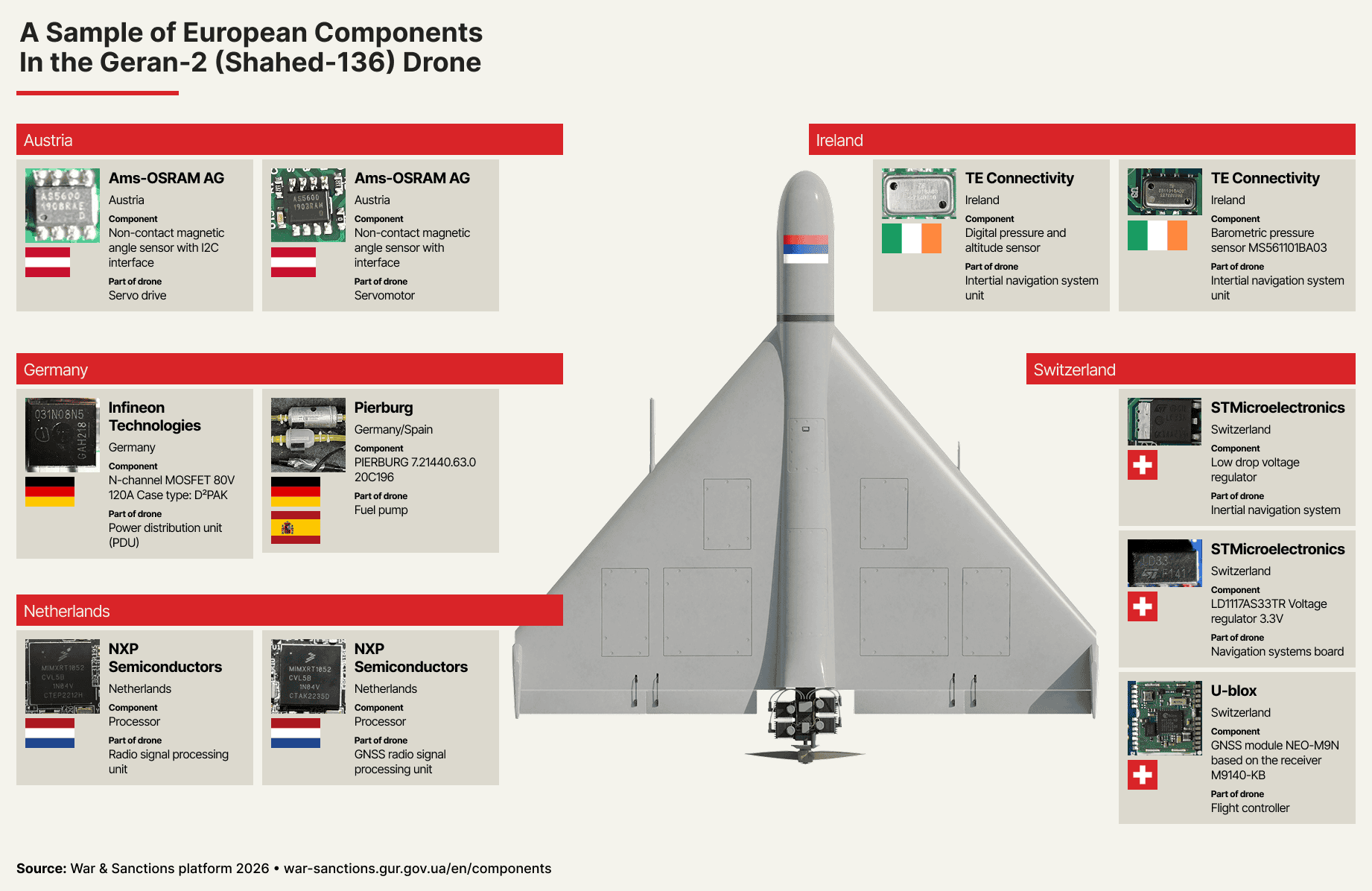
These include microchips, receivers, transistors, diodes, antennas, and fuel. About 20 European companies produce more than a hundred components. At the same time, the European Union formally prohibits the direct export of a significant part of such products to Russia.
However, trade data from the Import Genius platform shows that between January 2024 and March 2025, at least 672 shipments of sanctioned European-made components were sent to Russia.
The shipments were made by 178 companies, mostly registered in China and Hong Kong. At the same time, journalists found no evidence that European manufacturers themselves violated sanctions legislation or directly exported products to Russia.
The investigation reveals a systemic problem: even the constant tightening of EU sanctions has not been able to significantly limit Russia’s ability to produce strike drones using foreign components that enter the country through intermediary schemes.
According to journalists’ estimates, 19 companies from eight European countries are likely manufacturers of these components:
After receiving photographs of the components, two companies — REMA Group and Diotec Semiconductor — stated that the parts shown were not their products.
At the same time, trade data does not contain information about the supply of sanctioned components manufactured by AMS Osram Group, Robert Bosch, REMA Group, Pierburg, and Complex Automotive Bearings.
In its statement, u-blox named several possible scenarios for its components ending up in Russian drones: purchase before the sanctions were imposed, resale of excess stock through brokers in countries that did not join the sanctions, smuggling, or dismantling components from civilian products and subsequently integrating them into drones.
It was recently reported that, despite sanctions, German parts are being found in Russian drones. According to journalists, their number could reach hundreds of thousands.
According to the DIU, most of the foreign components found in Russian military equipment come from the US and China, while 137 items of German origin have been recorded.
More than half were found in drones; the rest were in missiles, radar stations, military vehicles, and helicopters.
Підтримати нас можна через:
Приват: 5169 3351 0164 7408 PayPal - [email protected] Стати нашим патроном за лінком ⬇
Subscribe to our newsletter
or on ours Telegram
Thank you!!
You are subscribed to our newsletter