

Popular

At the outset of the Russian invasion, Russian forces were supplied with export defensive systems for fighter aircraft and scarce 1,500-kilogram bombs that had been intended for Kazakhstan and Egypt.
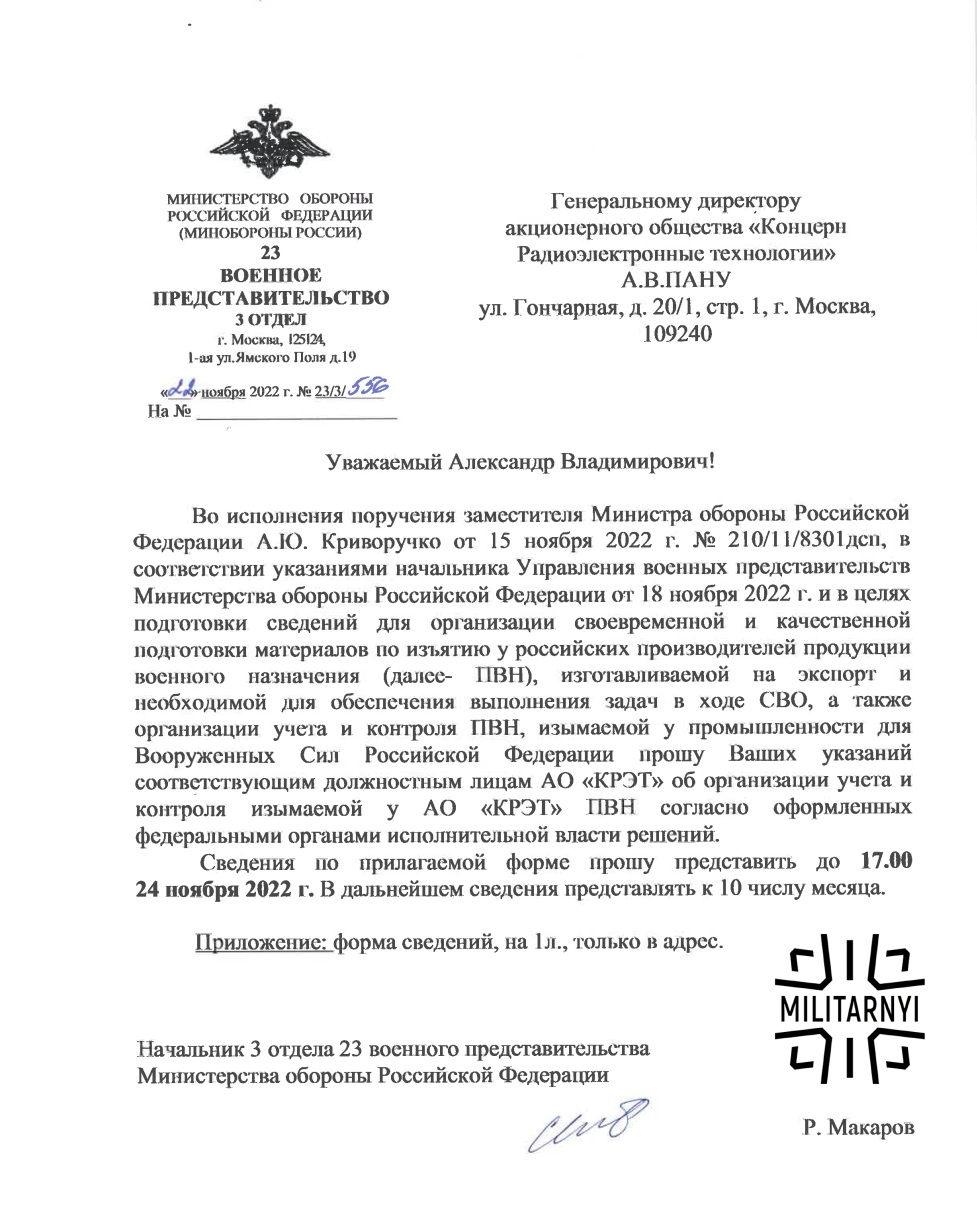
The Black Mirror hacker group published documents relating to the requisition and a request from the Russian Ministry of Defence.
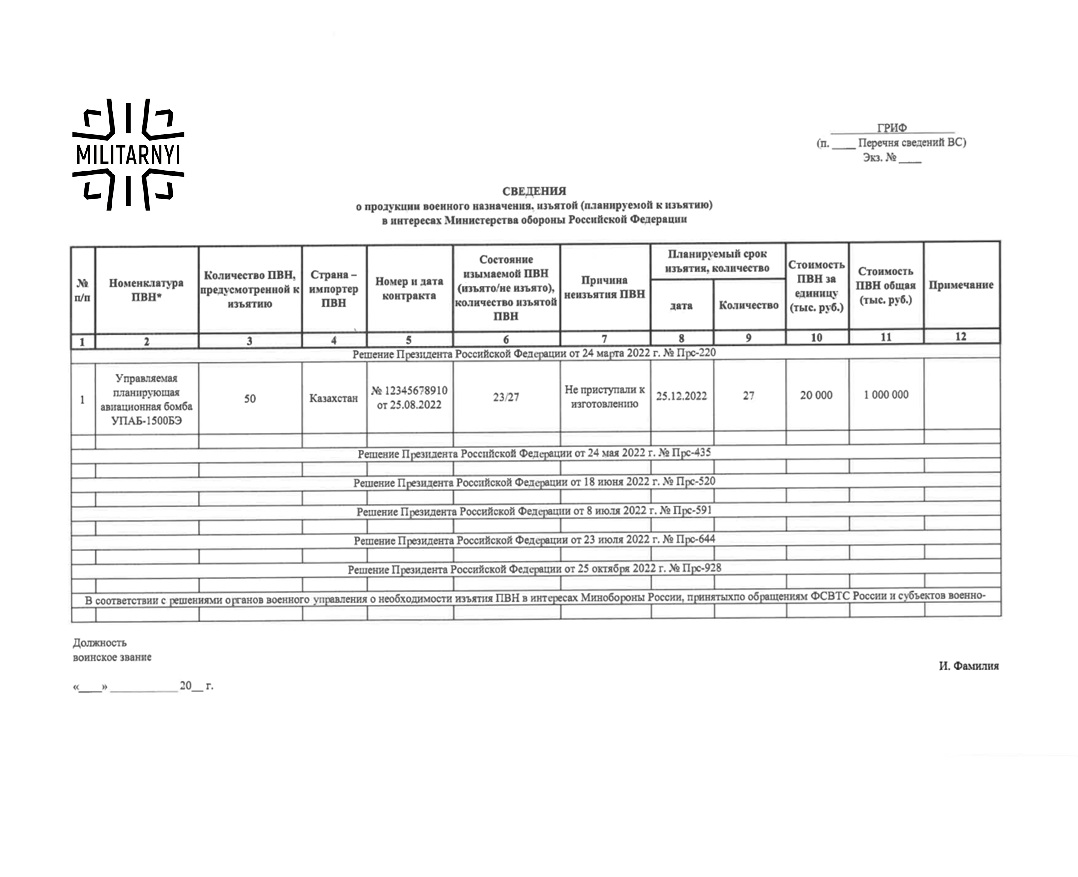
In November 2022, immediately after the Russian forces withdrew from Kherson, the Russian Defence Ministry initiated a request to requisition a batch of 50 UPAB-1500BE bombs from the warehouses of Concern Radio-Electronic Technologies, which had been manufactured to order for Kazakhstan.
These are 1,500-kilogram precision munitions designed to destroy deeply buried and particularly well-protected targets such as command posts, railway bridges, and bunkers. With a range of up to 50 km, they can be employed against rear-line targets by tactical aviation, including Su-34M bomber-fighters.
According to the document, as of November, 23 of the bombs had already been delivered to Russian forces, and a further 27 were planned for shipment during the following month.
In March 2023, Ukrainian Air Force spokesperson Yurii Ihnat announced the beginning of their active use – one of the first strikes targeted a facility in the Chernihiv region.
“These are guided bombs with wings that can travel tens of kilometers. It is likely that the Su-34 fighter-bomber that was shot down attacked Ukraine using exactly these bombs,” the spokesperson explained.
Earlier this year, Russian sources reported that this bomb was used in a terrorist strike on the regional administration building in Kherson, resulting in the complete destruction of the structure.
In March 2023, Ukrainian Air Force spokesperson Yurii Ihnat announced the beginning of their active use – one of the first strikes targeted a facility in the Chernihiv region.
“Glide bombs, precision-guided aerial bombs with wings, can travel tens of kilometers. It is likely that the Su-34 fighter-bomber that was shot down attacked Ukraine using exactly these bombs,” the spokesperson said.
Earlier this year, Russian sources reported that this bomb was used in a terrorist strike on the regional administration building in Kherson, resulting in the complete destruction of the structure.
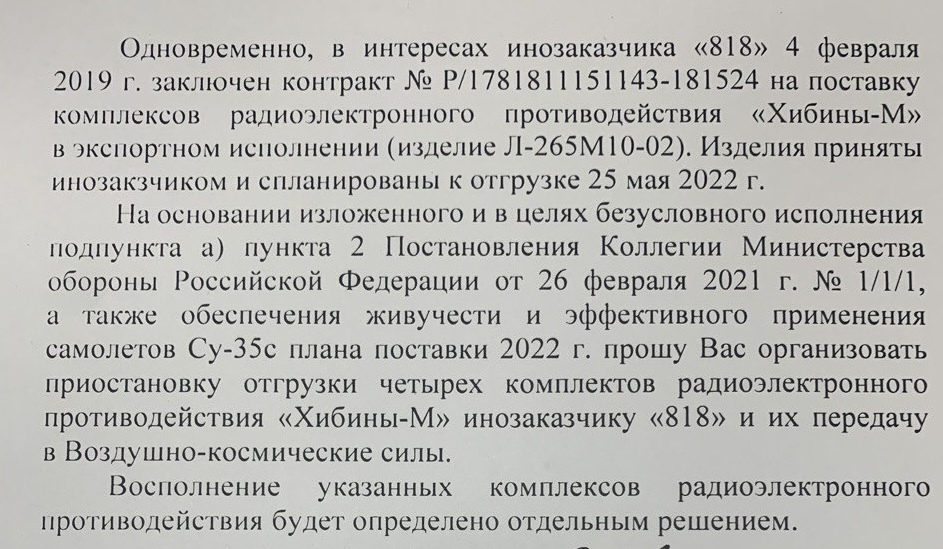
Another document seized from the concern’s archives indicates that in spring 2022, the Russian Ministry of Defence also requested the requisition of four completed L-265M10-02 Khibiny-M electronic countermeasures systems from an Egyptian contract; the purchaser had already accepted these systems, and they were being prepared for shipment.
The export airborne defensive systems for Su-35 fighter jets were redirected to equip Russian aircraft that were short of such systems and could not defend themselves effectively against air defence systems.
They proved indispensable at the time because the plan for a lightning elimination of Ukrainian air-defence systems had failed, and Russian tactical aviation suffered heavy losses while employing archaic unguided bombs.
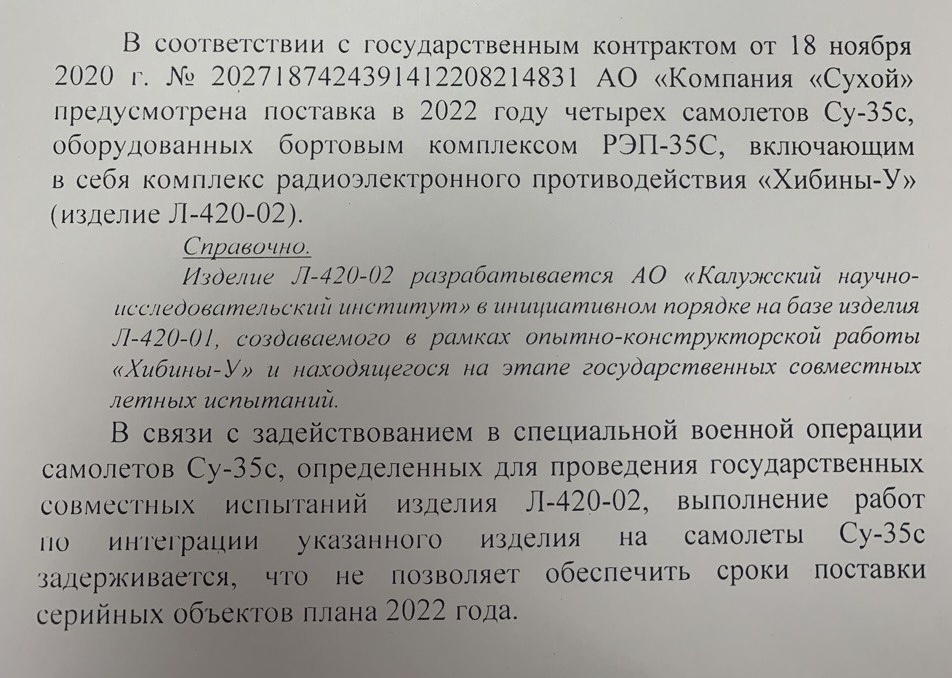
Another notable internal memo reveals that a representative of Concern Radio-Electronic Technologies reported the failure of trials for the latest L-420-02 Khibiny-U electronic countermeasures system due to the deployment of the designated Su-35 fighter jets for the war against Ukraine.
Підтримати нас можна через:
Приват: 5169 3351 0164 7408 PayPal - [email protected] Стати нашим патроном за лінком ⬇
Subscribe to our newsletter
or on ours Telegram
Thank you!!
You are subscribed to our newsletter