

Popular
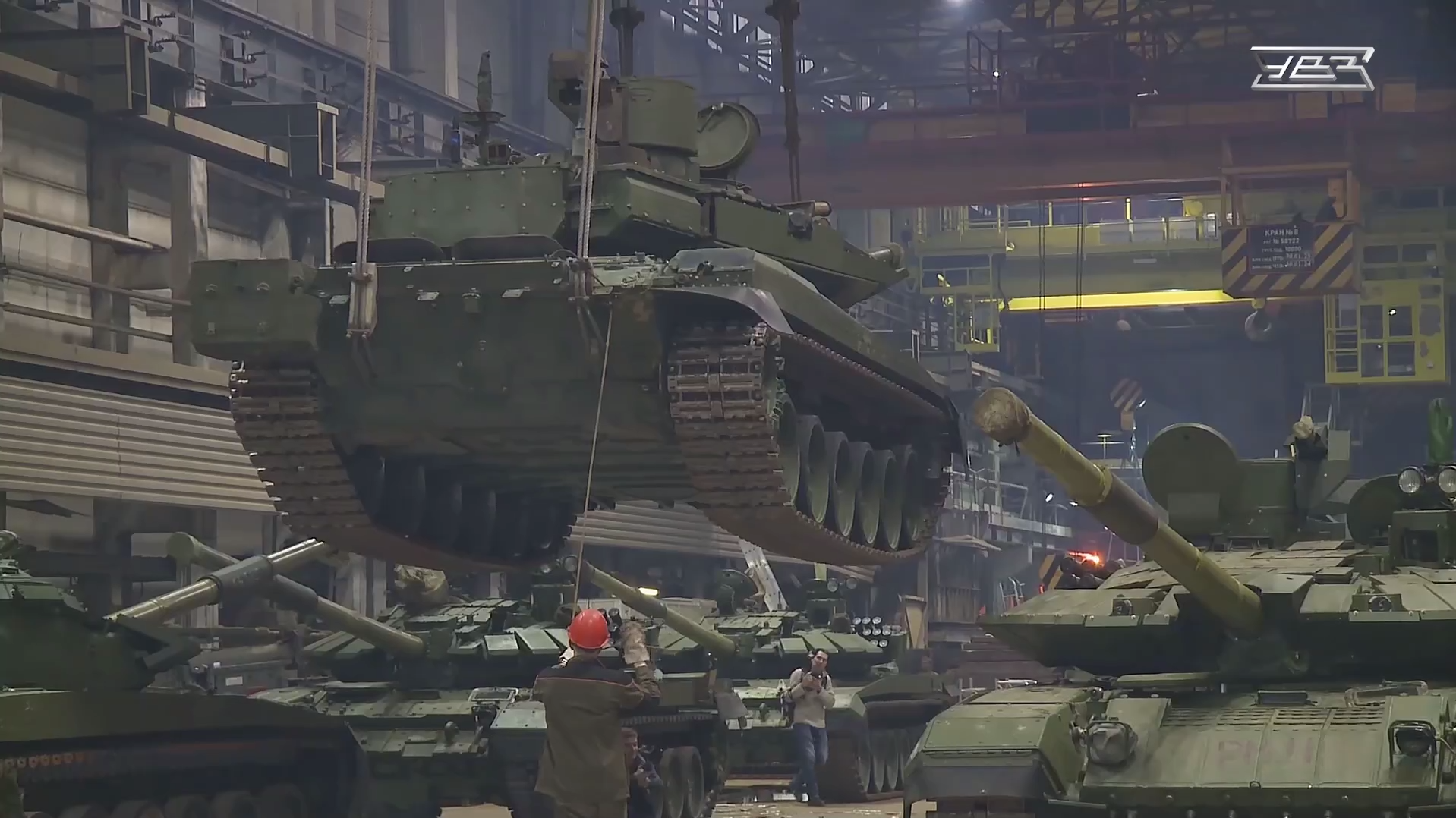
Journalists have identified 160 Russian companies that purchase Western components and equipment for the Russian defense industry. The investigation notes that imposing sanctions on all these intermediaries at once could significantly disrupt Russian weapons production.
The Insider’s study is based on a comparison of domestic procurement data with 2024 customs records. Russian defense enterprises rarely import products directly, relying instead on a network of private intermediaries. These are mostly small and medium-sized companies that supply raw materials, machine tools, and spare parts.
The supply chain often becomes opaque once goods cross the Russian border. Until recently, Western components were confirmed in weapons only by examining the remains of missiles and drones on the battlefield in Ukraine. New domestic market analysis methods now allow tracing goods from the importer to specific military plants.
According to customs data, in 2024, around 10,000 Russian companies imported sanctioned goods worth more than $22 billion. Over 2,000 of these were contractors for leading defense enterprises, with direct deliveries to military plants estimated at more than 80 billion rubles ($1 billion).
The investigation highlights that many sanctioned components have no equivalents, making them critical for Russian industry. For example, in 2024, the company Kontrakt-Holding imported Japanese equipment from SMC Corporation for the microchip manufacturer Micron.
These components are used in almost all modern Russian weapons.
For the navigation of Russian Shahed/Geran kamikaze drones, programmable integrated circuits (FPGA) from Xilinx are required. These were supplied by Uniservice, which works with the sanctioned drone manufacturer STC. Imports of sensors from the British company Renishaw for UDK Saturn, which produces engines, were also recorded.
Importers serving the military industry fall into four groups. The first includes state-owned factories that purchase goods directly, such as Concern Radioelectronic Technologies or Kazan Helicopter Plant. Due to sanctions and bureaucracy, direct transactions are now rare.
The second group consists of industrial giants producing steel, aluminum, and petroleum products. While essential to the defense sector, many remain outside sanctions to avoid destabilizing global raw material markets.
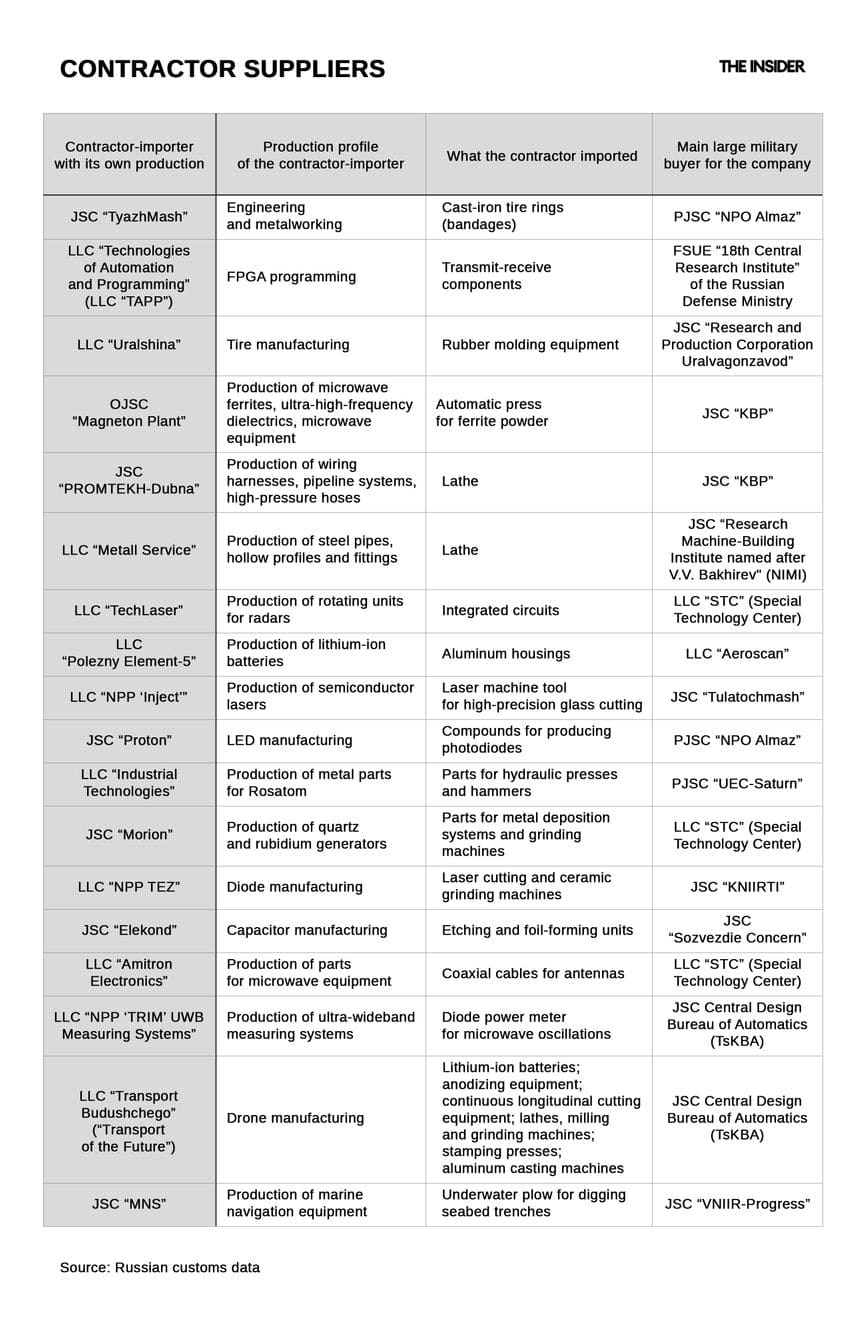
The third group is private contractors producing specific components and assemblies for military equipment. They are flexible in importing raw materials but have significant assets and large workforces, making rapid legal changes difficult if sanctions apply.
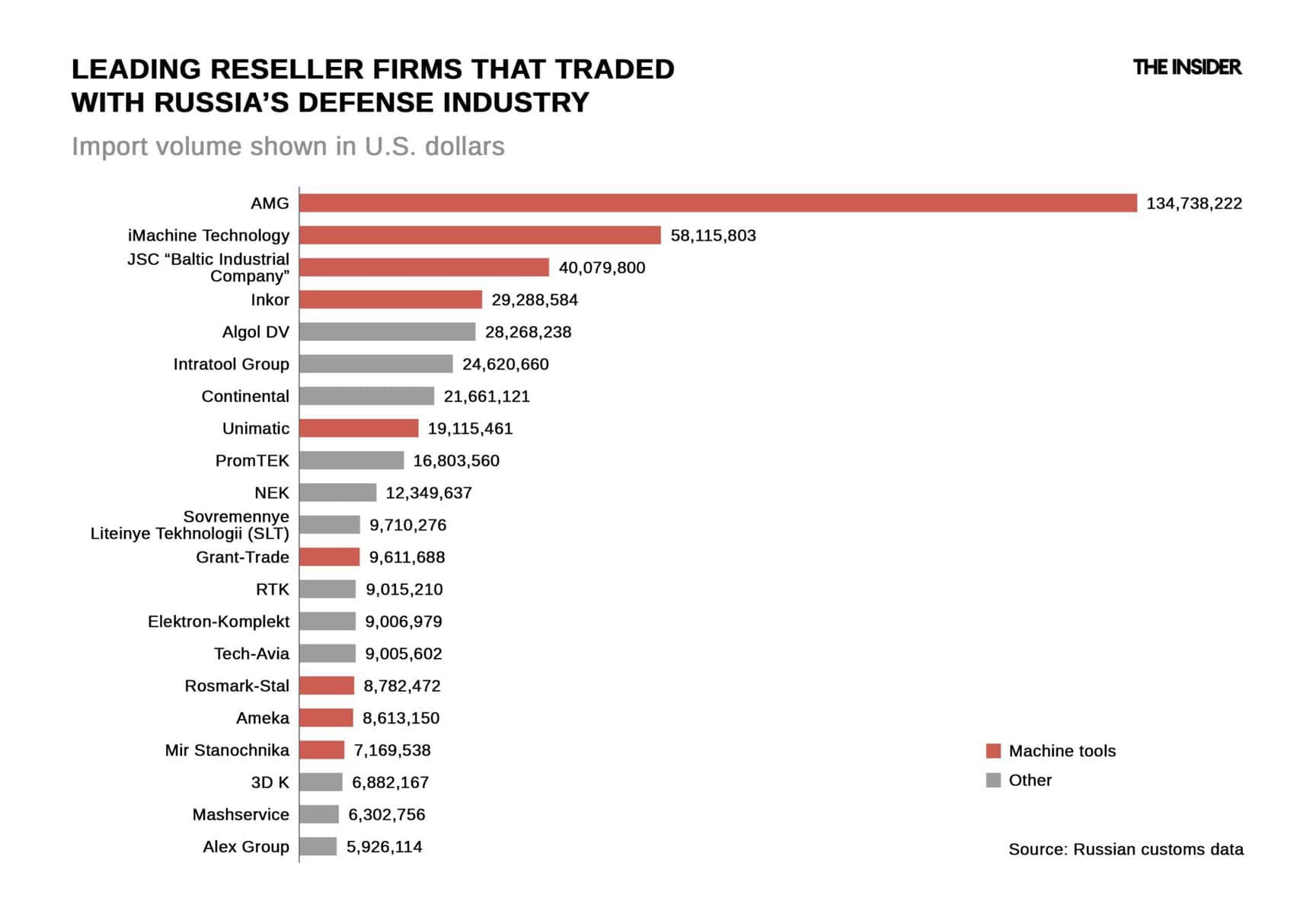
The largest group consists of reseller companies specializing in wholesale electronics or metalworking equipment. Notable examples include Unimatic, Rosmark-Stal, and Inkor. Despite their operations for the defense industry, most medium and small businesses are not on sanctions lists.
The investigation highlighted companies whose import turnover closely matches military contracts. For example, Bi Pitron supplies cables and develops optical converters for the army through shell structures in Indonesia. Limited public activity suggests their role as intermediaries for the defense industry.
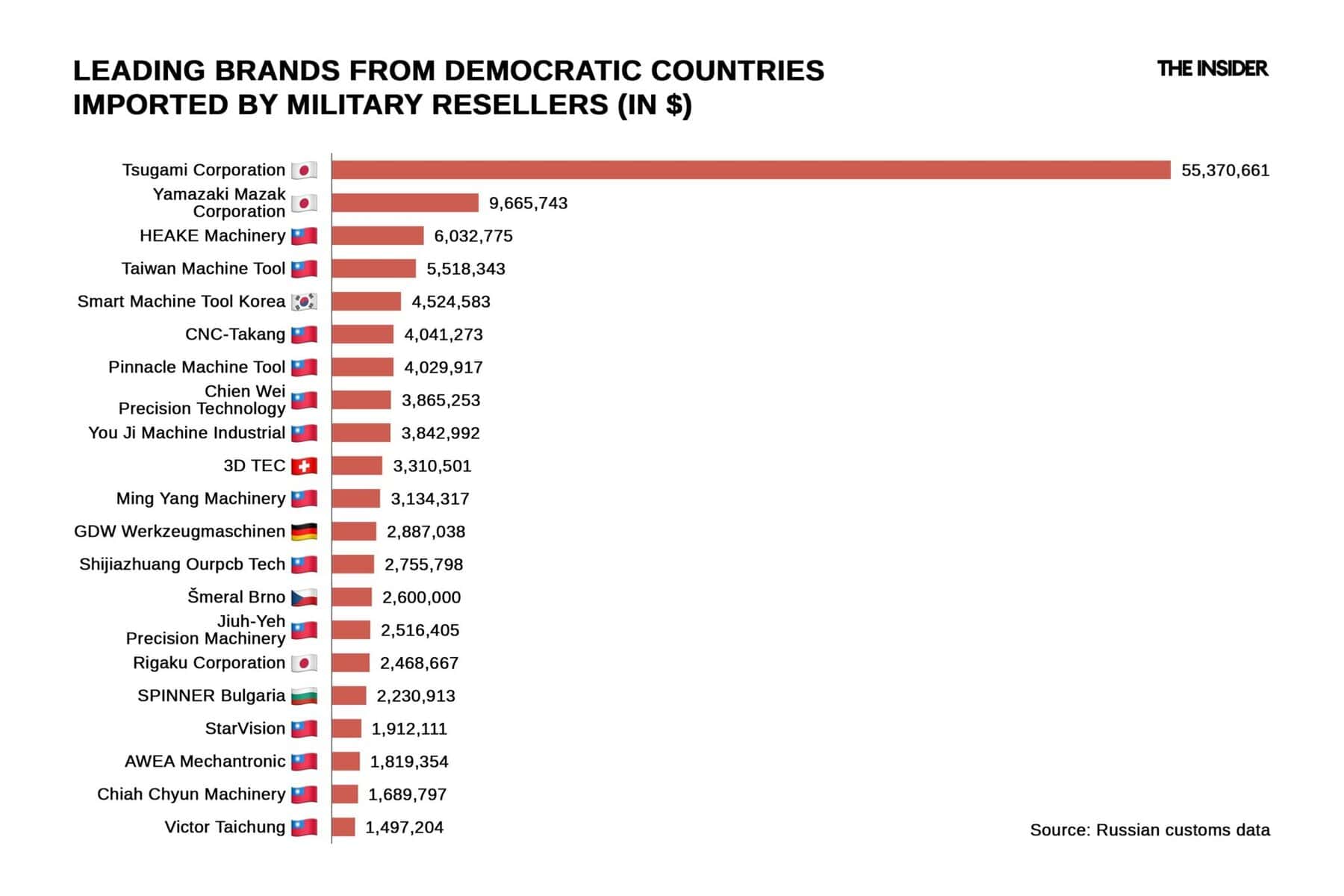
Despite sanctions, equipment from major global brands continues to enter Russia, particularly from the Japanese company Tsugami. Key countries producing machine tools and electronics for the Russian defense sector remain Japan, Taiwan, South Korea, and Switzerland. The 160 identified companies represent only part of the network sustaining Russian weapons production.
Підтримати нас можна через:
Приват: 5169 3351 0164 7408 PayPal - [email protected] Стати нашим патроном за лінком ⬇
Subscribe to our newsletter
or on ours Telegram
Thank you!!
You are subscribed to our newsletter