




Popular
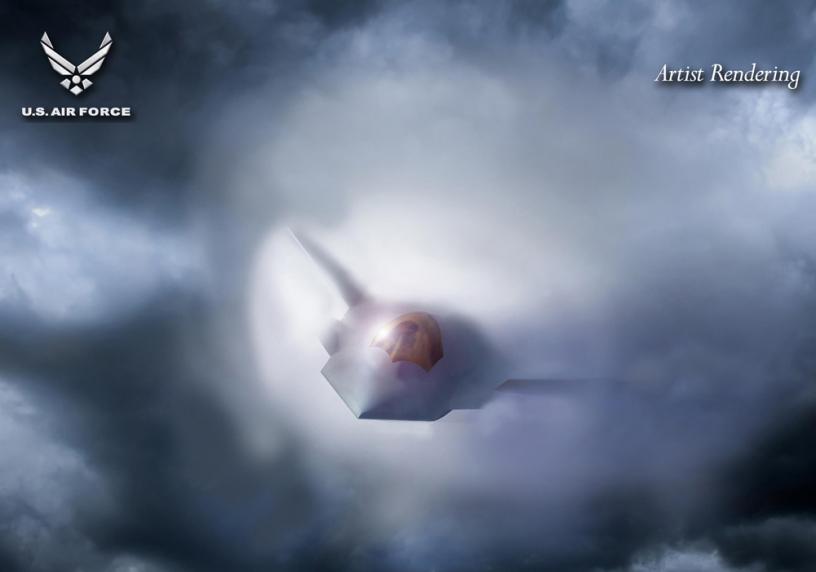
The US Department of Defense plans to prioritize the development of the latest sixth-generation F-47 fighter jet for the Air Force, postponing a similar program for the Navy.
Bloomberg reported on this.
The Pentagon has asked Congress to transfer an additional $500 million for the development of the F-47, while planning to withdraw these funds from the program to create a fighter jet for the Navy.
This funding was added to the defense section of the tax cut bill signed by then-President Donald Trump, on the House Armed Services Committee initiative.

“The simultaneous development of two sixth-generation fighter jets could result in an undersupply of both,” reads the request sent to the House and Senate defense policy committees last month.
Defense Secretary Pete Hegseth spoke in favor of redirecting the funds to the F-47, “which has the full support of the President.”
At the same time, the House Armed Services Committee included $500 million for the F/A-XX for the Navy in the overall $3.9 trillion defense budget package that was sent to the Senate.
Committee spokeswoman Heather Vaughn stated that lawmakers disagreed with the Pentagon’s request because the department had not provided a clear explanation for the change in priorities.
“In the absence of any new information from the Navy to revise the identified gaps and shortfalls, mission requirements, cost, or acquisition strategy for the F/A-XX, the committee continues to support the development of this critical platform,” Vaughn added.
The Senate Armed Services Committee released its own version of the defense authorization bill, which provides $750 million to “ accelerate F/A-XX development,” another rejection of the Pentagon’s request.
The F/A-XX program is the US Navy’s initiative to develop a sixth-generation fighter aircraft to replace the F/A-18E/F Super Hornet and complement the F-35C in the 2030s.
Although the program bears the same name as a similar initiative of the US Air Force, its goals, requirements, and technical characteristics are significantly different. The need for such an aircraft was first identified in June 2008.
The new fighter jet should be able to operate effectively in the face of strong enemy air defense and perform a wide range of tasks: from aerial refueling and reconnaissance to surveillance, targeting, and electronic warfare.

The Navy is considering various platform configurations – both manned and unmanned or optionally manned models – to ensure maximum adaptability to future combat conditions.
In March, it was announced that Lockheed Martin had dropped out of the competition. This left only two participants in the program – Northrop Grumman and Boeing.
For Northrop Grumman, this is the first project of a deck-based fighter since the legendary F-14 Tomcat. For Boeing, winning the competition could be a step toward a monopoly position in the production of sixth-generation aircraft for the United States.
Підтримати нас можна через:
Приват: 5169 3351 0164 7408 PayPal - [email protected] Стати нашим патроном за лінком ⬇
Subscribe to our newsletter
or on ours Telegram
Thank you!!
You are subscribed to our newsletter