






Popular

The UK government has confirmed a delay in integrating the Meteor long-range air-to-air missile onto the F-35B fighter jet, pushing its expected service entry into the early 2030s.
According to UK Defense Journal, the admission came in response to a parliamentary question from MP Ben Obese-Jecty.
“Integration of the MBDA Meteor ramjet-powered air-to-air missile with F-35B is driven by the US-led Lightning II Joint Programme Office; the estimated current timeline for in-service capability is expected to be early 2030s,” the government stated in a written reply.
This is the first public acknowledgment by UK authorities that Meteor integration will not be completed this decade, effectively shelving previous plans to introduce the interceptor by 2027.
The missile’s integration was part of a broader modernization effort that also includes the SPEAR 3 air-to-surface missile, which is now also expected to enter service in the early 2030s.
The delays span multiple UK administrations and are primarily driven by the timelines of the US-led Joint Programme Office and Lockheed Martin, the program’s prime contractor.
Despite the setback, progress has been made. On February 28, 2025, the US Marine Corps conducted the first flight tests of an F-35B armed with a Meteor missile.
The flight used an inert missile deployed from the jet’s internal weapons bay to collect data for the UK’s integration effort.
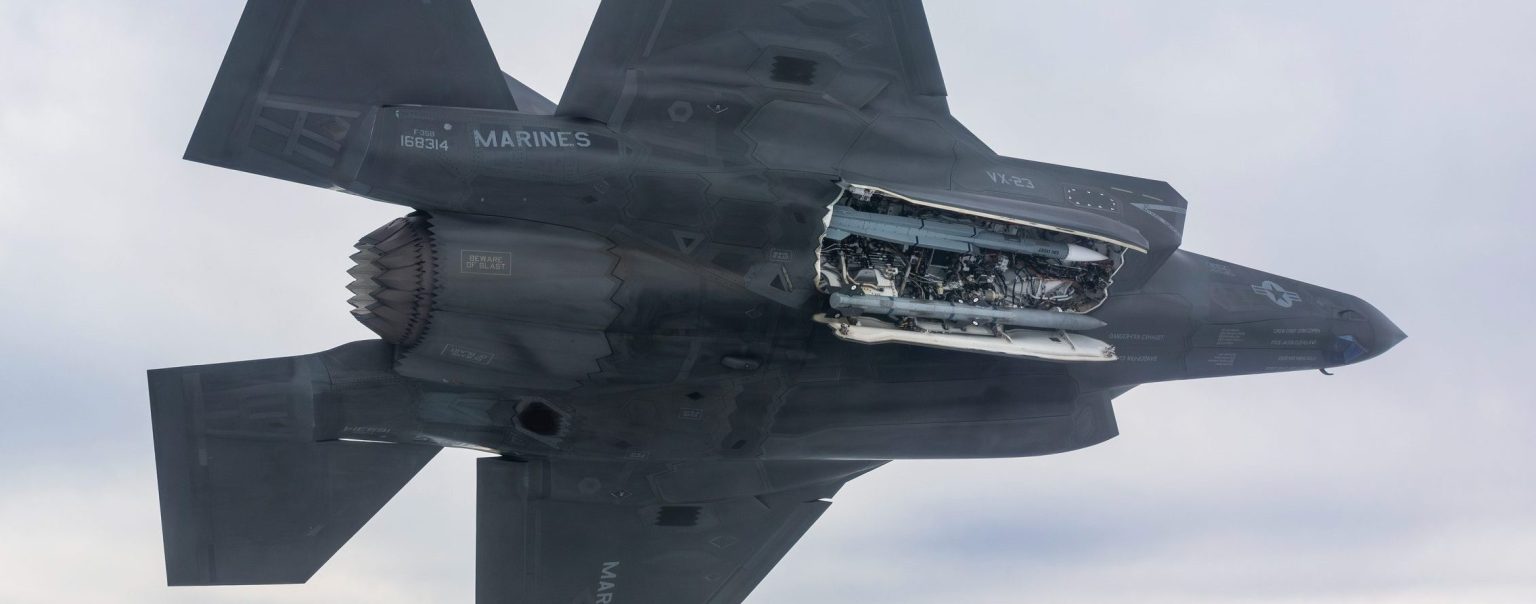
Work to integrate Meteor onto the F-35 has been underway for several years. Lockheed Martin received initial funding in 2019 for the project, which covers both the short take-off and vertical landing F-35B and the conventional F-35A version.
Together with a new radar that will be added during the Block 4 upgrade, the Meteor missile is expected to significantly extend the F-35’s engagement range and complement its current medium- and short-range weapons.
Unlike traditional solid-fuel air-to-air missiles, the Meteor uses a ramjet engine to adjust speed mid-flight, perform complex maneuvers, and achieve a range of more than 100 kilometers.

After launch, the missile is guided by an inertial navigation system updated via datalink from the host aircraft. In the final phase, it activates its own active radar seeker to home in on the target.
For more, read Militarnyi’s article “Meteor: potential improvement of Ukrainian F-16.“
Підтримати нас можна через:
Приват: 5169 3351 0164 7408 PayPal - [email protected] Стати нашим патроном за лінком ⬇
Subscribe to our newsletter
or on ours Telegram
Thank you!!
You are subscribed to our newsletter