


Popular
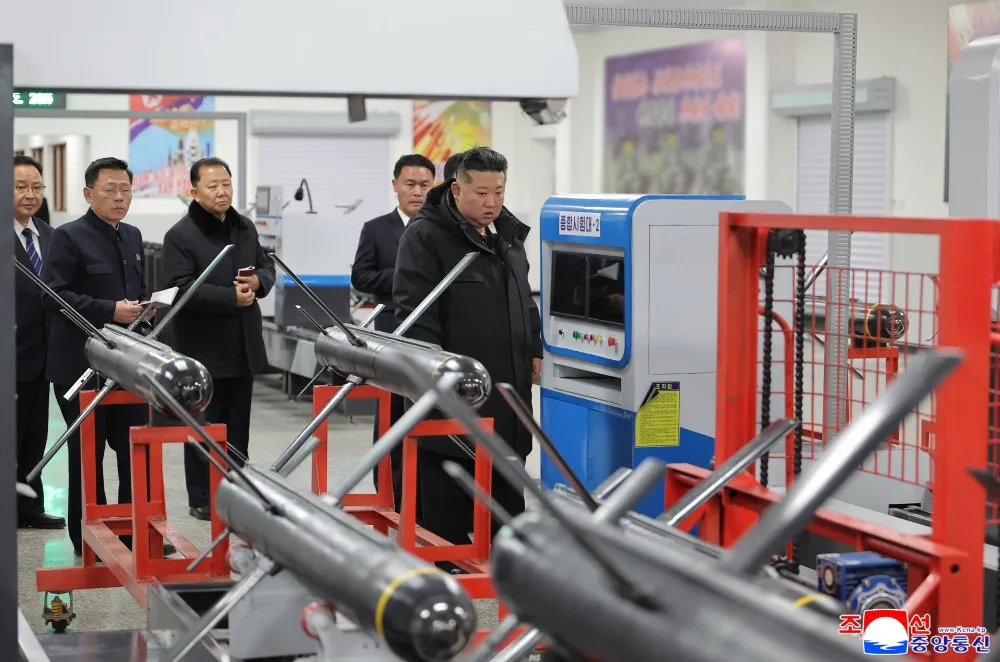
Kim Jong Un has ordered a 2.5-fold increase in the production of Bulsae-4 anti-tank guided missiles, which Russia has used in the war against Ukraine.
The decision was reported by the Korean Central News Agency (KCNA).
The visit to the plant took place on January 3, 2026. During the visit, the North Korean leader reviewed the production process for what the country describes as its most advanced anti-tank weapon systems.
He said that despite current output levels, there were shortcomings in the modernization of the assembly process. As a result, Kim ordered a review of overall construction and modernization plans for ammunition industry facilities in 2026 and called for updated proposals aimed at improving efficiency.
He also emphasized the need to significantly expand production capacity for Bulsae-4 missiles by around 2.5 times, saying this would help meet armament requirements set by the Ministry of National Defence and the General Staff of the DPRK.

The Bulsae-4 anti-tank missile is considered a long-range system. It closely resembles the Israeli Spike-NLOS missile in appearance, though analysts say it is technically less sophisticated, reflecting limitations in North Korea’s domestic electronics manufacturing base.
North Korea has supplied these missiles to Russia, which has already employed them against units of the Ukrainian Defence Forces.
According to available information, launches have been conducted from an M-2010 armored personnel carrier with a 6×6 wheel configuration, observed in July 2024, as well as from an SUV-based platform recorded in August 2025.
The precise technical specifications of the Bulsae-4 remain undisclosed. However, based on its design and component choices, analysts estimate the missile’s maximum engagement range to be approximately 10-15 kilometers.
For guidance, the missile reportedly uses an electro-optical seeker combined with command guidance via a fiber-optic cable.

This configuration allows the operator to manually guide the missile using a live video feed. During flight, the missile can follow terrain contours, avoid obstacles, and strike targets beyond direct line of sight, including those behind cover.
In addition to the Bulsae-4, North Korean units operating in Russia’s Kursk region have reportedly used another system, the Bulsae-2.
The Bulsae-2 is a modified North Korean version of the Soviet-era 9K111 Fagot anti-tank missile, featuring laser guidance and upgraded optics.
Footage of the use of these systems was shown during a posthumous award ceremony for 101 servicemen, according to North Korean state media.
Підтримати нас можна через:
Приват: 5169 3351 0164 7408 PayPal - [email protected] Стати нашим патроном за лінком ⬇
Subscribe to our newsletter
or on ours Telegram
Thank you!!
You are subscribed to our newsletter