




Popular

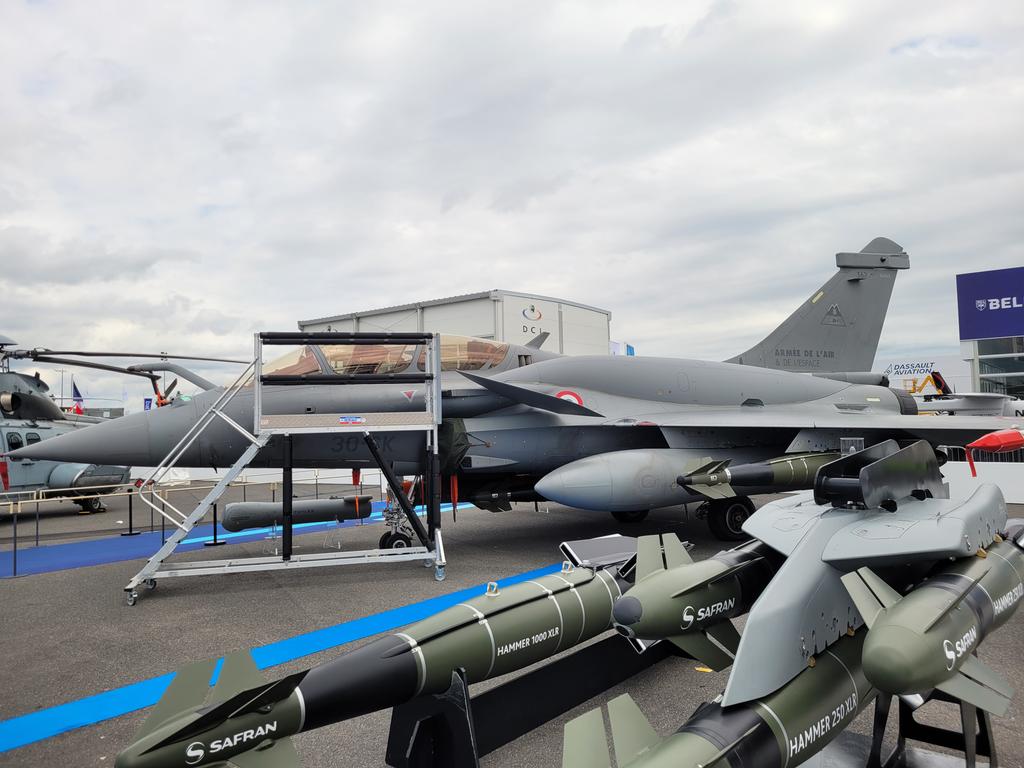
Iraq and France are expected to sign a contract in 2026 to purchase 14 Rafale F4 fighter jets for the Iraqi Air Force.
The French aviation publication Avions Legendaires reports that negotiations, which started in 2022, are nearing completion. Some sources indicate that the agreement could be finalized in the first half of 2026, while others simply refer to it as taking place “next year.”
Since February 2025, the overall number of aircraft has been known, but the details remained unclear. The 14 Rafale F4 fighter jets currently under negotiation are likely to include ten single-seat Rafale C aircraft and four twin-seat Rafale B variants.
The new French aircraft are expected to provide the Iraqi Air Force with air superiority capabilities, enabling it to deter both Iran and Israel from operating within the country’s sovereign airspace.

Sources cited by the media report that, in addition to the aircraft purchase, the negotiations also cover long-range air-to-air missiles, including the MICA NG and Meteor.
Furthermore, the Rafale’s advanced air-to-ground strike capabilities are described as a decisive factor in the talks, particularly its ability to employ AASM 250 and AASM 1000 precision-guided bombs.
Iraqi pilots are accustomed to flying side by side with their French counterparts as part of Operation Chammal. They have repeatedly had the opportunity to train together and directly observe the differences between their F-16IQ Fighting Falcons and the Rafale aircraft of the French Air and Space Force. Each time, the French jets demonstrated a clear advantage.
The F-16IQ was developed as a significantly simplified version of the F-16C/D Block 50/52 specifically for the Iraqi Air Force. In particular, these aircraft are unable to use modern air-to-air missiles such as the AIM-120 and AIM-9X, and are limited to older AIM-7 Sparrow and AIM-9L/M missiles.
The avionics and electronic warfare systems are also substantially inferior to those of standard F-16 versions.

It is believed that the decision to limit the aircraft’s armament to this configuration was driven by Israeli concerns over Iraq deploying fighter jets with credible air combat capabilities.
As a result, the United States agreed to sell Iraq aircraft with minimal capabilities, sufficient primarily for striking ground targets.
Підтримати нас можна через:
Приват: 5169 3351 0164 7408 PayPal - [email protected] Стати нашим патроном за лінком ⬇
Subscribe to our newsletter
or on ours Telegram
Thank you!!
You are subscribed to our newsletter