


Popular
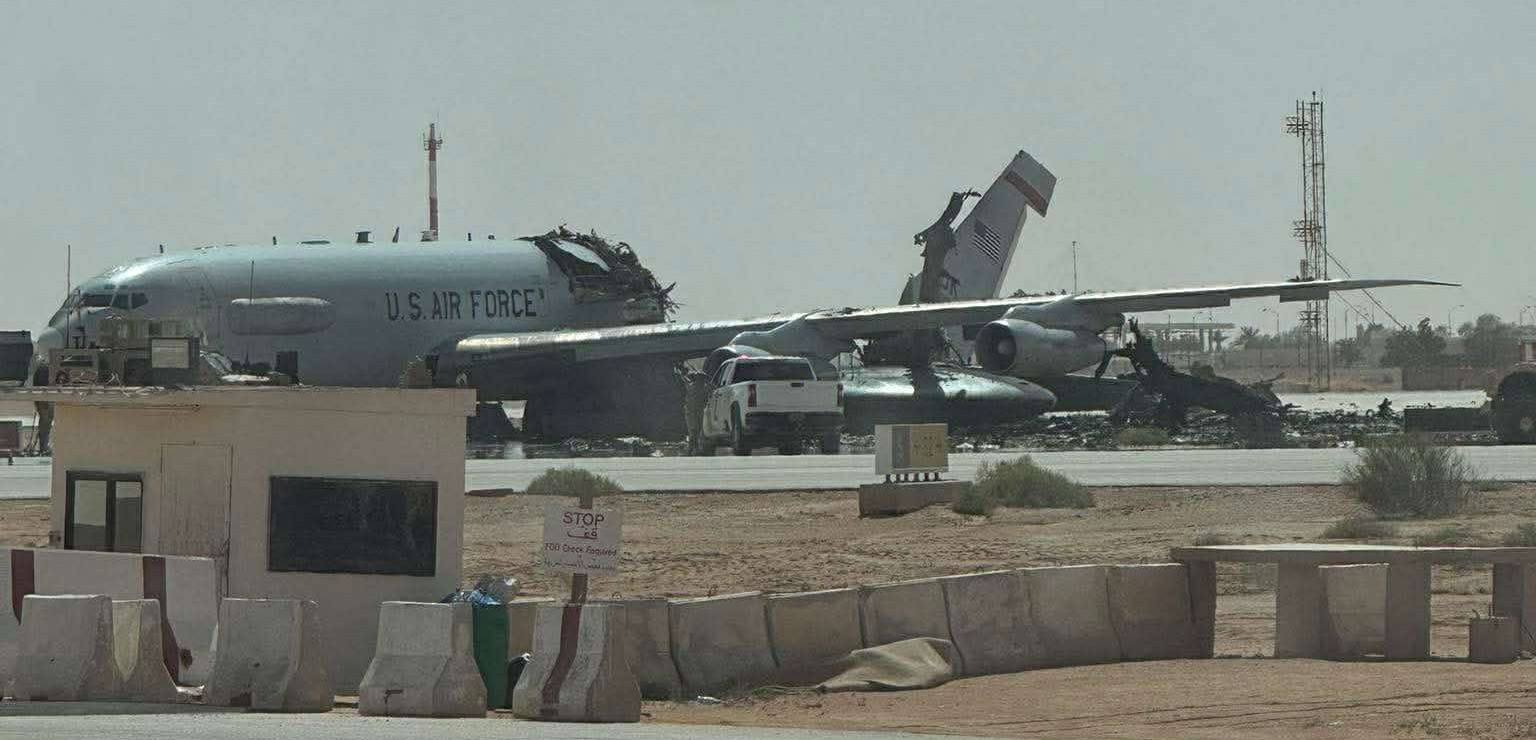
Iran launched a combined missile and drone strike on Prince Sultan Air Base in Saudi Arabia, destroying a U.S. Air Force E-3 Sentry AWACS early warning aircraft.
The report comes from Air & Space Forces Magazine, citing its own sources. Aviation analyst @TheIntelFrog also shared a photo of the damaged aircraft on X.
According to the report, more than 10 service members were injured, including two who are in serious condition. The attack also damaged several aerial refueling aircraft.
Based on the released photos, the extent of the damage to the E-3 Sentry AWACS may render it beyond repair. In particular, the radar dome antenna appears to be completely destroyed, along with a significant portion of the aircraft’s fuselage. The onboard equipment was also likely severely damaged by the resulting fire. Image verification services have found no signs that the photos were altered using artificial intelligence.
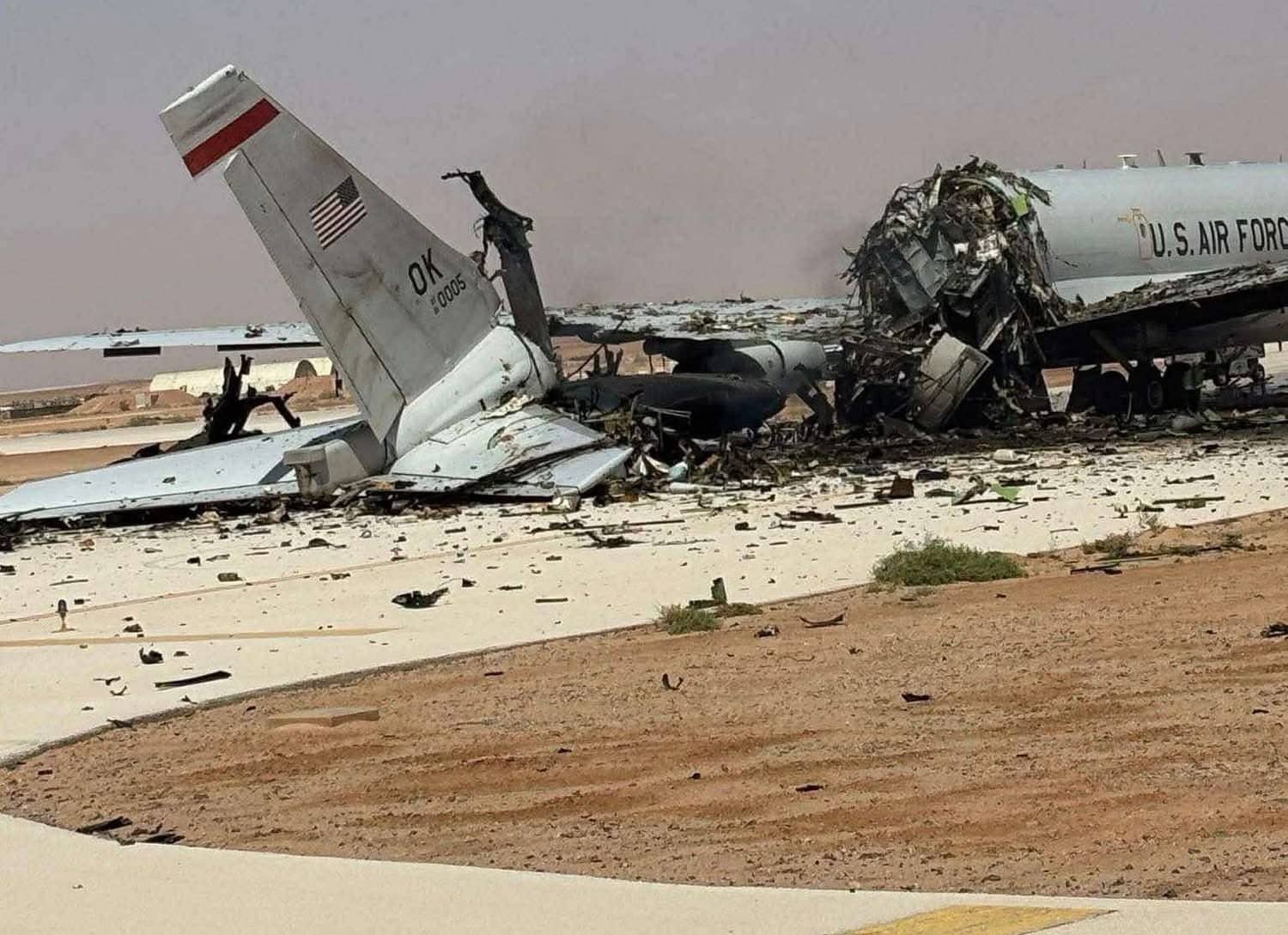
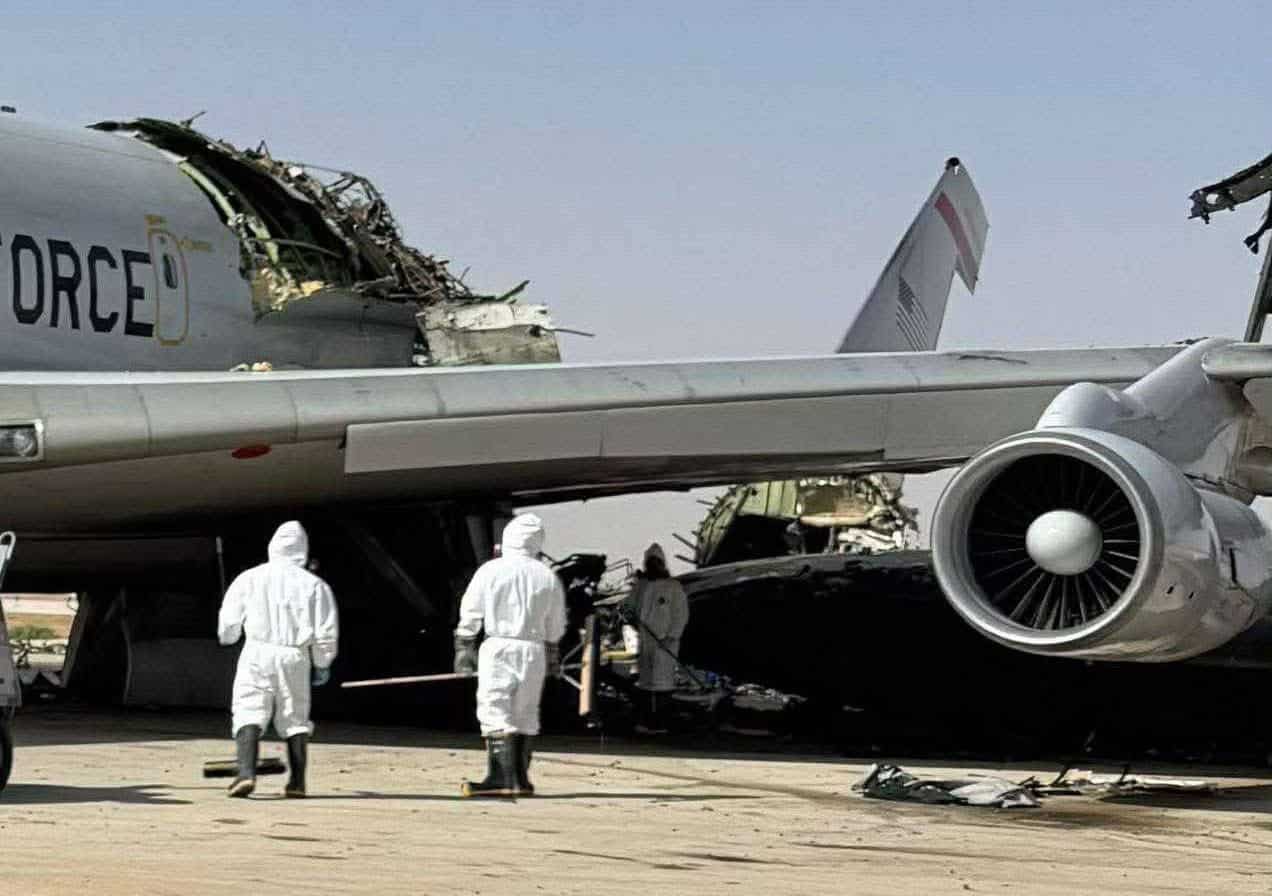
The published photos also show part of the aircraft’s serial number – 0005 – which corresponds to the E-3G Sentry AWACS with serial 81-0005 (AE11EE). The aircraft belonged to the 552nd Air Control Wing, based at Tinker Air Force Base in Oklahoma.
Prior to the incident at Prince Sultan Air Base, open-source flight tracking data indicated that six E-3 aircraft were stationed there. Overall, according to OSINT estimates, out of a total fleet of 16 aircraft, six were deployed in the Middle East, one was operating in Alaska, and one was in Japan. The remaining eight were undergoing maintenance.
AWACS aircraft have a long history of use and play a critical role in command and control of air operations, as well as in intelligence, surveillance, and reconnaissance.
The media notes that the loss of one of the few AWACS aircraft, especially one likely involved in ongoing operations, could complicate the U.S. Air Force’s ability to manage combat activities.
“The loss of this E-3 is extremely problematic, given how vital these battle management platforms are for everything from airspace deconfliction and aircraft coordination to targeting and enabling other strike capabilities necessary for conducting combat operations,” Heather Penney, a former F-16 pilot and director of research at the Mitchell Institute for Aerospace Studies, stated in a comment to Air & Space Forces Magazine.
Overall, according to U.S. officials, more than 300 service members were wounded as part of Operation Epic Fury. Another 13 were killed, including one service member at Prince Sultan Air Base during an earlier attack in early March.

To replace the aging U.S. E-3 Sentry fleet, the United States has ordered the construction of modern E-7A Wedgetail airborne early warning and control aircraft from the United Kingdom.
Under the contract, the British company Boeing UK will convert two passenger Boeing 737s into E-7A Wedgetail aircraft, including fuselage modernization and the installation of equipment, radar antennas, and other systems.
The most important feature of the new aircraft is the MESA radar, developed by Northrop Grumman, which uses AESA (Active Electronically Scanned Array) technology. It provides extensive airspace scanning and the ability to detect ground targets at a maximum range of over 600 km in surveillance mode.
For airborne targets the size of a fighter jet, the detection range exceeds 370 km, and for maritime targets the size of a frigate, over 240 km. The MESA radar can simultaneously track up to 180 targets and engage 24 targets at once.
Підтримати нас можна через:
Приват: 5169 3351 0164 7408 PayPal - [email protected] Стати нашим патроном за лінком ⬇
Subscribe to our newsletter
or on ours Telegram
Thank you!!
You are subscribed to our newsletter