






Popular

India has started actively promoting its indigenously developed Astra Mk1 medium-range air-to-air missile as an alternative for operators of Russian-made fighters seeking a replacement for the R-77. The effort was launched during the Dubai Airshow 2025.
The report comes from the Indian Defence Research Wing.
According to the media, India has mounted a “quiet but decisive export push” at the event, offering the Astra Mk1 as a direct substitute for the R-77 on Su-27, Su-30, Su-35, and MiG-29 aircraft around the world.
Representatives of India’s Defence Research and Development Organisation (DRDO) told reporters that several delegations from current and former R-77 users had requested detailed information on integration options and prices for large-scale adoption.
Since 2023, traditional buyers of Russian weapons, including Algeria, Egypt, Indonesia, Malaysia, Vietnam, and Serbia, have faced repeated delays and, in practice, non-delivery of R-77-1 missiles due to production bottlenecks and Russian export prioritization for its own needs.

In addition, the missile’s price has tripled — from roughly $400,000 in 2019 to more than $1.2 million.
Integration remains a key selling point. DRDO has already completed Astra testing on an Indian Su-30MKI aircraft equipped with the Russian N011M Bars radar. According to the media, only minor software updates were needed.
Similar “plug-and-play” compatibility has been claimed for the MiG-29/Su-27 family, with the missile appearing on the weapons selector as the “native” R-77-1.
DRDO is also encouraging interest by offering the Astra Mk1 as part of Tejas Mk1A contracts, or by providing free integration of the missile into existing Su-30 fleets as part of broader upgrade programs.
A version of the Astra Mk1 is currently in mass production for India’s Tejas Mk1A and Su-30MKI fighter jets. It has a stated maximum range of 110 km on a head-on course, a domestically developed active Ku-band radar seeker, and complete mechanical and electrical compatibility with Russian AKU-58 and APU-170 launch pylons.
The next version, the Astra Mark 2, is under development and is expected to reach targets at distances of up to 160 km. Future enhancements could extend the range beyond 200 km.
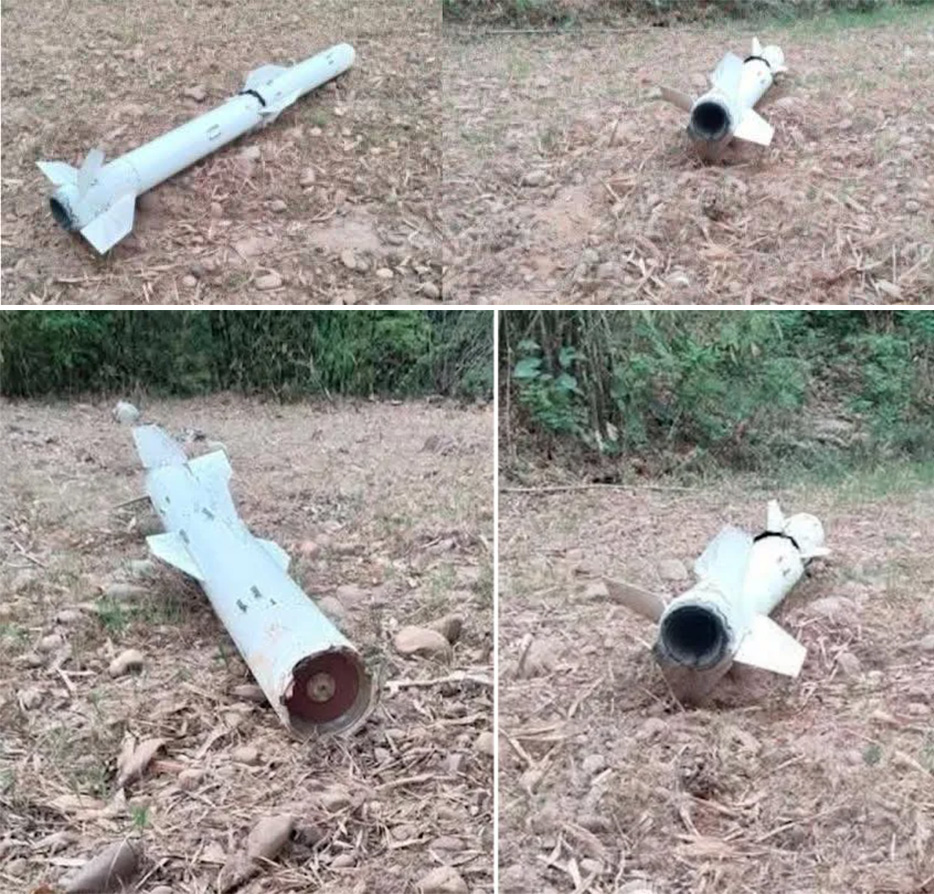
The new missile will incorporate improvements, including technologies derived from the Chinese PL-15 missile. This became possible after a technical analysis of a Chinese missile fired from a Pakistani aircraft during clashes in May.
The missile missed its target and crashed in Punjab, where it was mainly recovered intact. The analysis revealed several advanced features, including a compact active electronically scanned array (AESA) radar, a high-energy solid-fuel motor capable of speeds above Mach 5, and sophisticated electronic countermeasures.
Підтримати нас можна через:
Приват: 5169 3351 0164 7408 PayPal - [email protected] Стати нашим патроном за лінком ⬇
Subscribe to our newsletter
or on ours Telegram
Thank you!!
You are subscribed to our newsletter