


Popular
Germany is working on a program to develop its own long-range drone, with requirements that go beyond the typical kamikaze drones seen in the Russia-Ukraine war.
The German media Handelsblatt reported on this.
The Bundeswehr plans to be equipped by 2029 with long-range drones designed to operate “at distances of thousands of kilometers” and strike targets deep within enemy territory.
According to the media, even before the official announcement of the development program, three teams have already formed to compete for the future multi-billion euro contract. These include a partnership between Airbus Defence and the American startup Kratos, Rheinmetall together with Anduril, and the German developer of artificial intelligence systems and strike drones, Helsing.
Handelsblatt reports that the tender project is already at a fairly advanced stage. The client aims to acquire a strike drone with a subsonic cruise speed and a range exceeding the 500 km operational radius of Taurus cruise missiles.
Additionally, the deep-strike drone is expected to operate in coordination with combat aircraft and must have capabilities to destroy aerial targets.
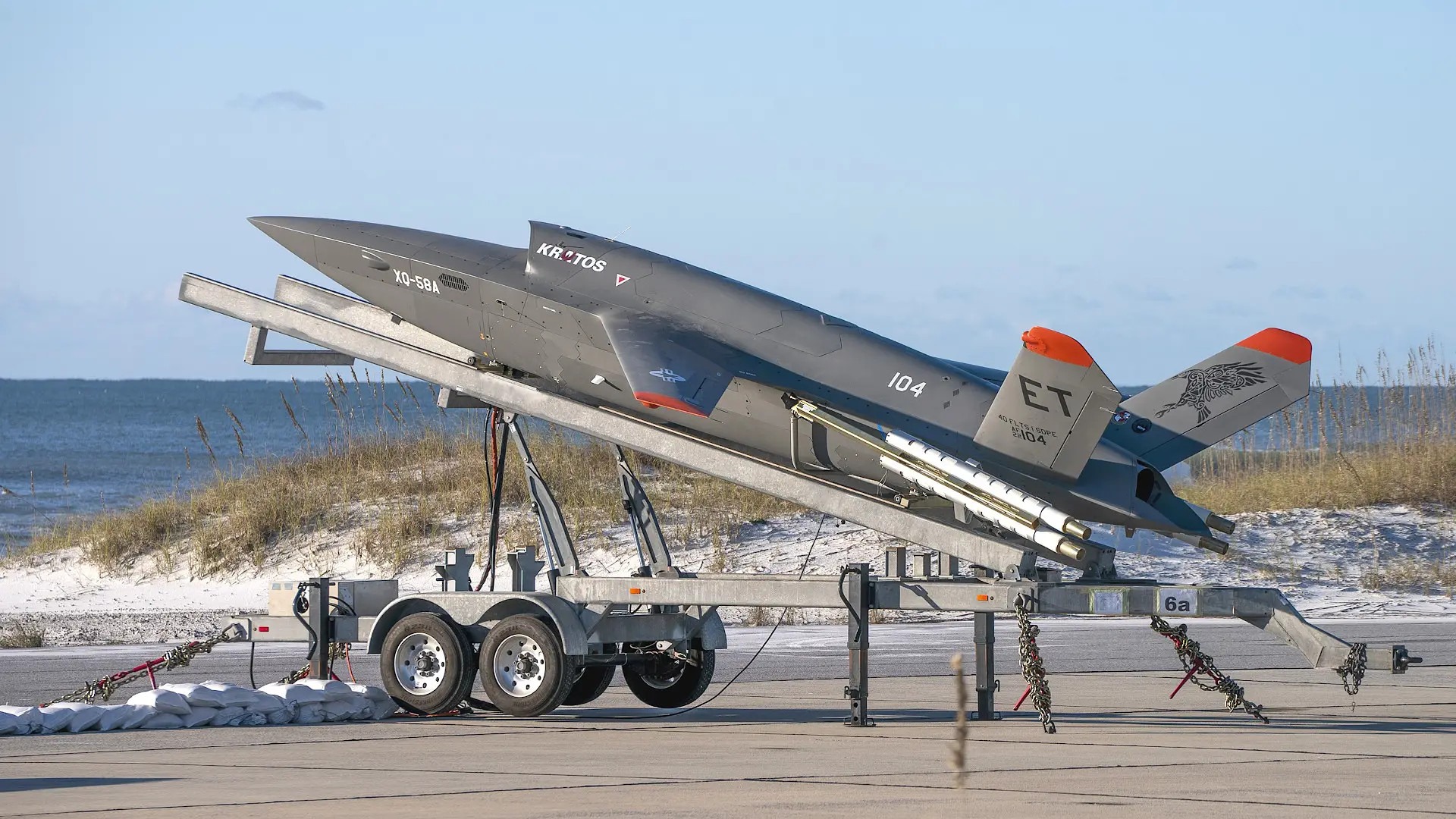
The German media IT Boltwise provides a detailed description of the long-range drone concept from Airbus and Kratos, who aim to adapt the XQ-58A Valkyrie project to meet the needs of the Bundeswehr Air Force.
This drone, known for its low observability and autonomous capabilities, was initially designed for reconnaissance and escorting combat aircraft. However, its features and ability to be launched without a runway make it a promising candidate in the German tender.
The basic Valkyrie measures 9.1 meters in length, has a wingspan of 8.2 meters, a maximum flight range of up to 4,800 kilometers, and a maximum takeoff weight of about 2,950 kilograms (including up to 270 kg in the internal payload bay and/or an additional 270 kg under the wings). It has a subsonic cruise speed of Mach 0.7 and can reach a maximum speed of around Mach 0.85.

However, these specifications blur the already vague line between the concepts of long-range drones and cruise missiles. It is possible that the German military may opt for a reusable solution with return capability, which is already implemented in the Valkyrie.
Proposals from other developers remain under wraps and may be revealed to the public only after the official tender announcement.
Militarnyi previously reported that the German government assessed the capabilities of Ukraine’s Liutyi long-range drones by funding the production of 500 units for the Armed Forces of Ukraine. In addition, the German government may potentially fund other programs, such as the production of drone missiles like the Bars.
Підтримати нас можна через:
Приват: 5169 3351 0164 7408 PayPal - [email protected] Стати нашим патроном за лінком ⬇
Subscribe to our newsletter
or on ours Telegram
Thank you!!
You are subscribed to our newsletter