







Popular
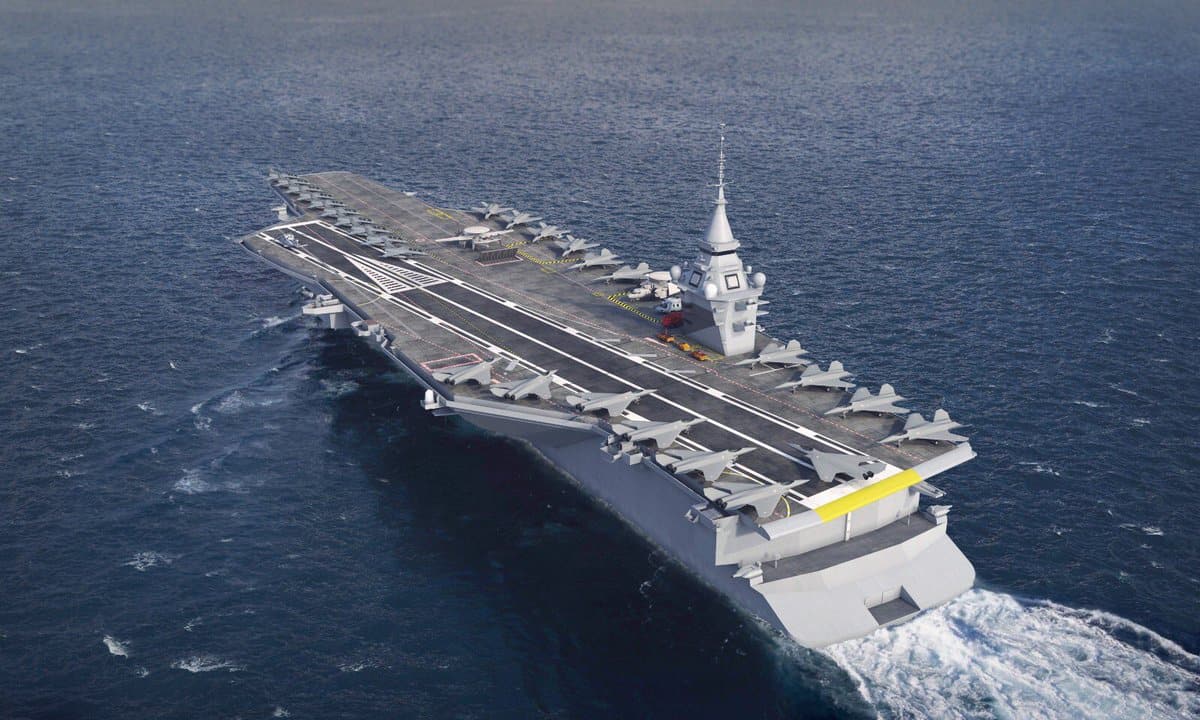
The French Ministry of Armed Forces has criticized a parliamentary proposal to delay the construction of the next-generation aircraft carrier PANG (Porte-avions de nouvelle génération).
Naval News reported on this.
It is noted that design work on the new nuclear-powered aircraft carrier is nearing completion, and the program is entering a critical approval phase that would allow construction to begin by the end of the year.
However, a new report from the French Parliament has raised fresh doubts about the implementation of this major project, reigniting debates surrounding it once again.
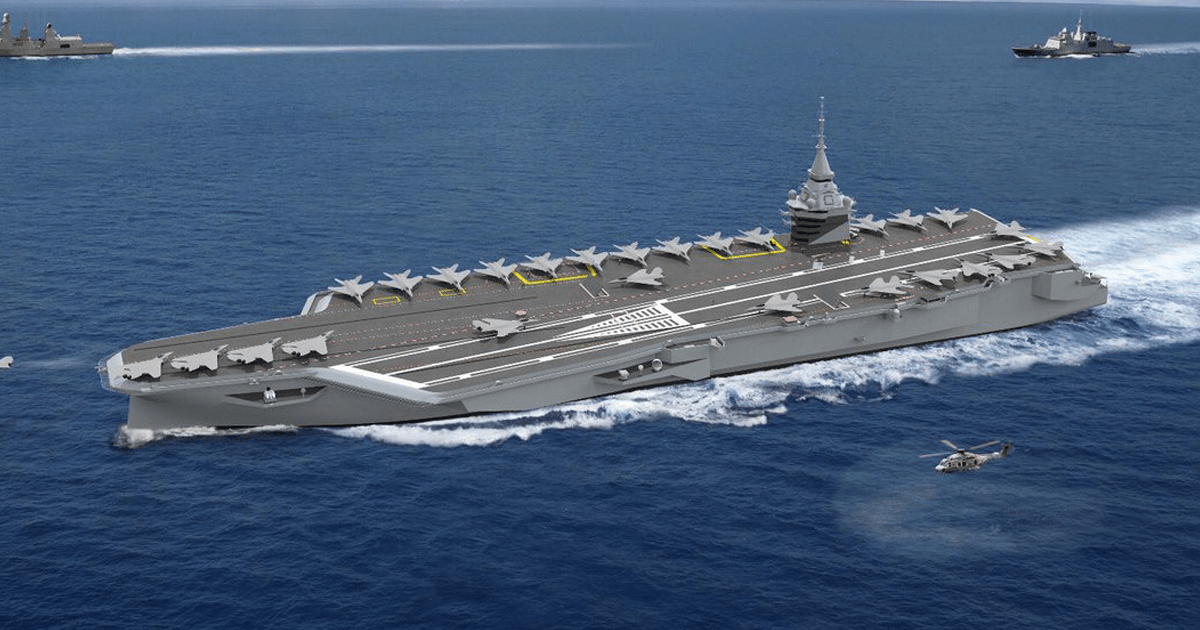
Despite this, the program is moving forward smoothly — the first contract to supply long-lead components was signed as early as April 2024.
The PANG project continues to attract widespread attention and debate. As one of the cornerstone modernization initiatives for the French armed forces, it remains at the forefront of both political discussions and public interest, primarily due to its significant cost and strategic importance.
Amid budget constraints and France’s goal of achieving the most effective rearmament, two members of parliament have drafted a report highlighting the need to strike a careful balance between the quantity and technological sophistication of military equipment.
The document proposes revising the current Military Planning Law (LPM), which sets the defense budget for a specific period, to adapt to the current geopolitical situation and reallocate resources toward more promising areas of armament.
The French military justifies the importance of building the new aircraft carrier with several key factors.
These include supporting the shipbuilding industry and related sectors, retaining skilled personnel within the navy, replacing the existing aircraft carrier Charles de Gaulle, and, consequently, preserving naval aviation capabilities.
Militarnyi previously reported in December 2020 about the official announcement of a new French nuclear-powered aircraft carrier set to replace the existing Charles de Gaulle.
According to preliminary plans, the cutting of steel for the new carrier is scheduled for 2025, with sea trials set for 2036. The ship is expected to enter active service in 2038, when the Charles de Gaulle is expected to be retired at the end of its service life.
Construction will take place in dry dock at France’s largest shipyard, Chantiers de l’Atlantique in Saint-Nazaire, with Naval Group involved in manufacturing some of the hull sections.
The project’s planned displacement is 75,000 tons, with a length of approximately 300 meters and a width of 80 meters. The crew will number around 2,000 personnel.

The vessel will be equipped with a new power plant based on two K22 nuclear reactors, each with a thermal output of 220 MW.
The propulsion system will include three shaft lines with a combined power of 80 MW, enabling a maximum speed of up to 27 knots. The total power output, including electrical supply, will reach 110 MW.
One of the key technological innovations will be the use of electromagnetic EMALS catapults manufactured by General Atomics—the same system used on the U.S. Gerald R. Ford-class aircraft carriers.
The air wing of the future ship will include up to 30 next-generation fighter jets and 2–3 modernized carrier-based airborne early warning and control aircraft.
Підтримати нас можна через:
Приват: 5169 3351 0164 7408 PayPal - [email protected] Стати нашим патроном за лінком ⬇
Subscribe to our newsletter
or on ours Telegram
Thank you!!
You are subscribed to our newsletter