

Popular
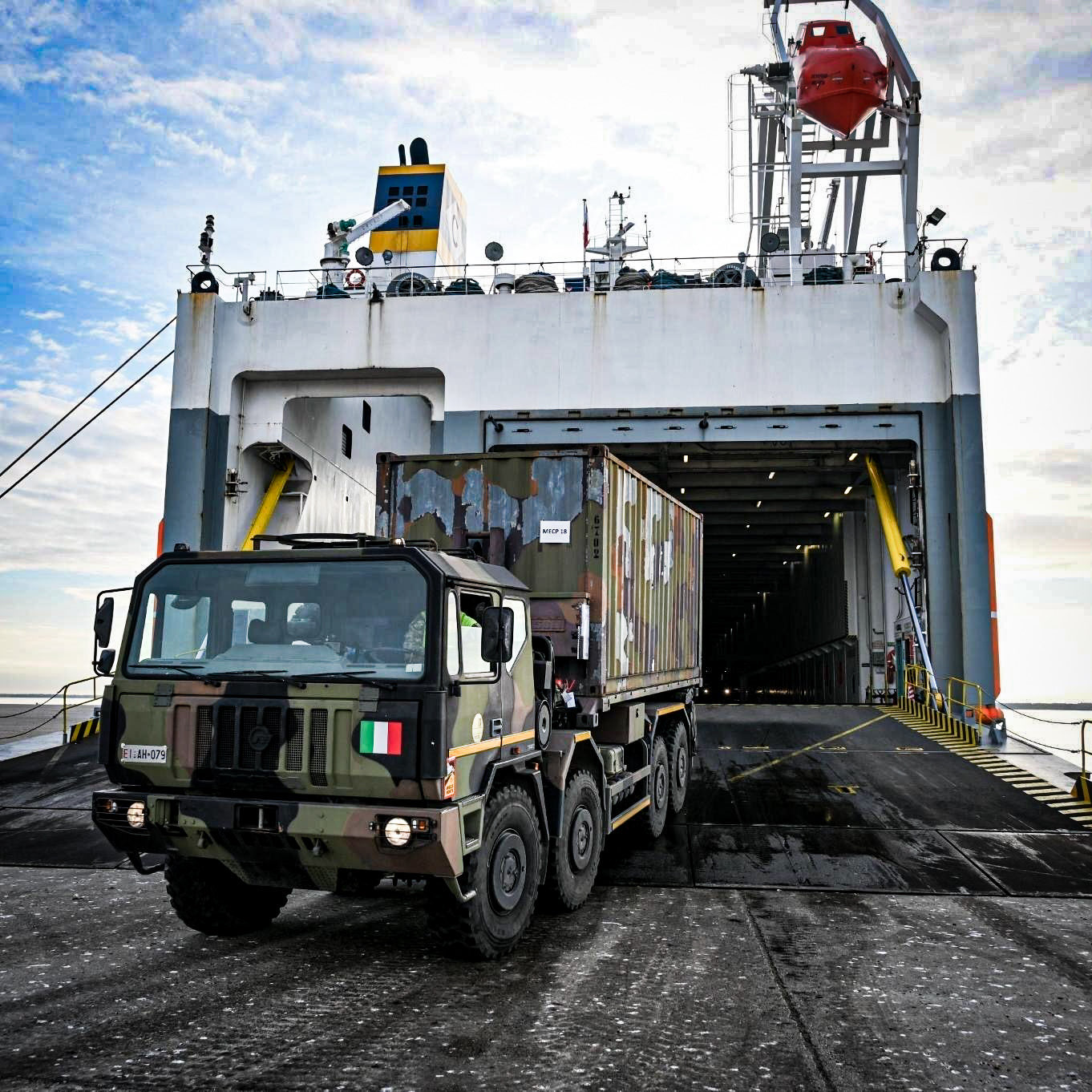
Members of the European Parliament are urging the removal of internal EU borders for the movement of troops and military equipment to strengthen deterrence against Russia.
According to an official statement from the European Parliament, lawmakers support large-scale upgrades to railways, roads, tunnels, and bridges to improve the EU’s military logistics.
They stress that military mobility is a core pillar of European security and defense and is essential for protecting the EU’s eastern flank, particularly the Baltic states and Poland.
The resolution also welcomes the European Commission’s proposal to raise funding for military mobility in the next long-term EU budget to more than €17 billion.

MEPs are urging member states to prevent any reduction in this funding, as happened during the preparation of the 2021–2027 budget, when the proposed allocation was cut by 75%.
According to lawmakers, upgrading around 500 critically important infrastructure sites, including bridges and tunnels, will require at least €100 billion.
In this context, they are calling on the European Commission to simplify procedures for accessing funding for dual-use projects.
Parliament acknowledges that, despite progress in military mobility, the EU still faces significant administrative and financial barriers, as well as infrastructure constraints.
As a result, in some cases, the movement of military equipment across the EU can take more than a month.
MEPs are calling on EU countries and the European Commission to step up investment in transport infrastructure, particularly along the EU’s four key military mobility corridors.

They also insist on the wider implementation of digital solutions and on faster permit procedures for cross-border movements, based on a “one-stop shop” principle.
Separately, they recommend working on the creation of a so-called “military Schengen,” supported by a dedicated military mobility task force and a European coordinator to align and streamline the implementation of relevant initiatives. The European Commission, for its part, is expected to prepare a detailed roadmap.
The European Parliament stresses that military mobility is a priority of EU–NATO cooperation and plays a key role in enabling the rapid movement of allied forces in peacetime, during crises, and in wartime.
The resolution also calls for regular joint exercises and stress tests to identify and eliminate existing obstacles.
In addition, lawmakers propose that the EU follow NATO’s approach and ensure rapid-response capabilities, enabling military units to cross internal EU borders within three days in peacetime and within no more than 24 hours in a crisis.
Підтримати нас можна через:
Приват: 5169 3351 0164 7408 PayPal - [email protected] Стати нашим патроном за лінком ⬇
Subscribe to our newsletter
or on ours Telegram
Thank you!!
You are subscribed to our newsletter