


China’s military start training to counter FPV drones

China’s military start training to counter FPV drones
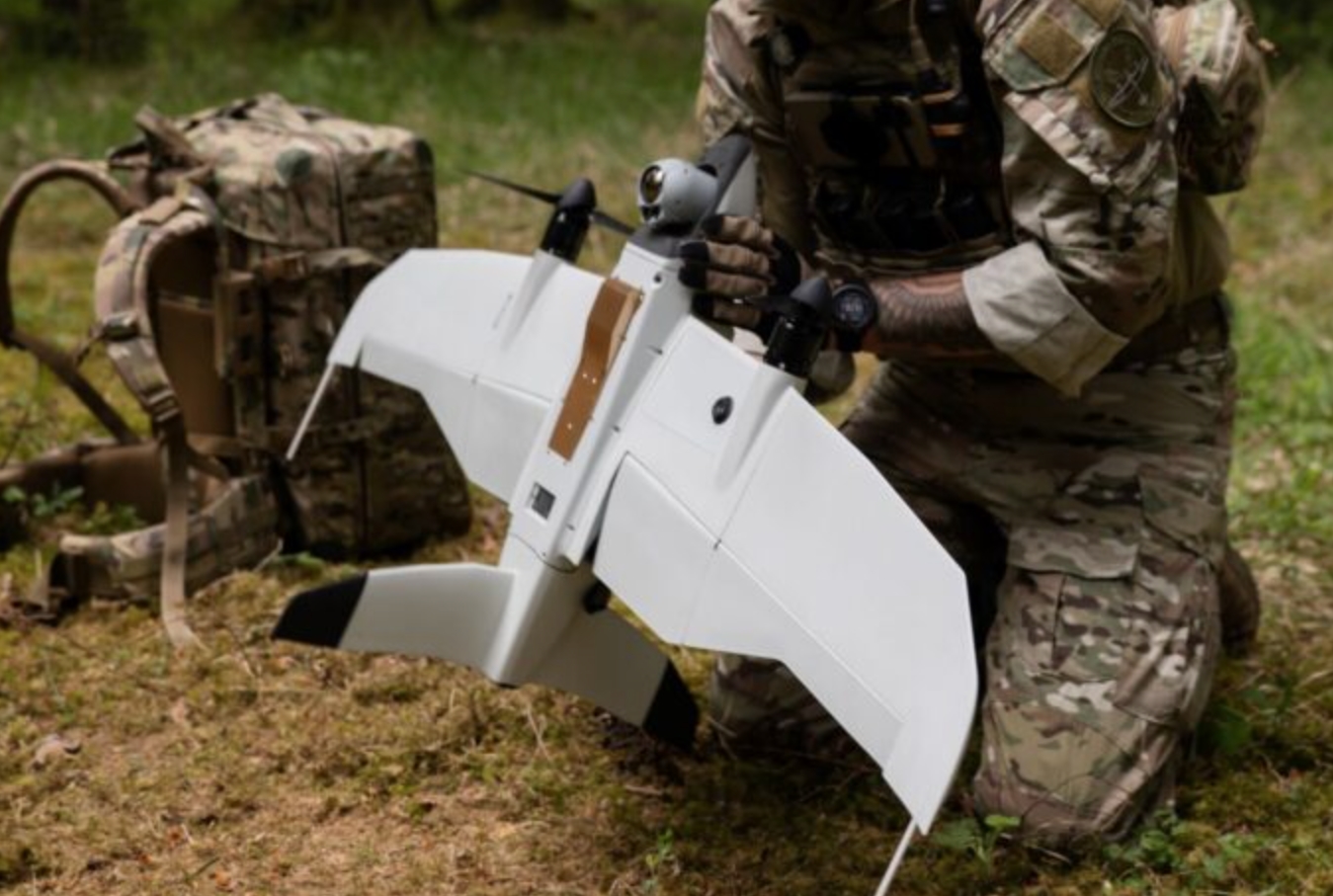
Chinese anti-drone equipment. Photo credits: China army telegram group
News

The Chinese military has added exercises to counter FPV drone attacks to its training.

The China army telegram group published footage of similar exercises by the Chinese, which uses various methods of countering drones.

Such exercises are especially relevant at the moment, when the sky is dotted with swarms of enemy attack drones.

In this regard, China’s military command is actively equipping its troops with drone countermeasures.

In particular, the military is being issued anti-drone rifles, shotguns, and net guns.

In addition, Chinese soldiers are looking for ways to protect themselves in underground trenches.

Chinese anti-drone equipment. Source: China army telegram group

The Chinese military is being trained to equip trenches with grids that should prevent FPV drones from flying inside.

However, so far, the Chinese have not adopted the Russian experience of physically evading FPV drones. Russian army soldiers are trained to dodge, run, jump, fall, roll, and even fight back with assault rifles.

A Russian soldier throws his assault rifle at a drone during training. Source: Russian telegram channels

Ukrainian experience

In Ukraine, the fight against FPV drones involves a comprehensive approach to UAV protection in the form of active and passive measures that must be implemented both in units and as individual elements by each serviceman.

Active measures include:

  • Detection and destruction of “kamikaze” drone operators’ calculations (probable launch sites, presence of antennas, specially prepared FPV launch pad, traces of ammunition disassembly, packages and boxes, inconspicuous cars, repeaters on tall buildings and infrastructure elements;
  • Early detection of UAVs (visually, by ear, signal to a detector or analyzer) and alerting (receiving commands or notifications from a senior officer, observation post, neighbors about the presence of a drone in the area of your operations);
  • Radio electronic suppression of control, video transmission and satellite navigation channels by means of electronic warfare;
  • Reducing the time spent in the area of possible impact thanks to the speed of a vehicle (an Enduro motorcycle at a speed of about 80 km/h covers 5 kilometers in 4 minutes);
  • Firepower – destruction of drones by small arms fire, primarily from smoothbore rifles (up to 50 meters);
  • Mechanical impact – the capture of drones by using special devices – “net-catchers” at close distances (20-30 m);
  • Maneuver – actions of personnel to evade drone strikes (dispersal, taking shelters, active movement in the open in case of a threat of attack);
  • Ensuring the logistics of ammunition, water, and food to units at the LBZ through the use of “heavy copters” and ground-based robotic systems for cargo delivery and evacuation of the wounded.

Passive measures:

  • Additional fortification of positions (preparation of anti-drone niches and burrows, bends at the entrance to dugouts and shelters, installation of protective hinged nets and barriers
  • Disguising positions and equipment (installation of camouflage nets with irregular geometric shapes and a distance of 0.3-0.5 m to equipment in the shade of trees and bushes, inside destroyed buildings, use of heat shields, control of demasking features from a drone);
  • Creation of fake positions (equipped with heat and light sources) with the installation of models of military equipment and vehicles (including those unsuitable for operation) with imitation of their activities;
  • Installation of protective nets (screens) made of fishing nets on the routes of rotation, evacuation of personnel, delivery of ammunition, water and food
  • Installing hinged protection elements (visors, canopies) and dome electronic warfare systems on equipment
  • Taking into account weather conditions, terrain and time of day when planning active operations and movement
  • Setting up aerosol curtains, creating foci of smoke at positions (objects) and movement routes (including false ones).

As a promising method of counteracting UAVs, developments are underway to optically affect the camera of an FPV drone by using a laser device with a wide light beam.

Share this post:

SUPPORT MILITARNYI

PrivatBank ( Bank card )
5169 3351 0164 7408
Bank Account in UAH (IBAN)
UA043052990000026007015028783
ETH
0x6db6D0E7acCa3a5b5b09c461Ae480DF9A928d0a2
BTC
bc1qv58uev602j2twgxdtyv4z0mvly44ezq788kwsd
USDT
TMKUjnNbCN4Bv6Vvtyh7e3mnyz5QB9nu6V
Popular
Button Text