






Popular

China has deployed new Shuiqiao-class auxiliary ships on the beach of Nansan Island.
Sino Talk published the video on X.
The island is located in the South China Sea near the city of Zhanjiang. This is reported to be the second series of Shuiqiao-class ships since their first public appearance in March 2025.
These ships are designed as an intermediate platform to enable rapid, direct landings of large quantities of heavy equipment from transport ships onto the shore.
The ships have a large open platform at the stern to receive equipment and cargo from other vessels. Equipment moves along the hull and reaches the coast via a retractable folding ramp about 120 meters long.
Footage shows that this setup allows bypassing difficult-to-navigate coastal sections and landing equipment directly on solid ground. The ramp also enables loading from conventional cargo ships.
The ships are equipped with retractable supports that stabilize the platform and minimize swaying. When approaching the coast, the ship effectively becomes a temporary pier.
Naval News, citing satellite imagery, reported that as of early January 2025, China was simultaneously building at least three, and possibly up to five, of these ships at a shipyard in Guangzhou.
Such ships can play a key role in amphibious operations, significantly increasing the fleet’s landing capacity. Their design allows military landing ships to be supplemented with numerous civilian barges.

The active construction of these platforms may indicate that China is preparing for a potential landing operation against Taiwan.
On Taiwan’s main island, there are few beaches suitable for landing amphibious armored vehicles, and these are well-defended. Until recently, pre-captured ports were the primary options for large-scale landings.
Deploying Shuiqiao-class ships could remove this limitation, expanding the potential for mass landings of armored units in previously inaccessible coastal areas.
Recent reports indicate that China has twice mobilized thousands of fishing vessels in recent weeks, practicing the formation of giant “floating barriers” about 460 kilometers long.
On Christmas Day 2025, about 2,000 Chinese fishing vessels abruptly stopped normal fishing operations or left their ports, forming two long parallel lines in the East China Sea, each roughly 460 kilometers long in an inverted L shape.
A similar formation occurred on January 11, 2026, when about 1,400 vessels assembled in a rectangular line stretching more than 320 kilometers.
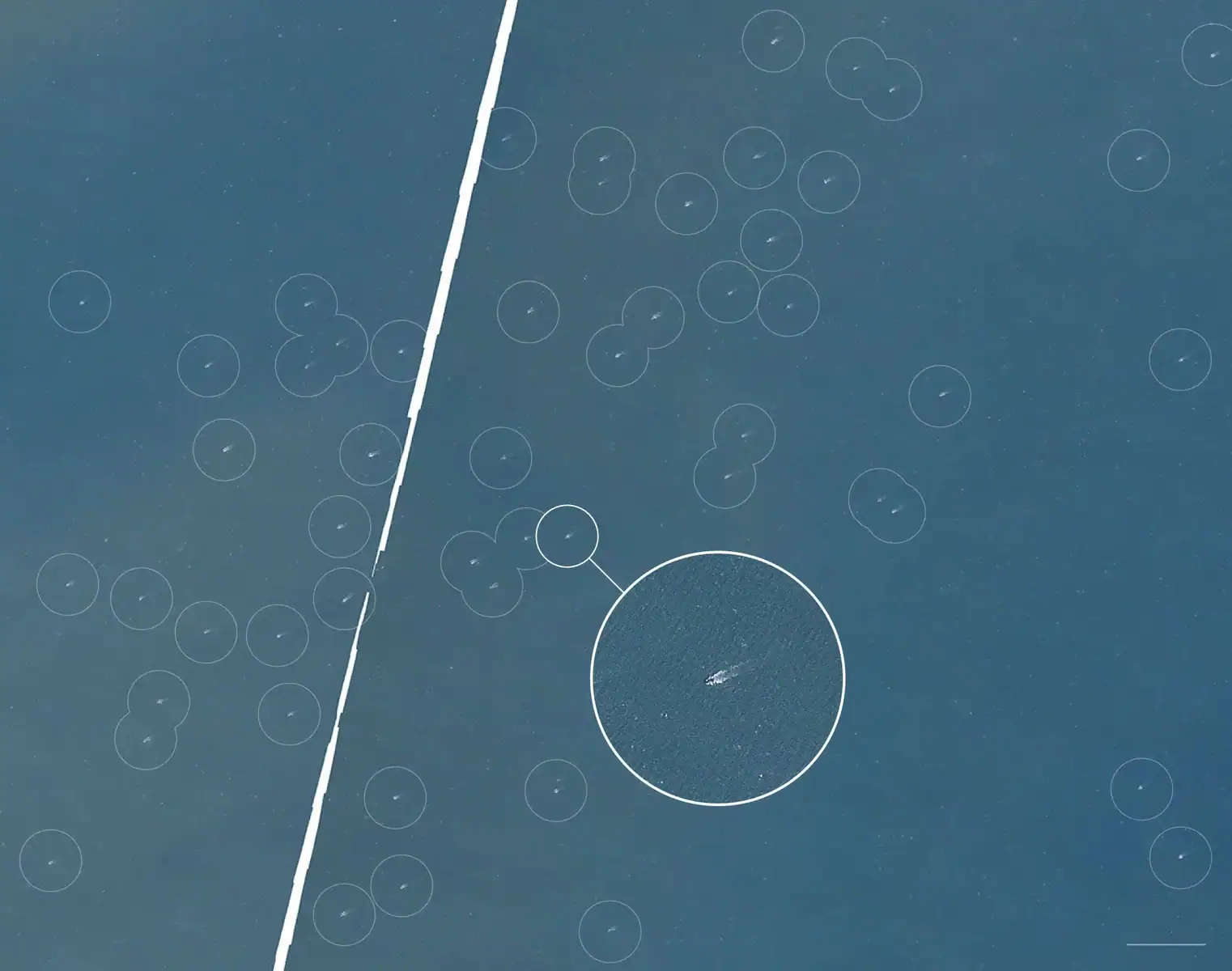
The density of the formations was so high that approaching cargo ships had to alter course, navigate around, or move in zigzags, according to marine tracking data.
The maneuvers were first noticed by Jason Wang, COO of the analytical firm ingeniSPACE, and were independently confirmed by The New York Times using location data from Starboard Maritime Intelligence.
Підтримати нас можна через:
Приват: 5169 3351 0164 7408 PayPal - [email protected] Стати нашим патроном за лінком ⬇
Subscribe to our newsletter
or on ours Telegram
Thank you!!
You are subscribed to our newsletter