




Popular

The Austrian government is open to discussing possible NATO membership and abandoning the country’s neutral status enshrined in its constitution.
Deutsche Welle reported on this.
“Clearly, neutrality alone will not protect us. Against the backdrop of an increasingly uncertain global security situation and a more aggressive Russia, Austria is protected by investments in our defense capabilities as well as in partnerships,” said Austria’s Foreign Minister Beate Meinl-Reisinger.
The minister noted that the government was open to a public discussion about the future of Austria’s security and defense policy. Although there is currently no majority in parliament or among the public in favor of NATO membership, she believes such a discussion could be very productive.
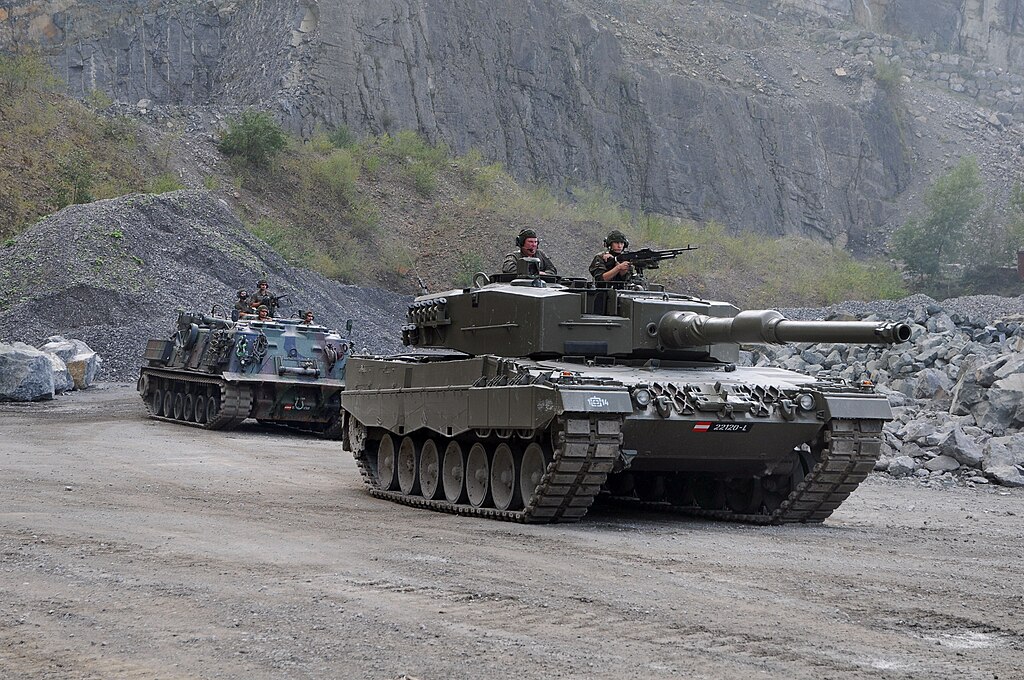
According to a poll conducted in March 2024 by Gallup Inc., the majority of the population considers Austria’s defense capabilities insufficient. However, support for neutrality remains unchanged.
Three-quarters of the population believe Austria is inadequately prepared to repel external aggression: 42% of respondents answered “definitely no,” and another 33% said “rather no.” Meanwhile, 16% disagreed with this statement, and 9% had no opinion.
Meanwhile, an overwhelming majority (74%) think that maintaining neutrality is better for Austria’s security than joining NATO. Only 14% support abandoning neutrality and joining NATO, while the rest are undecided. Support for neutrality has remained stable, with only minor fluctuations since the full-scale Russian invasion of Ukraine began.
Austria restored its independence, and the provision of “permanent neutrality” was enshrined in its constitution.
Thanks to its neutrality – and the fact that the country’s laws prohibit espionage only when directed against Austria itself, but not against other countries or international organizations – Austria’s capital has become notoriously known as a Russian espionage hub in Europe, from which anti-Western special operations are conducted.

According to The Wall Street Journal, from 2022 to 2024, the number of Russian government officials in Austria increased to over 500. More than half of them are diplomats and administrative staff. However, Austrian intelligence estimates that up to half of these individuals are spies.
European and American intelligence agencies report that Vienna currently serves as a base for Russian covert operations. These include funding and logistical support for assassinations, sabotage, and recruitment across Europe, as well as industrial espionage and influence operations.
Russian diplomats and support personnel operate in Vienna from over 40 properties owned by Moscow or individuals and companies connected to the Russian state. Often, surveillance equipment for intercepting satellite communications is installed on the roofs of these buildings.
Підтримати нас можна через:
Приват: 5169 3351 0164 7408 PayPal - [email protected] Стати нашим патроном за лінком ⬇
Subscribe to our newsletter
or on ours Telegram
Thank you!!
You are subscribed to our newsletter