






Popular

BAE Systems has presented an APKWS II 70mm rocket upgrade kit with a dual-mode laser beam guidance system and an infrared homing system.
This was reported by The War Zone.
The second generation of the Advanced Precision Kill Weapon System II unguided aircraft rocket modification kit, which is still under development, was publicly presented at the Sea Air Space 2025 exhibition. Currently, it is only a prototype, which is expected to be completed in 2026.
As it has become known, the new system has a completely new design and now consists of a single module that is fully integrated with the missile warhead, which is significantly different from APKWS, where the guidance kit was simply screwed between the removable warhead and the rocket engine.
While the first-generation systems were able to achieve laser beam guidance by placing sensors in the wings, the new system’s sophisticated infrared homing head required installation in the nose of the missile. Accordingly, APKWS II modules now require only a rocket engine.


The two-mode guidance system APKWS II is designed to solve the main problem of the previous system – the need for continuous illumination of the target until it is hit by the rocket. This significantly slowed down the speed of hitting air targets.
“So we’re working on what we call a dual-mode seeker. So, it’s an infrared seeker on top of the standard APKWS II. And the purpose is to increase the rate of fire” explained Smialek, Business Development Director at BAE Systems’ Precision Guidance and Sensing Solutions.
“So now you’ll still lase the target. You’ll do an anoint and shoot. So rather than having to hold the lase for the duration [of the flight], from launch to terminal, you can now anoint your target, fire the rocket, it heads out, and the infrared seeker picks up the target,” Smialek explains, adding that you can then immediately “move on to the next target and do the same thing.”
In effect, this is a solution similar to the much more complex and expensive “fire and forget” missiles, but at a lower price point. Smialek said the new version was being developed with an eye toward “maintaining the affordability” offered by the original system.
The price of a standard APKWS is between $15,000 and $20,000, with a few thousand more added for the Hydra 70 unguided missile. The introduction of an infrared GWS and its own warhead will increase this cost at least several times. However, even with a tenfold increase in price, it will be a much cheaper solution than classic air-to-air and air-to-ground missiles.
According to The War Zone, modern AIM-9X Sidewinder and AIM-120 AMRAAM air-to-air missiles cost approximately $450,000 and $1 million, respectively. And the latest versions of missiles for the Stinger man-portable air defense system cost about $400,000.
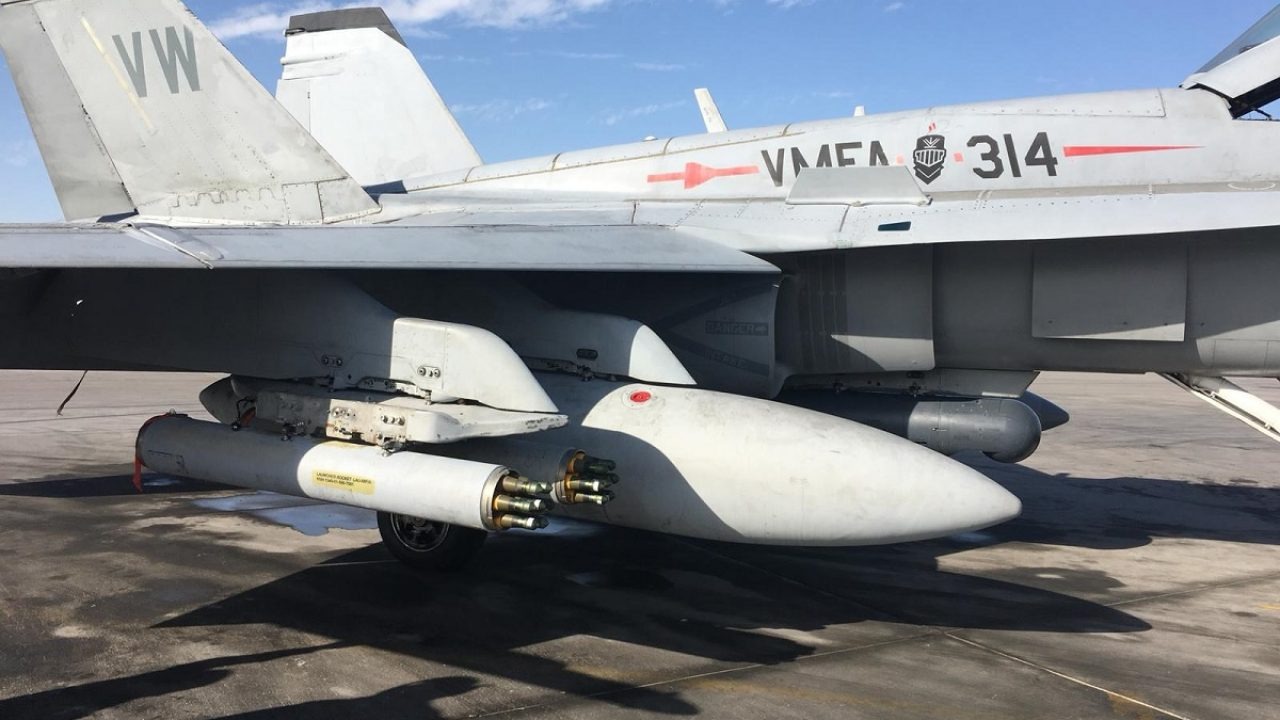
Another non-obvious advantage of the modified 70 mm missiles is their compactness: a single fighter pylon can easily carry two blocks of air-to-air missiles with a total volley of 14 missiles. At the same time, only one conventional air-to-air missile can be deployed in their place.
Thus, an aircraft with about fifty APKWS II missiles becomes many times more effective in intercepting massive attacks by drones and some cruise missiles, being able to hit a large number of targets without the need to return to the air base for refitting.
Підтримати нас можна через:
Приват: 5169 3351 0164 7408 PayPal - [email protected] Стати нашим патроном за лінком ⬇
Subscribe to our newsletter
or on ours Telegram
Thank you!!
You are subscribed to our newsletter