

Popular

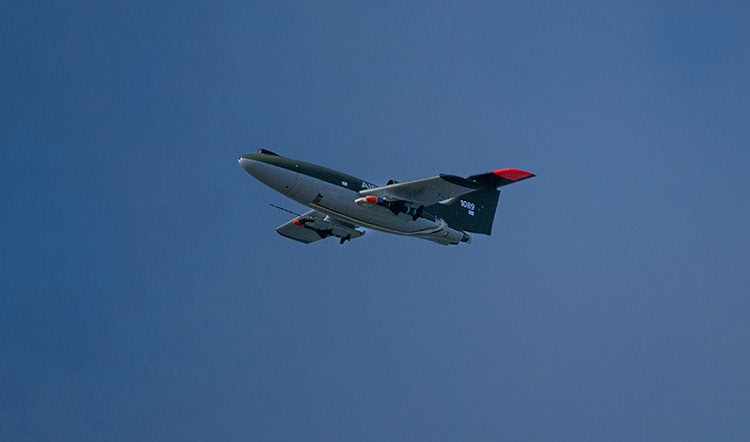
Boeing has officially delivered the first production T-7A Red Hawk training aircraft to the U.S. Air Force for operational use. This jet will play a key role in preparing a new generation of fighter and bomber pilots.
The company announced the delivery on its official X account.
The aircraft, tail number “7005,” has arrived at Joint Base San Antonio (JBSA) in Texas. It will serve as the primary trainer for pilots of fifth-generation fighter jets – the F-35A Lightning II and F-22 Raptor – as well as for the newest strategic bombers, including the B-21 Raider.
The delivery of the T-7A Red Hawk marks a historic milestone in the evolution of the U.S. pilot training system. This aircraft is set to replace the aging T-38 Talons, which have been in service for more than 60 years.
At the initial stage, the 99th Flying Training Squadron of the 12th Flying Training Wing will operate the Red Hawk. According to the Air Education and Training Command (AETC), the new aircraft will provide cadets with a modern platform for practicing complex maneuvers, simulating air combat, and responding to unusual or emergency situations.
The T-7A program, developed by Boeing in cooperation with Saab, is intended to fully replace the T-38 fleet, which, despite multiple upgrades, no longer meets the requirements for training pilots of next-generation aircraft.
In contrast, the T-7A Red Hawk was designed with modern challenges in mind: high stress loads, high maneuverability, and complex flight profiles.
In the coming years, the U.S. Air Force plans to receive more than 350 T-7A aircraft, which will gradually replace the entire training fleet. The first cadets will begin training as soon as the infrastructure and simulator complexes at JBSA are fully installed.
Aircraft’s entry into U.S. Air Force service, as well as the start of its serial production, has been postponed multiple times. One of the most critical issues cited was malfunctions in the ACES 5 ejection system (the aircraft’s ejection seat).

In particular, the issues involved improper ejection performance at high speeds, which caused failures of the canopy-fracture system and disruptions to the ejection sequence for the instructor’s and cadet’s seats.
During test flights, the aircraft also demonstrated instability at high angles of attack, making it difficult, and in some cases impossible, to safely perform training maneuvers. In addition, software problems were identified that required significant refinement and repeated testing.
Along with design and technical challenges, Boeing faced supply-chain and quality-control issues. As a result, the T-7A’s serial production was repeatedly delayed. Initially, the first deliveries were planned for 2024, then postponed to 2025, and later to 2026. According to the latest estimates, full-rate production is expected in 2027. Consequently, the initial operational capability (IOC) date has also shifted, now estimated for 2027–2028.
Підтримати нас можна через:
Приват: 5169 3351 0164 7408 PayPal - [email protected] Стати нашим патроном за лінком ⬇
Subscribe to our newsletter
or on ours Telegram
Thank you!!
You are subscribed to our newsletter