
Popular
Russia’s full-scale invasion of Ukraine marked a decisive turning point for Sweden, bringing an end to its long-standing policy of military non-alignment and caution in providing military assistance to other states. Back in the first months of 2022, Stockholm shifted from traditional restraint to active measures, including the transfer of anti-tank weapons, ammunition, and other armaments, as well as political support for Ukraine at the international level. These decisions were taken amid intense domestic political debates and legal constraints related to Sweden’s own defence capabilities, yet they demonstrated the willingness of the Swedish leadership to reconsider established security approaches.
The initial steps took the form of an urgent response to aggression and relied primarily on existing resources that could be rapidly integrated by the Ukrainian Defence Forces. At the same time, even at this early stage, Swedish political statements went beyond situational assistance. Support for Ukraine was increasingly framed as an element of safeguarding Sweden’s national interests and the security of Northern Europe and the Baltic region. Thus, from the outset, assistance to Kyiv was embedded in a broader strategic context of deterring Russia.
The subsequent evolution of Sweden’s military support policy unfolded in parallel with fundamental changes in the Euro-Atlantic security environment. The decision to join NATO removed a significant share of previous political and institutional constraints, enabling Sweden to participate fully in collective formats of assistance to Ukraine. From that point onward, support began to look less like a collection of one-off packages and instead acquired the features of a systematic policy oriented toward long-term planning and coordination with partners.
In 2022–2023, the foundations were laid for a transition to a multi-level support model combining bilateral decisions with participation in international mechanisms—the Ukraine Defence Contact Group, functional capability coalitions, and later joint industrial initiatives. The political decisions made during this period shaped the logic for the subsequent scaling up of assistance and the institutionalisation of cooperation, within which support for Ukraine became an integral component of Sweden’s new security strategy.
The ground component became one of the key areas of Sweden’s military support for Ukraine at an early stage of the war and subsequently evolved into a systematic line of assistance aimed at strengthening the manoeuvre and firepower capabilities of the Ukrainian Armed Forces’ Ground Forces. In 2022–2023, Stockholm focused on transferring equipment and ammunition that could be rapidly integrated into Ukrainian units and employed in high-intensity combat operations, gradually expanding both the range and scale of deliveries.
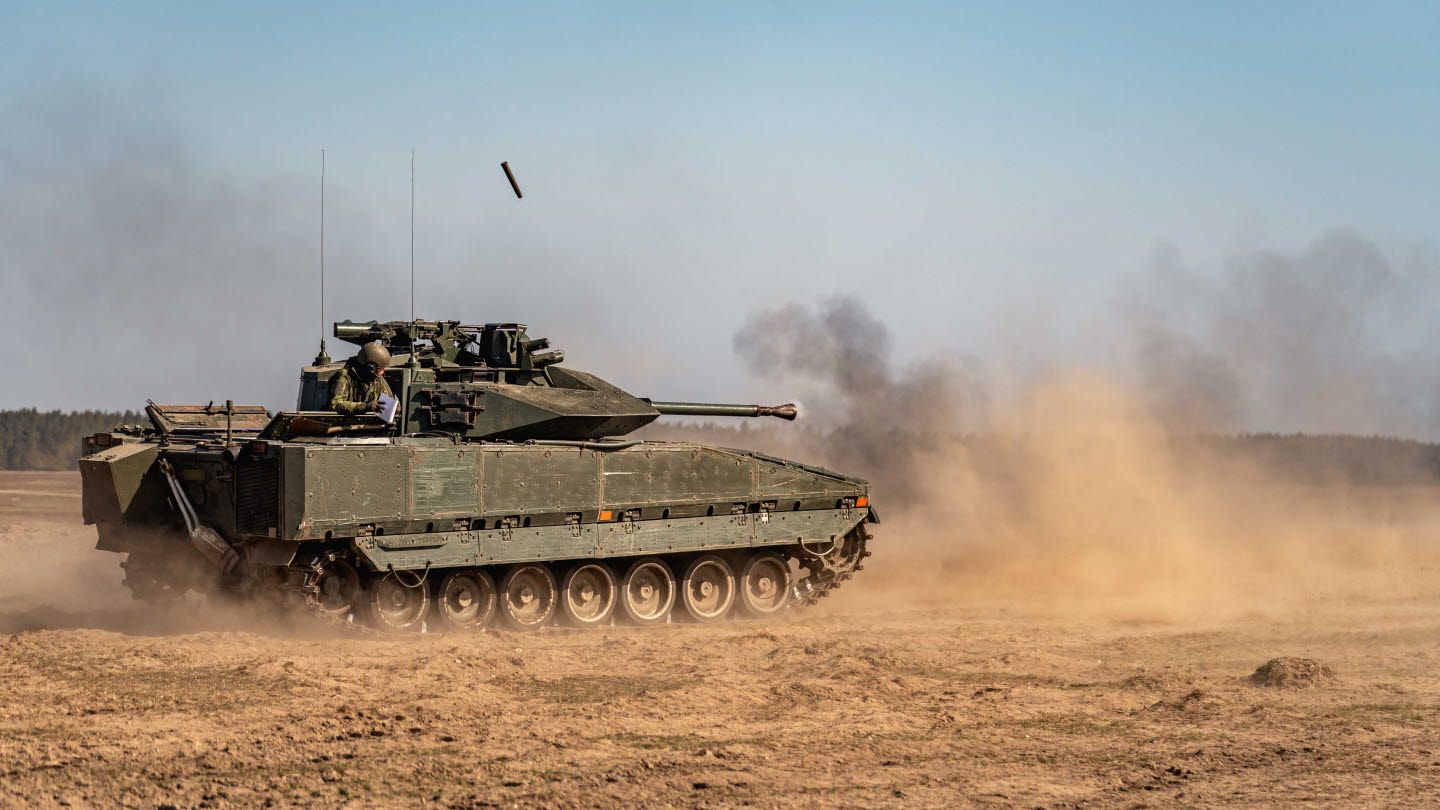
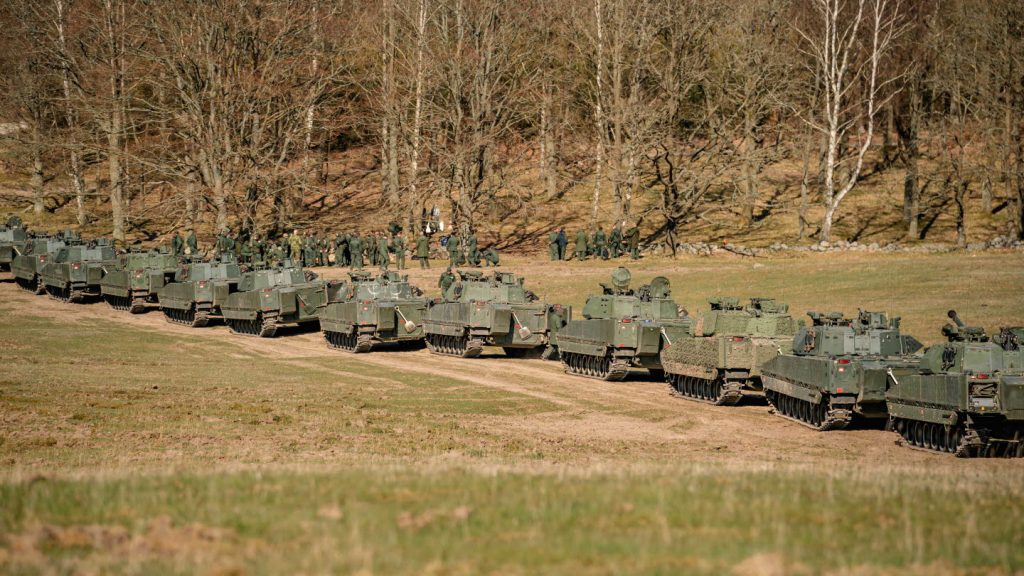
One of the most significant decisions was the transfer of CV90 infantry fighting vehicles. Ukraine received both equipment drawn from Swedish Armed Forces stocks and the prospect of new vehicles supplied under joint contracts with Scandinavian partners. The CV90 has proven to be an effective platform for mechanised units, combining protection, mobility, and substantial firepower. Experience gained from their combat employment in Ukraine, in turn, became an important factor shaping Sweden’s subsequent decisions to increase production and replace transferred equipment with newer variants.
Artillery occupied a distinct place within the ground component of assistance. The transfer of Archer self-propelled artillery systems represented not only a quantitative reinforcement for Ukraine but also a qualitative shift in the employment of long-range, high-precision artillery. High levels of automation, mobility, and the ability to rapidly change firing positions made Archer a critical element of counter-battery warfare. Subsequent decisions to supply additional systems and ARTHUR artillery reconnaissance radars demonstrated that Sweden views the artillery component as a long-term priority rather than a one-off contribution.
Support in the field of ammunition and logistics was no less significant. Sweden consistently supplied 155 mm artillery shells and invested in expanding their production in Europe, particularly through joint initiatives with partners within the EU and NORDEFCO (Nordic Defence Cooperation). Concurrently, auxiliary equipment was delivered, including armoured recovery and repair vehicles, transport platforms, engineering support assets, and demining vehicles, thereby enhancing the resilience and operational autonomy of Ukrainian units under combat conditions.
Taken together, ground weapons and artillery formed the foundation upon which subsequent Swedish support was built. Moving from individual deliveries to a comprehensive approach combining equipment, ammunition, maintenance, and production-related solutions, Sweden gradually developed a model oriented toward the long-term strengthening of the combat capabilities of the Armed Forces of Ukraine.
The air and naval components of Swedish military assistance to Ukraine were formed gradually, but with a clear focus on addressing critical vulnerabilities of the Armed Forces of Ukraine in the fields of air defence, reconnaissance, and maritime domain control. While initially smaller in scale than the land component, from 2023–2024 these areas evolved into some of the most technologically complex and strategically significant elements of support.
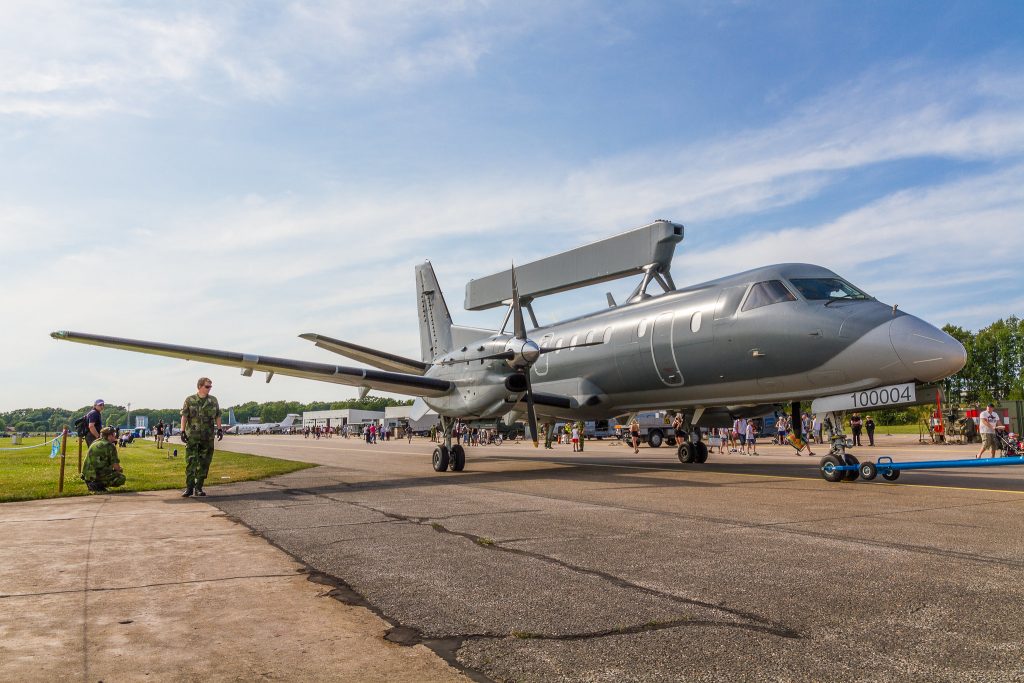
In the air domain, the key decision was the transfer of ASC 890 airborne early warning and control aircraft to Ukraine. This platform significantly enhances Ukraine’s ability to monitor air and maritime space, ensure early detection of targets, and coordinate air defence operations. Importantly, the transfer of the ASC 890 was embedded within the broader framework of the aviation coalition and linked to the introduction of F-16 fighter aircraft, demonstrating Sweden’s systematic approach to building a multi-layered air defence architecture for Ukraine. An additional element of this approach was the supply of Rb 99 (AMRAAM) missiles adapted for employment in ground-based air defence systems.
At the same time, Sweden’s position regarding Gripen fighter aircraft reflects a combination of political caution and long-term strategic planning. Although no decision was made to transfer the aircraft immediately, Stockholm left this option open, concentrating on supporting pilot and technical personnel training and on creating the conditions necessary for the future integration of Swedish aviation platforms. As a result, the air component of support assumed the form of a deferred, yet structurally prepared, decision.
The naval component of Sweden’s assistance played a distinct role in strengthening Ukraine’s capabilities in the Black Sea and coastal operational environments. The transfer of high-speed Combat Boat 90 assault craft and lighter Gruppbat boats significantly expanded the capabilities of the Ukrainian Navy, Marine Corps, and Special Operations Forces in manoeuvre, amphibious operations, patrolling, and special missions in shallow waters. These platforms naturally integrate into the concept of asymmetric maritime warfare that Ukraine has been compelled to develop due to its limited surface fleet.
Beyond the direct transfer of vessels, Swedish assistance encompassed crew training, technical adaptation of platforms to Ukrainian operational conditions, and participation in the multilateral Maritime Capabilities Coalition. In combination with measures undertaken by other partners, this contributed to the development of a more resilient system for coastal control, protection of maritime lines of communication, and support of operations in the southern operational direction.
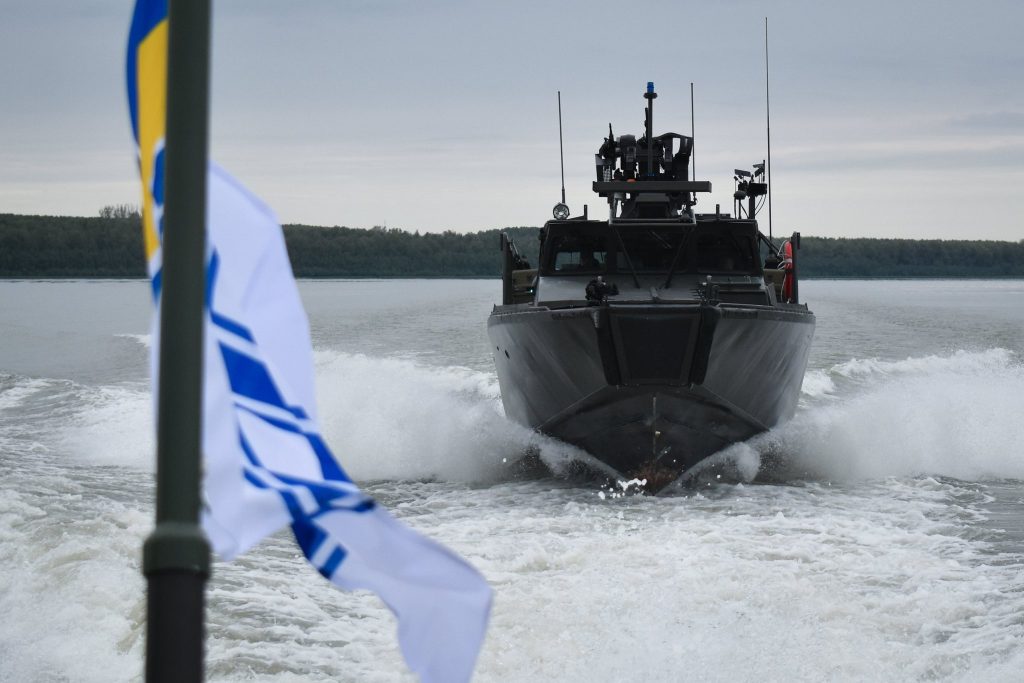
Overall, the air and naval components of Swedish support demonstrate a shift from providing individual platforms to developing interconnected capabilities. This concerns not only weapons and equipment, but also the creation of conditions for comprehensive control of air and maritime domains, directly affecting the operational resilience and strategic capabilities of the Armed Forces of Ukraine.
Since 2024, Swedish military assistance to Ukraine has acquired a pronounced institutional and industrial dimension, distinguishing this phase from earlier periods of direct arms deliveries. Multilateral capability coalitions within the framework of the Ukraine Defence Contact Group, in which Sweden has participated as an active financial and organisational contributor, have become a key instrument of this approach. Through these formats, Stockholm began to invest systematically in the development of specific capability areas, including unmanned systems, demining, maritime security, artillery, air defence, and cyber defence.
Participation in these coalitions enabled Sweden to move from the logic of one-off assistance packages toward long-term capability planning. Funding was directed not only toward the procurement of finished weapons systems, but also toward personnel training, the establishment of repair and maintenance infrastructure, the provision of spare parts, and logistical support. This approach was particularly evident in the fields of unmanned systems and demining, where Sweden emphasised scalability, technological adaptation, and the rapid replacement of losses in line with the operational requirements of the front line.
In parallel with coalition-based formats, Stockholm became actively involved in supporting Ukraine’s defence-industrial complex, notably through the so-called “Danish model” of financing weapons production directly in Ukraine. This mechanism marked a fundamental shift in approach, from the transfer of finished equipment to the contracting of Ukrainian manufacturers and stimulating domestic production capacity. For Sweden, this offered a means of aligning assistance to Ukraine with the long-term objective of strengthening European defence autonomy.
Swedish companies, primarily Saab and BAE Systems Hägglunds, as well as the state defence procurement agency FMV, have played an important role in the industrial dimension of support. They not only ensured the supply and servicing of previously transferred equipment but also contributed to the development of new contracts, the analysis of combat employment of weapons in Ukraine, and the preparation of decisions related to the localisation of production. The intention to deploy FMV specialists to Kyiv to support procurement and maintenance processes serves as a particularly illustrative example of this approach.
Thus, capability coalitions and industrial support have become key instruments enabling Sweden’s transition to a qualitatively new level of cooperation with Ukraine. This process concerns not only funding volumes or the quantity of transferred equipment, but also the integration of Ukraine into a broader European defence ecosystem, within which the production, operation, and development of armaments are understood as a shared responsibility of partners.
By 2025, Swedish military assistance to Ukraine had reached a scale that went beyond situational support and signalled a transition to a long-term strategy. The total volume of military assistance since February 2022 has exceeded SEK 40 billion. With the adoption of a three-year funding framework for 2024–2026, amounting to SEK 75 billion, Sweden has effectively designated Ukraine as one of the central priorities of its security policy. Such a level of commitment is unprecedented in Swedish defence practice since the end of the Cold War.
The budgetary dimension of this assistance is of fundamental importance. Decisions on multi-year funding were made in parallel with Sweden’s growing defence expenditures, its adaptation to NATO standards, and the revision of national rearmament programmes. This indicates that assistance to Ukraine is not perceived as an alternative to Sweden’s own defence, but rather is integrated into it as part of a broader regional strategy aimed at deterring Russia. In effect, Sweden’s expenditures on supporting Ukraine have become an integral part of its investment in the security of the Baltic–Nordic region.
The strategic implications of this policy are evident at several levels. For Ukraine, it entails the stabilisation of supplies of key capabilities – artillery, armoured vehicles, air defence, naval platforms, and unmanned systems – without critical dependence on ad hoc decisions by individual donors. For Sweden, it reflects a transformation from the role of a neutral observer into that of an active participant in the European system of collective security, in which support for Ukraine constitutes an element of its own strategic defence.
The implications for the European defence architecture merit separate consideration. The Swedish model, combining direct deliveries, capability coalitions, and the financing of Ukrainian production, establishes a precedent for a shift from a donor-based logic to a partnership-based approach. Ukraine is gradually integrating into the European defence-industrial space not only as a consumer, but also as a producer and co-developer, thereby altering the security balance in favour of long-term resilience.
Ultimately, the scale and budgetary parameters of Swedish assistance indicate a strategic choice rather than a temporary political expediency. For Stockholm, Russia’s war against Ukraine has acted as a catalyst for reassessing its own role in Europe; for Kyiv, it has become a source of systemic support capable of shaping not only the course of the war, but also the post-war security configuration of the continent.
Sweden’s experience of providing military support to Ukraine from 2022 to 2025 demonstrates the emergence of a comprehensive and consistent assistance model that combines political will, substantial budgetary commitments, the transfer of key categories of weaponry, and the integration of Ukraine into multilateral coalitions and defence-industrial value chains. Stockholm has evolved from a cautious donor into one of Ukraine’s systemic partners, perceiving Ukraine’s defence as a component of its own and regional security rather than as an external crisis. This approach has not only enhanced the resilience of the Armed Forces of Ukraine in the war against Russia, but has also created the preconditions for a long-term transformation of the European security architecture.
| No. | Name | Type | Country and manufacturer | Date of transfer | Quantity |
| 1. | CV9040C (Stridsfordon 90) | Infantry Fighting Vehicle (IFV) | Sweden, BAE Systems Hägglunds | From June 2023 | 50+ |
| 2. | CV9035 MkIIIC | Infantry Fighting Vehicle (IFV) | Sweden, BAE Systems Hägglunds | Announced 2024–2025 | 40 |
| 3. | Pbv 302 | Armoured Personnel Carrier (APC) | Sweden | May 2024 | 250+ |
| 4. | EPBV-3022 | Command and Observation Vehicle | Sweden | 2024 | 1+ |
| 5. | Stridsvagn 122 (Leopard 2A5/2A6) | Main Battle Tank (MBT) | Sweden / KMW | July 2023 | 10 |
| 6. | Leopard 2R | Armoured Engineering / Mine-Clearing Tank | Sweden / KMW | February–March 2023 | 6 |
| 7. | Archer | Self-Propelled Howitzer (SPH) | Sweden, BAE Systems Bofors | From November 2023 | 26 |
| 8. | ARTHUR | Counter-Battery Radar | Sweden, Saab | 2025 | 5 |
| 9. | RBS 70 (Robot 70) | Man-Portable Air-Defence System (MANPADS) | Sweden, Saab Bofors | 2022–2025 | Unknown |
| 10. | PS-70 / PS-90 | Air Defence Radar | Sweden | Until April 2023 | Unknown |
| 11. | Rb 99 (AMRAAM) | Surface-to-Air Missiles | USA / Sweden | 2023–2025 | Unknown |
| 12. | Tridon Mk2 | Surface-to-Air Missile System (SAM system) | Sweden, BAE Systems | 2025 | Unknown |
| 13. | HAWK | Surface-to-Air Missile System (SAM system) | USA / Sweden | 2023 | Unknown |
| 14. | ASC 890 (Saab 340 AEW-300) | Airborne Early Warning and Control aircraft (AEW&C) | Sweden, Saab | From 2025 | 2 |
| 15. | JAS 39 Gripen | Fighter aircraft | Sweden, Saab | Planned | Unknown |
| 16. | Robot 17 (Hellfire Shore Defense) | Coastal Anti-Ship Missile System | Sweden / USA | Until October 2022 | Unknown |
| 17. | Combat Boat 90 (CB90) | Assault boat | Sweden | 2024–2025 | 32+ |
| 18. | Gruppbat (Group Boat) | Landing craft | Sweden | 2024 | 20 |
| 19. | DMR (Djupminröjningsmaskin 1) | Deep Mine-Clearing Vehicle | Sweden | 2023–2024 | Unknown |
| 20. | ScanJack 3500 | Mine-Clearing Vehicle | Sweden | Until September 2024 | Unknown |
| 21. | Carl Gustaf | Rocket-Propelled Grenade Launcher | Sweden, Saab | 2022–2024 | Unknown |
| 22. | TOW | Anti-Tank Guided Missile System (ATGM) | USA / Sweden | 2024 | Unknown |
Підтримати нас можна через:
Приват: 5169 3351 0164 7408 PayPal - [email protected] Стати нашим патроном за лінком ⬇
Subscribe to our newsletter
or on ours Telegram
Thank you!!
You are subscribed to our newsletter

