

Popular
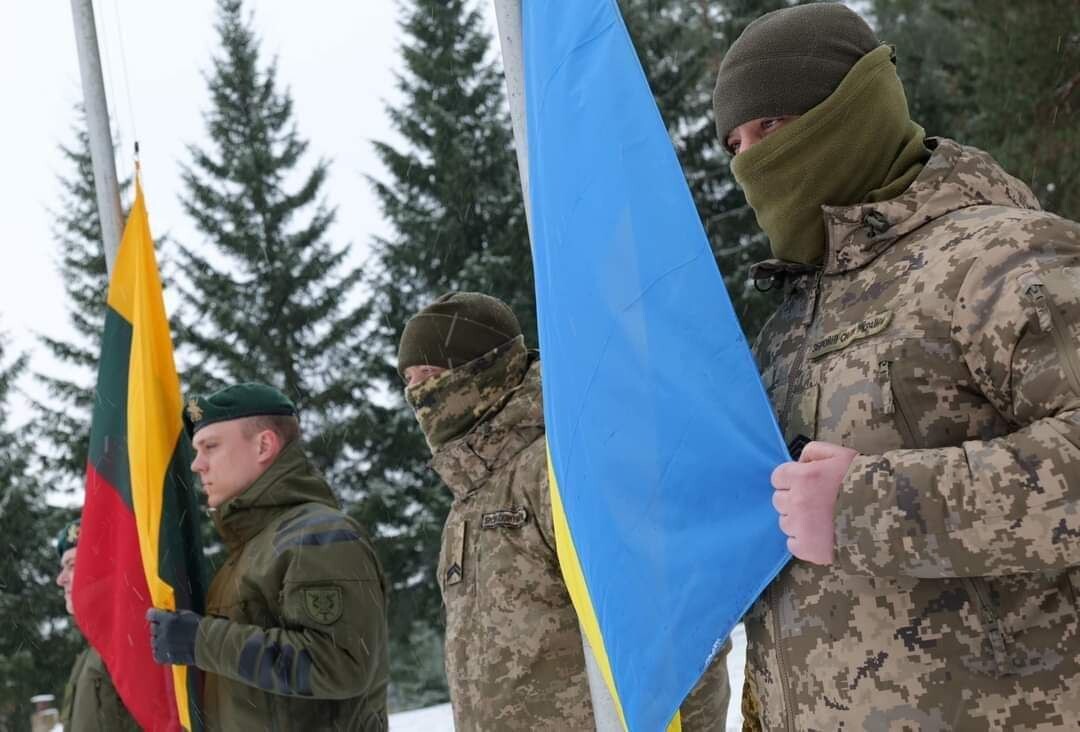
Russia’s full-scale invasion of Ukraine has prompted unprecedented international support for Ukraine’s defense. Among the countries that have responded consistently and swiftly to the threat, Lithuania holds a special place. Over four years, it has become one of Ukraine’s most active partners in Europe. Despite the limited scale of its own armed forces and resources, from the very first days of the war, this country has taken an active role in building an international coalition to support Ukraine, combining political, military and financial assistance.
Lithuania’s military support covers a wide range of areas: the supply of weapons and ammunition, the transfer of military equipment, the training of Ukrainian military personnel, the financing of defense programs, participation in multilateral coalition initiatives, and the promotion of the development of Ukraine’s defense-industrial complex. An important feature of Lithuanian assistance is its systematic nature: since 2022, it has gradually expanded, adapting to battlefield changes and the evolving needs of the Armed Forces of Ukraine. Over time, traditional arms supplies have been supplemented by military training programs, demining projects, repairs to military equipment, and initiatives to develop unmanned systems.
Lithuania’s support for Ukraine began in January 2022, when the Lithuanian government decided to transfer FIM-92 Stinger man-portable air-defense systems, together with missiles and auxiliary equipment, to Ukraine. The deliveries were carried out in close coordination with the United States, which granted permission for the re-export of these systems, and were intended to strengthen Ukraine’s ability to counter Russian aviation.
After the start of the full-scale aggression, Lithuania began to regularly announce new military aid packages. In the first weeks of the war, Ukraine received small arms, ammunition, anti-tank weapons, body armor, helmets, communications equipment and other military materiel. These deliveries were intended to provide immediate support to Ukrainian units during the intense fighting in the initial stage of the Russian offensive.
In the spring of 2022, Lithuania expanded the range of weapons it supplied. In April and May, Ukraine received 120 mm mortars together with ammunition for them. At the same time, a decision was made to transfer armored vehicles. In particular, Ukraine received M113 armored personnel carriers and M577 command-and-staff vehicles intended for transporting personnel, medical evacuation and unit command. Some of this equipment had been modernized before transfer and fitted with additional equipment.
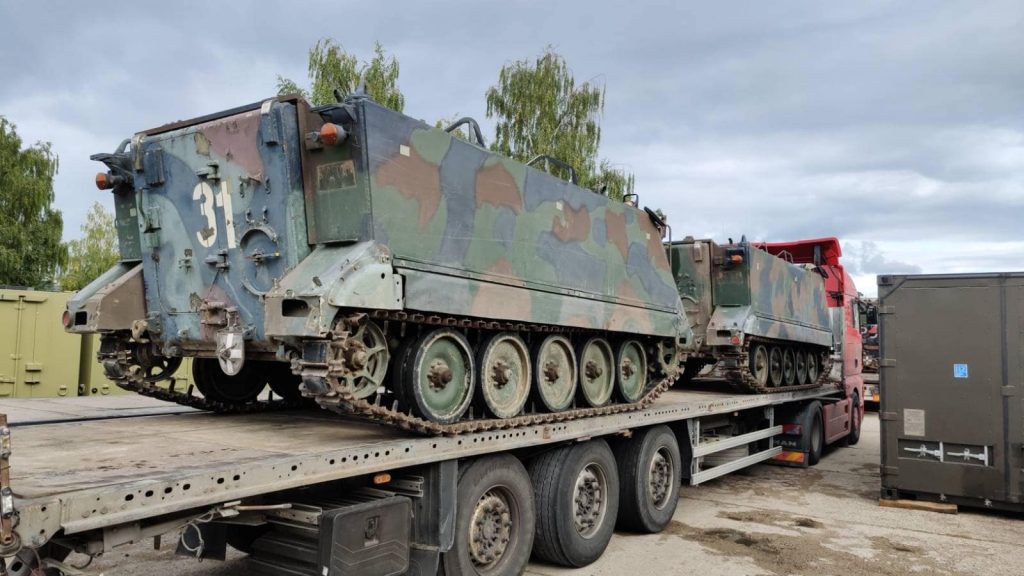
During the summer of 2022, Lithuania continued to supply armored vehicles. In August, the Lithuanian Ministry of Defense announced the transfer of additional M113 armored personnel carriers, as well as ammunition and military equipment, to Ukraine. In total, several dozen armored vehicles of this type and their variants were transferred to Ukraine during 2022. They were actively used by Ukrainian units as infantry transport platforms, medical evacuation vehicles and command posts.
A separate area of assistance was the transfer of logistical and technical resources to support the units. In October 2022, Lithuania transferred winter military equipment, optical devices and other equipment necessary for combat operations during the cold season to Ukraine. Ukrainian units also received vehicles, generators, communications equipment and other materiel.
In 2023, Lithuanian military aid to Ukraine became broader and more systematic. In January 2023, the Lithuanian Ministry of Defense announced one of the largest aid packages to date, which included dozens of Stinger man-portable air-defense systems with missiles, Bofors L-70 anti-aircraft guns with ammunition, and two Mi-8 military transport helicopters. The transfer of these systems was primarily aimed at strengthening Ukraine’s air defense against the backdrop of intensified Russian missile strikes on Ukrainian infrastructure.
Throughout 2023, Lithuania continued to supply armored vehicles. Ukrainian forces received additional M113 armored personnel carriers and their variants, which are used as infantry transport vehicles, command-and-control platforms and medical evacuation vehicles. According to open sources, the total number of M113 armored vehicles and their variants transferred by Lithuania to Ukraine since the start of the war exceeded 100 units.
A separate area of assistance was the strengthening of air defense and surveillance capabilities. In 2023, Lithuania transferred air-surveillance radar systems to Ukraine, including Giraffe radars, which are used to detect air targets and coordinate the operation of air-defense systems. These systems allow for more effective tracking of air threats, including cruise missiles and drones.
Throughout 2023, Lithuania also transferred significant quantities of ammunition, small arms, optical systems, communications equipment and other military materiel. The aid packages also included vehicles, generators, night-vision devices and other equipment needed to support units on the front line.
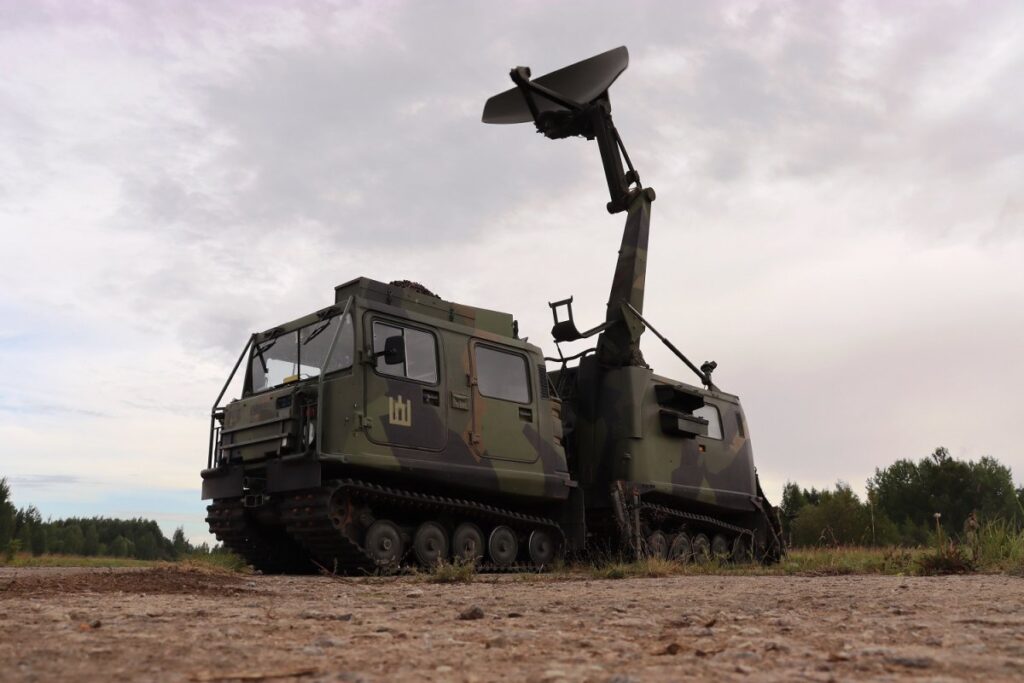
Support for engineering units remained an important component of the aid. The Ukrainian military received demining equipment, engineering vehicles, metal detectors and other equipment used to detect and neutralize explosive ordnance. Given the scale of mining in Ukrainian territories, this area of assistance has become particularly important both for conducting combat operations and for restoring liberated areas.
Alongside the transfer of weapons, Lithuania has actively used financial mechanisms to support Ukraine’s defense. The amount of this assistance has gradually increased throughout the full-scale war. In 2023, Lithuania’s total military assistance to Ukraine approached €500 million, while total support exceeded €1 billion, representing more than 1.2% of the country’s GDP. Throughout 2024, funding continued to grow: in the first months of the year alone, military aid reached approximately €610 million, and by the end of the year, it exceeded €721 million. As of early 2025, Lithuania’s military support to Ukraine had reached around €769 million, while total aid exceeded €1.5 billion. The funding has been used to transfer weapons from Lithuanian army stockpiles, purchase equipment, drones, ammunition and other materiel for the Ukrainian defense forces, and contribute to international funds supporting Ukraine. In terms of aid as a share of its own economy, Lithuania remains one of Ukraine’s leading allies.
Participation in international financial mechanisms for arms supplies has become an important tool of support. Lithuania participates in the European Union’s European Peace Facility program, which compensates states for the transfer of weapons to Ukraine and finances new military equipment purchases. In addition, the Lithuanian government has repeatedly announced additional financial contributions to programs to purchase ammunition and military equipment for the Ukrainian army.
In 2024, Lithuania became one of the active participants in the international coalition for the development of unmanned systems for Ukraine. As part of this initiative, the Lithuanian government announced the allocation of at least €10 million for the purchase of drones for the Ukrainian defense forces. Part of these funds was to be used to purchase Lithuanian-made drones, which would be transferred to Ukrainian units for use on the front line. In addition, large-scale public campaigns were conducted in the country to raise funds for the purchase of drones for Ukraine.
A separate area of focus was support for the defense industry and international arms procurement programs. Lithuania is a member of joint projects to finance the production of military equipment for Ukraine and has also participated in multilateral initiatives by allies aimed at providing the Ukrainian army with ammunition, equipment and modern technologies. Thanks to such financial mechanisms, Lithuania has been able to significantly expand the scale of its assistance, even with the limited resources of its own armed forces.
In parallel with the supply of weapons, Lithuania has been actively involved in training Ukrainian military personnel and providing technical assistance. Back in 2022, Lithuanian instructors began training Ukrainian military personnel as part of international training programs organized with the participation of NATO countries. The training covered basic infantry instruction, tactical medicine, engineering, the use of small arms and other areas of combat preparation.
In 2023, the scope of the training programs expanded significantly after the launch of the European Union Military Assistance Mission in support of Ukraine, EUMAM Ukraine. Lithuanian instructors became part of this multinational training program. Ukrainian military personnel underwent training both in Lithuania and at international training centers in Europe. The programs included training for infantry units, sappers, operators of various weapon systems, and engineering specialists.
During 2022–2026, Lithuania actively participated in training Ukrainian military personnel through national programs and international training missions. Lithuanian instructors took part in training Ukrainian military personnel both in Lithuania and within multinational allied training programs, in particular the EUMAM Ukraine and Interflex missions. During this period, more than 10,000 Ukrainian service members were trained, with Lithuanian instructors participating, learning to use various weapon systems and acquiring skills in engineering, tactical medicine, and other specialized areas of military training.
Particular attention was paid to the training of sapper units and mine action. Lithuania provided Ukraine with demining equipment, metal detectors, protective equipment for sappers, and conducted specialized courses on the detection and disposal of explosive ordnance. Given the extent of mining in Ukrainian territories, this area of assistance has become an important element of both combat operations and the future restoration of liberated areas.
Technical assistance also included support for the operation of the transferred equipment. The Ukrainian side received spare parts, equipment for the repair and maintenance of armored vehicles, and other technical materiel. Lithuanian specialists participated in programs to repair damaged equipment, enabling the equipment to be returned to combat use more quickly. Military training and technical support became an important complement to weapons supplies, increasing the effectiveness of the transferred systems.
In 2024–2026, Lithuanian support for Ukraine increasingly expanded into new technological and industrial areas. Whereas in the early stages of the war, assistance focused mainly on the transfer of weapons from Lithuanian army stockpiles, programs for the procurement of drones, the repair of military equipment and the development of cooperation between defense enterprises began to play an increasingly important role.
One of the key areas was Lithuania’s participation in the international coalition to develop unmanned systems for Ukraine. In 2024, the Lithuanian government announced the allocation of €10 million for the purchase of drones for the Ukrainian defense forces. The program involved procuring various types of drones, including reconnaissance and strike systems. Some of these drones were manufactured by Lithuanian companies and transferred to Ukrainian units for use on the front line. In addition to government programs, public campaigns were conducted in Lithuania to raise funds for the purchase of drones for Ukraine, which also complemented the official aid packages.
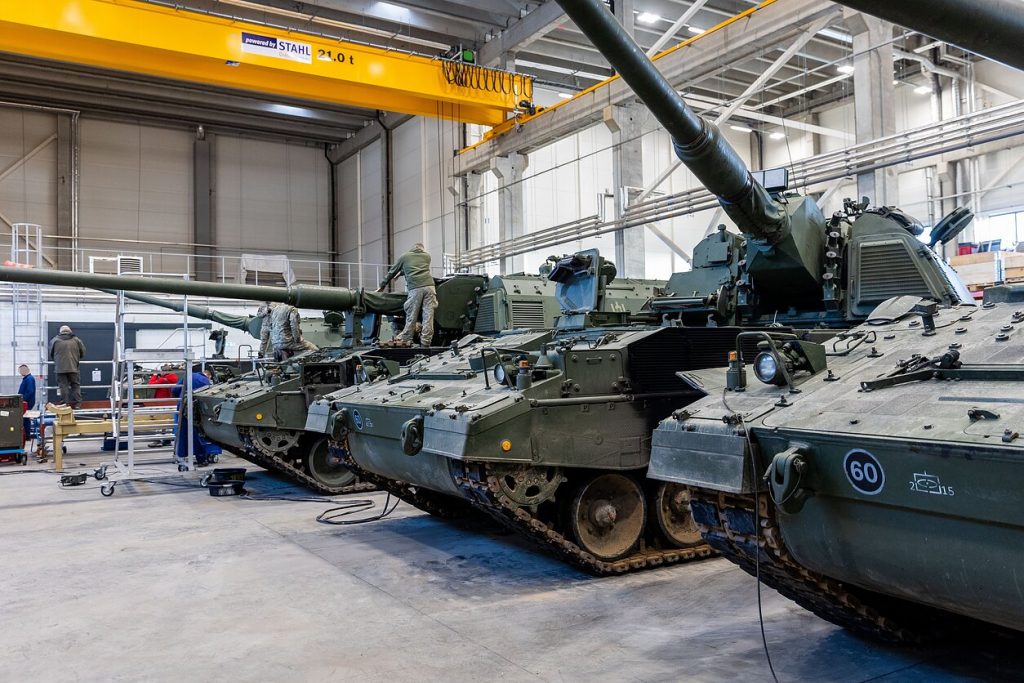
At the same time, technical support and the repair of military equipment were also expanded. In 2024, Lithuania and its partners joined programs to repair damaged equipment of the Armed Forces of Ukraine. These programs provided spare parts, repair equipment and technical documentation. Such measures made it possible to repair armored vehicles and other systems damaged in combat more quickly and return them to service.
Another area of support was cooperation in the defense industry. In September 2024, a Lithuanian-Ukrainian defense industry business forum was held in Kyiv with the participation of Lithuanian President Gitanas Nausėda and Ukrainian Defense Minister Rustem Umerov. During the event, Lithuania announced the allocation of €10 million for the purchase of Ukrainian Palianytsia kamikaze drones and reported the conclusion of contracts with five Lithuanian companies for the production and supply of nearly 5,000 FPV drones for the Ukrainian Defense Forces.
The next step was the signing of an agreement on cooperation in the development of the defense industry between the governments of the two countries on 5 November 2024. The document provides for joint projects in the production of weapons, ammunition, unmanned ground and naval systems, electronic warfare equipment, as well as the development of production capacities and technological solutions in the defense industries of both countries. Such initiatives are aimed at forming a long-term partnership between the defense sectors of Ukraine and Lithuania.
During 2022–2026, Lithuania developed one of the most consistent models of military support for Ukraine among European states. The assistance began on the eve of the full-scale invasion with the transfer of Stinger air-defense systems and quickly expanded into regular packages of weapons, armored vehicles, mortars, ammunition, radars and other military equipment. At the same time, Lithuania invested significant financial resources in international programs supporting Ukraine’s defense, participated in the training of thousands of Ukrainian military personnel, and provided technical assistance for the maintenance and repair of equipment. In the following years, cooperation reached a new level thanks to Lithuania’s participation in the coalition on unmanned systems, drone procurement programs, military equipment repair, and the development of defense industry projects. Taken together, these measures demonstrate Vilnius’ long-term strategy aimed at systematically strengthening Ukraine’s defense capabilities in the war against Russia.
| No. | Name | Type | Country and manufacturer | Date of transfer | Quantity |
| 1. | M101 | Towed howitzer | USA, Rock Island Arsenal | September 2022 | 18 |
| 2. | HMMWV (Humvee) | Armored vehicle | USA, AM General | February 2022 | Unknown |
| 3. | M113 | Armored personnel carrier | USA, FMC | since June 2022 | >114 |
| 4. | M577 | Armored command-and-staff vehicle | USA, FMC | since June 2022 | Unknown |
| 5. | NASAMS | Surface-to-air missile system | Norway, Kongsberg / USA, Raytheon | June 2023 (announced) | 2 |
| 6. | Bofors L70 | Automatic anti-aircraft gun | Sweden, BAE Systems AB | since February 2023 | 36 |
| 7. | FIM-92 Stinger | MANPADS | USA, Raytheon | January –February 2022 | Unknown |
| 8. | Short-range man-portable air-defense systems | Air defense | Various manufacturers | January 2025 | Unknown |
| 9. | RBS missiles | Air-defense missiles | Sweden, Saab | February 2026 | 30 |
| 10. | Giraffe | Air-surveillance radar station | Sweden, Saab AB | 2023 | Unknown |
| 11. | Bayraktar TB2 | Reconnaissance-strike UAV | Turkey, Baykar Technologies | June – July 2022 | 1 (purchased through fundraising) |
| 12. | FPV drones | Strike drones | Lithuania | since 2024 | >5000 |
| 13. | Mi-8 | Helicopter | USSR | by August 2023 | 2 |
| 14. | Aero L-39ZA | Training and combat platform | Czech Republic, Aero Vodochody | April 2024 | 1 |
Підтримати нас можна через:
Приват: 5169 3351 0164 7408 PayPal - [email protected] Стати нашим патроном за лінком ⬇
Subscribe to our newsletter
or on ours Telegram
Thank you!!
You are subscribed to our newsletter