


Popular

Finland joined the circle of Ukraine’s key northern partners without loud statements or political declarations. Its model of assistance was shaped by security threats and the realization that Ukraine’s defense is directly linked to the defense of the Finnish border. After February 24, 2022, Helsinki quickly abandoned its traditional caution in security policy, strengthened military cooperation with NATO, and launched systematic support for Ukraine, which evolved from covert deliveries into a large-scale strategic partnership.
Finland kept its first defense aid packages fully classified. The nomenclature was not disclosed, and the origin of the equipment was largely identified through OSINT. This approach made it possible to transfer weapons to Ukraine without political delays and without undermining Finland’s own combat readiness at a time when the country was not yet a NATO member. After joining the Alliance in 2023 and subsequently revising its national defense strategy, Finland gradually expanded the scope of its support and shifted to long-term instruments, including ammunition production, coalition participation, the launch of new procurement programs, and joint defense projects with Ukraine.
Finnish military assistance began without public announcements or published lists of weapons. In 2022, Helsinki adopted a policy of complete secrecy regarding the contents of its aid packages: the government confirmed the transfers but did not disclose the types of equipment, routes, or delivery timelines. This approach enabled rapid decision-making and avoided additional risks to Finland’s own defense while it was still preparing for NATO accession. In practice, many Finnish weapon systems became publicly known only after appearing on the battlefield, identified through videos, photographs, and OSINT analysis.
One of the first confirmed cases involved 120 mm Krh 85/92 mortars manufactured by Vammas, which began to be used by Ukrainian Navy units in August 2022. Finland did not publicly announce their transfer, but on the battlefield, these systems quickly proved themselves as reliable and low-maintenance mortars of a Soviet–NATO transitional type. During the same period, 23 mm anti-aircraft guns 23 ItK 61 appeared in the arsenal of Ukraine’s Territorial Defense Forces – one of the few Soviet-designed systems that had remained in Finnish storage prior to air defense modernization.
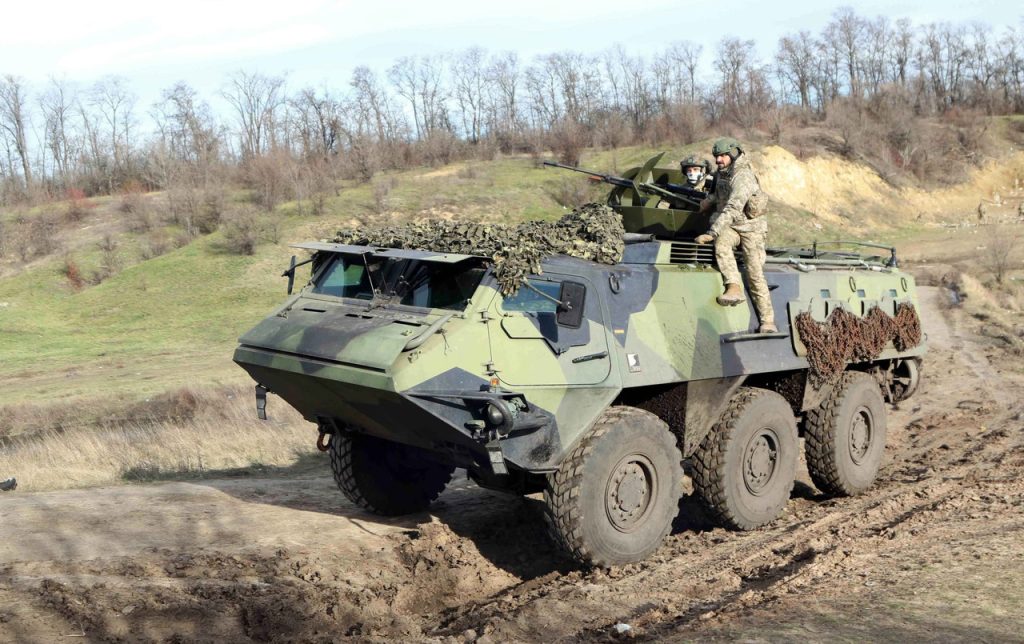
At the same time, wheeled armored vehicles were delivered to Ukraine. In the autumn of 2022, the transfer of Sisu XA-180/185 armored personnel carriers was documented – classic vehicles of the Finnish Army designed for harsh Arctic conditions. Their high mobility, capacity, and ease of maintenance made them useful across multiple operational environments, particularly for units transitioning to NATO standards for mobility.
The artillery component of Finnish assistance became more visible in 2023. Ukraine received towed 152 mm 152 K89 guns (equivalent to the 2A36 Hyacinth-B), which Finland possessed in limited numbers. Although their transfer was not officially announced, frontline footage confirmed their active use. A similar situation applied to the 130 mm M-46 guns (Finnish designation 130 K 54), which offer long firing ranges and remain effective for counter-battery operations. In 2024, OSINT analysts identified another system in Ukrainian service – the 122 PSH 74 (2S1 Gvozdika) self-propelled artillery system, which Finland had acquired from the former GDR in the 1990s.
A significant element of Finland’s contribution was the transfer of engineering armored vehicles. In 2023, Helsinki confirmed the delivery of Leopard 2R mine-clearing vehicles, some of the most capable systems for breaching minefields in Europe. Initially, three units were announced, but the number was later increased to six, representing a substantial contribution to Ukraine’s mine-clearing and maneuver capabilities.
In addition to ground equipment, Finland transferred Uisko-class landing craft to Ukraine, strengthening its capacity for riverine and coastal operations. The aid packages also included large quantities of ammunition, small arms, protective equipment, and gear – items typically not detailed publicly but critical for sustaining unit combat effectiveness.
Overall, the material component of Finnish assistance covered nearly the full spectrum of ground capabilities, ranging from anti-aircraft guns and mortars to self-propelled artillery, armored personnel carriers, and specialized demining vehicles. Notably, these transfers occurred even when Finland did not possess surplus stocks, meaning that they entailed a real reduction of its own reserves. This underscores the strategic character of Helsinki’s decisions and its willingness to contribute at a level comparable to states with significantly greater scale and resources.
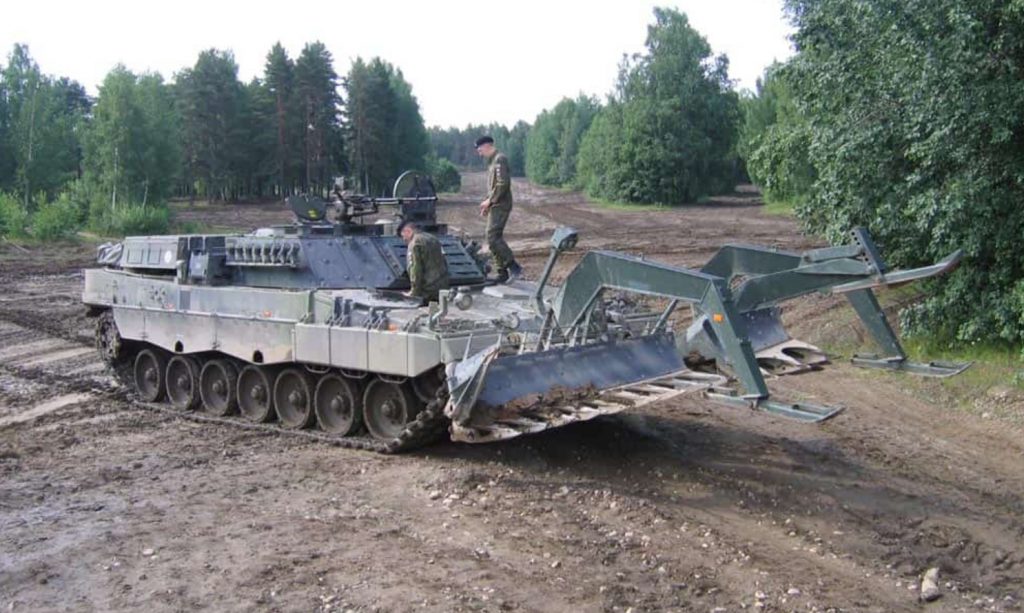
Finland was among the first Nordic states to join the training system for Ukrainian forces. As early as August 2022, Helsinki deployed a group of Finnish instructors to the United Kingdom to participate in a multinational program training new units of the Armed Forces of Ukraine. Although the format was non-public, it followed a clear logic: Finland, which has developed its military for decades around the principle of “a small state with maximum combat readiness,” transferred its practical experience in fighting in forested and swampy terrain, marksmanship training, and small-unit tactics.
Participation in training missions expanded over time. Finland joined European training initiatives, including programs for crews of Leopard 2R engineering vehicles supplied to Ukraine. Particular emphasis was placed on engineering operations, demining, engineering support for breakthrough actions, and tactics for overcoming minefields – areas in which the Finnish Armed Forces have extensive long-term expertise.
From 2023 onward, Helsinki has increasingly engaged in coalition-based formats of assistance, which have become the backbone of Western military support to Ukraine. Finland joined the artillery coalition, focusing on ammunition supply and coordination mechanisms. It then became part of the armored coalition, facilitating the transfer of Leopard 2R engineering vehicles and supporting the technical training of Ukrainian crews. Another step was participation in the IT coalition, through which Finland contributes to the digitalization and cyber defense of Ukraine’s defense forces.
One of the most consequential decisions was Finland’s official confirmation that Ukraine could use Finnish-supplied weapons to strike military targets on Russian territory. This position signaled full support for Ukraine’s right to self-defense under Article 51 of the UN Charter and demonstrated Finland’s readiness to act in alignment with key NATO allies.
The culmination of coalition engagement was the agreement to establish the “Nordic-Baltic Brigade,” a joint NB8 initiative aimed at training a Ukrainian formation of 3,000–5,000 personnel. In 2025, the practical phase of brigade formation officially began, with Finland among the states providing equipment, instructors, and methodological support. The project is coordinated by Norway, but Finland’s role as a full participant underscores the elevated level of its involvement in Ukraine’s defense.
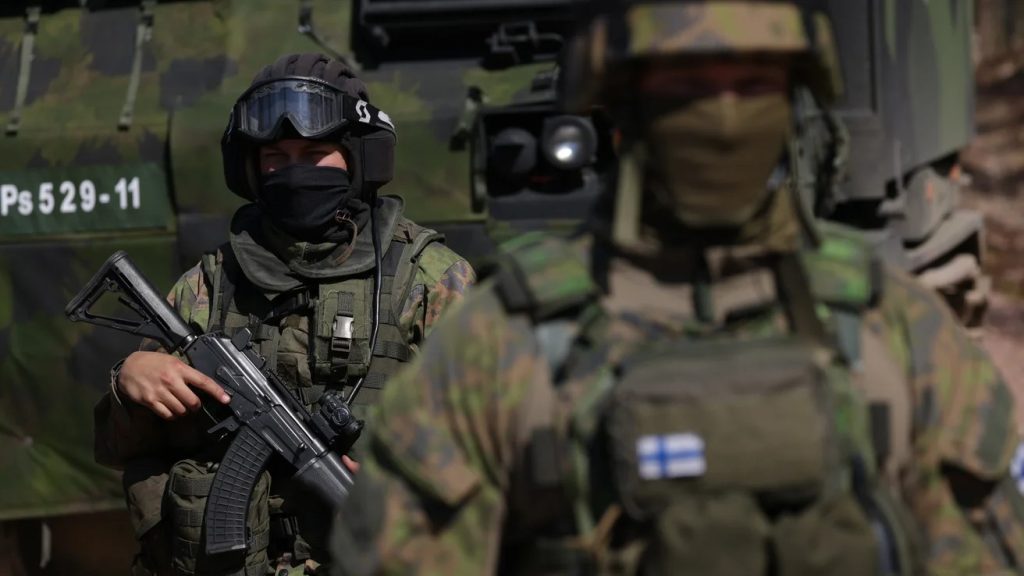
In sum, Finland’s contribution to training and coalition efforts evolved from small instructor deployments into a substantial role in core partner initiatives. Finland integrated into the architecture of Western support not as a peripheral actor, but as a state shaping entire capability areas – from engineering support to ammunition production. This has provided Ukraine not only with weapons, but also with standards, operational experience, and enduring capabilities that will remain relevant over the long term.
Finland was among the first Nordic states to focus not only on transferring existing stockpiles but also on establishing new defense production tailored to Ukraine’s needs. Whereas in 2022–2023 assistance consisted primarily of equipment and weapons drawn from the warehouses of the Finnish Defense Forces, in 2023–2024 Helsinki gradually shifted toward an industrial-support model, investing in domestic factories, participating in international joint procurement initiatives, and launching long-term ammunition production programs.
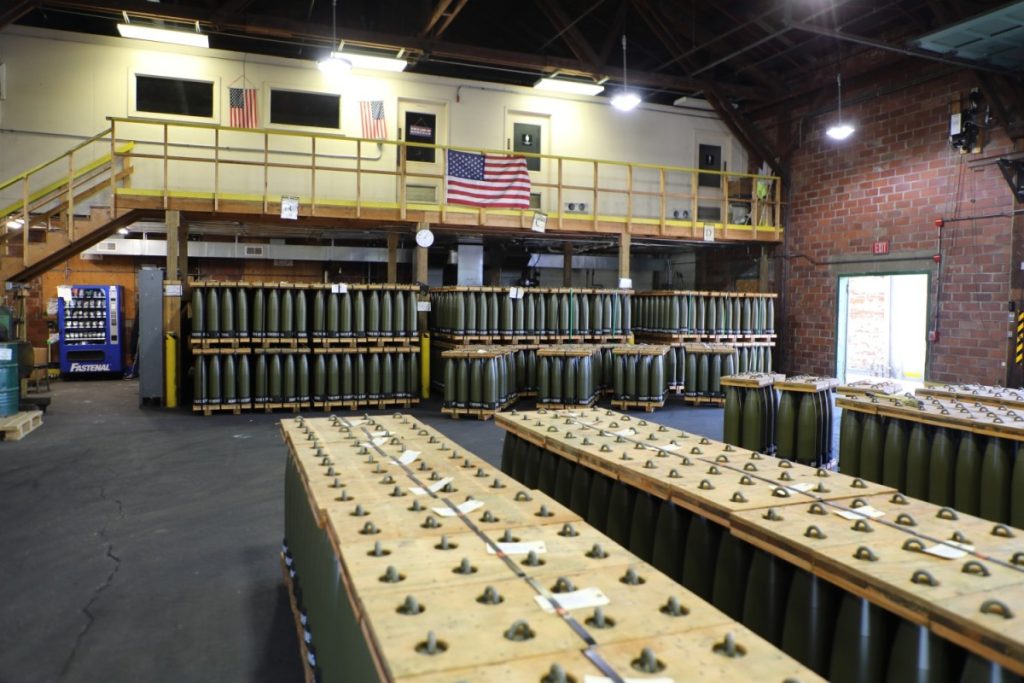
The turning point was the decision to resume and expand the production of large-caliber artillery ammunition. In December 2023, Finland announced plans to begin manufacturing 155 mm artillery shells specifically for Ukraine. Two factors underpinned this decision: the sharp increase in the operational needs of the Armed Forces of Ukraine and the recognition that existing national stockpiles could not serve as the basis for sustained long-term support. The contractor selected was Nammo Lapua Oy, which had previously produced ammunition for Finnish and NATO brigades but was now tasked with significantly increasing output, with investments amounting to tens of millions of euros.
Finland’s participation in European procurement mechanisms was a logical extension of this approach. Helsinki joined the Czech “artillery initiative,” allocating €30 million to finance the purchase of ammunition for Ukraine, and also supported the Polish program aimed at sourcing and transferring armored vehicles. In both cases, Finland combined financial contributions with the development of its own defense-industrial base, underscoring that economic benefits and support for Ukraine are not mutually exclusive.
In 2024, Helsinki took another significant step by supporting the use of frozen Russian assets under an EU initiative to procure Finnish-produced ammunition for Ukraine. This decision was noteworthy for two reasons. First, it effectively reoriented segments of the Finnish defense industry toward the needs of the Armed Forces of Ukraine. Second, it demonstrated that Finland supports Ukraine not only through political and military means but also via financial and legal mechanisms that shape the broader architecture of European security.
A central element of the Finnish model is the €660 million program announced in 2025. Unlike earlier aid packages, this initiative does not involve the transfer of equipment from existing stockpiles. Instead, it focuses on placing orders with the Finnish defense industry for new weapons and ammunition to be manufactured specifically for Ukraine. Procurement is managed by the Defense Forces’ Logistics Department, with key criteria including production speed, alignment with the most urgent operational needs of the Armed Forces of Ukraine, and the industry’s capacity to scale up output independently.
At the same time, Finland is expanding other areas of production support. Discussions are underway regarding the establishment of a TNT manufacturing facility, production of components for armored vehicles is being scaled up, and the manufacture of drones and selected systems in cooperation with Ukrainian partners has already reached the level of serial production. Importantly, Helsinki does not confine these programs exclusively to Ukraine’s needs: part of the output is intended for EU and NATO markets, thereby integrating Ukraine into a shared European defense-industrial space.
Overall, the Finnish support model has gradually evolved from the transfer of equipment from warehouses to the creation of new production lines directly serving the needs of the Ukrainian military. For a country with a relatively modest defense budget, this represents a strategic shift that has enabled Finland to transform its defense industry into an instrument of support for Ukraine while simultaneously strengthening its own security by reinforcing Europe’s eastern flank.
In 2024–2025, Finland entered a qualitatively new phase marked by participation in multi-coalition formats and integration into joint initiatives led by NATO, the EU, and groups of partner states aimed at the long-term strengthening of the Armed Forces of Ukraine. Unlike the initial period, when assistance was predominantly bilateral, Helsinki began to act as an active participant in collective defense mechanisms, combining its national capabilities with those of its allies.
One of the key directions was participation in coalitions dedicated to the development of specific branches of Ukraine’s armed forces. Finland joined the artillery, armored, engineering and demining, and IT coalitions established within the transparent framework of the Ukraine Defense Contact Group. In 2025, Helsinki also joined the maritime coalition led by the United Kingdom and Norway. This format aligns with the long-term objective of building a capable Ukrainian navy, encompassing maritime drones, coastal defense, and the future requirements of naval forces. Finland’s experience in securing bays and coastal waters in the Baltic Sea has made it a valuable contributor to this effort. In practical terms, Finland has become involved in five key areas of Ukrainian capability development, ranging from artillery and cyber defense to naval forces.
Simultaneously, Finland expanded its role within NATO’s joint procurement mechanisms. In 2025, the country officially joined the PURL initiative, a program for the collective procurement of U.S.-produced weapons for Ukraine. This decision carried multiple implications: it signaled Helsinki’s readiness to support Ukraine with long-range capabilities, integrated Finland into the transatlantic supply chain, and confirmed strategic alignment between the United States and the Nordic states regarding long-term support for the Armed Forces of Ukraine. During a meeting with the President of Ukraine, Prime Minister Petteri Orpo emphasized that Finland’s contribution to PURL amounts to €100 million, while Ukraine views this mechanism as a means to procure long-range missiles and unmanned systems.
Within the coalition-based model, Helsinki also supports initiatives related to civil defense and the protection of critical infrastructure. Finland leads an international coalition focused on the construction of shelters in Ukraine, aimed at adapting national protection networks to persistent Russian missile and aerial attacks. The country is also involved in energy-sector programs, including efforts to restore power grids damaged by large-scale strikes carried out by the Russian Federation.
Direct military assistance continued to expand as well. In 2024, Finland announced record aid packages at the time, covering ammunition, equipment, engineering assets, and logistical supplies. In 2025, the 27th and 28th aid packages were approved, followed in the autumn by the 30th package, which further reinforced Finland’s contribution through participation in PURL. A portion of these deliveries remained undisclosed, consistent with Helsinki’s security policy and repeatedly acknowledged by government officials.
The information domain proved particularly significant. Satellite data provided by the Finnish company ICEYE enabled near-continuous monitoring in 2025, reaching up to 20–24 images per day of a single sector of the front line. This substantially enhanced Ukraine’s capabilities in counter-battery operations, enemy movement detection, and operational planning.
In the socio-political dimension, public support for Ukraine in Finland continued to grow steadily. A 2025 survey indicated that approximately two-thirds of citizens support providing security guarantees and deploying non-combat missions to Ukraine, while more than 60 percent favor the transfer of weapons. This level of public backing constitutes an important domestic foundation for the government’s consistent and long-term policy.
Finland’s engagement in multilateral formats reflects a transformation in the country’s role within the European security system. Assistance is no longer limited to the bounds of national capacity but is embedded in collective decision-making aimed at strengthening Ukraine’s defense and shaping a new security environment on Europe’s northern and eastern flanks. This shift from a reactive to a strategic approach has become a defining factor in the quality and sustainability of support provided to Ukraine in 2024–2025.
Finnish assistance to Ukraine is not the result of ad hoc governmental decisions or reactions to isolated military events. It rests on broad public support, cross-party political consensus, and a deeper strategic understanding that Ukraine’s security is inseparable from Finland’s own security. This internal foundation has enabled the rapid expansion of military aid, sustained participation in coalitions, and the launch of defense-industrial programs.
In 2025, a large-scale survey conducted by Taloustutkimus showed that 67 percent of Finns support providing security guarantees to Ukraine, 63 percent support the transfer of weapons, and 68 percent favor the deployment of military specialists in non-combat roles. This represents one of the highest levels of support among EU member states and is relatively evenly distributed across the electorates of different political parties. Particularly noteworthy is the fact that even among voters of the Finns Party – traditionally more cautious on foreign policy issues – the share of supporters of assistance to Ukraine prevails. This suggests that the war in Ukraine is not viewed as a distant conflict, but as a factor shaping the security reality of the entire Northern European region.
The Finnish political elite likewise demonstrates a high degree of unity in supporting Ukraine. The policy course set by the government of Prime Minister Sanna Marin at the outset of the full-scale invasion has been maintained following the change of government. The current administration, led by Prime Minister Petteri Orpo, together with Minister of Defense Antti Häkkänen, has systematically expanded the instruments of support, ranging from participation in PURL and coalition frameworks to the launch of new defense-industrial programs and ammunition production for Ukraine. Häkkänen has repeatedly emphasized that support for Ukraine constitutes part of a “long-term strategy of deterring Russia,” rather than a one-off measure.
Finland’s position is also shaped by the accumulated experience of its own history. The memory of the Winter War, decades of containment policy, and reliance on a reservist-based defense model have fostered public readiness to adopt a firm stance toward Russia’s aggressive policies. Consequently, the expansion of Ukraine’s capabilities, including combat capabilities, is perceived in Finland as an element of defense for the Northern European region and NATO as a whole.
These shifts have also affected the defense economy. Increased investment in the defense sector, expanded ammunition production, and the launch of cooperative projects with Ukrainian and European partners reflect a strategic choice: Helsinki is moving toward a model in which assistance to Ukraine and the development of its own defense industry reinforce one another. This approach allows Finland to sustain a high tempo of aid packages without placing critical strain on its own stockpiles or budget.
The Finnish model of resilience combines societal consensus, political resolve, and strategic vision. This foundation has ensured consistent support for Ukraine throughout 2022–2025 and has positioned Finland as one of the most reliable partners on Europe’s northern flank.
Over nearly four years of full-scale war, Finland has developed a distinctive, coherent, and technology-oriented model of support for Ukraine. It has progressed from limited and classified deliveries in 2022 to large-scale aid packages, active participation in coalitions, ammunition production, and the launch of joint defense-industrial projects in 2024–2025. Unlike many other states, Helsinki emphasizes not only the transfer of equipment but also the development of long-term capabilities, ranging from artillery potential to naval development and engineering capacities.
This evolution has been enabled by a unique combination of internal factors: strong public support, robust cross-party consensus, and a strategic understanding that Ukraine’s defense is inseparable from the defense of the North and the broader European security space. Finland is not only strengthening Ukraine, but also transforming its own defense system by expanding industrial capacity, increasing ammunition production, testing innovative solutions, and engaging Ukrainian partners in joint programs.
Finland’s formula for Ukraine’s defense highlights a key contemporary trend: effective military assistance in the twenty-first century is not limited to the transfer of weapons, but involves the creation of a sustainable defense infrastructure in which industry, technology, and political decision-making operate in concert.
| No. | Name | Type | Country and manufacturer | Date of transfer | Quantity |
| 1. | Sisu XA-180/185 | Armored personnel carrier | Finland, Sisu Auto | September 2022 р. | 20+ |
| 2. | 23 ItK 61 | Anti-aircraft gun | Finland / USSR | August 2022 | 23 |
| 3. | AA guns (various models) | Anti-aircraft guns | Unknown | 2022–2023 | 375+ |
| 4. | 122 PSH 74 (2S1 «Gvozdika») | Self-propelled artillery | USSR | August 2023 | Unknown |
| 5. | 152 K89 (2A36 «Hyacinth-B») | Towed artillery gun | USSR | April 2023 | Unknown |
| 6. | 130 K54 (М-46) | Towed artillery gun | USSR | Until September 2023 | Unknown |
| 7. | Leopard 2R | Engineering tank for mine clearance | Finland / Krauss-Maffei Wegmann | February–March 2023 р. | 6 |
| 8. | Uisko-class landing craft | Landing craft | Finland | 2022–2023 | 1+ |
| 9. | 120 Krh 85/92 | Mortar | Finland, Vammas | August 2022 | Unknown |
| 10. | m/50 | Hand grenade | Finland | Since 2022 | Unknown |
Підтримати нас можна через:
Приват: 5169 3351 0164 7408 PayPal - [email protected] Стати нашим патроном за лінком ⬇
Subscribe to our newsletter
or on ours Telegram
Thank you!!
You are subscribed to our newsletter