


Popular

Among the countries that took a decisive stance from the very beginning of the full-scale invasion, Estonia occupies a special place. Small in both territory and population, this Baltic state quickly became one of the most active supporters of increased military assistance to Ukraine. Ukraine received artillery systems, ammunition, anti-tank weapons, drones, communications equipment, and other military equipment. At the same time, Estonia joined the training of Ukrainian military personnel, engineering support efforts, and international coordination of military assistance.
An important feature of Estonia’s policy was the combination of short-term military aid with the development of a long-term support model. The country’s government is committed to allocating at least 0.25% of its gross domestic product annually to defense support for Ukraine, making Estonia one of the leaders among Ukraine’s allies in terms of the ratio of aid to economic capacity. At the same time, Tallinn actively promoted initiatives aimed at increasing ammunition production in Europe, expanding defense-industrial cooperation, and creating international coalitions to support Ukraine.
Estonia was one of the first European countries to begin transferring lethal weapons to Ukraine, even before Russia’s full-scale invasion started. In January 2022, the Baltic states announced additional military assistance to Ukraine in response to Russia’s growing military threat. As part of this initiative, Estonia agreed to transfer Javelin anti-tank missile systems, while Lithuania and Latvia transferred Stinger portable anti-aircraft missile systems. The transfer of American-made weapons became possible after the United States government granted permission for their re-export to a third country. The actual delivery of Estonian Javelin systems to Ukraine took place in February 2022, just days before the start of Russia’s full-scale aggression.
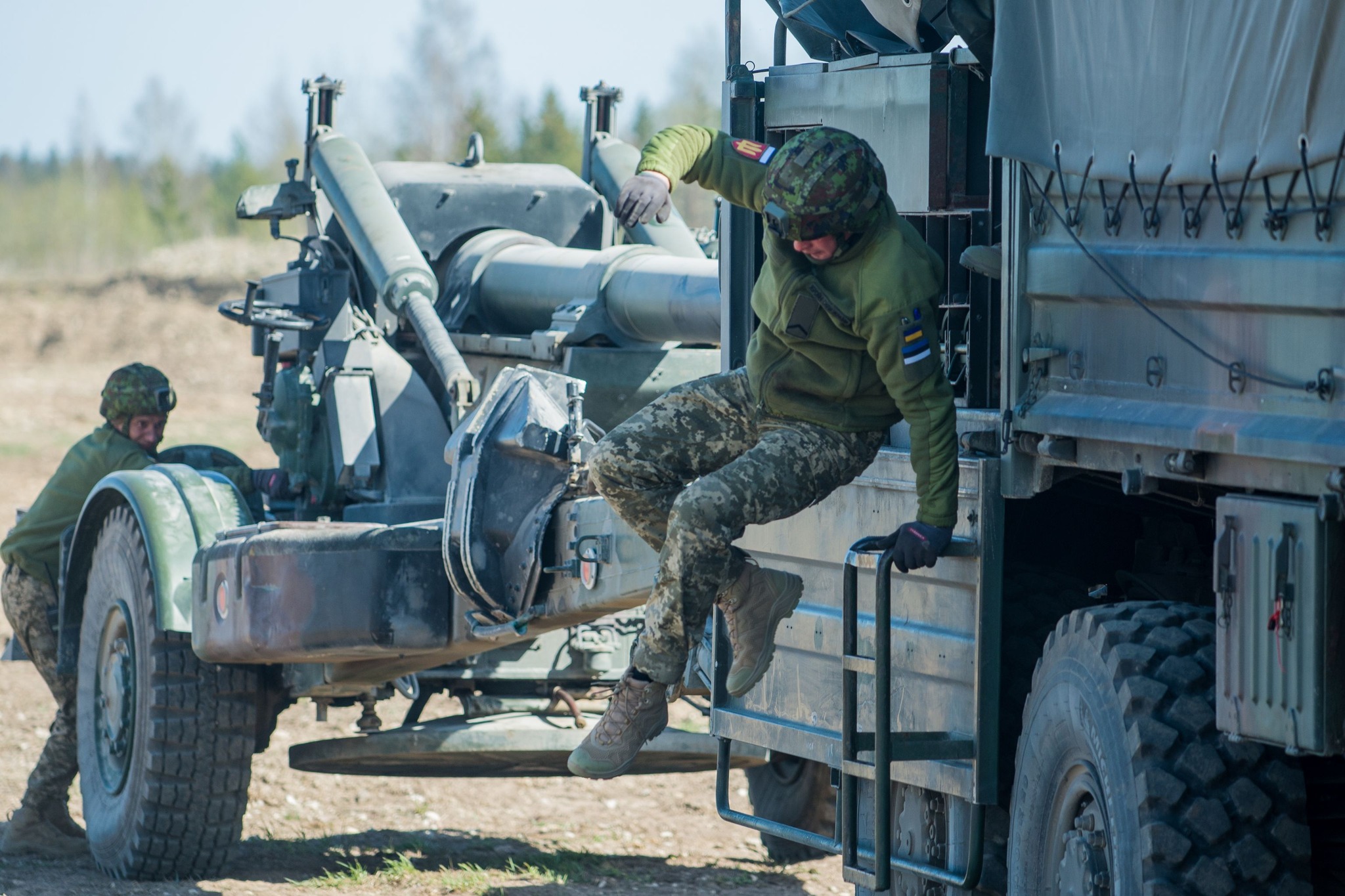
After the invasion began, the scale of Estonian support increased rapidly. In the first months of the war, Tallinn transferred significant amounts of weapons and military equipment to Ukraine. The aid package announced in the spring of 2022 included 122-mm D-30 howitzers, anti-tank weapons, drones, communications equipment, medical supplies, and chemical protection gear. The value of this package was approximately €220 million, making it one of the largest contributions among Ukraine’s allies relative to Estonia’s economic capacity. According to open sources, Ukraine also received a significant number of artillery systems from Estonia, including more than two dozen 155-mm FH-70 howitzers, as well as Alvis Mamba armored vehicles.
Military medicine and engineering support also became an important area of assistance. In February 2022, Estonia, together with Germany, transferred a Role-2 mobile field hospital to Ukraine, capable of providing medical care at the brigade level in combat conditions. Later, another field hospital was transferred in cooperation with partners. Moreover, in the spring of 2022, Estonia sent a group of demining specialists to Ukraine to help clear explosive hazards in areas affected by combat operations.
At the same time, Tallinn continued expanding other forms of support. In 2022, Ukraine received drones, winter equipment, personal protective gear, vehicles, and various auxiliary supplies from Estonia. A notable example was the decision by Estonian authorities to transfer a party of drones to the Ukrainian military; these drones had previously been attempted to be purchased by a Russian citizen in Estonia for the Russian army.
In 2023–2024, Estonian support for Ukraine became more systematic and strategic. While in 2022 the main priority was the rapid transfer of available weapons stocks, Tallinn subsequently began actively promoting international initiatives in support of Ukraine, combining the transfer of military equipment with diplomatic activity at the European Union and NATO levels.
In early 2023, the Estonian government approved one of the largest military aid packages to Ukraine, which included artillery systems, ammunition, anti-tank weapons, and other military equipment. The total value of this package exceeded €113 million, and the overall amount of Estonian military assistance to Ukraine surpassed €370 million, which corresponded to more than one per cent of the country’s gross domestic product. This level of support was among the highest provided by Ukraine’s allies relative to Estonia’s economy.
Estonia also began to play an important role in shaping pan-European mechanisms to support Ukraine. In February 2023, Tallinn proposed creating a joint program to procure artillery ammunition for Ukraine, worth around €4 billion. The initiative envisaged centralized financing for the production and procurement of one million 155-mm artillery shells through the European Peace Facility mechanism. The aim of this step was not only to provide Ukraine with the necessary ammunition but also to stimulate the expansion of production capacities within the European defense industry.
At the same time, Estonia continued to provide Ukraine with new military aid packages. In 2024, the weapons and equipment transferred included Javelin anti-tank missiles, machine guns, small-arms ammunition, vehicles, diving equipment, and other types of military supplies. A separate element of support was the transfer of two patrol boats to Ukraine in coordination with Denmark, to strengthen the security of the Black Sea maritime routes.
The year 2024 also marked an important stage in the political formalization of cooperation between Kyiv and Tallinn. During a European Union summit, Ukraine and Estonia signed a bilateral security agreement. The document provides for long-term military assistance, support for the reform of Ukraine’s defense sector, cooperation in the field of cybersecurity, and the development of the defense industry. One of the key provisions of the agreement is Estonia’s commitment to allocate significant financial resources each year to support Ukraine’s defense capabilities.
In addition to transferring weapons from its own armed forces’ stocks, Estonia has gradually shifted its support for Ukraine towards defense-industrial cooperation and technological interaction. As the war continued, Tallinn increasingly involved its own defense sector in assisting the Ukrainian armed forces, making it possible to move from transferring existing equipment stocks to producing and jointly developing new solutions for battlefield needs.
One of the most notable examples of such cooperation is the activity of the Estonian company Milrem Robotics, which specializes in the development of ground robotic systems. The THeMIS platform has become one of the most widely used unmanned ground systems employed by Ukrainian units. These machines are used for logistics tasks, evacuating the wounded, transporting ammunition, and performing engineering work, including demining. In 2025, it was announced that a new batch of such systems would be delivered to Ukraine, supplementing the platforms previously transferred under various international assistance programs.
An important stage in the development of technological cooperation was the integration of Ukrainian combat systems into Estonian robotic platforms. In 2025, the Ukrainian company Frontline, together with Milrem Robotics, integrated the Burya grenade launcher turret into the THeMIS platform. During testing, the system demonstrated stable operation and the ability to hit targets at distances greater than 1 kilometer. This project became an example of combining Estonian robotic technologies with Ukrainian combat modules, opening up new opportunities for the development of unmanned ground systems.

At the same time, Estonia began developing a model of military assistance in which a significant share of resources is directed towards purchasing products from its own defense enterprises for subsequent transfer to Ukraine. The country’s government announced its intention to use annual support programs to stimulate the production of technology and equipment by national companies, particularly in the fields of unmanned systems, surveillance, demining, and shipbuilding. Under this model, Ukraine receives new equipment, while the Estonian defense sector gains additional opportunities for industrial development.
Cooperation in the field of counter-drone technologies has become another important area of focus. In 2026, the British company BAE Systems announced a partnership with the Estonian technology start-up Frankenburg Technologies to develop inexpensive interceptor missiles and other anti-drone systems. Such projects demonstrate that Estonian companies’ support for Ukraine is gradually expanding beyond the supply of equipment and now includes the development of new technologies for modern warfare.
As the war continued, Estonia’s policy of supporting Ukraine gradually acquired the characteristics of a long-term and institutionalized model. An important step in this direction was the decision of the Estonian government to introduce a stable mechanism for financing defense assistance to Ukraine. In January 2024, Prime Minister Kaja Kallas announced that over the next four years, the country would allocate 0.25% of its GDP annually to defense support for Ukraine. This approach effectively consolidated Estonian assistance as a long-term state policy and set an example for other partners regarding the possible scale of support for Ukraine.
Within this program, Estonia continued to transfer weapons, ammunition, and military equipment, while also making greater use of the capabilities of its domestic defense industry. Part of the allocated financial resources is used to purchase products from Estonian defense companies for subsequent transfer to the Ukrainian defense forces. In particular, in 2025, Ukraine compiled a list of military assistance worth around €100 million, including unmanned aerial vehicles, unmanned ground platforms, maritime drones, and medical equipment purchased from Estonian manufacturers.
At the same time, Tallinn has actively joined several international coalitions supporting Ukraine. Estonia participates in the drone coalition, the IT coalition, and the electronic warfare coalition, which aim to provide the Ukrainian armed forces with modern technological capabilities for warfare. In June 2025, the country joined the expanded Electronic Warfare Coalition, operating under German leadership, which provides centralized funding for the procurement of equipment for the Ukrainian armed forces.
Regional cooperation between the Nordic and Baltic states remains another important dimension of international coordination. Within the NB8 format, Estonia participates in coordinating the supply of military assistance, training Ukrainian personnel, and discussing the creation of joint military formations. In particular, in 2025, discussions took place regarding the country’s participation in the training of the so-called Nordic-Baltic Brigade, which could become one of the new elements of collective support for Ukraine.
In addition, Estonia joined new assistance mechanisms created within NATO. In 2025, the country allocated funding to meet Ukraine’s needs through the Prioritized Ukraine Requirement List (PURL) initiative, which allows allies to centrally procure critical weapons and other equipment for the Ukrainian armed forces. In 2026, the Estonian government confirmed the continuation of funding for this program, which aims to strengthen Ukraine’s air defense and provide additional ammunition.
Thus, Estonia’s support for Ukraine has gradually evolved into a comprehensive system combining arms transfers, financial programs, the development of defense-industrial cooperation, and participation in international coalitions. This model enables long-term assistance to the Ukrainian defense forces and strengthens Estonia’s position as one of Ukraine’s most active allies in Europe.
The experience of cooperation between Ukraine and Estonia in 2022–2026 demonstrates that even a small country can play a significant role in shaping the system of international support for a state fighting for its independence. Tallinn’s consistent political position, active participation in international initiatives, and willingness to take the lead in strengthening defense assistance contributed to the consolidation of a broader coalition of Ukraine’s allies. Estonia has used its experience in security policy and its membership in European and Euro-Atlantic institutions to promote decisions aimed at strengthening Ukraine’s defense capabilities and increasing sanctions and military-technical pressure on Russia. As a result, these efforts have become part of the emerging regional security architecture in which support for Ukraine is viewed as a long-term strategy to deter aggression in Europe.
| No. | Name | Type | Country and manufacturer | Date of transfer | Quantity |
| 1. | FGM-148 Javelin | ATGM | USA, Raytheon / Lockheed Martin | 2022 | Unknown |
| 2. | D -30 | Towed howitzer | USSR | since April 2022 | 20+ |
| 3. | FH-70 | Towed howitzer | United Kingdom / Germany / Italy | since May 2022 | 24 |
| 4. | Alvis 4 «Mamba» | Armored vehicle | United Kingdom, Glover Webb | May 2022 | 7 |
| 5. | Mistral | MANPADS | France / Norway, MBDA | since June 2024 | Unknown |
| 6. | EOS C VTOL | Reconnaissance UAV | Estonia, Threod Systems | June–August 2023 | 6 |
| 7. | Unmanned Aerial Vehicles | UAV | Unknown | until February 2023 | 7 |
| 8. | Patrol boats | Boats | Norway, Umoe Mandal | 2023 | 2 (jointly with Denmark) |
| 9. | THeMIS UGV | Unmanned ground vehicle (UGV) | Estonia, Milrem Robotics | since 2022 | 15+ |
| 10. | ROCUS (THeMIS–based) | Unmanned demining system | France, CNIM Systèmes Industriels / Estonia, Milrem Robotics | 2025 | 6 |
| 11. | Role-2 field hospital | Mobile medical complex | Germany / Estonia | 2022 | 2 |
Підтримати нас можна через:
Приват: 5169 3351 0164 7408 PayPal - [email protected] Стати нашим патроном за лінком ⬇
Subscribe to our newsletter
or on ours Telegram
Thank you!!
You are subscribed to our newsletter