




Popular
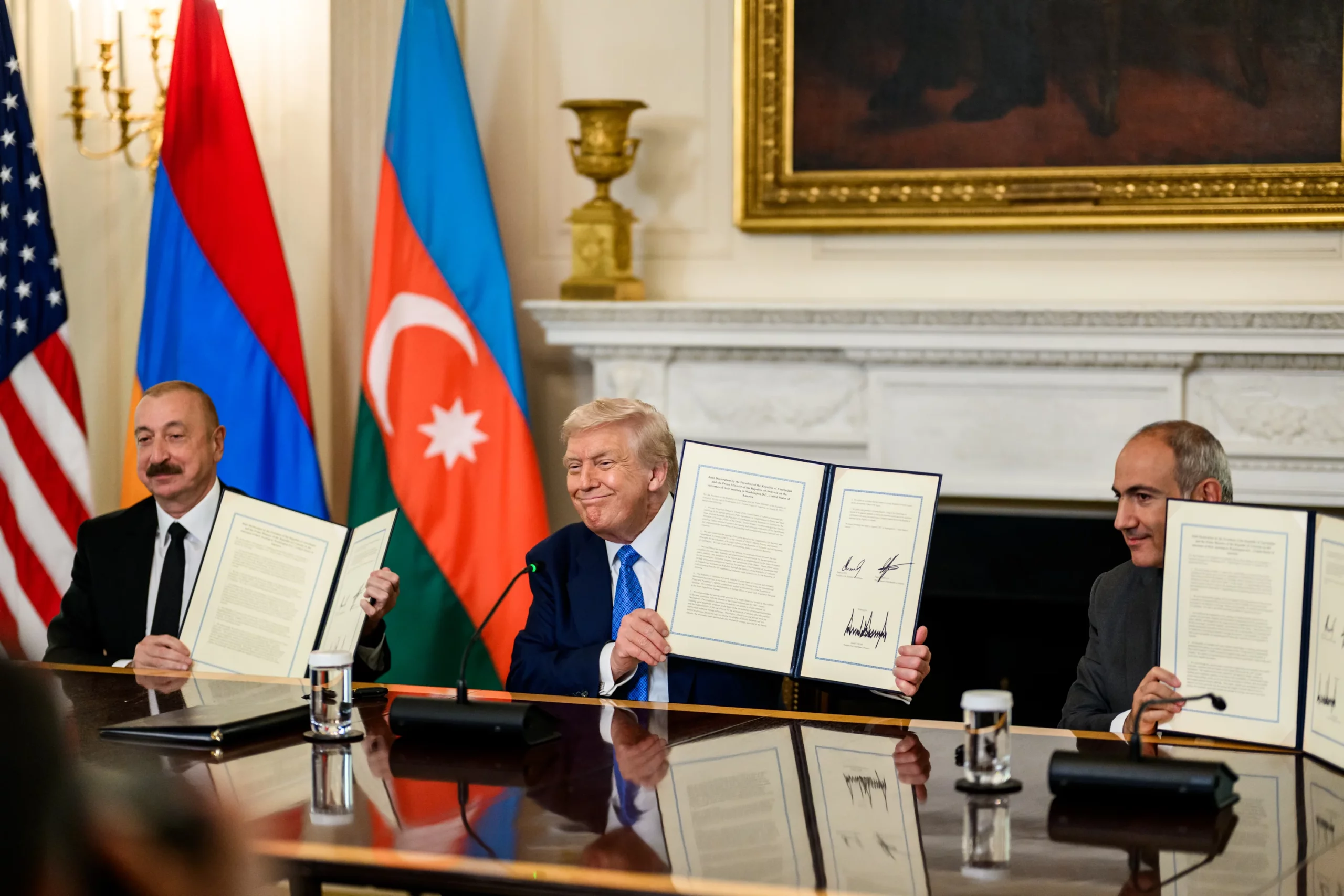
Armenia and Azerbaijan had committed themselves to a lasting peace after decades of conflict, US President Donald Trump said on Friday as he hosted leaders of the South Caucasus rivals at a signing event at the White House, Al-Arabiya reported.

The two former Soviet republics “pledge to permanently cease all hostilities, open trade, travel and diplomatic relations, and respect each other’s sovereignty and territorial integrity,” Trump said at the event. However, the fine print and binding nature of the agreement remained unclear.
Trump said that the two leaders would have a ‘great relationship,’ adding, “But if there is a conflict…they will call me and we will work it out.”
Azerbaijan and Armenia agreed on the text of a comprehensive peace agreement in March, but Baku later demanded that Armenia’s constitution be amended to renounce its territorial claims to Karabakh before signing. Nikol Pashinyan has announced plans to hold a constitutional referendum in 2027, although the issue remains controversial.
The agreement includes the creation of a transit corridor passing through Armenia to connect Azerbaijan with its exclave of Nakhchivan, a longstanding demand of Baku. The United States will have the rights to develop the corridor, dubbed the Trump Route for International Peace and Prosperity (TRIPP), in a strategic and resource-rich region.
Armenia dropped its long-standing opposition to the corridor during negotiations with the United States. Asked what Armenia stands to gain from the deal, a White House spokesman said it was a “tremendous strategic commercial partner.” He added: “The losers here are China, Russia and Iran.”
The corridor would allow people and goods to travel between Turkey and Azerbaijan and beyond to Central Asia without having to go through Iran or Russia. Currently, this is not possible because the Armenian-Azerbaijani border is closed and heavily fortified, according to Axios.
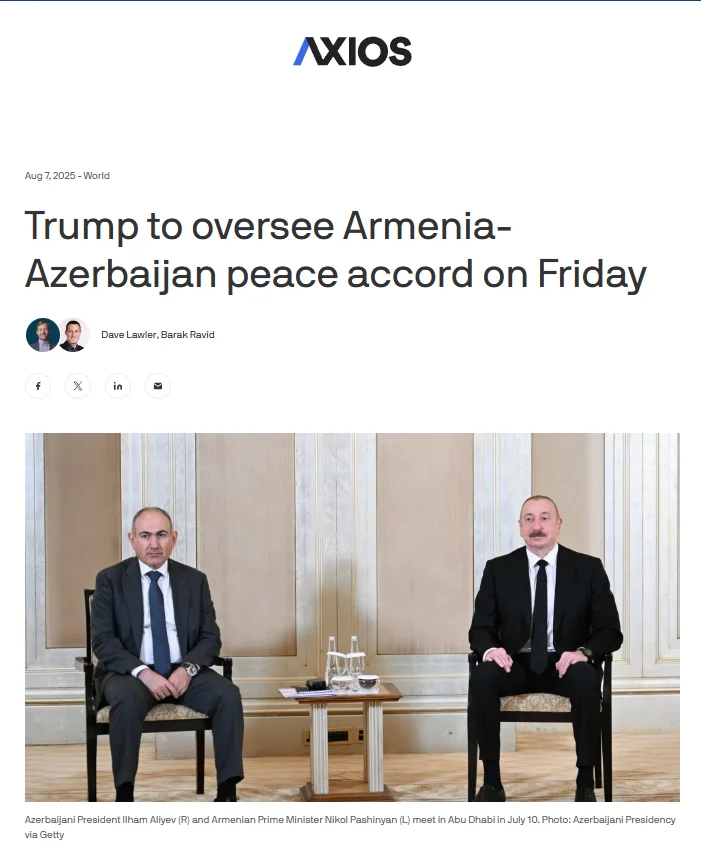
Previous proposals to resolve the conflict included a route between the Nakhchivan exclave and mainland Azerbaijan known as the Zangezur corridor, Anadolu English explains. One of the officials, who spoke to reporters on condition of anonymity, said that with the agreement, “there is no longer any talk of a corridor. There is no corridor.”
“The way President Trump elegantly put his decision out there was by introducing the Trump Route for International Peace and Prosperity,” the official said.
Negotiations on who will serve the route are expected to begin in the middle of next week, and a senior administration official said nine potential operators had expressed interest so far, including three U.S. firms.
Working groups are expected to be launched immediately after the agreement is signed to finalize the details of the roadmap over the coming months.
Iran is strongly opposed to the project and Russia has also criticized it, while Turkey has come out strongly in favor. Both countries are former Soviet republics but have had tense relations with Moscow in recent years. The EU warmly welcomed the first signing of a peace agreement and the establishment of interstate relations between Armenia and Azerbaijan at the White House on Friday.
Підтримати нас можна через:
Приват: 5169 3351 0164 7408 PayPal - [email protected] Стати нашим патроном за лінком ⬇
Subscribe to our newsletter
or on ours Telegram
Thank you!!
You are subscribed to our newsletter

