The Last Battles of the Fallen Ukrainian Peacekeepers in Iraq

The Last Battles of the Fallen Ukrainian Peacekeepers in Iraq

Taras Safronov

Taras Safronov

March 8, 2026
14:39
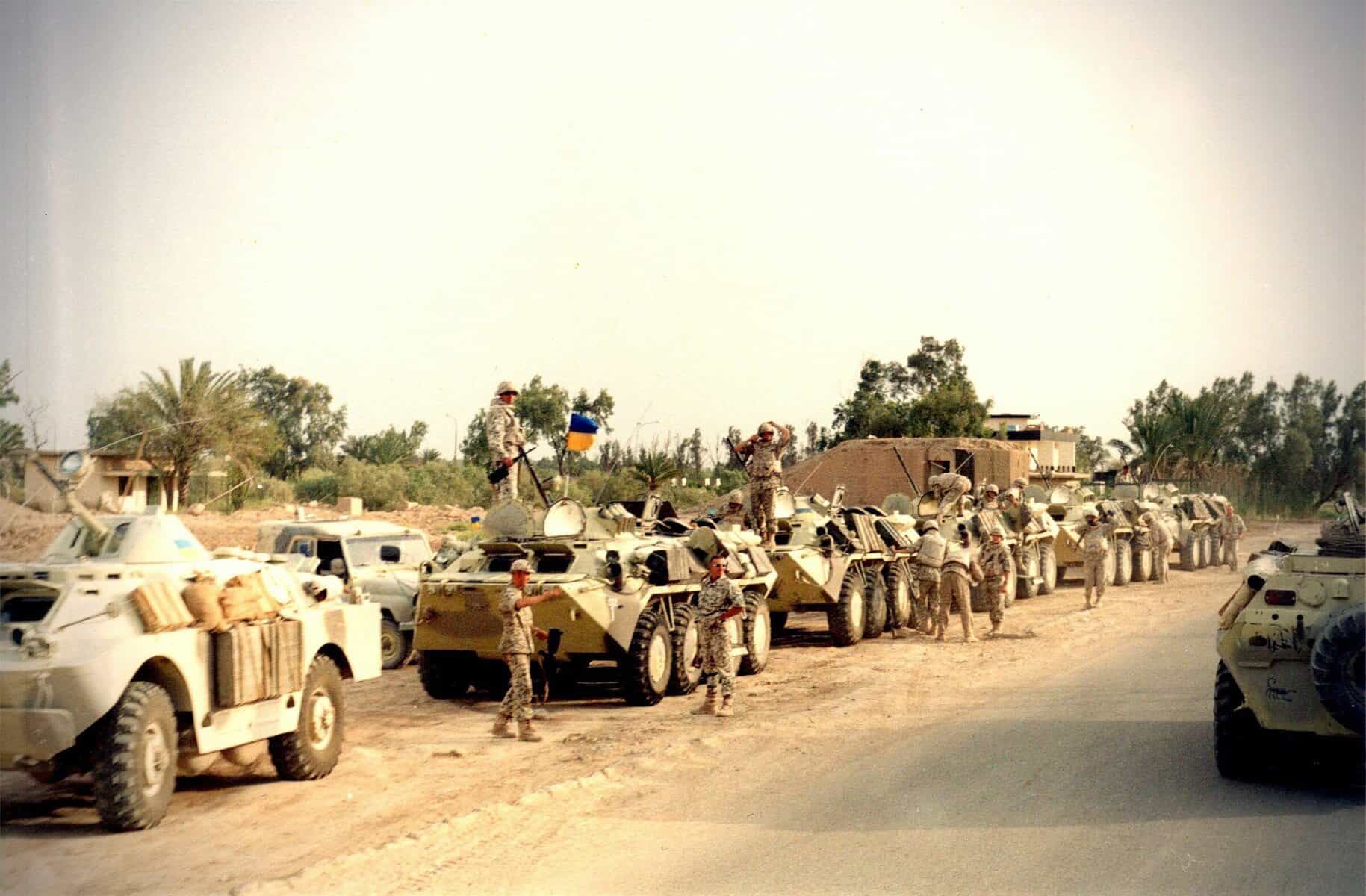
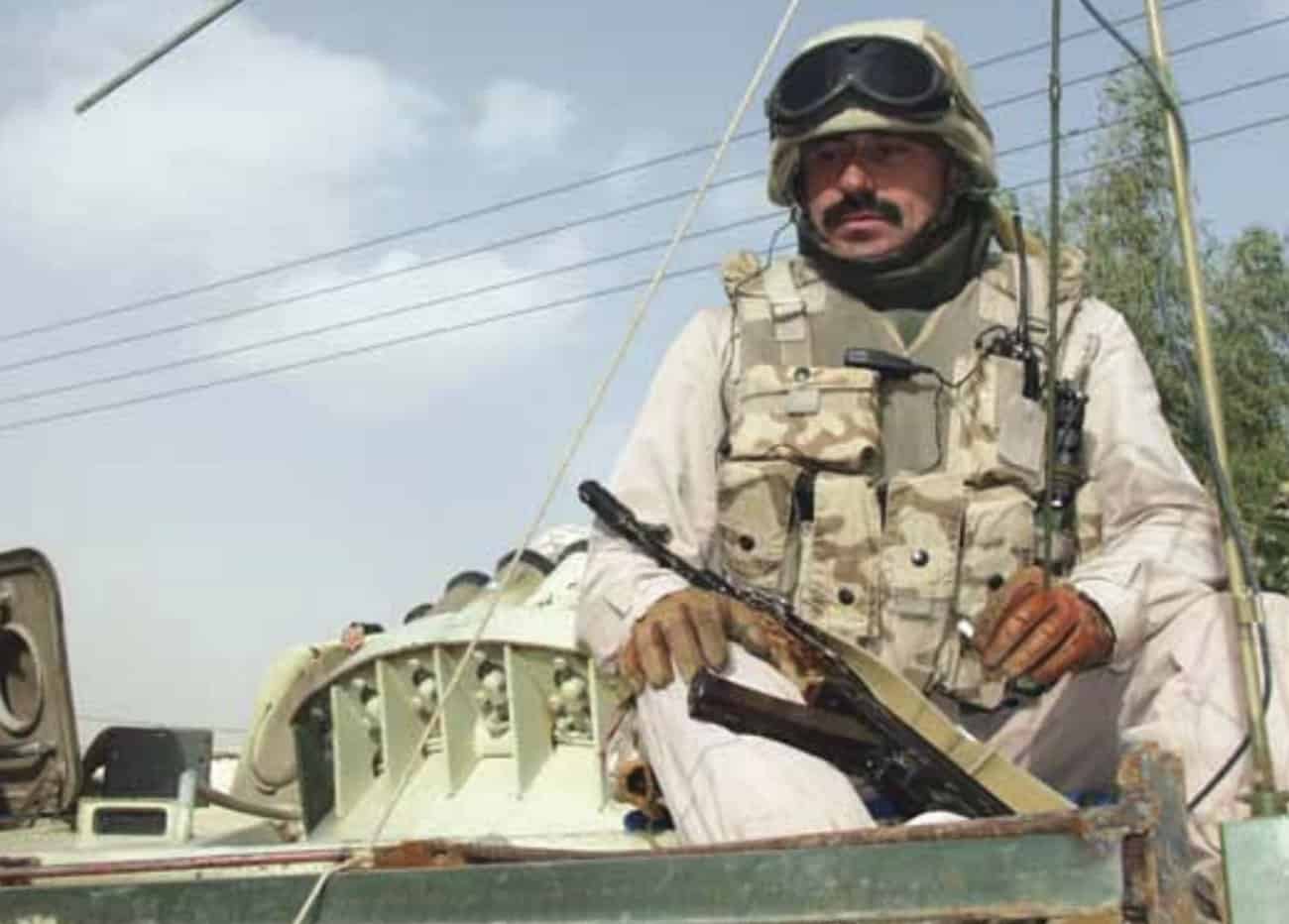
Ukrainian peacekeepers in Iraq. Source: Militärgeschichte community

The Last Battles of the Fallen Ukrainian Peacekeepers in Iraq

Taras Safronov

Taras Safronov

March 8, 2026
14:39
Ukrainian peacekeepers in Iraq. Source: Militärgeschichte community

In 2003, the Ukrainian peacekeeping contingent in Iraq became one of the largest.

Among the countries that sent troops to support the United States, Ukraine had the third-largest force, after the United Kingdom and Poland.

Between 2003 and 2005, the Ukrainian peacekeeping contingent included about 1,700 personnel. It became the largest peacekeeping mission in Ukraine’s history since gaining independence. 

Since the 1990s, Ukraine has actively participated in United Nations peacekeeping operations.

In 2003, Kyiv also viewed participation in the international coalition in Iraq as a step toward strengthening cooperation with the United States and NATO. 

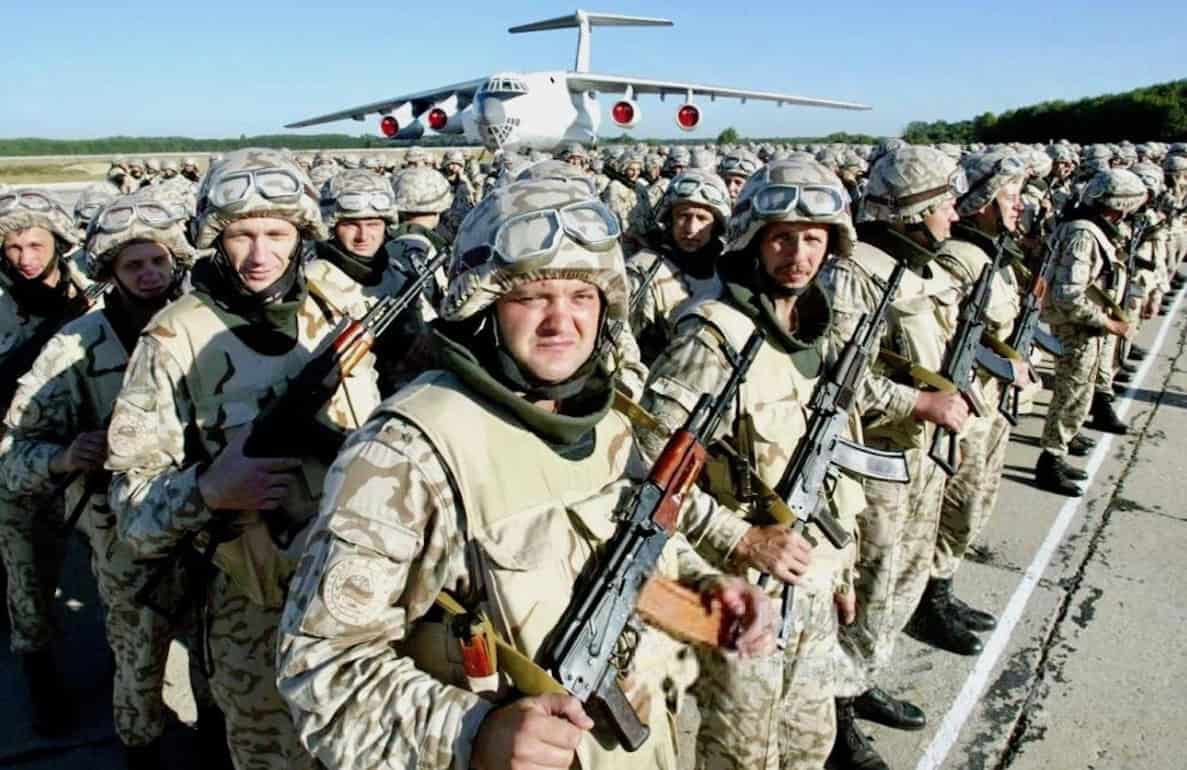
Ukrainian peacekeepers of the 5th Mechanized Brigade at Kyiv’s Boryspil Airport before departing for Kuwait aboard an Il-76 aircraft. August 7, 2003. Photo credits: Reddit

The mission was intended to demonstrate that Ukraine was a reliable partner and to serve as an argument in favor of Euro-Atlantic integration.

After the military defeat of Saddam Hussein’s regime, U.S. President George W. Bush called on the international community to join the process of “establishing democracy” in Iraq.

Ukraine responded to this call, and on August 7, 2003, Ukrainian peacekeepers began deploying to Kuwait.

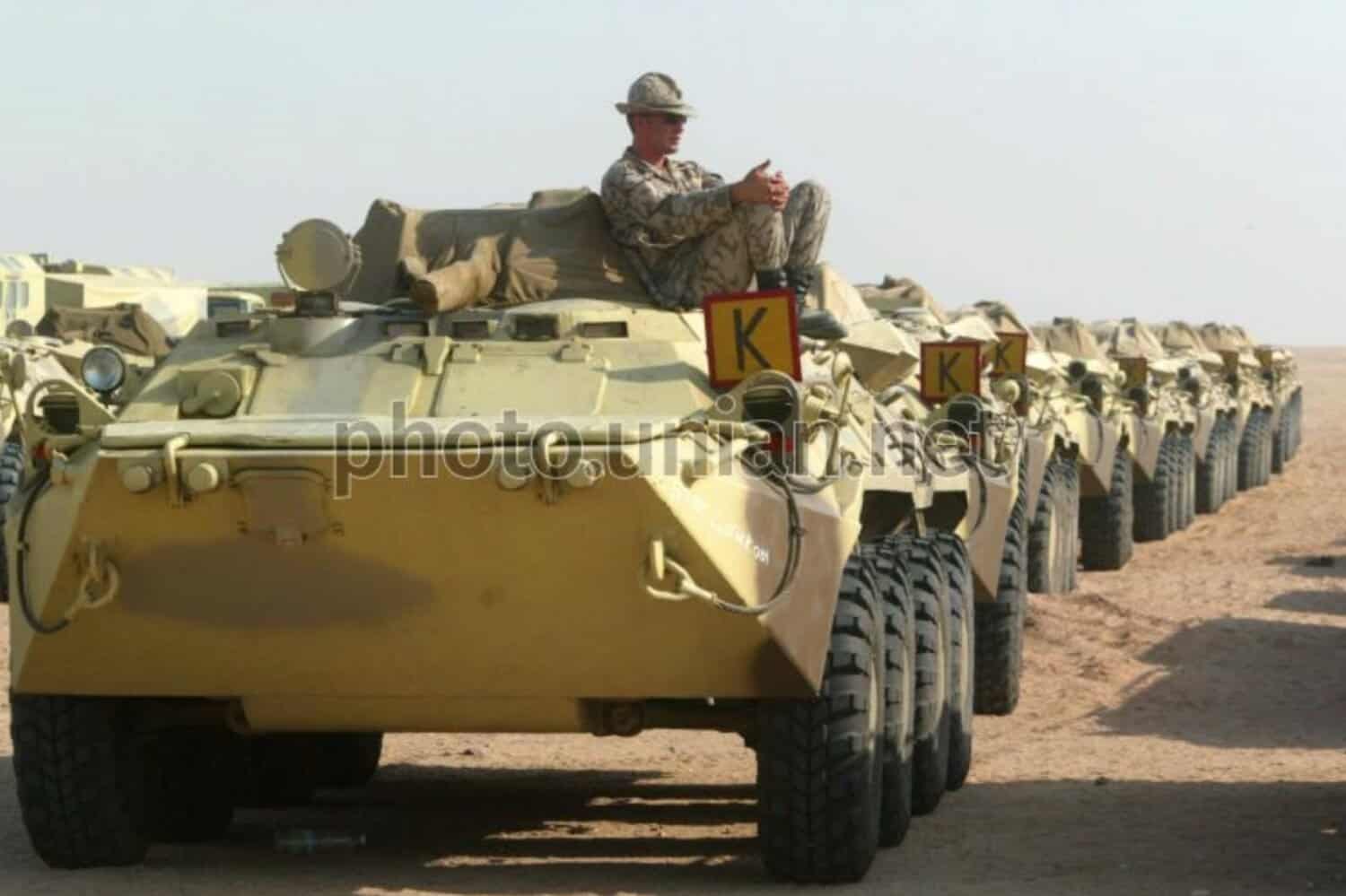
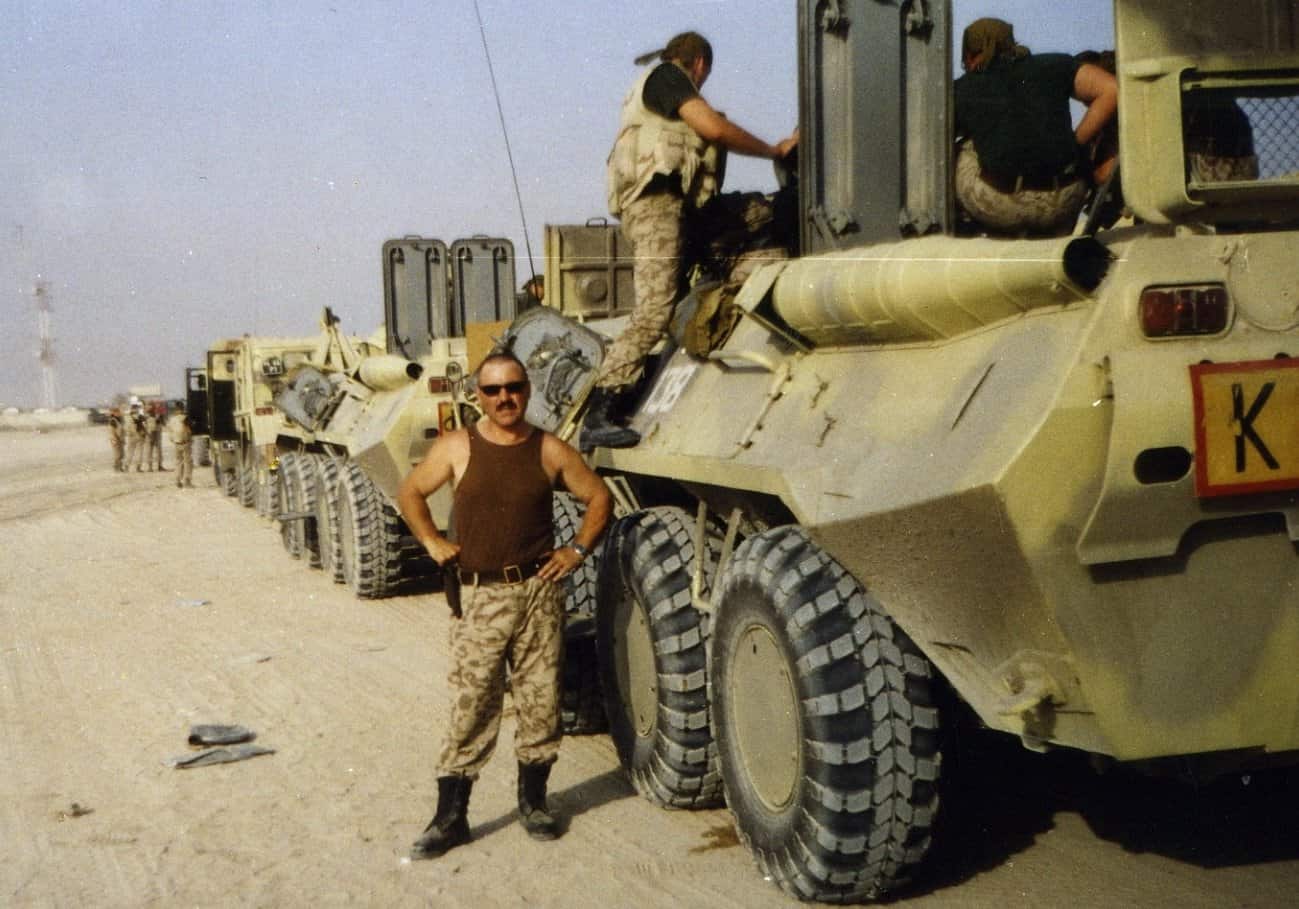
BTR-80 armored personnel carriers of Ukrainian peacekeepers in Kuwait at the U.S. military base Camp Coyote before being sent to Iraq. August 9, 2003. Photo credits: unian.net

From Kuwait, the Ukrainians carried out what was known as the “march of death” to their base in the city of Al‑Kut in Wasit Province, during which vehicles could break down, and drivers sometimes lost consciousness due to the unfamiliar climate conditions.

Tasks of the Ukrainians

The Ukrainian brigade was placed under the command of the Multinational Division Center–South.

The core of the division consisted of the Polish military contingent. The units were stationed in Wasit Province, about 160 kilometers from Baghdad.

Peacekeepers’ Areas of Responsibility in Iraq

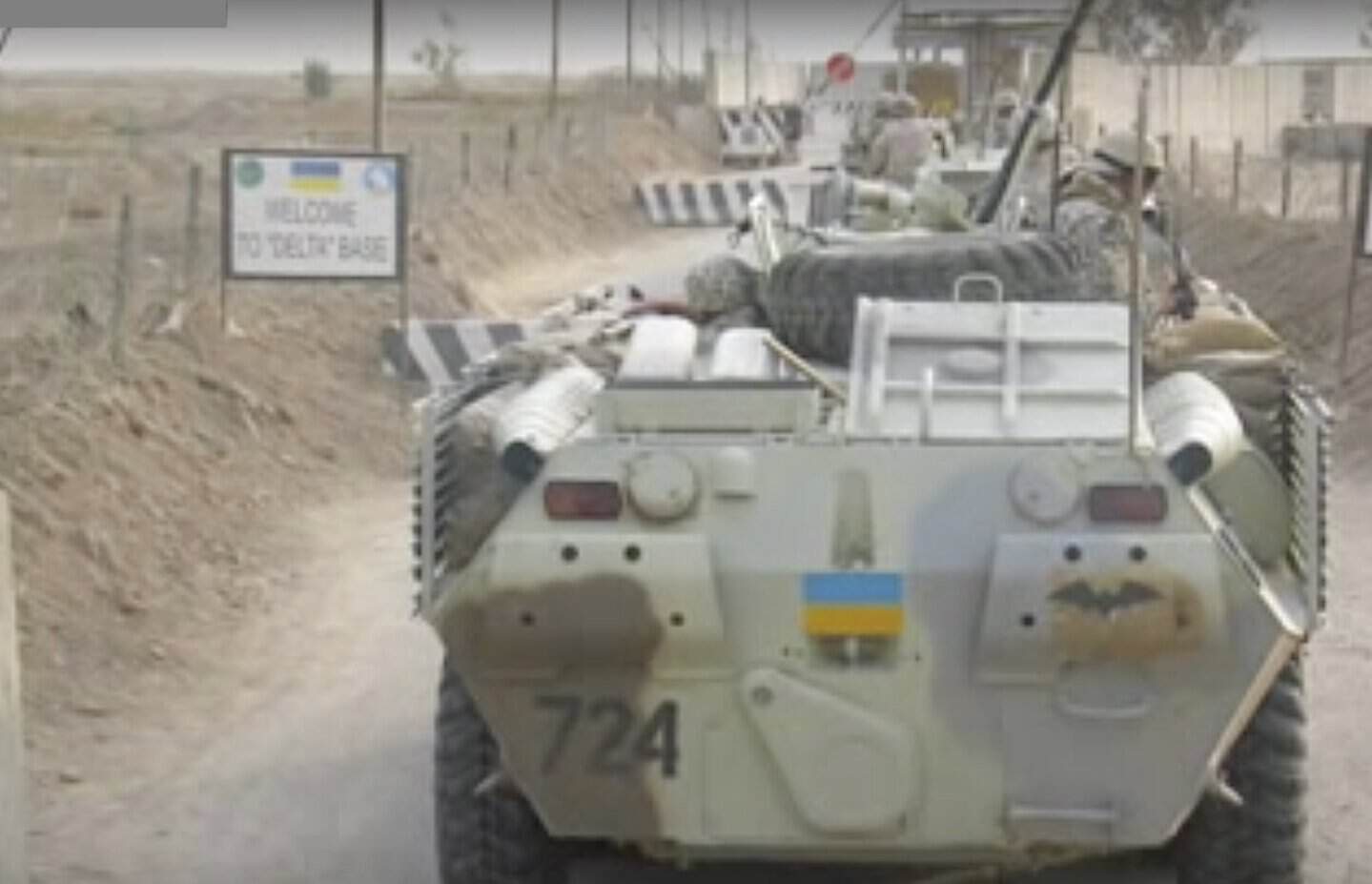
Ukrainian troops protected key facilities in the Iraqi city of Al-Kut from their base, which was called Delta.

The main tasks of the Ukrainian peacekeeping contingent included maintaining security in their area of responsibility, providing assistance to the civilian population and local authorities, and carrying out engineering and other operations.

The peacekeepers’ movements were constantly fraught with danger and sometimes led to clashes and casualties. Meanwhile, not all losses suffered by the Ukrainian contingent were combat-related.

Ukrainian peacekeepers arrive at the Delta base near the city of Al-Kut in Wasit Province.

During this war, Ukraine lost 18 soldiers and one journalist. The Ukrainian contingent suffered its heaviest losses during an incident in the Es-Suwaira area.

First losses

The first Ukrainian losses in Iraq were officially not recognized as combat-related.

On September 30, 2003, Yurii Koydan from Chernihiv was returning from a patrol in Al-Kut when the wheels of his BRDM hit a trench, causing the armored vehicle to overturn.

Overturned BRDM of Ukrainian peacekeepers in Iraq

As a result of the impact inside the vehicle, Yurii sustained injuries that led to his death.

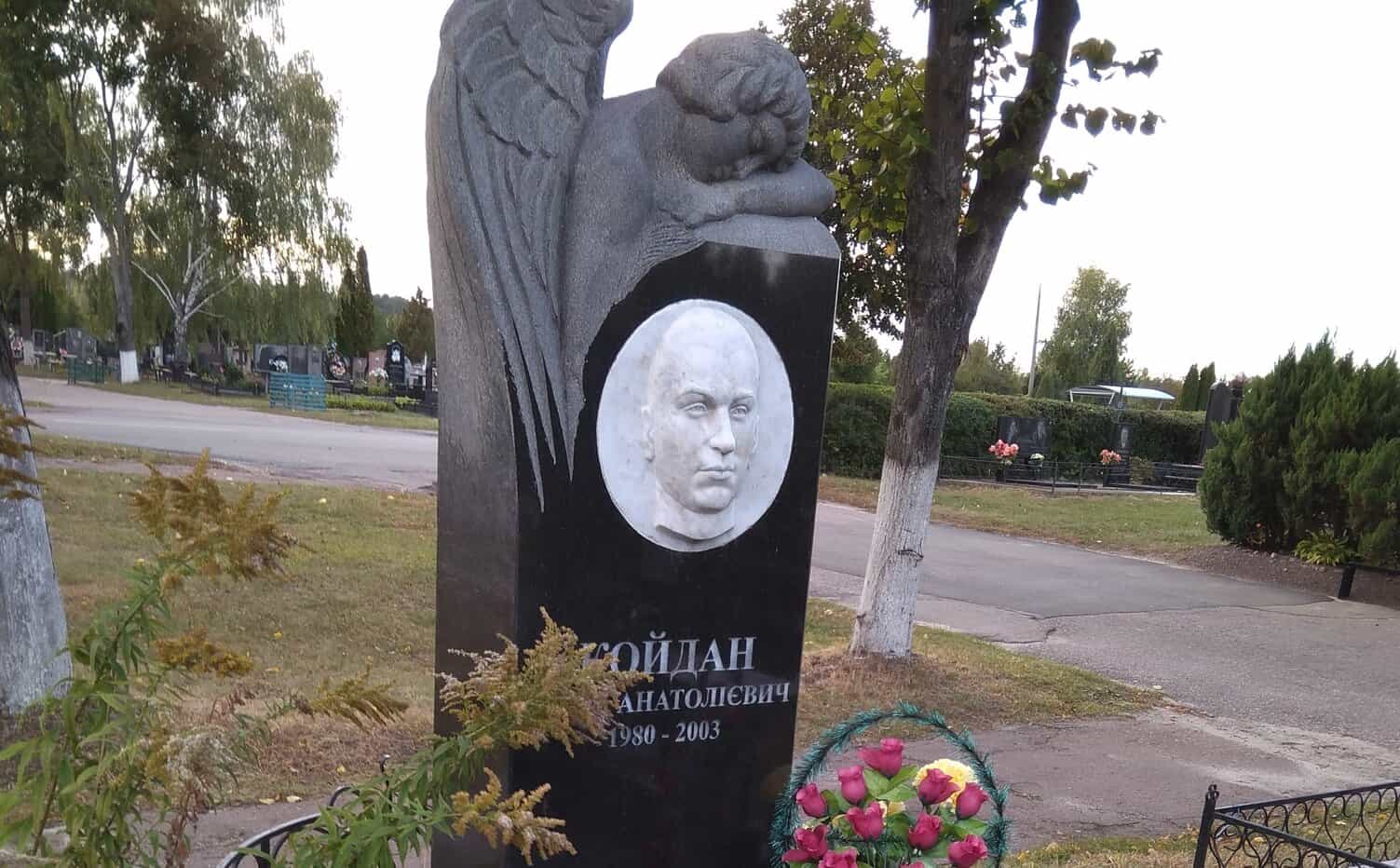
Yurii was buried in Chernihiv at the Yatsevo Cemetery. His tombstone indicates that he was born in 1980, meaning he was 23 years old at the time of his death.

Grave of Yurii Koydan in Chernihiv at Yatsevo Cemetery

The name of Yurii Koydan has been added to the “Hall of Memory” Memorial Complex of the Ukrainian Ministry of Defense in Kyiv, where, since 2018, the “Bell of Memory” has sounded daily in honor of fallen Ukrainian servicemen.

Senior Sergeant Yurii Koydan, who served in the 5th Mechanized Brigade, was posthumously awarded the “Valor and Honor” distinction.

The second loss of the Ukrainian contingent was Junior Sergeant Serhii Suslov, who died on November 11, 2003.

According to the official account, Serhii was fatally wounded while performing a security task at a bank in the city of Al-Aziziyah.

Investigation materials state that the tragedy was caused by careless handling of personal weapons: an accidental shot from an automatic rifle resulted in a fatal injury.

The Ministry of Defense kept the incident secret for several days. It was only late in the evening of November 13 that the public was informed of the death of the Ukrainian peacekeeper, without any details or photographs of the deceased.

In the book “Life Between Bullets,” military doctor and peacekeeper Oleksandr Rud recounts that an unknown assailant killed Suslov at a checkpoint:

“Sergeant Suslov from the fifty-second battalion was on duty when the fatal shot rang out. The Ukrainian died, and the killer was never found,” writes the peacekeeper in his memoirs.

Oleksandr Rud in Iraq. Photo credits: che.cn.ua

A week later, on November 18, Captain Oleksii Bondarenko was found dead.

The body of the Zaporizhzhia native was found behind a building on the Iranian-Iraqi border, with a pistol in his hand.

A pack of cigarettes lay nearby. The examination concluded that it was suicide: the captain had shot himself in the head.

It is still unknown what drove the young, energetic man to take such a step. Oleksii worked as a translator and constantly communicated with Arabs.

A suicide note was found next to the body, in which he asked no one to blame anyone for his death:

“I am leaving this life voluntarily. Farewell, everyone.”

The suicide note surprised everyone. A few days before the tragedy, he had been promoted to captain.

“He was happy about it, behaved appropriately, was sociable, easily found common ground with his colleagues, and there was nothing unusual about his actions. Captain Bondarenko was a successful man,” the head of the Ministry of Defense’s press service said at the time.

Moreover, it is known that after completing his service in Iraq, Oleksii was planning to get married. He was buried at the Osipenko Cemetery in Zaporizhzhia.

Battle with the Mahdi Army

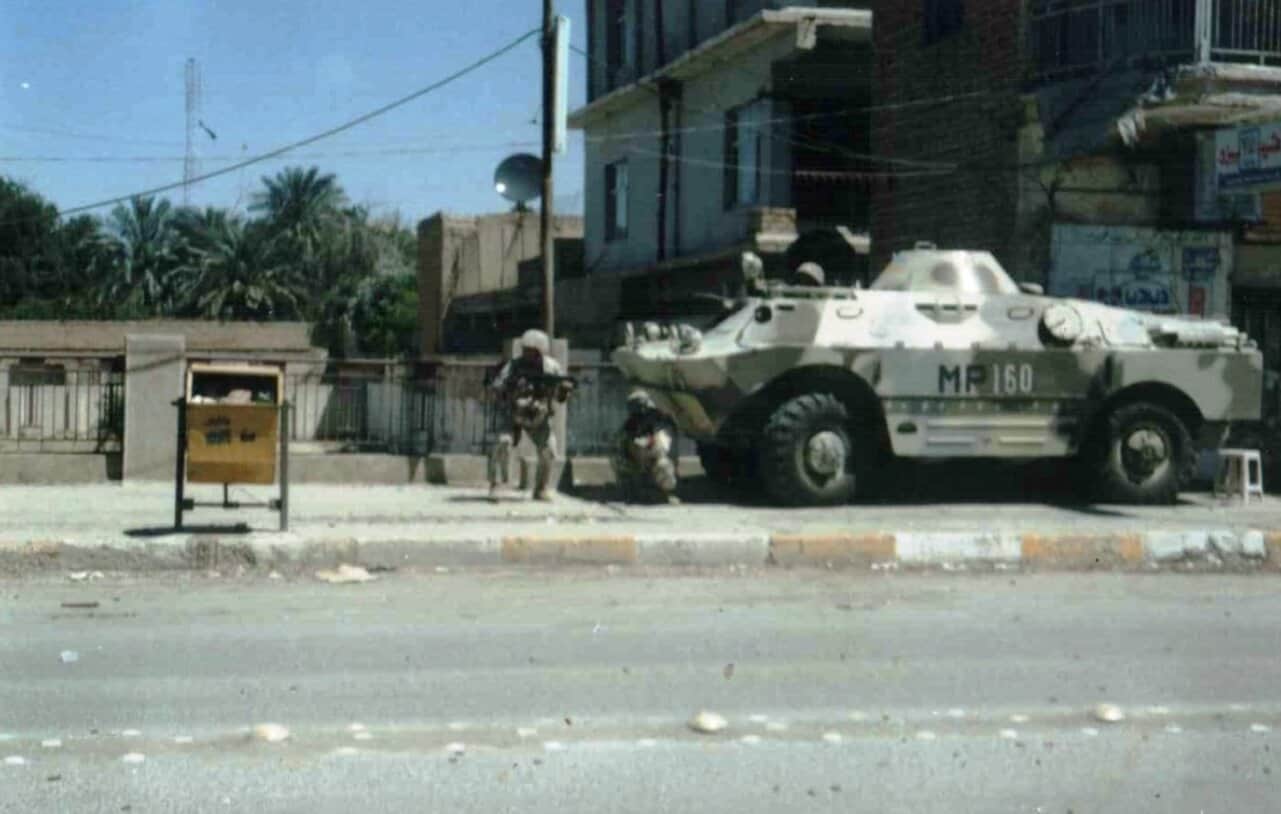
On April 6, 2004, Ukrainian peacekeepers stationed in the Iraqi city of Al-Kut found themselves in a situation that felt like hell as a Shiite Muslim uprising began.

The events had started a day earlier. In Wasit Province, where a Ukrainian-Polish battalion was deployed as part of the 6th Brigade, an uprising by the Mahdi Army broke out.

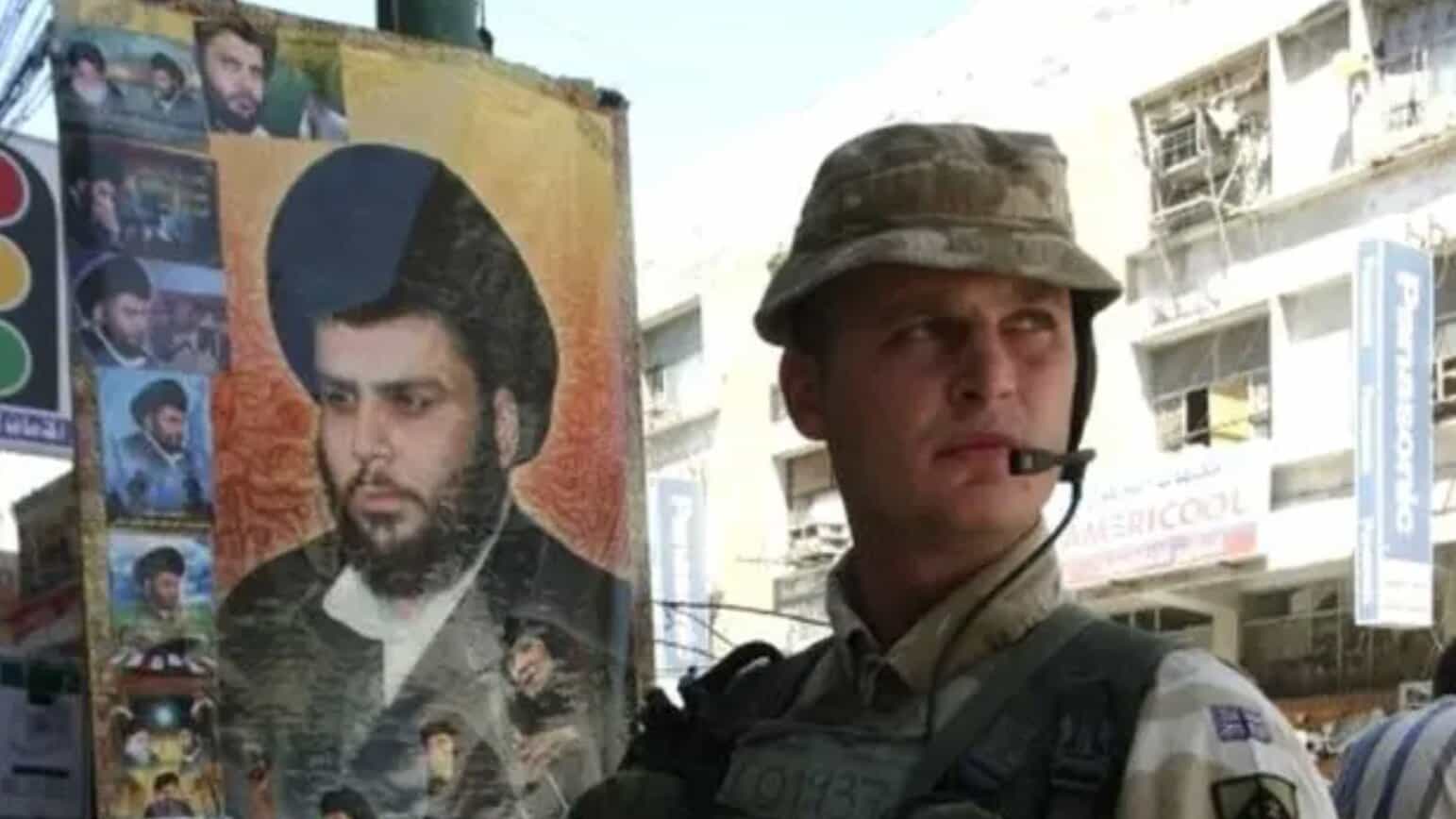
The rebellion was led by the ambitious Shiite cleric Muqtada al-Sadr, who sought to gain greater power by mobilizing opposition against the pro-American Iraqi government.

A British soldier in front of a portrait of Muqtada al-Sadr in Iraq, 2003

On April 3, militants opened fire on Polish soldiers. The next day, Shiite fighters began gathering in Al-Kut and Al-Hai.

The Ukrainian 2nd Company was stationed in the town of Al-Hai, about 70 kilometers from the main base in Al-Kut.

On the morning of April 5, they received an order to move to the base: the Ukrainians were to reinforce security at the bridge over the Tigris River. Earlier in Al-Kut, unknown attackers had fired at an American patrol.

The Ukrainians completed the mission and returned to base. But on April 6 at 5 a.m., they were put on alert – the situation in the city had become tense.

“Until about 11 o’clock, it seemed quiet. Then the streets suddenly became completely empty – there were no ordinary pedestrians anywhere. Suddenly, the entire city hall staff disappeared, even their Arab guards,” a Ukrainian peacekeeper recalled.

Some simply left their weapons and walked away, while others joined the militants of the Mahdi Army, who had flooded the streets. It later turned out that about 600–800 fighters had gathered in Al-Kut at that time.

The first shots were fired at the peacekeepers, but the Ukrainians were not authorized to use their weapons, and especially not to conduct aimed fire.

“We simply stayed at our position and waited,” the peacekeeper recalls.

There was no one left to guard – all the city hall employees had fled in panic. Now the Ukrainians had to find a way out of the trap.

The commander decided to leave the area. However, the militants did not want to let the peacekeepers go and closed the metal gates.

The gates were rammed with an armored personnel carrier, and the soldiers drove out in their vehicles.

“The city was divided in two by the Tigris River. When we were already crossing the bridge, we noticed that militants were setting up their mortar batteries on the left bank (there was a pier for fishing boats there – a specially equipped platform),” the soldier recounts.

The peacekeepers then received a new order: return to the right bank and guard the most important facility in the city – the grain elevator.

The local population survived thanks to bread baked from the grain stored there. The Ukrainians held the elevator, although for hours, from 11:30 a.m. to 6:00 p.m., they were under intense enemy fire.

Ukrainian peacekeepers fighting on the streets of Al-Kut. April 2004

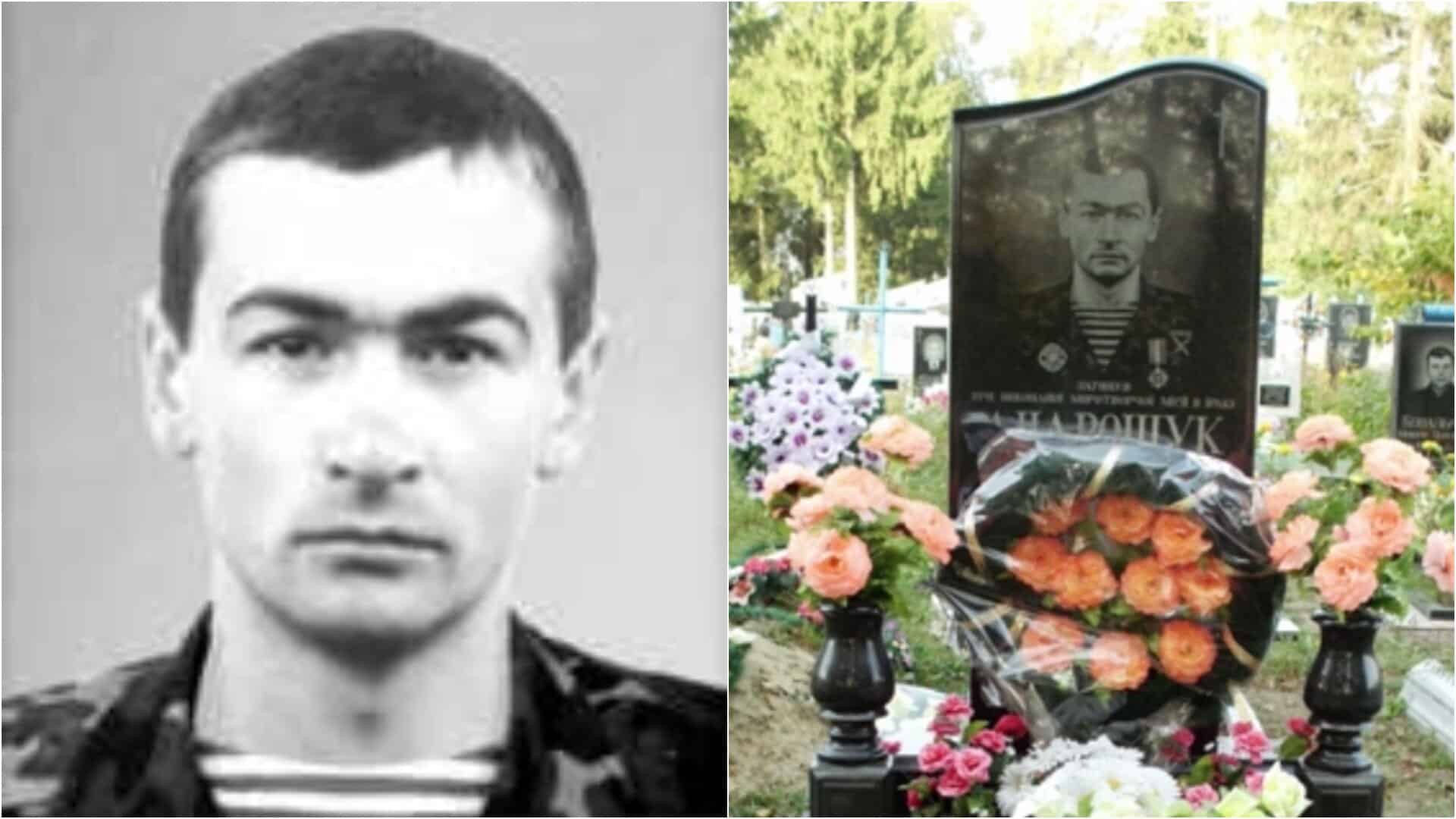
“At first, they fired at us with assault rifles, then with grenade launchers, while we were not even allowed to return fire. Only after Ruslan Androshchuk, a soldier from the reconnaissance company’s special platoon, was killed were we finally allowed to open fire,” the peacekeeper recalls.

Ruslan Androshchuk saw a grenade launcher operator on the opposite bank aiming at a Ukrainian armored personnel carrier (APC).

The peacekeeper aimed his machine gun at the militant and asked for permission to neutralize the attacker, but he was strictly forbidden to shoot.

“Of course, if not for that order, Ruslan would not have died. His comrade had the bandit in his sights and definitely wouldn’t have missed! Imagine how it feels when you see everything happening but cannot do anything,” says a participant in the battle.

The first rocket missed – it flew over the APC. The second one hit the side directly. The shaped charge killed the Ukrainian peacekeeper Ruslan Androshchuk.

Even after the Ukrainian soldier was killed, the peacekeepers were still not allowed to conduct aimed fire.

“We could only ‘snap back’ with limited return fire. Thank God no other Ukrainians were killed, but many were wounded – mostly by grenade fragments,” the soldier recalls.

On April 16, coalition forces managed to retake Al-Kut from the militants.

The Shiite uprising ended with a ceasefire with the Americans. Muqtada al-Sadr achieved his aim, gaining significant influence among the Shiite population, and he remains an influential political figure in Iraq to this day.

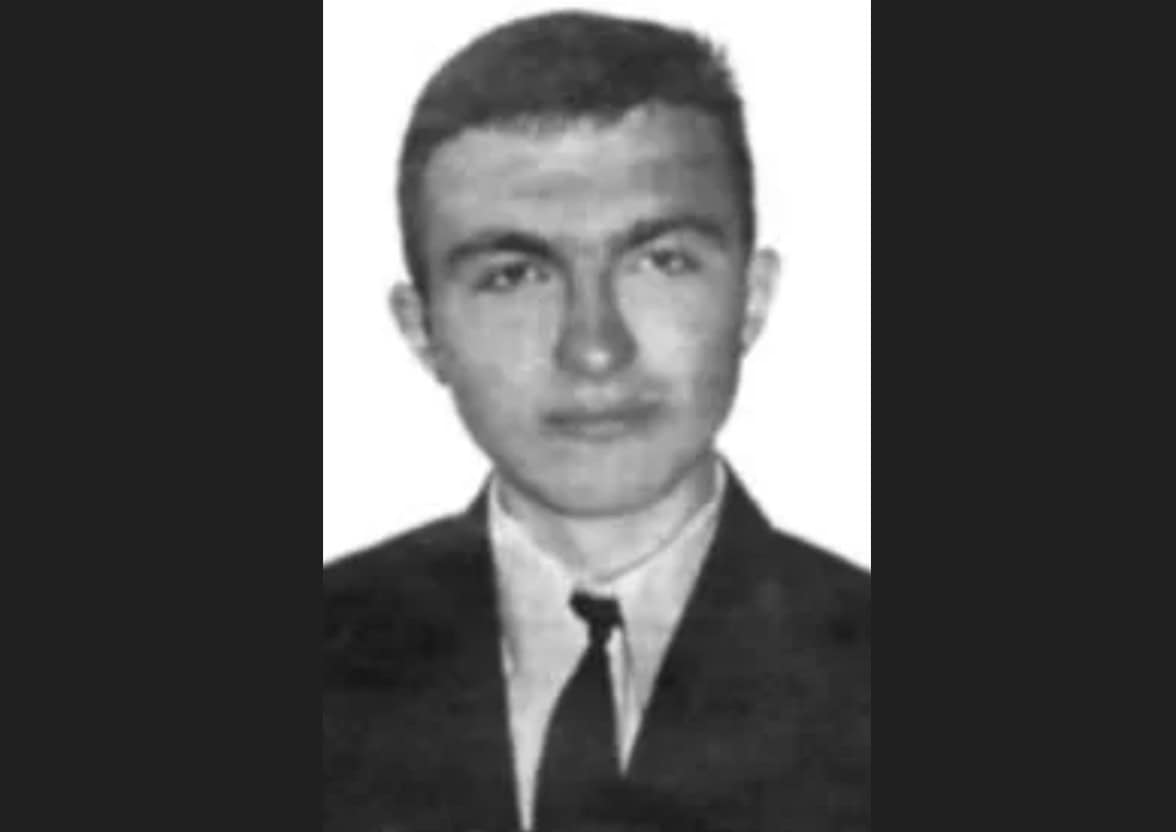
The fallen Ukrainian peacekeeper Ruslan Androshchuk, from the 6th Mechanized Brigade and originally from the Zhytomyr region, was buried in the village of Kolodianka.

The Ukrainian peacekeeper Ruslan Androshchuk, who was killed in Iraq

Attack on the convoy

On April 28, 2004, militants carried out an attack on Ukrainian peacekeepers of the 6th Separate Mechanized Brigade during a patrol near the Iraqi city of Az-Zubadiyah.

In general, the Iraqi population had a reserved yet relatively neutral attitude toward the mission of Ukrainian peacekeepers. However, the situation was destabilized by mobile Mahdi Army units.

Moving in two or three vehicles carrying concealed weapons, the militants first studied the patrol routes. They then performed sudden attacks on the patrols and disappeared just as quickly.

Ukrainian peacekeepers in Iraq stop a car with civilians for inspection

It was according to this scenario that the armed attack took place on the morning of April 28. A patrol of three BTR-80 armored personnel carriers was on a mission to monitor the highway to Baghdad, about 60 kilometers west of the base camp in Al-Kut.

As they approached a road intersection, an improvised explosive device (IED) was detonated about five meters from the lead armored personnel carrier.

The platoon commander decided to leave the area of the explosion. At that moment, the last armored personnel carrier, whose crew included sniper Kostiantyn Mikhalev and machine gunner Yaroslav Zlochevskyi, fell slightly behind because of the smoke screen.

The vehicle was then hit by an RPG-7, after which militants fired at the disabled APC with a heavy machine gun. Kostiantyn was killed on the spot, while Yaroslav later died of his wounds in the hospital.

The BTR-80 of the Ukrainian peacekeepers after being fired upon

Soon, two U.S. attack helicopters arrived to assist the Ukrainian peacekeepers, along with three additional helicopters that helped the unit exit the danger zone.

After 35 minutes, a helicopter from the U.S. MEDEVAC medical unit arrived at the scene and evacuated the wounded Ukrainian soldiers to Baghdad.

The fallen soldiers in Iraq, Kostiantyn Mikhalev and Yaroslav Zlochevskyi, were buried with full military honors in the Khmelnytskyi region.

Memorial plaque in honor of Yaroslav Zlochevskyi in the Ternopil region

In the Ternopil region, a memorial plaque was installed on the facade of the Koropets boarding school in honor of Yaroslav Zlochevskyi, who had studied there.

August ambush

By August 2004, militants had already studied the patrol routes of the peacekeepers, including the locations where the Ukrainian soldiers collected water.

On August 15, they planted a radio-controlled improvised explosive device (IED) near a water reservoir by the city of Al-Suweira and detonated it as two fuel tankers escorted by four APCs were approaching.

The explosion damaged the fuel tankers, and Captain Yurii Ivanov was killed.

Ukrainian peacekeepers’ fuel truck after the ambush on August 15, 2003

On the same day, the Ukrainian peacekeepers were attacked a second time – along the route of a convoy transporting fuel from Babylon to the base camp.

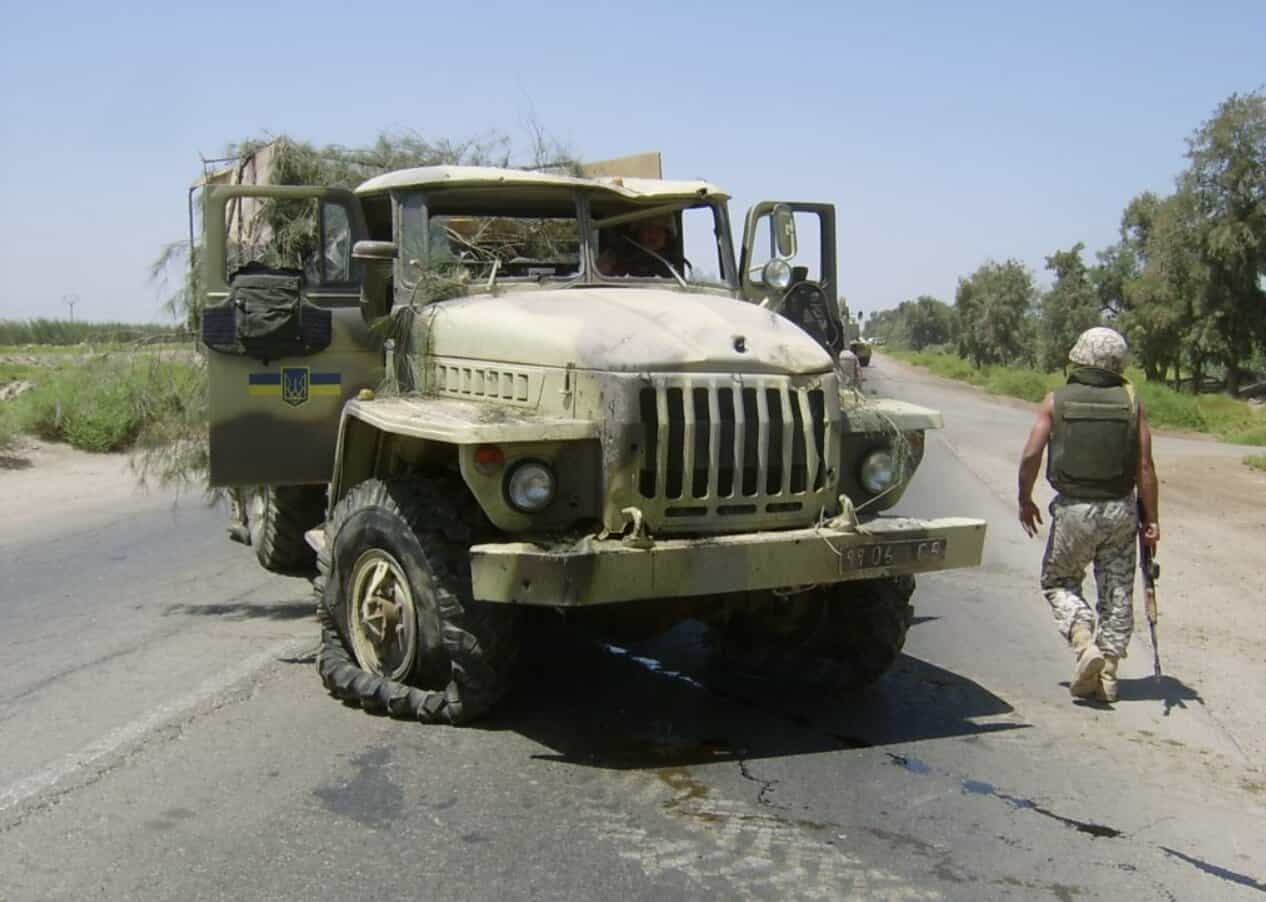
The roadside IED explosion damaged a Ural truck, and some of the Ukrainian soldiers were wounded.

The peacekeepers called in a reserve platoon for assistance, but the unit rushing to help the injured also came under fire from unknown attackers.

Ukrainian peacekeepers’ truck after the ambush on August 15, 2003

After fighting off the first attack, the peacekeepers reported the incident to their command. Once several armored vehicles arrived, the enemy firing positions were suppressed.

Captain Yurii Ivanov was posthumously awarded the Order “For Courage,” 1st Class.

Explosion of munitions

At the beginning of January 2005, Iraqi law enforcement discovered 35 bombs, four artillery shells, and grenades. Peacekeepers were called in to neutralize the explosives.

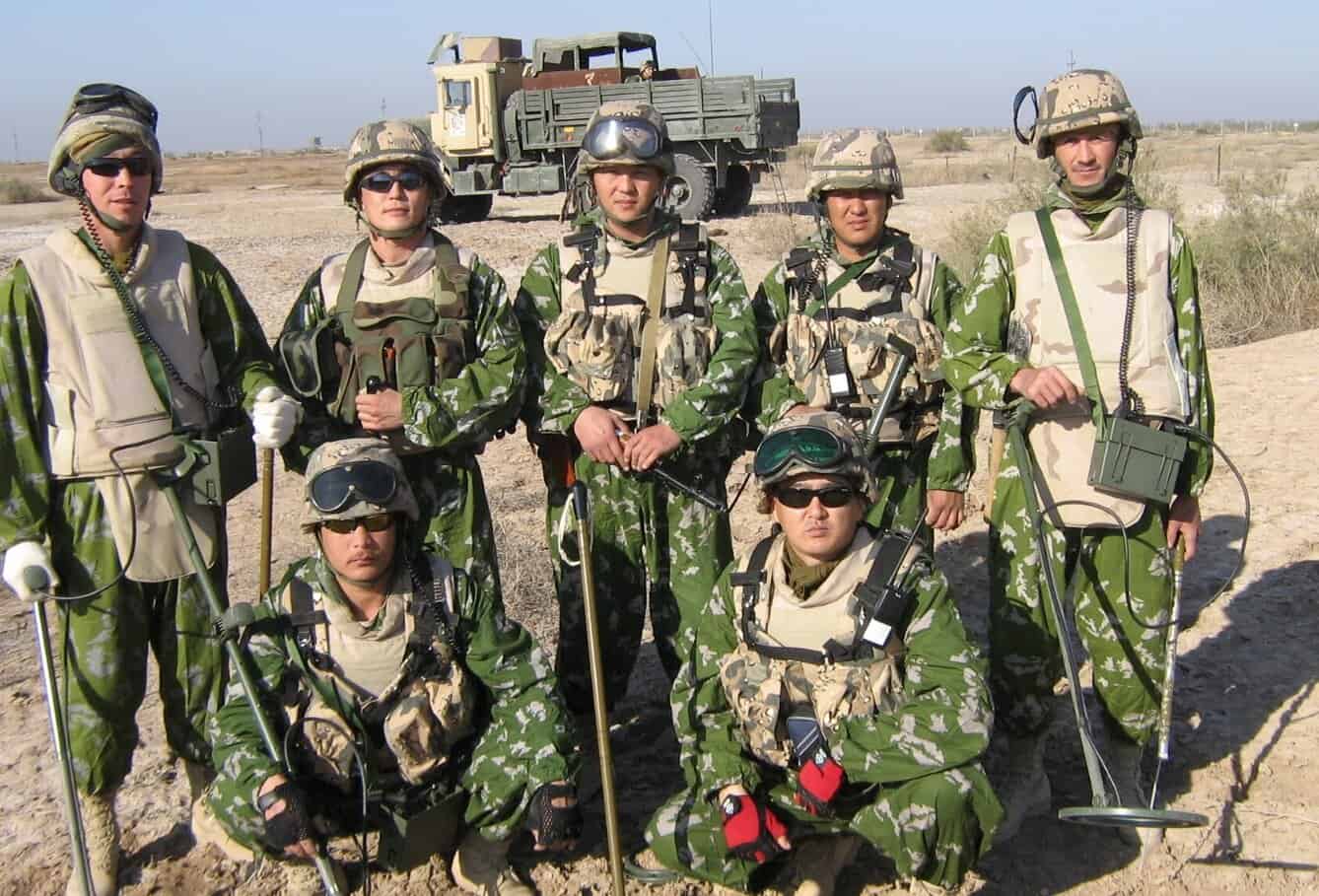
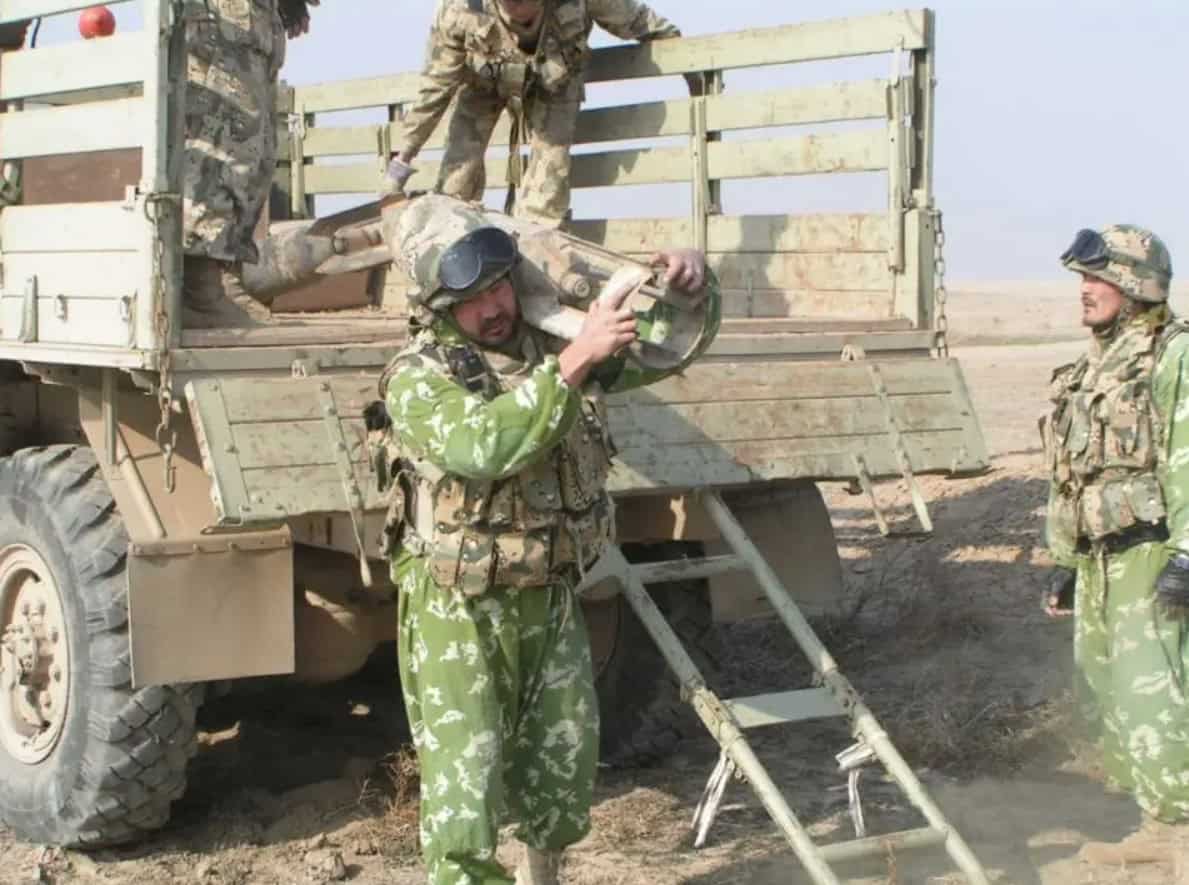
On January 9, Ukrainian and Kazakh peacekeepers transported the munitions to a training range near the Iraqi city of Es-Suweira.

Ukrainian peacekeeper and Iraqi police officers

At exactly 12:00, an unplanned explosion occurred at the site.

According to the investigators’ report, a 122-millimeter artillery shell placed between two aerial bombs detonated, which in turn also triggered three grenades.

The fragments, scattered over several tens of meters, rained down like a metal shower on a group of Ukrainian and Kazakh soldiers.

Later, among the scattered munitions, investigators found a clockwork mechanism, a battery, parts of a switch, a capacitor, and a battery with a wire.

Among the Ukrainians, only Major Ihor Kozlov, who was injured, remembered the moment of the explosion. In his memory remained the body armor flying through the air, a hand grenade detonating right at the waist, and the screams of the mortally wounded.

“Just before that, we were all laughing – someone had told a good joke. Suddenly, I felt as if someone had hit me in the face with a shovel. And a second later, the hand grenade hanging on my belt exploded…”

“I don’t know how much time passed before I came to after the explosion. I looked around – Vira Petryk, our medic, was lying next to me. I touched her, but she was already dead. I got up – my leg was dangling, and I couldn’t feel it. One of our soldiers had both legs blown off by the blast. He was screaming terribly. I grabbed him under the arms and dragged him away. I knew there were several tons of munitions; if everything exploded, none of us would survive. I remember pleading with him, even yelling: ‘Don’t scream, be a man!’ Then I fell backward and passed out. When I opened my eyes, a comrade was standing over me. I told him: ‘There’s a soldier bleeding out, pull him away!’ And he replied: ‘He’s already dead.’ – ‘And the commander?’ – ‘Also there…’”

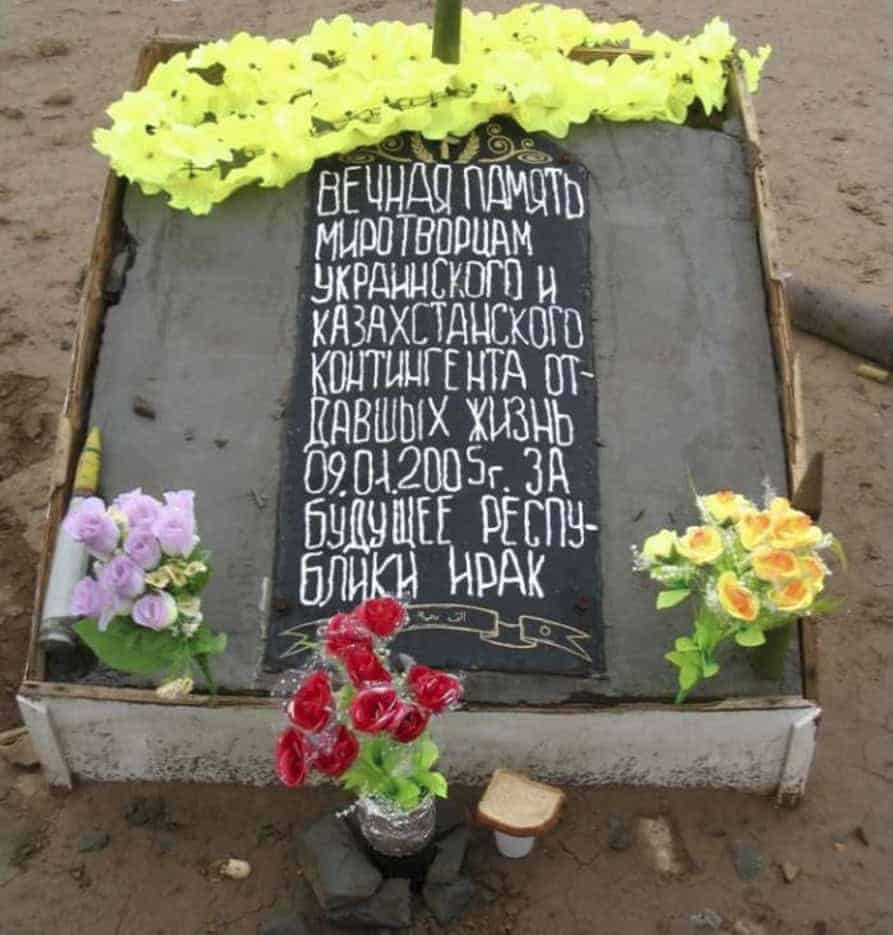
As a result of the explosion, eight Ukrainian peacekeepers and one Kazakh soldier were killed.

Another seven Ukrainian and four Kazakh soldiers were wounded.

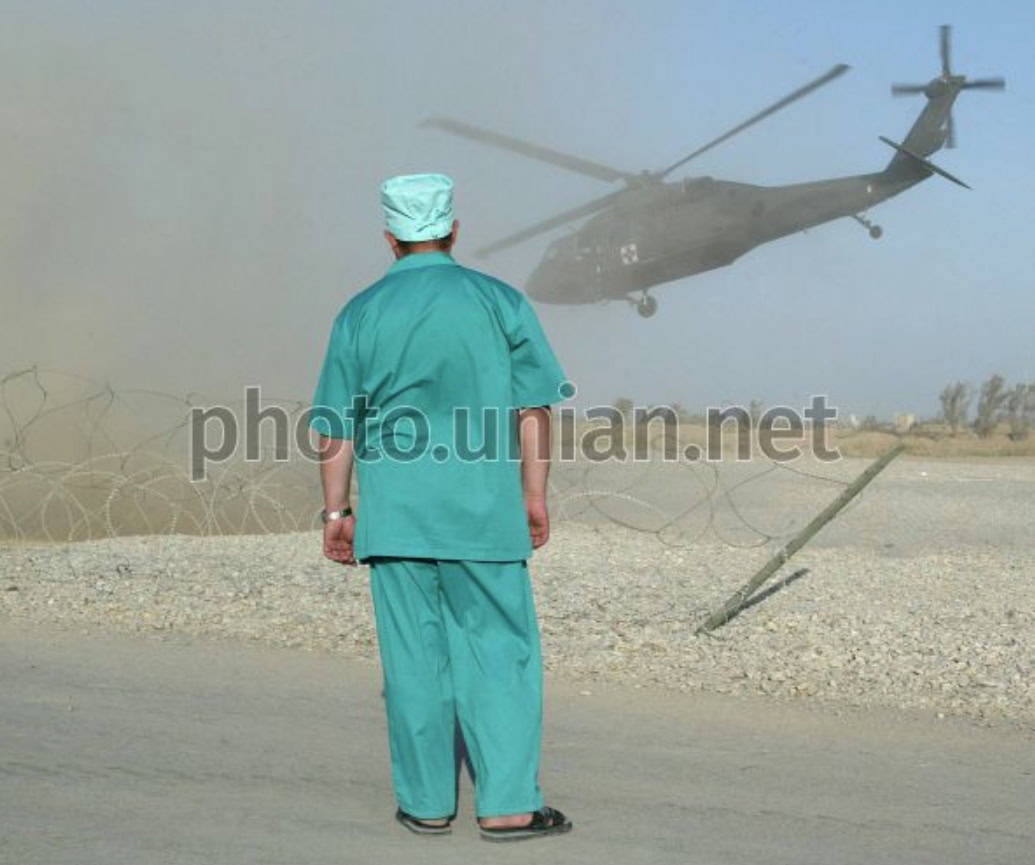
Ukrainian military medic watches an American medical helicopter carrying a wounded soldier to a military hospital in Baghdad, October 7, 2004. Photo credits: photo.unian.ua

The wounded were first taken to the Ukrainian peacekeeping contingent camp “Zulu”, where they received initial medical care.

Later, they were transported by helicopter to a U.S. military hospital in Baghdad.

Claims of negligence

In 2017, the Kazakh media Sarbaz published an interview with Askar Smagulov, who survived the explosion and helped evacuate wounded Ukrainian and Kazakh soldiers.

In 2004, he was deployed to Iraq along with seven Kazakh and 35 Ukrainian soldiers.

In Iraq, Askar served as a senior instructor of the sapper team in the Kazbat engineering-sapper unit, holding the rank of warrant officer.

On Saturday evening, January 8, after a briefing, the commander of the Kazakh unit arrived at the deployment site and reported that the commander of the Ukrainian base had requested assistance from the Kazakh unit.

Kazakh peacekeeper sappers in Iraq

The problem was that the Ukrainian peacekeepers lacked a loader to transport the heavy aerial bombs.

It was January 9 – a fateful Sunday. In the morning, the Kazakh soldiers set out to the city to pick up the aerial bombs from the local police station.

Askar recalls that the day before, Ukrainian peacekeepers had already visited the same station and had removed the less dangerous munitions.

“Since the Ukrainians had taken all the smaller shells yesterday, we were able to handle it fairly quickly,” Askar remembered.

Kazakh peacekeeper sappers in Iraq (illustrative photo)

After loading the aerial bombs, the unit set out in a convoy to the munition disposal site.

Upon arriving at the training range, they quickly stacked the bombs in two rows and were ready for detonation.

However, according to Askar, the Ukrainian soldiers stopped them and asked them to wait.

“When the last aerial bomb was in place, I began placing the detonators on top. At that moment, my commander came up from behind and ordered me to remove the charges, explaining that the commander of the Ukrainian peacekeeping contingent had decided to place the remaining munitions nearby and carry out a combined detonation,” Askar recalls.

At the range, five Ukrainian armored personnel carriers drove in.

BTR-80 armored personnel carriers of Ukrainian peacekeepers in Iraq (illustrative photo)

The Ukrainians started unloading the munitions, and when exactly half remained, an unexpected explosion occurred. Everyone nearby was thrown to the ground.

“The blast wave threw me back. Coming to a bit, I got up and, looking around, saw people on fire scattering in all directions – some lying down, some on all fours. Summoning all my strength, I ran to them to help in any way I could.”

After the explosion, the Ukrainian armored personnel carriers hurriedly tried to move to a safe distance, while others placed the wounded on them.

“I asked the driver of the last vehicle for a fire extinguisher and began putting out those who were still alive, and even those who were already burning.”

Among the Kazakh soldiers was also a medic, Captain Sabinbekul, who provided medical aid directly at the scene.

Meanwhile, Sergeant Marat Dautov, the driver of the self-loading vehicle, while running aside, grabbed a Ukrainian officer and dragged him to safety.

A second explosion soon followed.

“Turning over the first person, I saw the face of the commander of the Ukrainian group. The second one was still moving slightly, and I pulled him aside. Suddenly, I heard an explosion and passed out. When I came to, it was difficult to move, but in shock, I managed to get up and drag the Ukrainian to safety.”

Among the dead was a Kazakh soldier – Captain Kairat Kudabayev, who had shielded his comrades at the moment of the explosion.

“I dragged him to a UAZ vehicle and laid him in it, where another wounded soldier was already lying. They were taken to the base immediately. On the way to the hospital, Kairat died.”

Fallen Kazakh peacekeeper Kairat Kudabayev

The fire resulted from a detonator going off.

The explosion affected about a quarter of the aerial bombs, which turned out to be incendiary, and the burning mixture spilled onto the people.

Kazakhstan accused the Ukrainian peacekeepers of negligence.

“After a prosecutor’s investigation, it was revealed that the Ukrainian peacekeepers had shown carelessness in observing safety measures,” Askar notes.

According to him, the munitions transported by the Ukrainians from the police station were not checked. In one of them, a clockwork mechanism set exactly for 12:00, intended by terrorists to blow up the police station, was discovered.

Kazakh peacekeeper sappers in Iraq (illustrative photo)

“Almost everyone who died that day was wearing a wristwatch. They all stopped exactly at 12:00, along with the explosion. Even Kairat’s watch showed this time,” Askar summarized.

Captain Kairat Kudabayev was posthumously awarded the Order “Aybin,” 1st Class, and the Ukrainian Order of Bohdan Khmelnytsky.

Memories of Savchenko

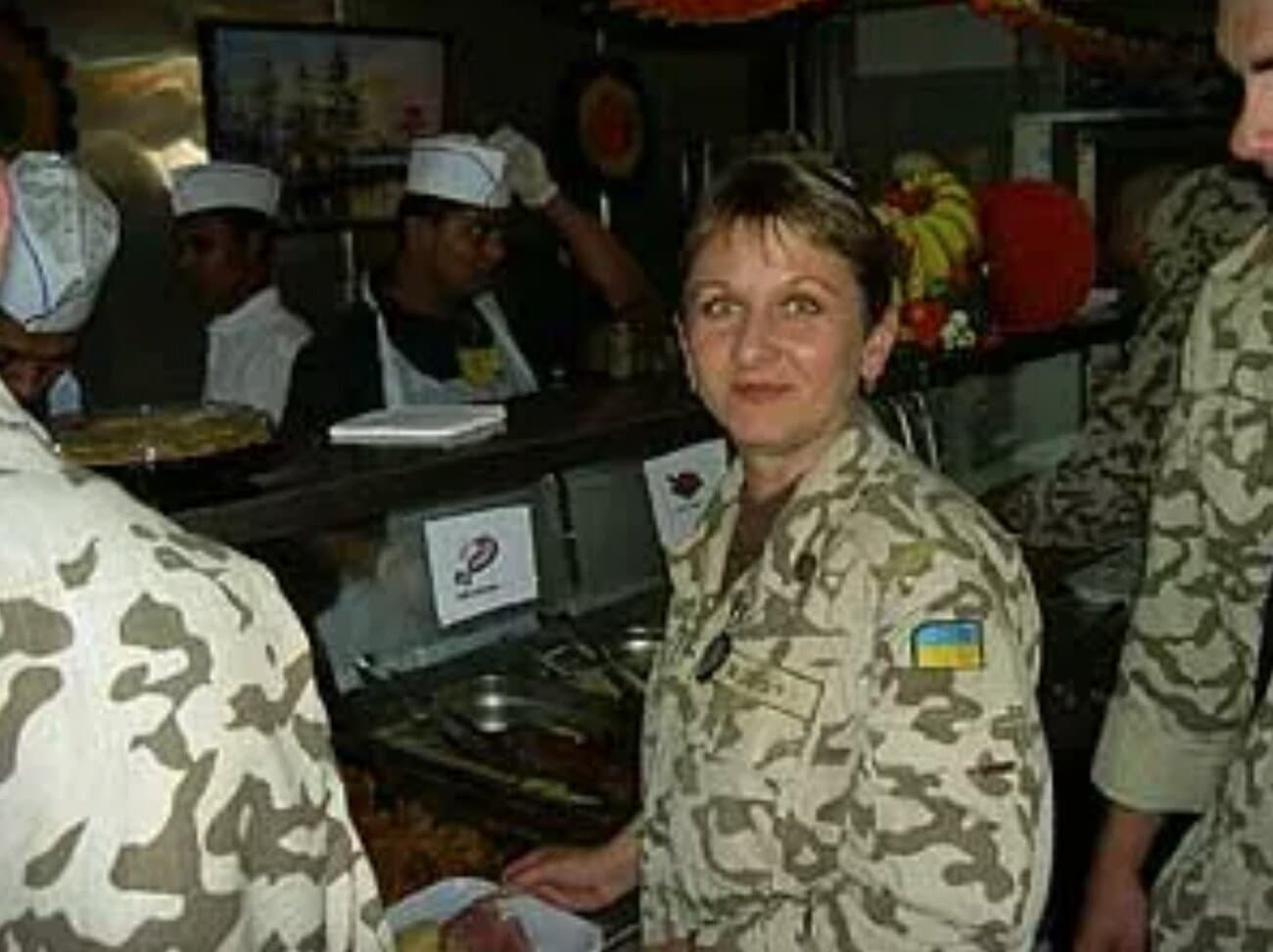
In 2004–2005, Nadiia Savchenko served with the Ukrainian contingent in Iraq.

She served six months as a rifleman in the 3rd Company of the 72nd Mechanized Battalion.

In her book Strong Name Nadiia, the chapter on Iraq describes in detail the circumstances of the tragedy that occurred on January 9.

Ukrainian peacekeeper Nadiia Savchenko in Iraq

On that day, Savchenko was at the base, heard the explosion, and later helped receive the wounded. According to her, she also saw part of the events on video recordings from the site of the tragedy, which were later confiscated.

Earlier that day, Ukrainian peacekeepers set out for the city of Es-Suweira on nine armored personnel carriers to go to the market.

“Around midday, the Kazakhs on a ‘Charlie’ vehicle had set up a large batch for munitions disposal and came to pick up what hadn’t yet exploded at our training range,” Savchenko recalls.

The Ukrainian peacekeepers also went to the munitions disposal site.

“Hearing there would be a ‘big fireworks show,’ they followed the Kazakhs on the Charlie vehicle. The battalion commander also joined them. As a result, everyone who shouldn’t have been there ended up at the site. When they arrived, they formed a column – the APCs weren’t even distributed to positions,” Savchenko remembers.

According to Nadiia, the Ukrainian peacekeepers did not follow safety measures and handled the munitions carelessly.

“They were walking around, posing, even kicking the bombs. We later saw all of this in the preserved video. But eventually, all the footage and disks were confiscated by the 8th department. The Kazakhs sat on the ground, asking everyone to stay away from the batch,” she recalls.

From the Ukrainian disposal range, two boxes were brought – one with grenades for under-barrel grenade launchers and another with RPG rounds that had previously detonated but had not exploded.

These boxes were placed next to a large pile of munitions set for disposal. The pile included shells, mines, various cartridges, and two U.S. training bombs.

“In one of the videos, you can clearly see the platoon sapper commander sliding the box of grenades and hitting it against the box with RPG rounds. The force of the detonation was enough to blow up the entire batch. The APCs that were standing there like a ‘wedding formation’ didn’t fly back to the base like tin cans only because the aerial bombs were training ones,” Savchenko recounts.

The wounded were transported back to the base in armored personnel carriers.

“I was going to lunch in the mess hall. I saw APCs arriving at the medical unit, unloading the wounded – dozens of people. The nurses were in panic – crying, screaming. The doctors were rushing around. They started bringing in the ‘two-hundreds’ [dead]. One nurse lost consciousness – her body was carried to another room. The Kazakhs were bandaging their own legs… They had been sitting on the ground, and the blast wave pinned them down; only their legs were shredded. One man was standing – he died,” Nadiia recalls.

Later, Savchenko continued to help the wounded and care for the deceased.

Remembering the fallen

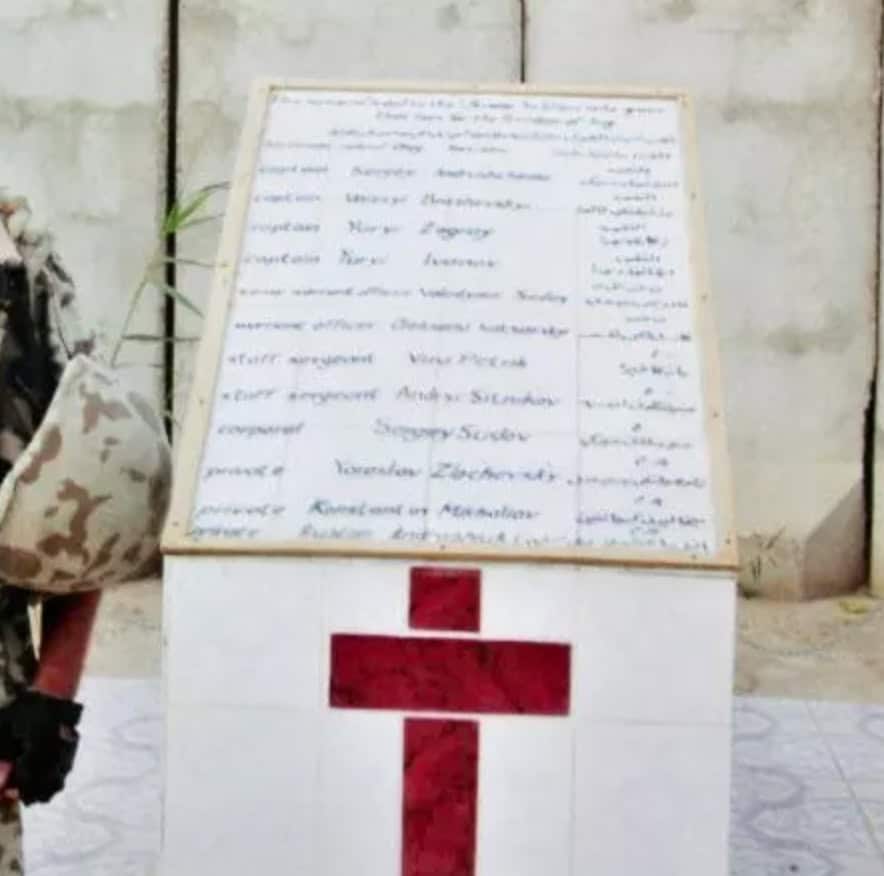
On February 25, 2005, at Camp “Zulu”, where the 72nd Mechanized Battalion is stationed, a monument was solemnly unveiled in honor of the Ukrainian servicemen who died while carrying out peacekeeping and stability missions in Iraq.

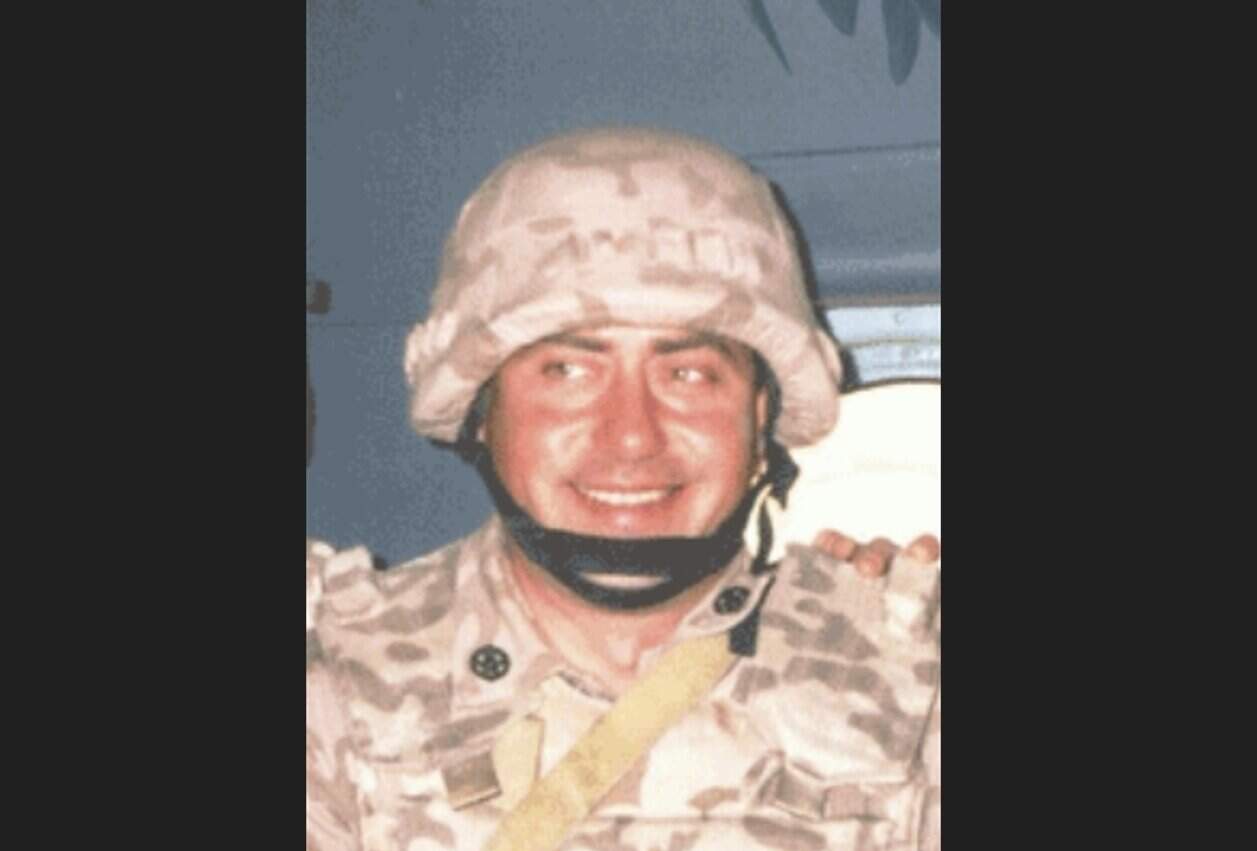
Among those who died in the January 9 explosion was Lieutenant Colonel Oleh Matizhev from Kovel. He had commanded the 72nd Mechanized Battalion deployed to Iraq.

Ukrainian peacekeeper Oleh Matizhev in Iraq

After graduating with honors from the Khmelnytskyi Higher Artillery Command School, the young officer was deployed to Afghanistan.

During the withdrawal of Soviet troops from the country, Captain Matizhev’s unit provided cover for the retreating forces.

Later, he served in Zhytomyr and Chernihiv. He subsequently graduated from the Academy of the General Staff of the Armed Forces of Ukraine and was appointed battalion commander two years later.

Monument to fallen Ukrainian internationalist soldiers in Bolhrad, Odesa region

In the Odesa region, in the city of Bolhrad, there is a monument to fallen internationalist soldiers, on which Matizhev’s name is commemorated.

In 2016, in Kovel, as part of decommunization efforts, Suvorov Street was renamed Oleh Matizhev Street.

Among the fallen was Captain Yurii Zahrai, commander of the engineering-sapper platoon from Bolhrad.

Captain Zahrai personally inspected the routes of vehicles carrying battalion personnel and humanitarian aid convoys for explosive devices.

On January 9, Zahrai was closest to the epicenter of the explosion.

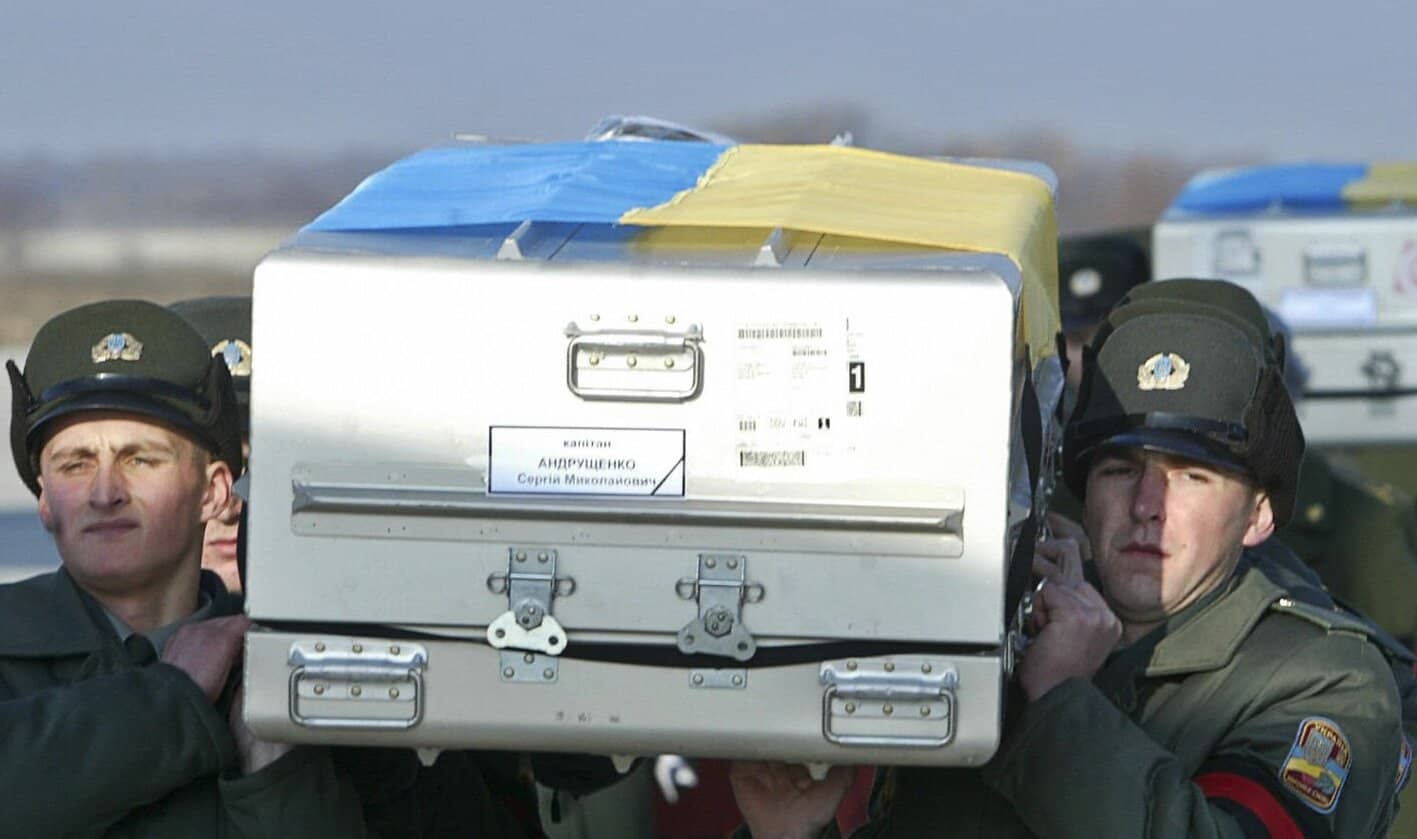
Also killed was Senior Liaison Officer Captain Serhii Andrushchenko, who lived in Zhytomyr and had joined the Armed Forces of Ukraine from the Security Service of Ukraine.

In Iraq, Serhiy worked on establishing contacts with local residents and law enforcement.

The body of Serhii Andrushchenko was returned to Ukraine, January 12, 2005. Photo credits: gettyimages.com

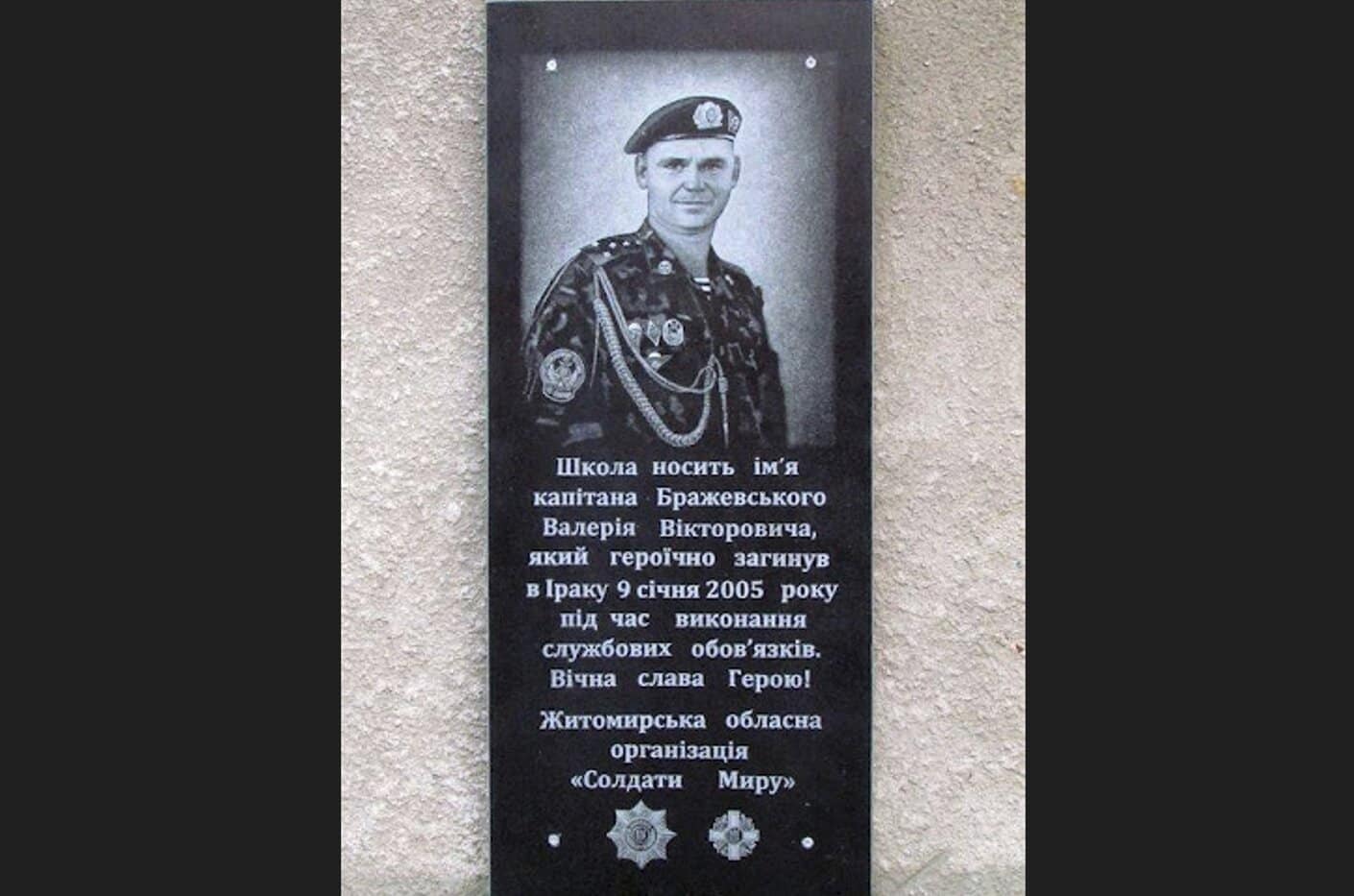
Also killed was Captain Valerii Brazhevskyi, commander of the 1st Mechanized Company of the 72nd Separate Mechanized Battalion.

In honor of the paratrooper officer, his hometown school, Secondary School No. 7 in Zhytomyr, was named after him. A memorial plaque was installed on the school building in his honor.

In 2011, this became the first instance of a Ukrainian combat officer’s name being given to a general secondary school since Ukraine gained independence.

Memorial plaque in honor of Valerii Brazhevskyi

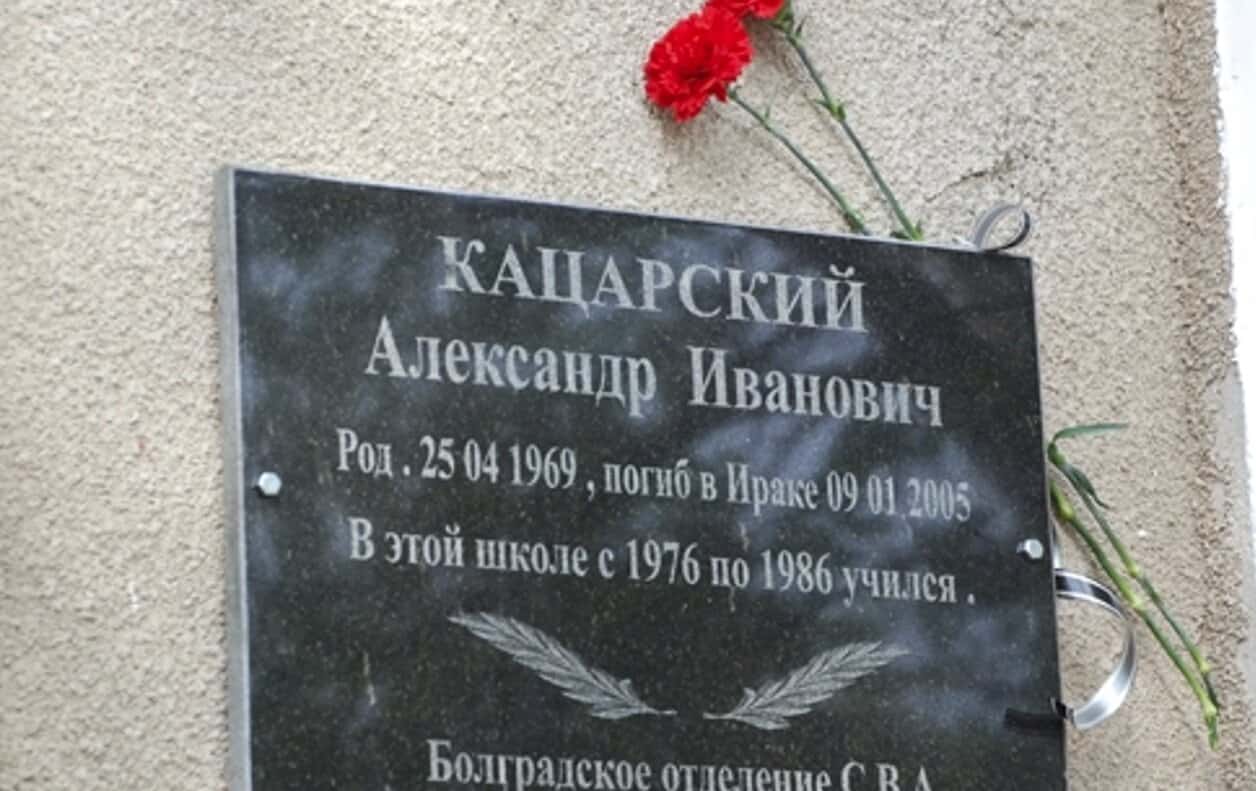
Also killed was Warrant Officer Oleksandr Katsarskyi, head of the electrotechnical section of the engineering-sapper platoon, from Bolhrad.

Before Iraq, Oleksandr had participated in peacekeeping missions in Lebanon and Yugoslavia.

In 2015, a memorial plaque honoring Oleksandr Katsarskyi was unveiled at School No. 2 in Bolhrad.

Memorial plaque in honor of Oleksandr Katsarskyi

Also killed was Senior Sergeant Andrii Sitnikov, commander of the engineering-sapper section of the engineering-sapper platoon, from the Kharkiv region.

In the Kharkiv region, in the town of Zlatopil, a memorial plaque dedicated to the peacekeeper has been installed at the intersection of V. Kondratiev Street and Marshal Grechka Street.

The bodies of nine peacekeepers (including a Kazakh peacekeeper) were returned to Ukraine on January 12, 2005. Photo credits: gettyimages.com

Among the fallen was Senior Sergeant Vira Petryk, the medical instructor of the 1st Mechanized Company.

In the Lviv region, Vira graduated from the Sambir Medical School with honors. Almost immediately afterward, she joined the Armed Forces of Ukraine as a medical worker. She served in an airborne brigade, completing several dozen parachute jumps.

Ukrainian peacekeeper Vira Petryk in Iraq

Shortly before the rotation of the Ukrainian peacekeeping contingent in Iraq from the 95th Airmobile Brigade, stationed in Zhytomyr, a competition was held for the best company commander. The condition was that the officer who won the contest would be sent to Iraq along with his subordinates. The winner was Captain Valeriy Brazhevskyi.

Along with him, Senior Sergeant Vira Petryk and Senior Warrant Officer Volodymyr Syvyi were deployed to Al-Kut.

Vira had two children and saw the deployment to Iraq as an opportunity to earn money for a home for her family.

Also killed was Senior Technician of the 1st Mechanized Company, Warrant Officer Volodymyr Sedoi.

The names of the eight Ukrainian peacekeepers killed on January 9, 2005, in Iraq are recorded in the Book of Remembrance at the Memorial Complex of the Ministry of Defense of Ukraine in Kyiv.

All of them were posthumously awarded the Order “For Courage.”

Non-combat losses

On July 2, 2004, the Ministry of Defense of Ukraine reported that Sergeant Roman Henzerkskyi, commander of the supply section of the 6th Mechanized Brigade, committed suicide.

The tragic incident occurred in Al-Kut around 7:00 a.m. Kyiv time while he was on duty.

Death resulted from a gunshot to the head from an AKS-74 rifle.

During his deployment in Iraq, he performed duties within the base camp, but was not involved in patrols or guarding key facilities.

Ukrainian peacekeeper Roman Henzerkskyi

It is known that Roman wanted to stay in Iraq for a second tour during the next rotation, as he reported in the relevant memorandum.

The parents and relatives of the deceased initially disagreed with the experts’ conclusions and insisted on conducting additional forensic examinations.

A few hours before his death, Roman called home, his mother recalled. The conversation was ordinary – he asked how things were at home, said he was fine, and promised to hand the phone to someone at home as soon as he returned from Iraq.

Roman’s contract was set to end on August 10. He spoke of a quick return and did not mention any memorandum regarding the extension of his service, his mother stated.

On September 29, 2004, 38-year-old Lieutenant Colonel Oleh Tykhonov died in a car accident. He had served in the peacekeeping contingent for only a week.

Ukrainian peacekeeper Oleh Tykhonov

Around 6:00 a.m. Kyiv time, during a planned inspection of checkpoints and observation posts along the road, a Chevrolet car carrying officers of the Ukrainian peacekeeping contingent overturned.

Oleg had gone to Iraq with his unit on September 21. While inspecting the posts with the previous battalion commander, Tykhonov was familiarizing himself with the situation during the first weeks of his service.

On February 3, 2005, Ukrainian peacekeeper Colonel Roman Serednytskyi died in Iraq of a heart attack.

Abrams fires at a hotel

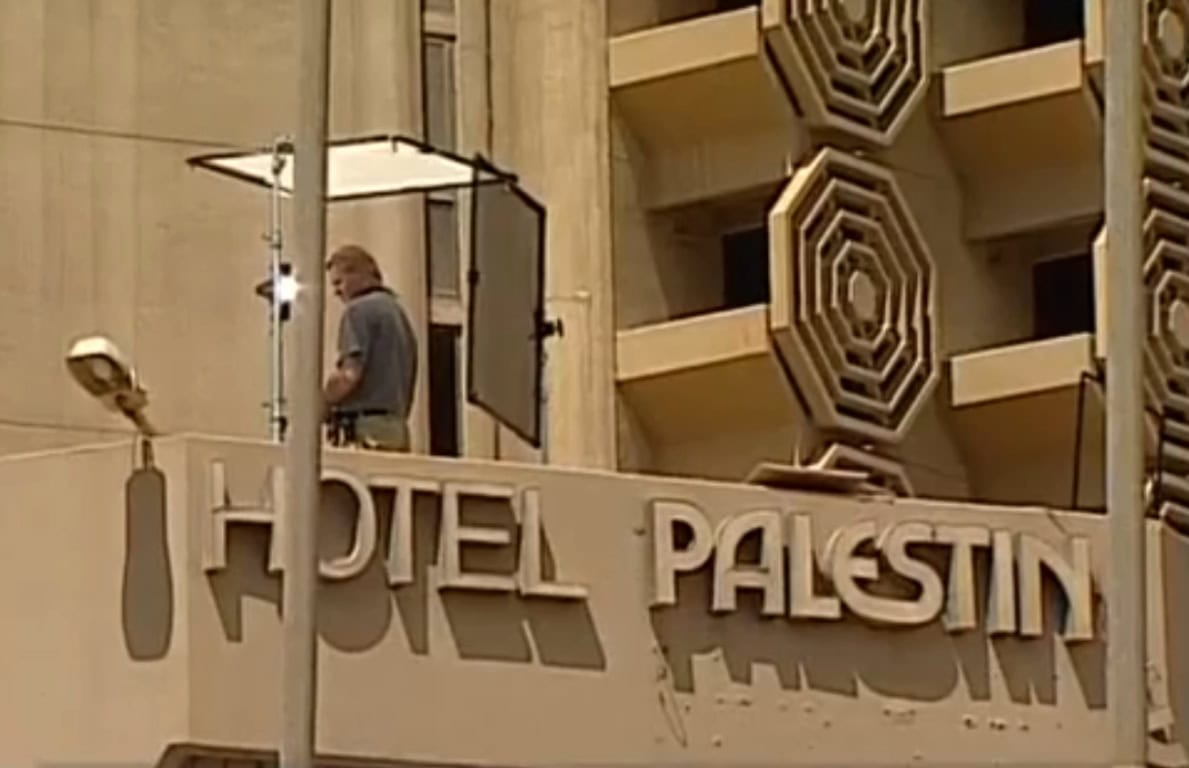
On April 8, 2003, in Baghdad, an American M1A1 Abrams tank fired at the Palestine Hotel, where journalists were staying.

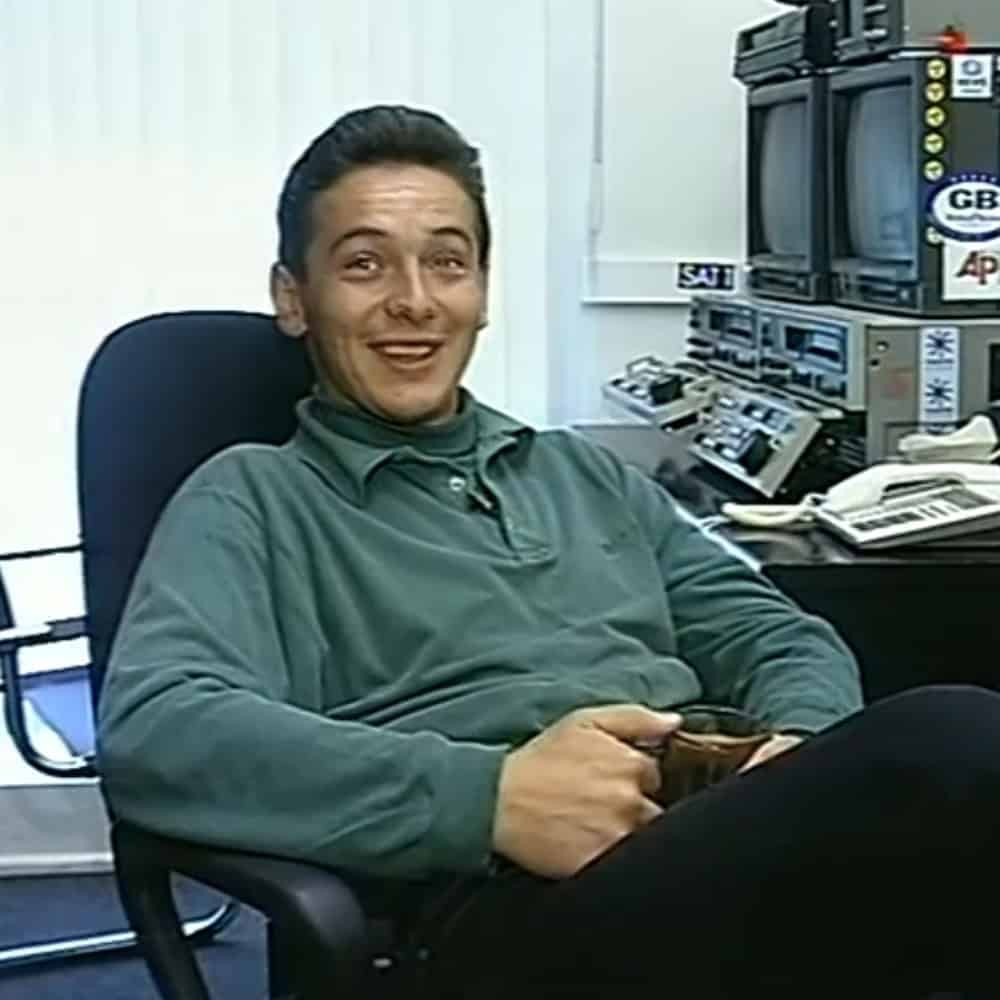
The shell hit a balcony on the 15th floor of the hotel, where Ukrainian journalist Taras Protsiuk was located.

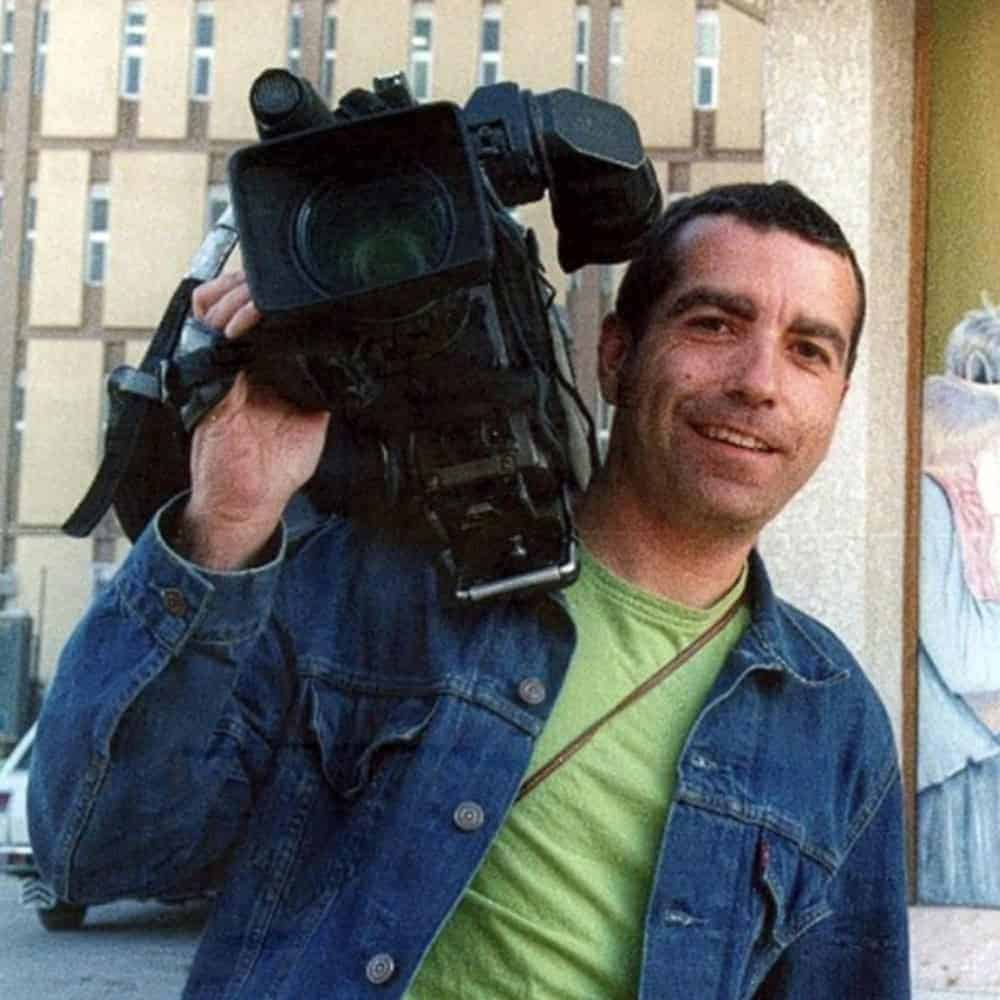
Shrapnel also struck Spanish cameraman José Couso on the 14th floor.

After the cumulative shell hit, they were still alive but later died in the hospital from their injuries.

At the time of the attack on the hotel, about 100 international journalists were covering the U.S. assault on the Iraqi capital.

On April 3, U.S. forces began the assault on Baghdad. The operation involved Abrams tanks from the 3rd Infantry Division and other units.

It is estimated that they faced around 36,000 soldiers of the Iraqi Republican Guard. On April 4, Iraqi forces attempted a counterattack but were defeated.

On April 7, fierce fighting took place in three locations, all along Highway 8, control of which allowed U.S. forces to advance deeper into the city.

On April 8, hundreds of Iraqis launched a fierce counterattack across the Al-Jumhuriya Bridge. On that day, U.S. forces encountered strong resistance from Iraqi forces but continued their advance and repelled the attacks.

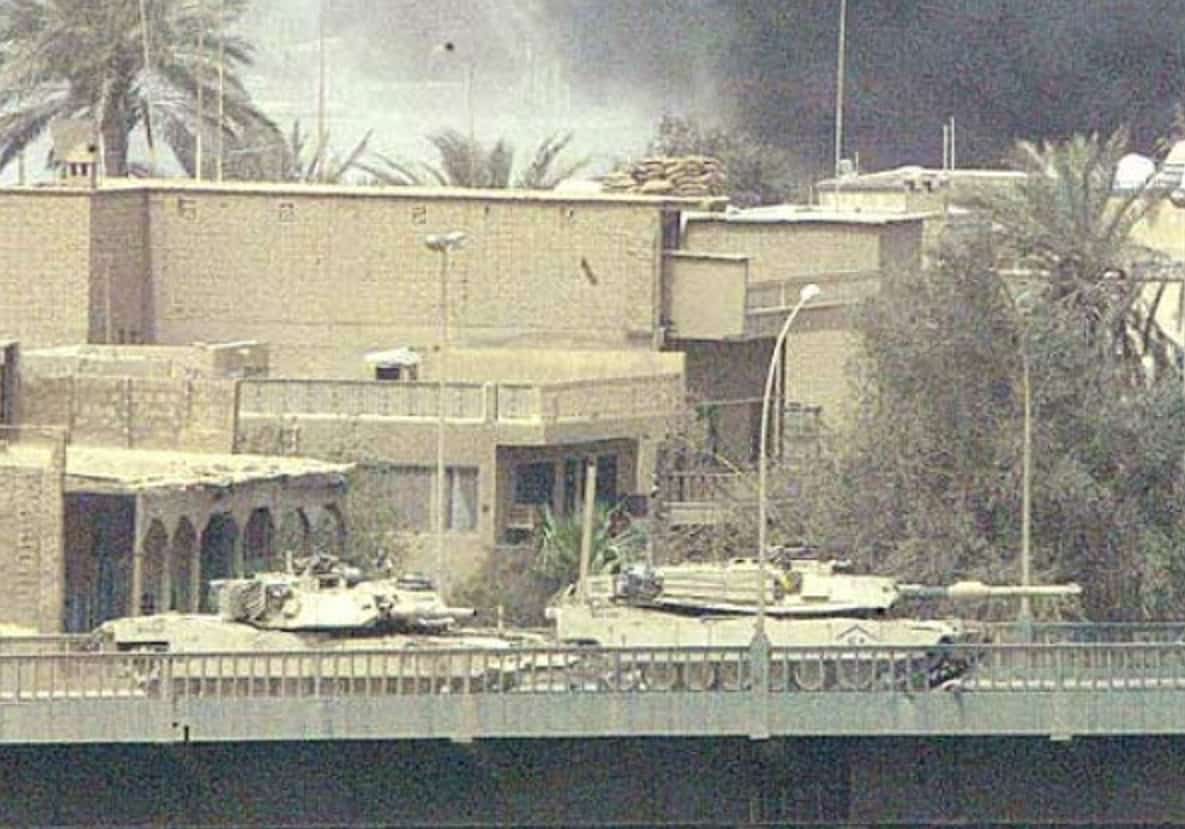
Two American Abrams tanks on the Al-Jumhuriya Bridge in Baghdad, April 8, 2003

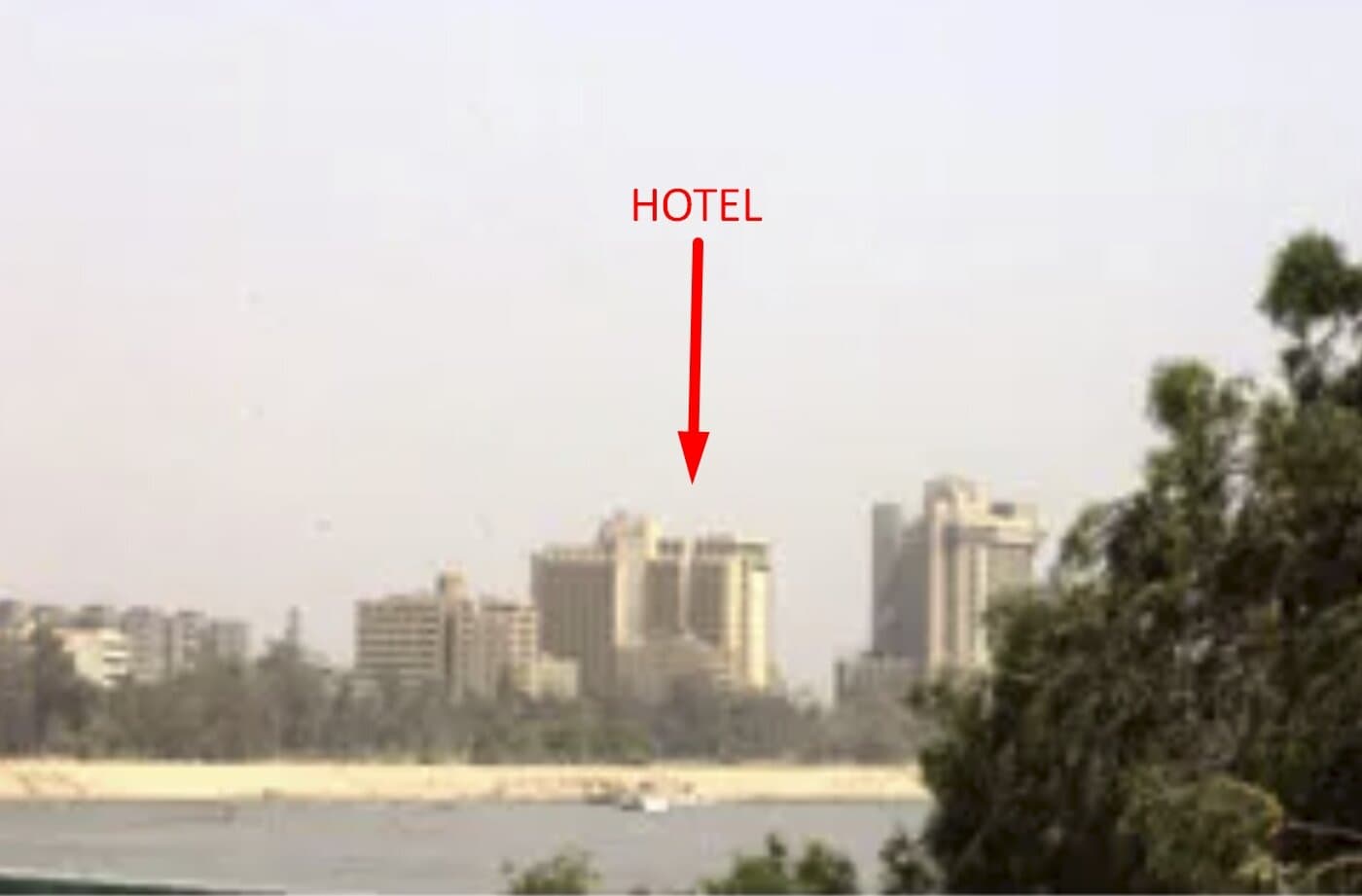
Reporters gathered on the balconies of the Palestine Hotel on the east bank of the river were observing the counterattack by Iraqi forces.

The actions of the Iraqi troops were being directed by spotters in high-rise buildings, while tanks were being targeted with RPGs, snipers, and mortars.

Around mid-morning, two M1A1 Abrams tanks from the Alpha unit moved onto the Al-Jumhuriya Bridge, which crosses the Tigris River.

“There was extreme concern, as everyone was trying to figure out where this spotter was,” a veteran of the Battle of Baghdad recounted.

Distance from Al-Jumhuriya Bridge to the Palestine Hotel

Late in the morning, one of the tank officers on the Al-Jumhuriya Bridge, who was searching for the spotter, reported over the radio that he had spotted a person with binoculars in a building on the east bank of the river.

Exactly how much time passed between the officer identifying the target and the tank firing is unknown.

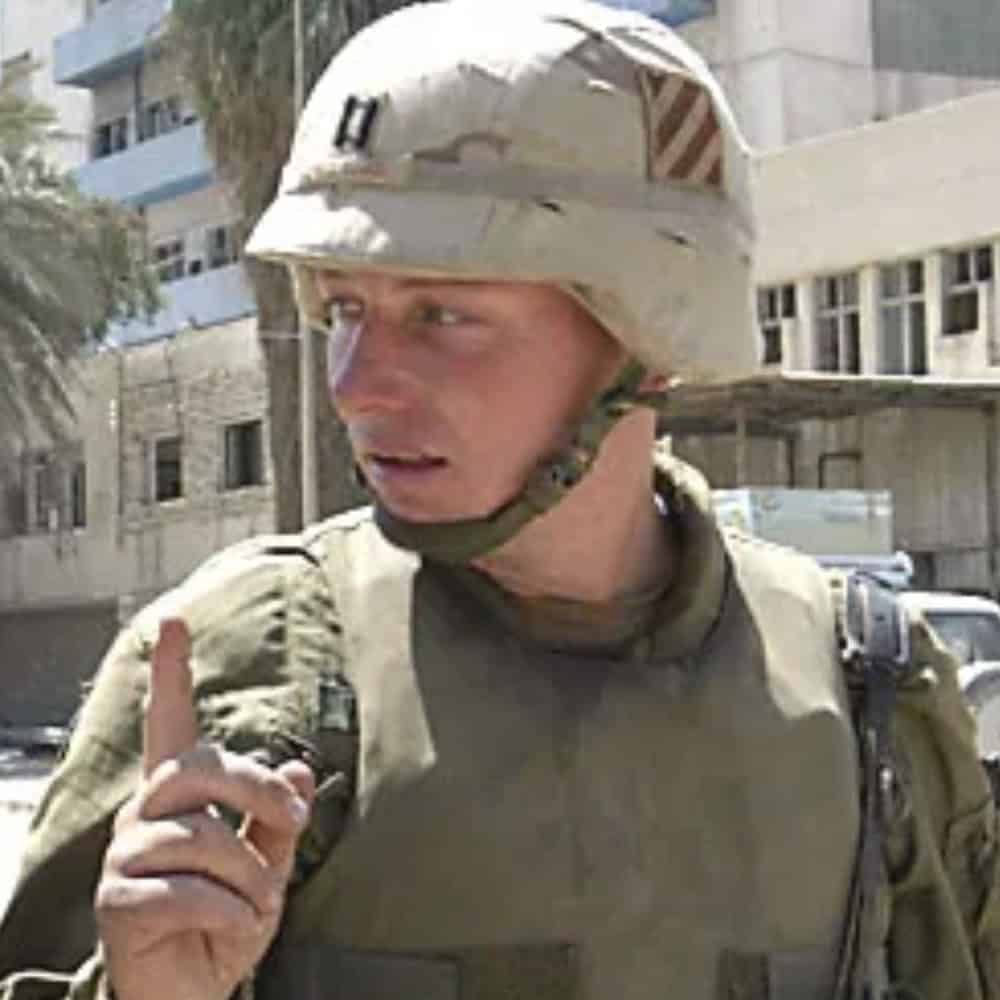
In an interview, Captain Philip Woolford, the commander of that tank company, stated that he gave the order to open fire immediately.

However, in another interview, tank sergeant Sean Gibson noted that after he noticed a person talking and gesturing with binoculars, he reported it to the commanders, but did not receive the order to fire for approximately 10 minutes.

View of the Palestine Hotel from the Al-Jumhuriya Bridge

The immediate reaction of the American commanders to the shelling of the Palestine Hotel was anger and confusion.

Lieutenant Colonel Philip DeCamp, Captain Woolford’s direct commander, began shouting over the radio:

“Who just fired on the Palestine Hotel?” DeCamp asked Woolford: “Did you, for God’s sake, just fire on the Palestine Hotel?” – demanding an explanation.

“[After a few minutes’ pause] Woolford said: ‘Yes, yes. There was a spotter there.’ And DeCamp replied: ‘You are not authorized to fire on the hotel.’ A brief discussion followed about what exactly he saw and why he opened fire.”

Journalists immediately went to Colonel Perkins, DeCamp’s commander.

“I just gave the order: under no circumstances is anyone allowed to fire on the Palestine Hotel, even if it is being fired upon, even if there is an artillery piece on the roof. No one is allowed to fire on the Palestine Hotel anymore,” Perkins told the journalists.

The journalists could not understand how an American tank could have fired on the hotel, whose location was well known to the senior officers.

“Taras was lying on the floor, unconscious. His jaws were clenched. We forced them open to give him air, and he started breathing again,” witnesses recounted.

The balcony of the Palestine Hotel, April 8, 2003

Protsiuk was taken to a hospital in Baghdad, where he died immediately upon arrival.

Shrapnel hit the floor below, where Spanish cameraman José Couso was filming. Like Protsiuk, Couso was taken to a Baghdad hospital with injuries to his leg and jaw. He died after surgery.

Major General Buford Blount, commander of the 3rd Division, stated that the tank that opened fire “was being fired upon with small arms and RPGs from the hotel and responded with a single tank shot.”

Colonel David Perkins, the brigade commander who spoke with journalists after the strike, also said that his unit had come under RPG fire from the area directly in front of the hotel.

Lieutenant Colonel Philip DeCamp, commander of the 4th Battalion, 64th Armored Regiment, apologized for the incident and called himself “the man who killed journalists.”

At the same time, he claimed that Iraqi fighters in bunkers at the base of the hotel fired AK-47s and RPGs at his tank unit.

Many journalists who witnessed the incident or were in the hotel at the time categorically dispute the Pentagon’s and some Baghdad commanders’ claims that the tank was returning fire from the Palestine Hotel.

Those observing the events from their balconies with a full view of the surrounding area stated that there was no shooting or RPG fire from the hotel or its immediate vicinity.

“I open fire in response. Without hesitation – that’s the rule. Twenty minutes later, I learned that we had hit a hotel full of journalists,” Wulford said.

Wulford claimed he had no information from command that journalists were inside the building.

Tank officer Sergeant Sean Gibson later also stated that he did not know the building was filled with journalists.

Reflections from journalists’ equipment in the Palestine Hotel

Wulford’s statements and those of other officers contradicted each other. In press interviews, Wulford said he opened fire immediately, while a tank officer noted that about 10 minutes passed between reporting the spotter and receiving the order to fire. The explanations also appeared inconsistent: on one hand, they claimed the tank was “returning fire,” while on the other, they said it fired at a person with binoculars.

Despite the incident, combat operations continued, and on April 12, 2003, Baghdad was officially occupied by Coalition forces.

Taras Protsyuk was buried on April 14, 2003, in Kyiv at the Baikove Cemetery. He was posthumously awarded the Order “For Courage” III degree.

Grave of Ukrainian journalist Taras Protsyuk in Kyiv at Baikove Cemetery

In 2015, a street in his hometown of Ivano-Frankivsk was named after Taras Protsyuk.

Withdrawal from Iraq

Surveys showed that some Ukrainians were insufficiently informed about the nature of the mission Ukraine was carrying out in Iraq, and many did not distinguish between participation in peacekeeping operations and direct involvement in a war.

This was exploited by various opposition political forces, who criticized the peacekeeping mission in Iraq and demanded the withdrawal of Ukrainians, despite the fact that all of them had voluntarily agreed to participate, and the army gained invaluable experience.

Protest in Ukraine against the war in Iraq

Already during the presidency of Viktor Yushchenko, in March 2005, the phased withdrawal of the Ukrainian contingent began.

The first group of nearly 140 personnel, who had served in the mechanized company of the 72nd Battalion near the city of Es-Suweira, arrived in Mykolaiv on two flights of an Il-76 military transport aircraft. Combat equipment was sent by sea through Kuwait.

During the summer and fall of 2005, about 800 Ukrainian soldiers remained in Iraq’s Wasit province, within the area of responsibility of the Ukrainian contingent of the multinational “Center-South” division.

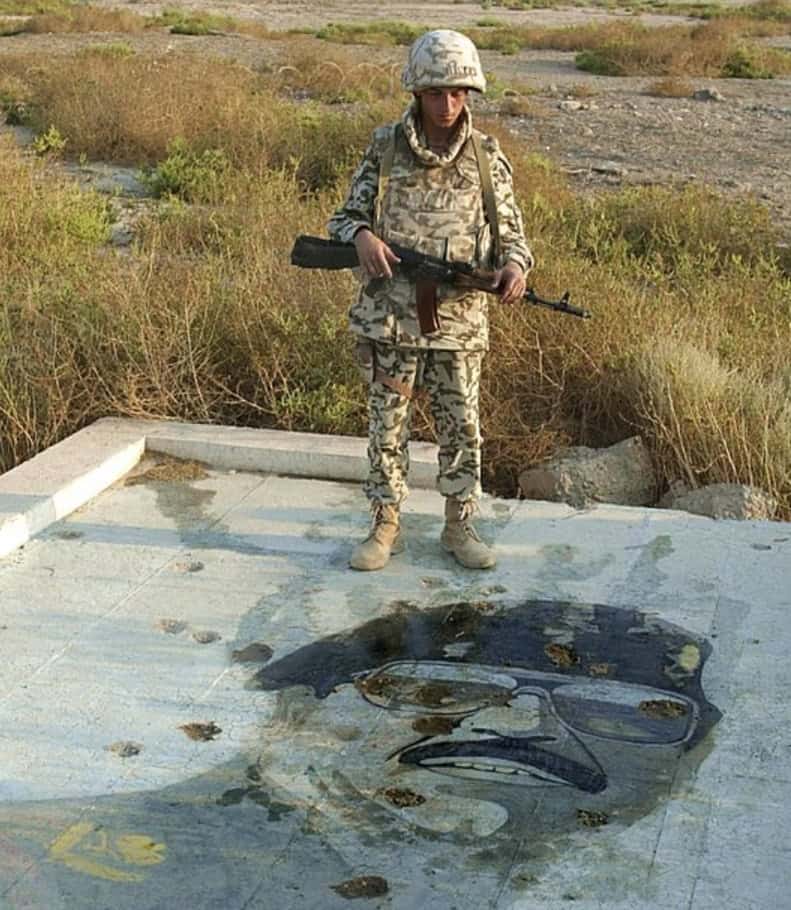
A Ukrainian peacekeeper stands near a toppled portrait of Saddam Hussein

On December 9, 2008, the Ukrainian army held a ceremony marking the completion of its mission at Camp Echo in central Iraq.

Anticipating the withdrawal of Ukrainian troops, the United States offered Ukraine the opportunity to maintain a presence in Iraq in other forms – Ukrainian soldiers could continue serving in Iraq as military advisors and observers, which was implemented in 2006.

By 2008, Ukraine had 10 Armed Forces personnel serving with the NATO Training Mission in Iraq.

On December 9, 2008, the Ukrainian army held a ceremony marking the completion of its mission in Iraq.

In total, 18 soldiers and officers of the Ukrainian contingent were killed during the Iraq campaign, and over 40 were wounded.

“For the benefit of Iraq and thanks to Ukraine’s efforts, you helped ensure a higher quality of life for the people of Iraq. Ukrainian troops made a contribution that allowed all coalition partners to succeed here, and it was not in vain. Here, 18 precious Ukrainian soldiers lost their lives,” said Major General Michael Ferriter, Deputy Commander of Operations of the Multinational Corps in Iraq, in 2008.

In 2009, the Iraqi Ministry of Defense ordered 420 BTR-4 armored personnel carriers from Ukraine. The United States financed the contract as part of its foreign military assistance program.

SUPPORT MILITARNYI

PrivatBank ( Bank card )
5169 3351 0164 7408
Bank Account in UAH (IBAN)
UA043052990000026007015028783
ETH
0x6db6D0E7acCa3a5b5b09c461Ae480DF9A928d0a2
BTC
bc1qv58uev602j2twgxdtyv4z0mvly44ezq788kwsd
USDT
TMKUjnNbCN4Bv6Vvtyh7e3mnyz5QB9nu6V
Popular
Button Text