
Maginot or Mannerheim? The Baltic defense line analysis

Maginot or Mannerheim? The Baltic defense line analysis

Lukas Šimonis

Lukas Šimonis

March 19, 2026
13:49
Будівництво Балтійської оборонної лінії на території Естонії

Maginot or Mannerheim? The Baltic defense line analysis

Lukas Šimonis

Lukas Šimonis

March 19, 2026
13:49
Будівництво Балтійської оборонної лінії на території Естонії

After the First World War, the European powers, realizing how precarious peace is, and considering lessons learned from the brutal trench warfare of the Western Front, have begun building defensive lines or other fortifications to protect themselves, such as the German Siegfried line. One of those was the French Maginot (named after the French Minister of War André Maginot) line. While it’s true effectiveness is up to debate for military historians, its name has undoubtedly become an idiom, meaning a flawed or illusory defense, something that gives a false sense of security. Exact opposite were the defensive fortifications build to protect Finland from Soviet invasion, what became known as the Mannerheim line (named after Finnish Army’s then commander-in-chief Field Marshal Baron Carl Gustaf Emil Mannerheim). During the Winter war, while unfinished and far from perfect, the Mannerheim line became one of the decisive factors in stopping the Red Army’s invasion. In the 21st century, learning lessons from the bloody positional warfare in the Ukrainian east, and threatened by a very real possibility of a Russian invasion, the Baltic states are looking to build a defensive line of their own. A project simply known as the Baltic defense line. In this article, I will analyze its doctrine, strengths and weaknesses, and possible risks.

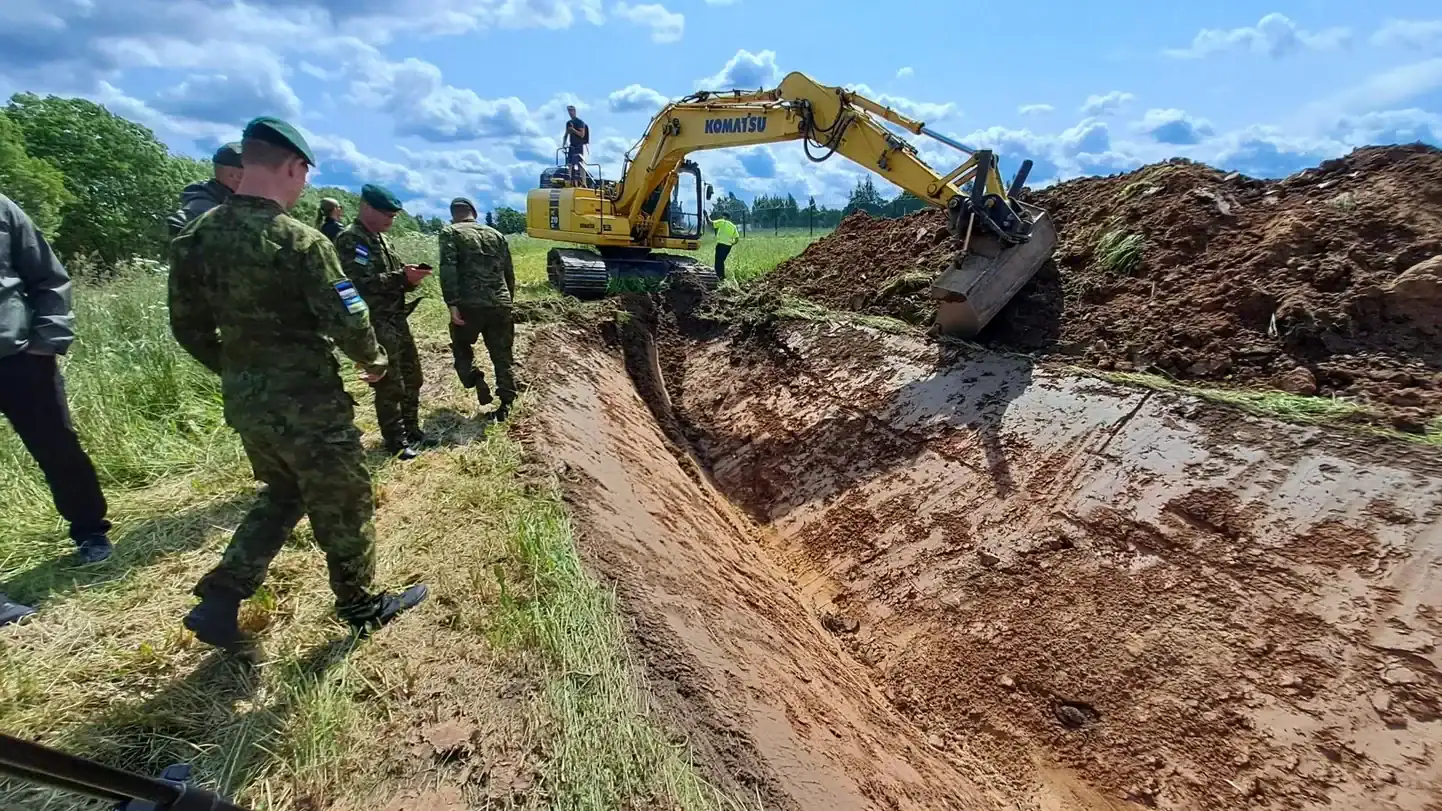
As previously mentioned, driven by the need to protect themselves from the potential Russian invasion, and witnessing the effectiveness of Ukrainian defenses, the Baltic states are planning defenses of their own. By early 2024, the ministers of defense of the three Baltic states have released a joint statement, agreeing on building joint defense line along respective borders with Russia and Belarus. According to the agreement, Lithuania, Latvia and Estonia will build defensive fortifications alongside borders with Russia and Belarus, procure anti-tank obstacles, mines and other equipment. The construction of the defensive line is planned to be finished by late 2027, although Lithuanian government have disclosed that it will invest over 600 million euros in a course of a decade in total. Thus, it is most likely that by 2027, only the basic defenses will be built, with the line getting upgraded over time.

It should cover more than 700 kilometers in total, and consist of different layers of defense. For example, Lithuanian part of the line will consist of three different defensive “echelons”, each made up of different types of fortifications. The first echelon will be comprised of anti-tank ditches, dragons’ teeth, fortified hardpoints and firing positions, as well as possible minefields. The second and third consists of areas with fortified firing positions, bridges ready to be blown up, road obstacles, and ditches. Estonia and Latvia plan similar defenses, except with bunkers in mind. Overall, while the Baltic nations have agreed on building joint defenses, there is no unified strategy, with each country building what they see fit.

As mentioned before, while lessons from Ukraine were important, it was not the only reason why the Baltic states are planning on fortifying the border. One of the greatest difficulties when it comes to defending the Baltics is its terrain. It lacks natural defenses, such as mountains or large rivers. While lakes or forests might slow down the invader, flat terrain allows rapid mechanized maneuvers, and is notoriously difficult to defend, especially against a numerically superior force. Given relative proximity of the capital cities to the border, it creates a dangerous precedent, where invading forces can quickly overwhelm defenders and besiege capitals, cutting them off from the rest of the country, before NATO reinforcements can arrive. Thus, such danger necessitates a barrier, tripwire, something that could slow down enemy’s advance until a better defense can be organized. All three nations understand, that in an event of a full-scale invasion, they would have to make do on their own for at least a week or two, before NATO allies from neighboring countries (like Poland) can arrive. Therefore, the Baltic defense line becomes a crucial part of the defense and deterrence strategy.

While the Maginot line was a mass of concrete bunkers, obstacles and firing positions, thought to be impervious to frontal attacks and meant to keep the Germans away from the French soil, the Baltic defense line is built with a different kind of warfare in mind. As previously mentioned, that due to Russian numerical superiority it is impossible to completely stop them at the border, the Lithuania, Latvia and Estonia instead aim to slow the invading forces by driving them into predesignated killing zones made up of anti-tank ditches, fortified firing positions, obstacles such as Czech hedgehogs and minefields. Presumably, as the invading force moves through, it will face increasingly bigger obstacles, such as destroyed bridges or blocked roads, while simultaneously taking high casualties. Consequently, at the same time, the rest of military forces are mobilizing to defend Vilnius or Tallinn, while political processes are in motion to activate the NATO article 5. With a strategy like that, the Baltic defense line works as an early alarm system preventing a surprise attack or quick enemy movement. Bogging the enemy forces down instead of trying to stop them at the very border also allows to see the direction of attack and plan accordingly, avoiding Polish mistake during early stages of WW2. Polish military command tried to stop the Wehrmacht right at the border, overextending their forces and being unable to see what direction the German attack is taking. With that being said, such strategy (and the whole defense line) comes with several advantages, yet carries certain risks.

While Russian army has suffered a massive loss of its armor fleet in Ukraine and in its current state largely oriented in positional warfare, it is likely to make an attempt to rebuild its mechanized forces. While such an attempt is most likely won’t be successful, because Russian military has largely depleted its Soviet era stockpiles and currently possesses no industrial power to rebuilt it, even partially rebuilt mechanized forces poses a massive threat to smaller Baltic militaries. As previously mentioned, flat, open terrains allow quick maneuvers for tanks and other fighting vehicles, while defenders have limited cover and concealment. And this is where “counter mobility” comes into play. The term “counter mobility” usually dominates discourse surrounding the Baltic defense line, whenever military representatives and government officials emphasize on how to stop Russian invasion. Lithuania, Latvia and Estonia agreed to create “counter mobility parks”. Essentially, it’s storage areas near the border with Russia and Belarus, where anti-tank and anti-infantry obstacles such as dragons’ teeth, Czech hedgehogs, concertina wires are kept. Using these tools, as well as mines, it is possible to create kill zones where enemy armored vehicles and infantry will be “herded” into and effectively destroyed. Mines, while cheap, were extremely effective in stopping mechanized forces in Ukraine, and with Russian forces lacking demining equipment it can become a major obstacle for the invading force. Recognizing this, Lithuania plans to spend more than 800 million euros procuring anti-tank and anti-personell mines. Thus, with properly set up defenses, the enemy’s numerical advantage can be nullified or at least degraded, while inherent difficulty of defending Baltic terrain can be reduced.

The counter mobility parks also bring another key advantage. Unlike static defense, that can be identified, avoided or destroyed during pre-designated strikes in the early hours of invasion, mobile, easily set up defenses are much more difficult to identify, eliminate or avoid entirely. Using advanced NATO ISR (intelligence, surveillance, reconnaissance) capabilities, early warning radars and sensors, the defenders can quickly move anti-tank and anti-infantry obstacles to necessary locations and effectively block invading enemy or force them into predesignated kill zones. Dispersed counter mobility parks also mean that the enemy force can’t easily destroy or damage it all in a single attack, increasing chances of defender’s survival. In today’s battlefield, were loitering munitions and FPV (first person view) drones dominate, dispersion tactics are of utmost importance, as anything concentrated in a single location (manpower, vehicles, logistics) tend to be hit first. Thus, scattering these parks all over the border means easy access to defensive equipment at the time of need, and higher chance of survival.

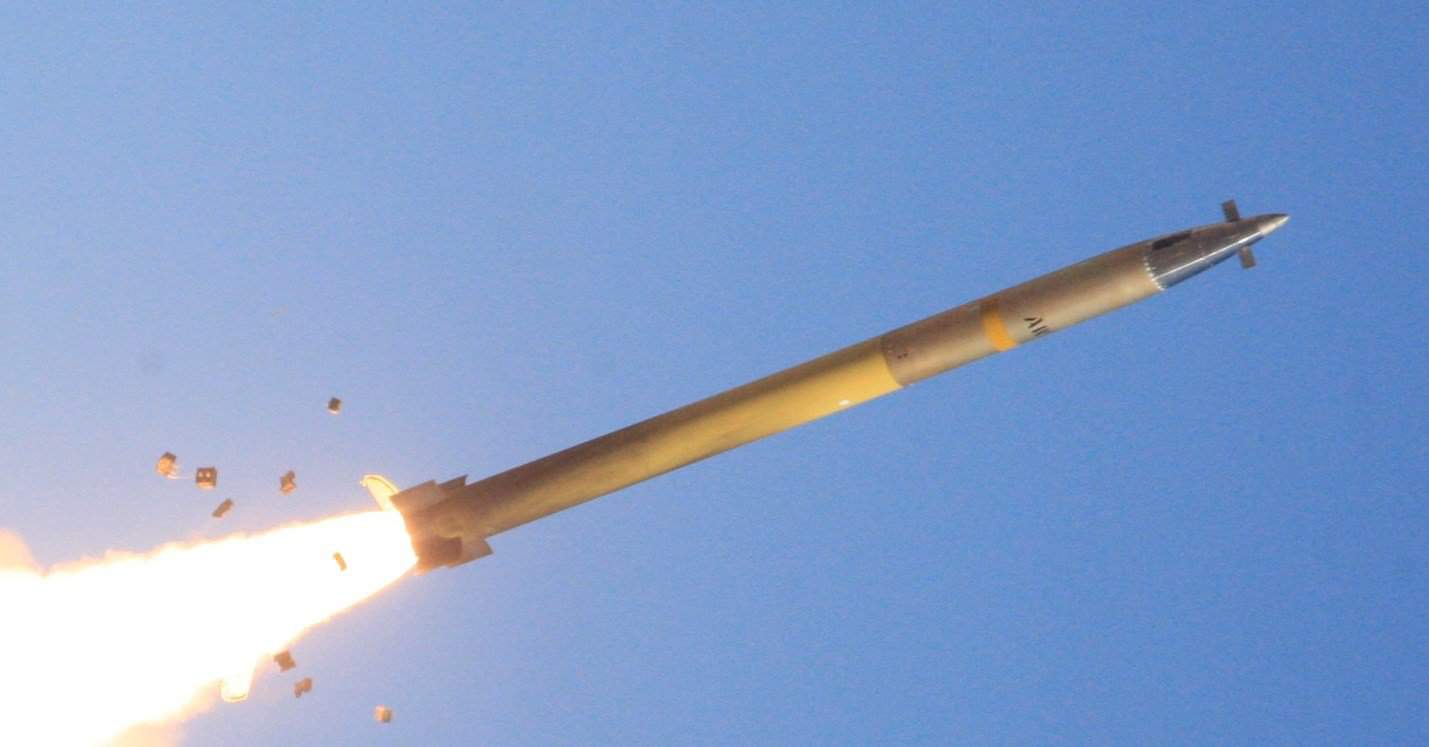
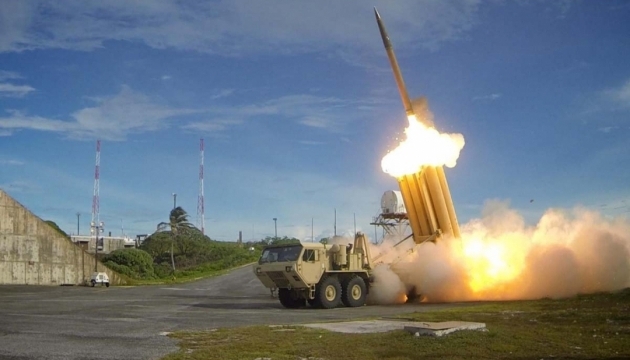
Dispersion tactics bring another advantage of the Baltic defense line. Traditionally, in the case of Maginot or Mannerheim lines, artillery played a crucial role in defense. However, as mentioned before, fixed artillery locations attract enemy strikes. Recognizing this weakness, the Baltic states have agreed to procure and use the highly mobile American made M142 HIMARS rocket artillery systems. Extremely effective in stopping Russian armor and infantry in Ukraine, these artillery systems bring several benefits to defending forces. One, it forces attackers to disperse for risk of attracting HIMARS strike, which degrades operational capability and makes any kind of larger maneuver risky. As previously said, this massively benefits Baltic forces, which can’t field large armies and mechanized forces like Russia, making it easier to destroy. Second, with HIMARS systems being highly mobile (unlike fixed or towed guns) it becomes much harder to find and destroy, as defenders can employ Ukrainian style shoot-and-scoot tactics, and can be quickly deployed to any frontline location. Not to mention that due to the small size of the Baltic nations, and the large range of HIMARS missiles (ATACMS having operational distance of 300 km) it can quickly cover the border and be out of the enemy’s range at the same time. Used properly, HIMARS rocket artillery systems can be extremely effective in stopping enemy forces near the defensive line.

The Baltic defense line will be integrated into other NATO defense projects, such as Poland’s east shield program and Finland’s defenses. That means, that theoretically, fortifications will stretch Northen Finland to Southern Poland, covering entire NATO eastern flank. Theoretically, this would be a key advantage over Maginot line, which, while difficult to attack head on, could be easily bypassed through Belgium (Manstein plan). Invading Russian or Belarusian forces could not easily bypass the Baltic defense line, Poland’s Eastern shield of Finnish border, and would be forced to commit a costly, full-frontal assault.

Finally, Russian own tactics might be a hindrance. While it is generally unwise to judge about a possible future conflict based on the current one (war in Ukraine), there are still arguments to be made. Writing for the Institute for the study of war (ISW), Director for the Defense of Europe Project Mason Clark argues that Russian military has developed a slow, costly, albeit effective way of fighting positional warfare. Essentially, using small unit tactics, poorly trained infantry, Russians probe Ukrainian defenses in search of weak spots, exploit gaps in defenses, then use FPV drones, artillery and glide bombs to destroy and wear down defenders, cut off logistical routes, slowly taking ground and fortifying themselves in it. Finally, utilizing specialized, highly trained assault groups (often made up by “elite” units, like paratroopers), Russians clear out weakened positions and take it as their own. While such tactics are somewhat effective fighting in Ukraine, it causes massive casualties, and more importantly, is extremely slow. Per ISW, while Russia will attempt to at least somewhat rebuild their mechanized forces, at its core, Russian military has completely adapted to positional warfare, and getting back to maneuver warfare will be difficult. This, however, would make storming the Baltic line complicated. While Russia found it’s pace in Ukraine acceptable in what they view as a war of attrition, this might not work in the Baltics. The whole point of the Baltic defense line is to slow the enemy down until reinforcements from the rest of the NATO can arrive, and military reservists mobilized. While it is difficult to say how political process would go, the NATO Allied Reaction Force theoretically should mobilize one hundred thousand troops withing ten days, and two hundred thousand within 30 days. This means, that the tactics used in Ukraine, that rely on a slow progress would not work, as every passing day means more NATO troops arriving, and any kind of further operations complicated. Now, while Russia will at least try on changing their tactics to involve quick mechanized breakthroughs, a complete change is unlikely, as the core of Russian senior and junior officers and enlisted have become used to slow, high attrition positional warfare.

While afore mentioned advantages and tactics separate the Baltic defense line from the bulky, static Maginot line, there are still several risks and disadvantages involved that can be exploited by the enemy.

Firstly, while all three Baltic states agreed to jointly build defenses focused on counter mobility, there is no unified plan on how to do it. For example, while Latvia and Estonia are building bunkers, Lithuania is planning on building far less. While Estonia and Latvia are planning on building most of their defenses right at the border, Lithuania will build layered defenses away from it. While some differences are expected and acceptable, without a well-coordinated effort and planning, it can lead to sections of the line being weaker, what enemy can easily exploit. This is also important in the building process. If one country lags behind, it can endanger the whole project. While currently the defensive line is in it’s early stages, it is difficult to say whether such problem will arise, seeming Estonia leads the way in building process, although it is unfair to compare, because Lithuanian part will be the largest, and most likely will take more time to build. Nevertheless, the Baltic states should put cooperation and joint planning as a highest priority or otherwise suffer from inconsistent defenses.

Besides Maginot or Mannerheim, the Baltic states should pay attention to ill-fated Israeli Bar Lev line. In the late 60s, to protect itself from Egypt, Israel built a series of fortifications at the border with Egypt. The Israel defense force had a similar mindset. Hold off the invading enemy, while divisions in the rear will mobilize and move to defeat the Egyptian forces. Unfortunately for the Israelis, Egypt, through stealth and combined arms tactics have managed to breach the line in mere hours. The Israelis were too few to put up a serious defense, and too many to be a “cheap” tripwire. Even more, the fortifications hindered actions of the IDF (Israel defense forces), which were used to highly mobile mechanized maneuvers involving tanks. Few lessons can be learn from the failure of the Bar Lev line. Firstly, the defending side must perfectly calculate the number of troops and equipment necessary for the task. If the line is manned too lightly, troops spread too thin, it will not stop the invading forces, and millions of dollars’ worth of investments will go to waste. Yet if the line is manned too heavily, lots of soldiers committed to it, then the “tripwire” only meant to slow the enemy down and act as alarm will cost too much, result in heavy casualties, which is extremely important for militaries that cannot muster massive manpower. Secondly, like Israel and other NATO countries, Lithuanian military doctrine relies heavily on maneuver warfare and high mobility. Minefields, dragons’ teeth and other anti-tank obstacles can slow the invader down, yet at the same time might possibly act as a double-edged sword, effectively limiting maneuverability for NATO forces. All kinds of counter attacks would have to be planned out (and limited) by defenses Baltic’s built. A minefield would have to be either demined or avoided altogether; a bridge destroyed while retreating would force to take different routes or bring correct equipment (like bridge layers), while anti-tank obstacles would take time to be removed. Not to mention, if somehow the defenders were forced out of their trenches before reinforcements could arrive, the invaders would easily use it for their own purposes. Knowing how historically effective Russian forces were in building fortified positions, it would make any kind of NATO counterattack difficult, and most likely costly. Thus, defensive fortifications carry certain risks for the defenders and require extremely effective planning and doctrinal changes.

As previously mentioned, the doctrine of Baltic militaries (as well as the rest of NATO) emphasizes on rapid mechanized maneuver warfare, not a slow positional war of attrition currently seen in Ukraine. While the Baltic nations, learning from Ukraine has started to train on how to fight in trenches (like recent international exercises Hedgehog 2025 or Baltic Viking 2025), NATO forces still lag behind Ukraine in terms of experience in positional warfare. Looking at how slowly Russians advance in Ukraine (and how effective, especially with limited resources, Ukrainian defenses are) can give a fall sense of security. As mentioned by Mason Clark, Ukrainians have spent roughly 4 years fighting this kind of war and raised an entire generation of officers and soldiers trained for it. In other words, Ukrainians are used to positional warfare, while Baltic forces are not. It should not be expected that NATO forces would be as effective in pure positional warfare as Ukraine, as their doctrine and experience is on a different level. Unfortunately, it is likely the same comparing NATO training to Russia. While individual training of NATO troops is superior to most what Russia has to offer, as mentioned previously in this article, Russia has largely built its current doctrine on positional warfare, and developed troop training and tactics based on it. Thus, while planning defense, Baltic militaries should take in mind that their troops, largely trained in maneuver warfare, will not be as effective in positional warfare.

The M142 HIMARS rocket artillery system is an integral part of the defense line. While the system is undoubtedly effective, it carries risks and limitations on its own. Ukrainians primarily use it to destroy enemy equipment, logistics hubs and headquarters, often behind the enemy lines.  Yet at the same time, US has repeatedly forbidden any strikes deep in Russian territory, fearing “escalation”. While recently US has allowed to use ATACMS missiles to strike Russian territory, such permissions were not always stable, and US reserves a right to forbid such usage again. To defend the Baltic line, Baltic militaries will have to strike priority targets inside Russian and Belarusian territory, and US can put a ban on it, like they did in Ukraine, allowing only defensive strikes inside Baltic countries. Looking at the current political climate and the standing of US Government (particularly President Donald J. Trump), such risk is very much possible and should be avoided or at least taken into consideration.

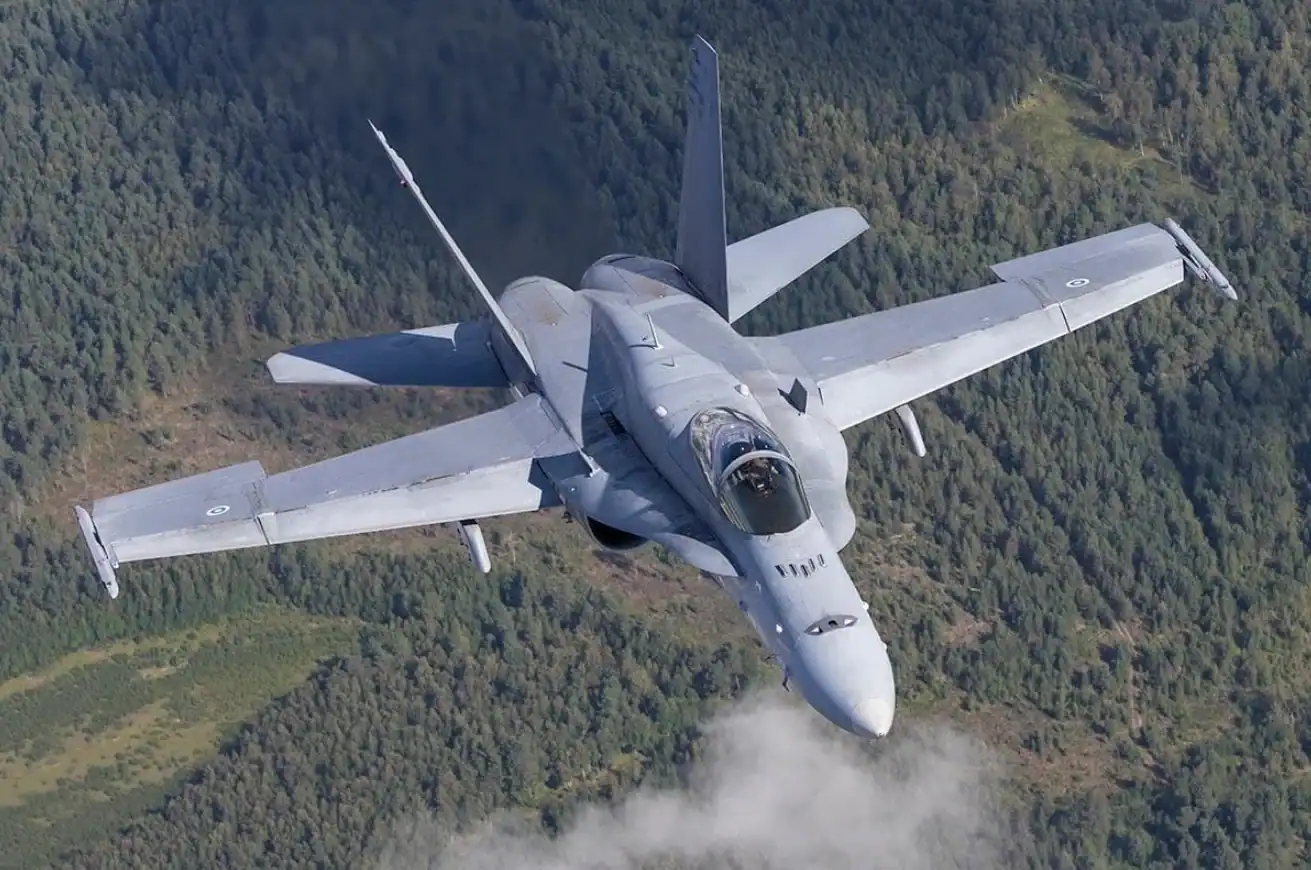
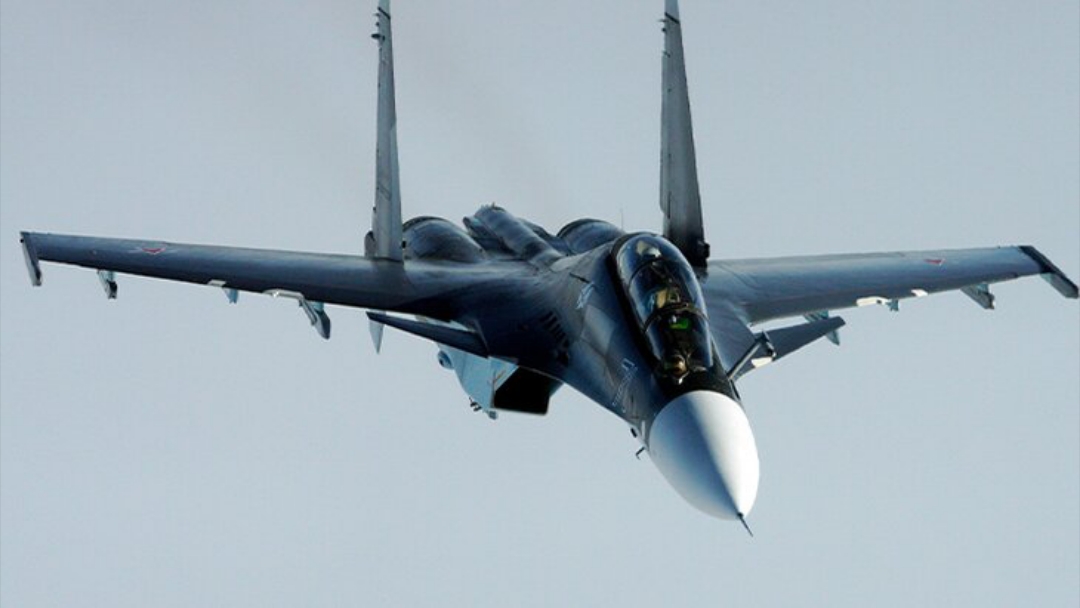
Finally, static defenses, like the Estonian bunkers pose a risk of their own. During opening hours of the invasion of Ukraine, Russia struck Ukrainian military infrastructure with missiles and bombs. Any kind of static defense, like bunkers or hardpoints, would presumably be hit by a similar barrage, in an attempt to soften up defenses before a ground attack. Now, Estonian government has mentioned that the bunkers will be designed to withstand standard Russian 152 mm artillery rounds. However, the war in Ukraine has shown, that one of the greatest threats to Ukrainian hardpoints is Russian guided aerial bombs. Using simple and relatively cheap UMPK kits, Russians turn unguided bombs into precise glide bombs, that are launched from a standoff distance, meaning out of range of most air defense systems, like 60 or 70 kilometers. Their small radar signature makes it difficult to intercept. NATO recognized this threat, and initiated a program to find a solution, but currently, the air defense systems used by the Baltic states, like Lithuanian NASAMS 3 can only engage targets up to 50 kilometers away, not enough to stop or deter enemy aircraft launching missiles and bombs from standoff range. This means, that without a proper, NATO provided air cover (since currently none of the Baltic states possess combat aircraft on their own) any bunker can and will become a target for Russian aviation.

The risks mentioned can be mitigated with changes in planning and doctrine. If the Baltic states plan (at least temporarily) to fight a positional war, it should make necessary changes in doctrine in training. Positional warfare should be one of the major subjects taught to military personnel, instead of supplementary. If possible, Ukrainian military veterans should become regular instructors and partners in defensive planning, for their experience is something no other country in Europe currently has. Gap in experience, especially in air defense, is particularly visible in the 2026 Iranian conflict, where Ukrainian instructors had to be deployed to teach allied Middle eastern nations on how to counter kamikaze drones. Yet one should learn not only from friends, but enemies too. If Russian forces created ad-hoc units to clear trenches, Baltic militaries could consider creating specialized units on their own. When procuring weapons, Baltic states should prefer (where possible) ITAR (US International Traffic in Arms Regulations) free systems, so there would be fewer problems with their use inside Russian or Belarusian territory.  Learning from the failure of Maginot and success of Mannerheim line, Baltic states should focus on mobile, flexible defense instead of a series of static bunkers and hardpoints. The Baltic states should consider threat posed by Russian aviation, and develop or procure proper defense systems, such as EW and jamming equipment.

In summary, the Baltic defense line is a much-needed project that if properly implemented, with Poland Eastern shield project, will greatly boost defensive capabilities of the entire NATO eastern flank, and act as a barrier that would protect the capital cities from a direct attack. While the project is still in its early phase, it seemingly emphasizes mobile, multi layered defense, much like the Mannerheim line, instead of relying on massive concrete fortifications, like the Maginot line. While defensive fortifications offer a lot of advantages, it comes with several previously mentioned risks. These risks must be addressed or at least taken into consideration while planning defensive and offensive operations. Finally, with quickly changing geopolitical environment, the Baltics should accelerate the building process, and unlike the French before WW2, stay vigilant, and not give into a false sense of impregnable security.

SUPPORT MILITARNYI

PrivatBank ( Bank card )
5169 3351 0164 7408
Bank Account in UAH (IBAN)
UA043052990000026007015028783
ETH
0x6db6D0E7acCa3a5b5b09c461Ae480DF9A928d0a2
BTC
bc1qv58uev602j2twgxdtyv4z0mvly44ezq788kwsd
USDT
TMKUjnNbCN4Bv6Vvtyh7e3mnyz5QB9nu6V
Popular
Button Text